Sunday Night Sticky-Note Tetris - And the One Rule That Cut Through It

The Sunday Scaries Sticky-Note Tetris
If your Sunday Scaries look like a sticky-note wall and a calendar that turns into a Tetris board, and you keep moving commitments around until it’s midnight… I know that room.
Alex (name changed for privacy) met me on a video call from their Toronto condo living room. The laptop glow made the wall behind them look like a small command center—neat rows of sticky notes in different colors, each one a promise. They were barefoot on cold laminate, shifting the same two notes back and forth. Every peel-and-press made that soft tacky sound that’s strangely loud at 9:41 p.m.
“I’m not procrastinating,” they said, with a tired half-smile that didn’t quite reach their eyes. “I’m recalibrating.”
I watched their shoulders hover just under their ears like they were bracing for impact. Their jaw kept tightening and releasing, like a song stuck on a loop. Overwhelm doesn’t always feel like panic; sometimes it feels like having 40 browser tabs open in your body—everything technically ‘there,’ nothing truly steady.
Alex didn’t come asking for a perfect system. They came asking what their life balance pattern actually was—and what one next step would finally make the wall stop multiplying. Underneath it all, I could hear the real contradiction: a steady, humane rhythm… versus the fear that if they slowed down or said no, they’d fall behind and lose credibility.
“Okay,” I told them, gentle and direct. “Let’s not redesign your whole life tonight. Let’s draw a map of what’s already happening—so we can find one lever that actually resets the week. This is a Journey to Clarity, not a performance review.”

Choosing the Compass: The Energy Diagnostic Map (7)
I asked Alex to put both feet on the floor and take one slow breath with me—nothing mystical, just a clean transition. Then I shuffled, not as a ritual for fate, but as a way to let the mind stop arguing long enough for the pattern to show itself.
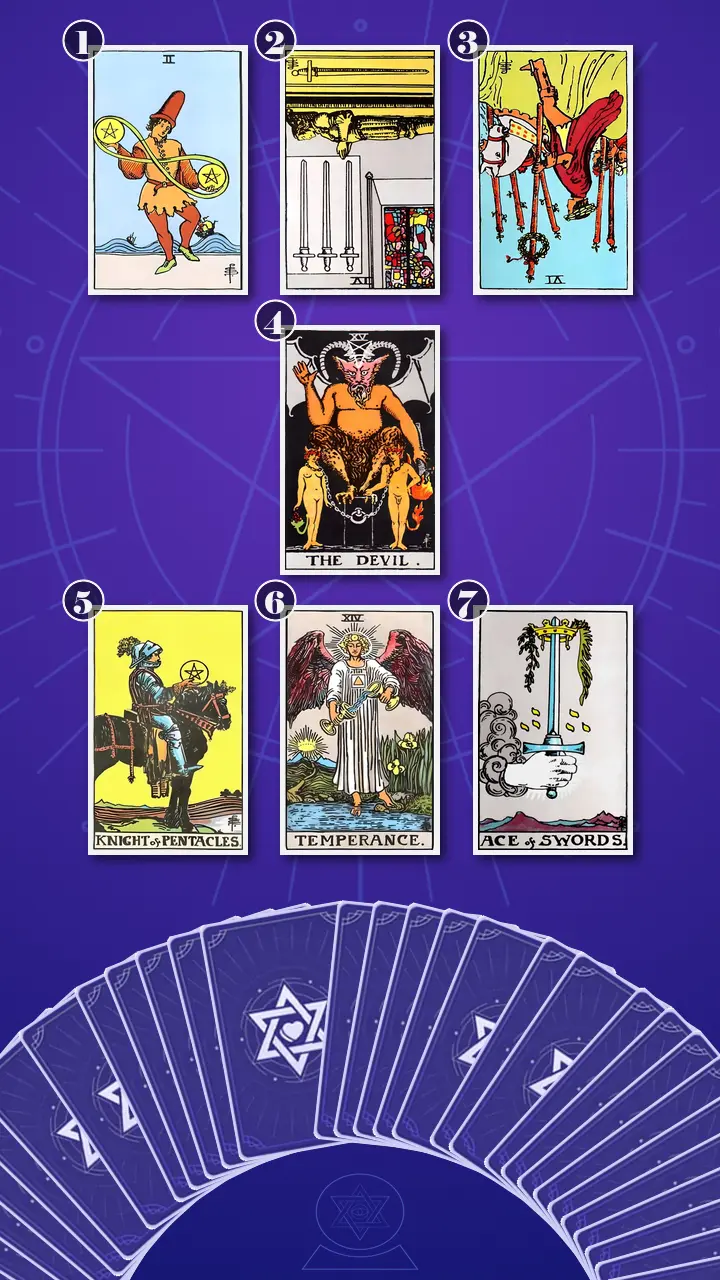
“We’re going to use a spread called the Energy Diagnostic Map (7) · Context Edition,” I said. “It’s built for exactly this kind of question: not ‘what will happen,’ but ‘how does this system run—and what’s one realistic next move?’”
For you reading along—this spread works because it separates the problem into parts that usually get tangled together: the surface behavior (what you do on repeat), the inner tug (what makes rest feel hard), the external pressure (what the culture/workplace rewards), then the core blockage (the belief that keeps the loop running). Only after that do we move into empowerment: the resource you can trust, the key transformation, and one next step that’s testable this week.
“Think of it like a dashboard,” I told Alex, “not a verdict.”
Reading the Map: The Loop, the Noise, and the Real Engine
Position 1 — Surface balance pattern
“Now flipped over,” I said, “is the card that represents your surface balance pattern—the observable way you try to manage life balance day to day.”
Two of Pentacles, upright.
It’s 8:10 a.m. energy: sticky-note grid plus Notion plus Google Calendar open at the same time. A single new email arrives and suddenly everything gets shuffled—work, workout, admin, friend plans—like you’re trying to keep every plate spinning.
In this card, balance isn’t stillness. It’s perpetual motion. The energy is overactive, not evil—just exhausting. The infinity-loop ribbon around the coins is the reflex to keep everything possible, so no choice has to become final.
Alex let out a short laugh—bitter, amused, and a little bruised. “That’s… actually mean,” they said. “Like, why is that so accurate?”
I noticed the three-step reaction in their body: first a tiny freeze (their hand stopped mid-air), then recognition (their eyes unfocused, like they were replaying last Tuesday morning), then release (a small exhale through the nose). “It’s not mean,” I said. “It’s honest. And honesty is useful.”
“Here’s the uncomfortable truth the Two of Pentacles carries,” I added. “Moving tasks feels like progress. Completion feels scary because it forces a trade-off.” I paused. “If everything stays possible, nothing becomes real.”
Position 2 — Inner tug (why rest won’t land)
“Now we’re looking at your inner tug—what makes it hard to genuinely rest or settle into one rhythm,” I said.
Four of Swords, reversed.
This is the calendar-blocked ‘rest’ that turns into errands, wellness admin, cleaning, and checking messages so it looks justified. You lie down, and your hand reaches for your phone like it has its own agenda. The moment it gets quiet, your mind goes hunting for something to fix—so you return to planning because planning feels safer than stopping.
The energy here is blocked recovery. Rest exists on the calendar, but not in the nervous system.
I said the line I’ve learned to say without judgment, because it lands like a handrail: “Recalibrating isn’t the same thing as recovering.”
Alex nodded, but not in relief—more like the kind of nod you do when you finally admit the smoke alarm isn’t going to stop unless you deal with the battery. Their shoulders lifted again as if to argue with the idea of softness.
“Your body’s telling the truth first,” I told them. “When your jaw tightens at silence, that’s not a character flaw. That’s a signal.”
Position 3 — External pressure (the invisible scoreboard)
“Now flipped,” I said, “is external pressure—what your environment or comparison field keeps reinforcing.”
Six of Wands, reversed.
This is the week designed for what reads as impressive: being responsive on Slack, keeping up with Apple Watch rings, being a great friend, progressing on a side project. Then you see someone’s highlight reel—LinkedIn humblebrags, Instagram Stories of 5 a.m. routines—and you quietly add one more goal, as if adding weight will prove you can carry weight.
The energy is unstable fire: not inspiration, but performance heat. Recognition becomes a shaky metric when you internalize it as worth.
Alex’s mouth tightened at one corner. “I hate that I care,” they said. “But I do. Responsiveness reads as competence where I work.”
“Of course it does,” I replied. “That’s not you being broken. That’s modern workplace incentives doing what they do.”
Position 4 — Core blockage (the attachment under the wall)
“Now we turn the center card,” I said. “This is the core blockage—the belief or attachment that keeps the planning loop running.”
The Devil, upright.
The sticky-note wall isn’t just organization—it’s a control ritual. The moment you consider deleting a task or saying no, there’s a jolt of panic, like you’ll be exposed as unreliable. So you keep everything visible, keep everything possible, keep everything ‘just in case.’
The energy here is compulsion. Not desire—compulsion. An internal Terms & Conditions that says, “You can rest when you’re done,” with no definition of done.
As I named it, I watched Alex’s jaw clench hard enough that the muscle jumped. It reminded me of storm warnings back home in the Highlands—when the birds go quiet and you can feel weather moving in before you see a single drop.
“That jaw clench,” I said softly, using my Body Signal Interpretation the way my grandmother taught me—like reading the tide off a shoreline. “That’s your body saying, ‘If I let go, I’ll be exposed.’ Not because it’s true. Because it’s the rule you’ve been living under.”
Alex looked down at their notes. “Oof,” they whispered. “That’s me.”
“And,” I added carefully, “the chains in this card are loose. The trap is real—but it’s not permanent.”
Position 5 — Usable resource (what already works)
“Now,” I said, “this card shows your usable resource—a strength you can lean on to stabilize balance.”
Knight of Pentacles, upright.
This is the version of you that’s steady when you choose fewer priorities. It’s boring on purpose. Two workouts, one friend catch-up, one protected focus block—kept even when the week isn’t perfect.
The energy is balanced earth: consistent, grounded follow-through. Not urgency. Not heroics. Just a pace that survives reality.
Alex’s shoulders dropped a fraction, like their body trusted this card more than their brain did. “I can do that,” they said. “When I stop trying to do everything.”
When Temperance Turned the Wall into a Mixing Board
Position 6 — Key transformation (the antidote)
I let my hands rest on the deck for a second before turning the next card. The room felt quieter—not because Toronto got quiet, but because Alex’s attention finally stopped sprinting ahead of them.
“This,” I said, “is the key transformation—the integrating mindset that changes the pattern at its source.”
Temperance, upright.
Temperance doesn’t promise a perfectly designed week. It offers a mix—intentional blending, pacing, small calibration. One foot in water, one on land. Flow, but grounded.
Here’s where I used my Elemental Balance lens: Alex’s spread began heavy in Earth—real responsibilities, real capacity limits. But their Air (mind) couldn’t settle, and their Fire (visibility pressure) was running hot. Temperance isn’t “do less.” It’s “stop maxing every slider.” It’s the moment you treat your life like a mixing board: lower one channel, raise another, and aim for a sound that doesn’t distort.
Alex’s eyes narrowed slightly, not in disagreement—more like they were trying to unlearn a reflex.
Setup: You know that moment when you’re standing in front of the sticky-note wall, moving the same three notes around for the fifth time—because if you don’t keep everything visible, it feels like something important will vanish and you’ll look careless?
Stop trying to out-juggle your week; start pouring your energy with intention like Temperance, and let a calmer rhythm replace the compulsion to control everything.
The sentence hung there. Alex went still in three waves: first, a held breath (their chest barely moved); then the mental replay (their gaze slid off-camera, like they were seeing the sticky notes in their mind); then the emotional shift—one long exhale that sounded like a door finally closing against noise.
“Okay…” they said, voice quieter. Their shoulders dropped, but their hands trembled a little on the mug they were holding—relief mixed with the strange vulnerability of not bracing. “That actually makes sense. But it’s… annoying,” they admitted, a quick flash of irritation. “Because it’s not equal. And part of me still thinks if it’s not equal, it’s not fair.”
“That’s the exact conflict Temperance resolves,” I said. “Perfect symmetry versus sustainable rhythm. ‘If it’s not equal, it’s not fair’ versus ‘If it’s livable, it’s balanced.’”
Then I asked, exactly as I always do when a card lands in the body: “Now, with this new lens—think back to last week. Was there a moment where this would have changed how you felt?”
Alex swallowed. “Thursday,” they said. “5:47 p.m. Slack ping. I’d planned to go for a walk. I saw it, and I just… folded.” They touched their jaw without realizing it. “I could’ve poured differently. I could’ve said, ‘Tomorrow morning.’”
“That,” I said, “is you moving from overwhelm-driven hyper-planning into calm, values-led pacing. Not as a personality makeover. As a single, repeatable choice.”
Position 7 — One next step (the clean cut)
“Now flipped,” I said, “is your one next step—a single actionable decision or boundary to test this week.”
Ace of Swords, upright.
This is clarity that behaves like a blade: one vertical line that ends debate. Not thirty-seven sticky notes. One sentence that becomes the rule.
“Your week doesn’t need more categories—it needs one anchor,” I said, and I watched Alex flinch slightly like the simplicity was almost too exposed to hide behind. “One sentence can protect more peace than 30 sticky notes.”
They stared at the camera, then at their wall. “But what if someone needs me?”
“If everything is urgent,” I said, “nothing is chosen.”
The One-Anchor Week: Actionable Advice That Survives Reality
I pulled the story together for Alex the way I’d summarize a weather system: first you name the front, then you stop blaming yourself for the rain, then you choose what you’ll wear.
“Here’s what your spread says,” I told them. “On the surface, you juggle and re-prioritize to keep everything afloat (Two of Pentacles). Inside, your mind won’t truly land, so ‘rest’ turns into more optimizing (Four of Swords reversed). Outside, you’re being trained—by Slack culture, comparison, and visibility pressure—to optimize for applause, not sustainability (Six of Wands reversed). The engine underneath it all is The Devil: the internal rule that control equals safety and worth equals output. And your way out isn’t more motion. It’s Knight of Pentacles consistency plus Temperance integration—finished with one Ace of Swords decision.”
The cognitive blind spot was clear: Alex had been trying to design balance by making everything visible and possible. But visibility isn’t the same as capacity. The transformation direction was just as clear: shift from designing the perfect balance to choosing one non-negotiable anchor and cutting the plan around it.
I offered Alex three small experiments—each one built to be doable in a messy week, not an ideal one.
- The Single-Sentence Cut (Ace of Swords)Write one sentence on a single sticky note and place it at eye level: “My workday ends at 6:30 p.m. Tue + Thu this week.” Then delete, renegotiate, or shorten ONE commitment that conflicts with it.Expect your brain to protest: “This is too simple.” That’s the point. If two days feels impossible, do one day—same sentence, smaller scope.
- The 10-Second Capacity Pause (Devil unhook)Before you accept any new request (Slack, email, hallway ask), pause and say: “Let me check my capacity and get back to you by EOD.” Put it in your drafts if you need to.If your jaw clenches or your shoulders jump, name it—“fear signal”—and take three slower breaths before you reply. You’re choosing, not negotiating with anxiety.
- The Temperance Pour + Water ResetOnce this week, do a 10-minute “Temperance Pour” reset: set a timer; draw two columns—“Must stay” and “Can bend”; write ONE non-negotiable anchor; then move only 2–3 sticky notes into “Can bend.” Follow it with a 2-minute shower water-flow meditation: feel the water on your shoulders and let your exhale lengthen.No forcing. If your chest tightens, stop early and come back later. Balance is a mix you can repeat, not a schedule you can perfect.
As a final support, I added one of my practical tools—the kind you can do in Toronto winter without becoming a new person overnight: “If you feel the spiral starting,” I said, “step onto your balcony—or just crack a window—five minutes. Feel the air hit your face. Let your shoulders drop. It’s not self-care theatre. It’s a nervous system reset before you touch the sticky notes again.”
A Week Later: The Quiet Proof
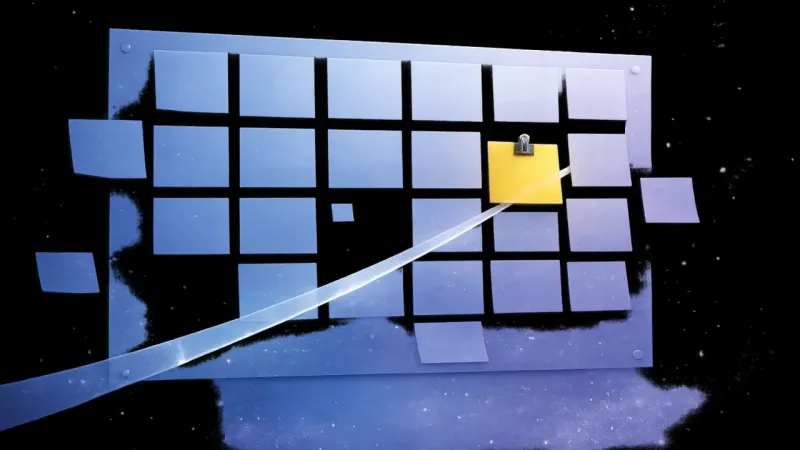
Eight days later, Alex messaged me a photo: one sticky note, centered on the wall like a flag. My workday ends at 6:30 p.m. Tue + Thu this week. Under it, fewer notes. Not empty—just honest.
“I did it twice,” they wrote. “The first time I felt like I was getting away with something. The second time I felt… normal.”
They didn’t tell me their life became perfectly balanced. What they told me was smaller and more believable: they slept a full night, then woke up with the old thought—what if I’m wrong?—and for the first time, they didn’t sprint to fix it. They just sat up, breathed, and started the one thing.
That’s the real proof of a Journey to Clarity: not certainty, but ownership. Not the sticky-note wall getting prettier—your body getting quieter inside it.
When your week is held together by a wall of sticky notes, rest doesn’t feel like rest—it feels like a risk, like one quiet moment could expose you as “not on top of it.”
If you let yourself choose one non-negotiable anchor for the next seven days—just one—what would you want your week to protect, even if everything else stays a little imperfect?