Rent Portal Tab I Kept Closing—And a 20-Minute Reset for Freeze Mode
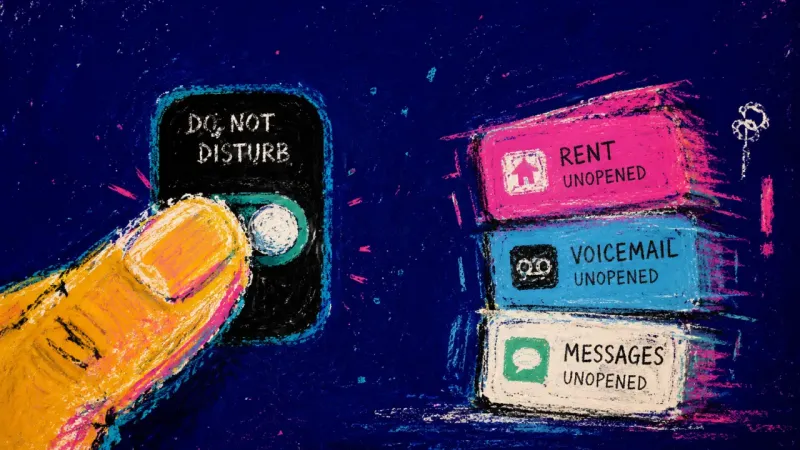
Finding Clarity in the 9:14 PM Rent Portal Glow
If you’ve ever gotten a rent reminder email, felt your stomach drop, and closed the app like it was a jump scare—welcome to life-admin overwhelm.
Jordan (name changed for privacy) slid into the chair across from me like they’d been holding their breath since the L train. They were 29, a marketing coordinator in Midtown—sharp in Slack, fast in meetings—and yet the moment their personal life asked for anything concrete, their whole system seemed to go quiet.
They described a Tuesday night in their East Village walk-up: laptop open, rent portal tab glowing that clean, accusing white; an inbox subject line that started with “Reminder”; Zocdoc open in another tab like a promise they couldn’t keep. Their phone was warm from scrolling. The radiator clicked. A delivery scooter whined outside. And every time Jordan’s thumb hovered near the rent portal, their shoulders climbed toward their ears like they were trying to become smaller than their own life.
“I don’t need a makeover,” they said, rubbing their sternum without noticing. “I need a reset. One kind reset. Rent is overdue. I missed the dentist. And I have… ignored texts.”
Their voice didn’t sound dramatic—just tired in a very specific way, like carrying a backpack you can’t take off, and every notification adds another brick.
I nodded, slow and steady. “We’re not here to judge you. We’re here to understand your system—what it’s protecting you from—and find a way back into motion. Let’s try to draw a map through the fog. Let’s look for clarity that’s kind enough to repeat.”

Choosing the Compass: The Transformation Path Grid (6)
I invited Jordan to put both feet on the floor and take one unforced breath—no mysticism, just a small physical “arrival.” While I shuffled, I watched their body the way I watch weather: not to control it, but to notice what’s already happening. Their chest held tight on the inhale, and the exhale came out shallow—like a nervous system bracing for impact.
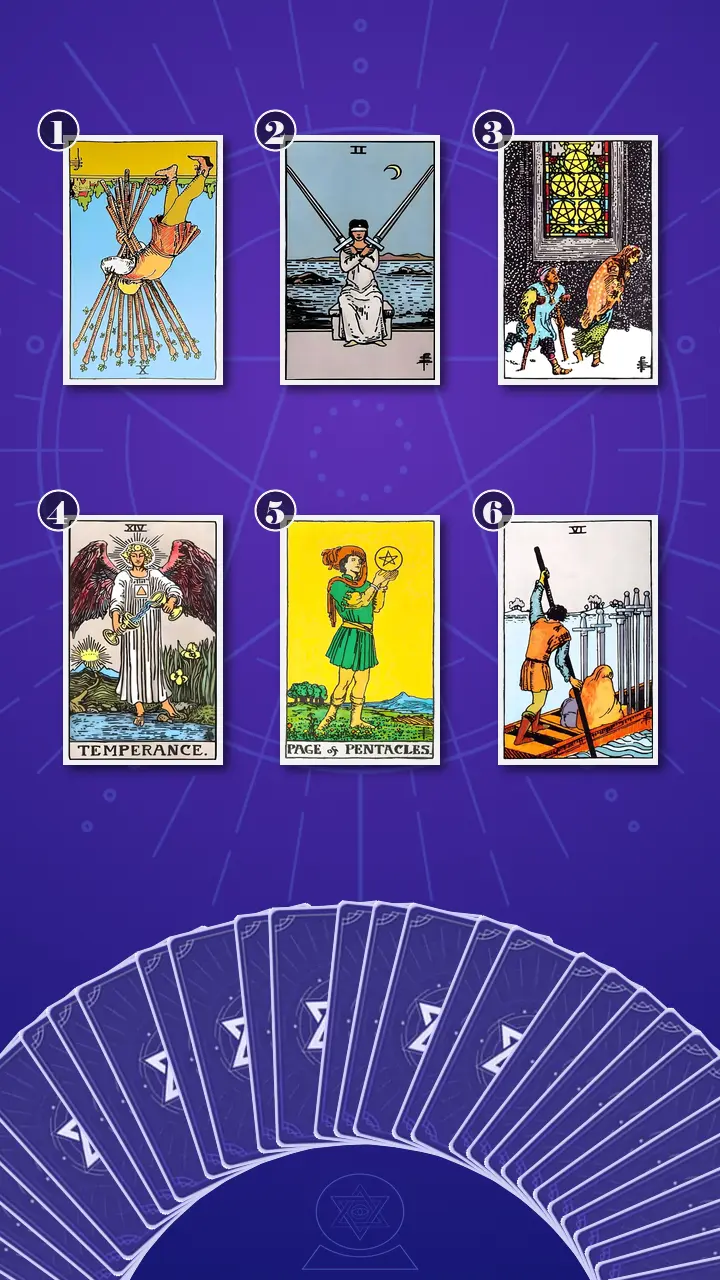
“Today, we’ll use a spread called the Transformation Path Grid (6) · Context Edition,” I said. “Six cards, laid in a simple 2x3 grid.”
For readers who wonder how tarot works in a situation like this: I chose this spread because Jordan’s question isn’t one problem—it’s a system problem. Rent, health care, and relationships are three different domains, but the freeze response glues them into one heavy lump. This grid is small enough to stay practical, and structured enough to show: what’s visible, what blocks you, what’s underneath, the turning point, one doable next step, and what integration feels like.
I pointed to the mental map we were about to build: “The first card names the surface reality—what your overwhelm looks like at 9 or 10 PM. The next shows the blockage—the exact protective stance that keeps you from opening the app. And the fourth is the key reset: the stabilizing shift that makes everything else possible.”
Reading the Open Tabs: Card Meanings in Context
Position 1 — Surface reality: what’s showing up in daily behavior
“Now turning over is the card for Surface reality—the most visible, concrete way the overwhelm shows up: rent, missed care, ignored messages,” I said.
Ten of Wands, reversed.
This card always makes my own shoulders remember something—my family comes from the Highlands, where you learn early that carrying too much against the wind doesn’t make you noble. It just makes you fall.
I used the card’s modern mirror, because it fit Jordan exactly: after work in NYC, carrying everything—chaotic day in marketing, rent swallowing a big portion of the paycheck, three personal tasks postponed. Sitting down “to handle it,” opening the rent portal, then the inbox, then the dentist site… and suddenly each tab feels like it contains all the others.
Reversed, the Ten of Wands is overload tipping into shutdown. The energy here isn’t “you’re lazy.” It’s blockage: too much Fire (pressure, push, urgency) with nowhere safe to land, so the body drops the bundle by freezing.
Jordan let out a small laugh—dry, almost surprised. “That’s… wow. That’s me. And it’s kind of brutal to hear it out loud.”
“Brutal is what your week has been,” I said gently. “The card is simply honest. And honesty is how we stop guessing.”
In my Nature Empathy Technique, I don’t start with blame. I start with conditions. Ten of Wands reversed tells me: your inner climate is like a heatwave—everything feels urgent, and then the system shuts down to protect itself.
Position 2 — Blockage: the protective stance keeping you stuck
“Now turning over is the card for Blockage—the exact inner friction that keeps the backlog untouched,” I said.
Two of Swords, upright.
The modern-life scenario landed immediately: you see the notification preview—rent reminder, dentist voicemail, a “hey” from a friend—and you feel the jolt. Instead of opening it, you keep it in preview-land. You tell yourself you’re “not ready,” because once you open it you’ll have to decide something, and deciding feels like walking into judgment.
This is Air energy in excess: thinking that turns into bracing. The Two of Swords isn’t indecision because you don’t know what to do. It’s indecision as self-protection—like putting your feelings on Airplane Mode so nothing new can come in and spike your nervous system.
I narrated the micro-scene I could practically see on Jordan’s face: laptop heat on your thighs, Slack pings fading into background noise, the rent portal tab glaring. Inner monologue: If I open it, it becomes real… and if it’s real, I have to deal with everything. Relief-now versus consequences-later.
Jordan’s chin dipped in a slow nod. Their exhale finally came out longer than their inhale, like a door unlatched. “Yeah,” they said softly. “If I don’t open it, I can pretend I’m not behind for, like… an hour.”
“Avoidance is a strategy, not a personality flaw,” I reminded them. “But strategies have costs. We’re going to choose a kinder one.”
Position 3 — Root cause: what’s underneath the procrastination and silence
“Now turning over is the card for Root cause—the deeper fear under the procrastination,” I said.
Five of Pentacles, upright.
I told Jordan what I saw in plain terms: rent and basic care don’t just feel like tasks; they feel like proof of whether you’re safe. If money is tight, or you’ve missed an appointment, you don’t want to be seen needing flexibility. So you withdraw—no reschedule, no payment plan question, no text back—because it all feels like announcing failure.
This is Earth energy in deficiency: not enough grounded safety, not enough “I can handle basics” in the body. The Five of Pentacles is the winter card—two figures out in the cold, a warm window nearby, and a belief that warmth isn’t for them.
Jordan’s eyes unfocused for a second, as if they were back in a bodega line doing rent math while the receipt printed. Their hand tightened around their water bottle, then loosened. A three-beat reaction: a small freeze in the shoulders, a faraway look, then a swallow that sounded louder than it should have in the room.
“It’s embarrassing,” they admitted. “Like… if I call the dentist, I’m admitting I couldn’t do one basic thing. If I email about rent, I’m admitting I’m ‘that person.’”
“That’s the root,” I said. “Not disorganization. The fear of exposure. The fear that being behind means you’re unsafe.”
When Temperance Spoke: A Reset Isn’t a Verdict. It’s a Rhythm.
I paused before the fourth card. The room felt quieter—not dramatic, just focused, like the moment right before rain finally falls.
Position 4 — Key reset: the stabilizing shift that regulates everything
“Now turning over is the card for Key reset—the most compassionate, stabilizing shift that can regulate the whole system,” I said.
Temperance, upright.
Setup: I could feel Jordan’s mind still trying to bargain with time: the couch after work, three tabs open—rent portal, email, dentist site—phone on Do Not Disturb. Switching between them like the “right moment” might appear. Then it’s midnight, the phone is hot, and nothing has moved.
Stop trying to punish yourself into action; start pouring one small task into the next, the way Temperance blends two cups into a steady flow.
Reinforcement: Jordan’s breath caught—just for a second. Their shoulders lifted, then dropped, as if their body tried on the idea and realized it didn’t have to fight it. Their eyebrows pinched, not with confusion, but with a kind of grief: Oh. I’ve been trying to scare myself into being functional. Their hands, which had been clasped tight, opened and rested flat on their thighs. The tightness in their chest softened enough that the next inhale didn’t scrape. They blinked hard, eyes shining but not spilling, and when they spoke their voice was smaller and steadier. “So… it’s not a character thing?”
“This is a systems problem, not a character problem,” I said. “Temperance is the system update.”
Then I shifted into my Body Signal Interpretation—because Jordan’s body was already telling the truth. “When you talked about opening the rent email, your shoulders went Ten of Wands—up and forward. Your chest went Five of Pentacles—tight like you were out in the cold. Temperance is what it looks like when the body stops bracing and starts regulating.”
“Here’s your experiment,” I continued, keeping it bounded: “Set a 10-minute timer. Open ONE ‘avoidance tab’—rent portal or dentist voicemail or the most overdue text thread. Your only job is to look and write down one next action in a single sentence. Then close everything and stop when the timer ends—even if you feel you could do more. If you start spiraling or getting self-mean, pause, put a hand on your chest, and switch to something neutral for two minutes—drink water, stand up, wash one dish. You’re practicing pacing, not punishment.”
I leaned in slightly. “Now—use this new lens and think back to last week. Was there a moment when a notification hit, and this would have let you respond differently?”
Jordan stared at the Temperance card like it was a set of stairs in a building they’d avoided for years. Another reaction chain rolled through them: breath held, eyes flicking left as memory replayed, then a long exhale. “The dentist voicemail,” they said. “On the L train. I dismissed it. If I’d just… looked, and written ‘Call to reschedule,’ that would’ve been enough.”
“That’s the shift,” I said, naming it clearly: “from trying to fix everything to choosing one 15–30 minute gentle admin reset that’s small enough to complete today. That’s how you move from life-admin overwhelm and shame-driven freeze to paced self-trust and calmer follow-through.”
One Tab, One Receipt: Turning Temperance into a Page of Pentacles Plan
Position 5 — Action plan: one realistic next step that creates tangible relief
“Now turning over is the card for Action plan—one step you can do soon that creates a real-world receipt of progress,” I said.
Page of Pentacles, upright.
The Page is beginner energy, and I mean that as praise. The modern mirror is simple: open the rent portal, read the exact balance, click the payment plan button; or call the dentist and take the next available slot; or send a two-line text without turning it into a press release. You’re not fixing your whole life—you’re producing one proof that action is possible.
Here, Earth energy is finally in balance: practical, not punishing. One tab. One number. One button.
Jordan swallowed, then said, “Okay. But real talk—I get home, and I feel like I don’t even have five minutes. Work drains me. By the time I’m on the couch, it’s like my brain is mush.”
It was a real obstacle, not an excuse. I respected it.
“Then we regulate first,” I said. “Not with a big routine. With something that tells your body you’re safe enough to take one step.”
I offered my smallest, city-friendly tool: “Try my 5-minute balcony energy awakening practice—and if you don’t have a balcony, a window or fire escape moment works. Stand where you can feel actual air. One hand on your chest, one on your belly. Look at the sky for one full minute—no phone. Then come back in and do your one-tab timer.”
“We’re borrowing from nature,” I added, “even in NYC. Wind, air, a horizon line. Your nervous system understands that language.”
Position 6 — Integration: what it feels like when the reset starts working
“Now turning over is the card for Integration—what changes internally when you practice the kind reset, even before everything is caught up,” I said.
Six of Swords, upright.
This card doesn’t promise an instant clean slate. It promises movement. You’re still carrying swords—unfinished thoughts, loose ends—but you’re in a boat now. There’s a plan, a direction, and the water gets calmer as you go.
I gave Jordan a transition shot they could actually feel: the subway rocking, notifications still there, but one thread handled. Mental weather before: static, dread, bracing. After: imperfect, but navigable.
Jordan nodded, almost like they could already feel their week getting 10% quieter. “That’s all I want,” they said. “Not perfect. Just… navigable.”
The Kind Reset Protocol: Actionable Advice Without Self-Punishment
When I looked at the full grid, the story was clear. Ten of Wands reversed said Jordan’s load had tipped into shutdown. Two of Swords showed the protective strategy: don’t open, don’t answer, don’t decide—because decision feels like judgment. Five of Pentacles named the hidden engine: scarcity stress and shame that whisper, If you’re behind, you’re unsafe and alone. Temperance offered the turning point: regulate first, then act—small pours, not a weekend punishment sprint. Page of Pentacles translated that into one concrete step with a receipt. Six of Swords promised the real outcome: calmer mental weather through steady, imperfect progress.
The blind spot wasn’t that Jordan didn’t know what to do. It was that they were treating every overdue task like a moral verdict—and waiting for a “perfect explanation” before they were allowed to re-enter their own life.
So I gave them a plan built to be repeatable. This is exactly what a Transformation Path Grid (6) tarot spread for a kind reset is for: turning insight into next steps.
- The 20-minute “Kind Admin Reset” blockPick one weekday evening this week. Put a 20-minute event in Google Calendar titled “reset, not punishment.” When it starts, open only ONE overdue thing (rent portal OR dentist voicemail OR one text thread) and set a timer.Stop when the timer ends even if you could keep going. Pacing is the point; finishing everything is not.
- The One-Tab sticky noteBefore you start, write: “One tab. One step. Then done.” Put it next to your laptop. Your job is to write one next action in a single sentence (e.g., “Pay $X on Friday,” “Call to reschedule,” “Send two-line reply”).If your brain says “not enough,” label it as the old all-or-nothing voice and return to the sentence.
- A “receipt of progress” actionChoose one step that creates proof: screenshot the rent balance and due date, send a payment plan email to management (“Hi—can we set up a payment plan? I can pay $X on [date].”), or book the next available dentist slot and add it to your calendar before you hang up.Cap “research” at 5 minutes. After that, press one button or send one message—minimum viable version counts.

A Week Later: The Quiet Proof
Eight days later, Jordan texted me a screenshot: the rent portal balance, circled—not paid in full yet, but no longer a ghost. Under it: “Emailed management. Payment plan. Also booked the dentist. I didn’t do it perfectly. I did it.”
They added, almost as an afterthought: “Slept through the night. Woke up and still thought, ‘What if I mess it up?’ But it didn’t crush me this time. I made tea and looked at the calendar.”
That’s the journey I trust: not instant transformation, but a steadier nervous system and one completed loop at a time. Clarity doesn’t always arrive like a spotlight. Sometimes it arrives like calmer water—enough quiet to take the next stroke.
When the rent email, the dentist voicemail, and the unread texts stack up, it’s not that you don’t care—it’s that facing them feels like you’re about to get proof you’re not safe, so your body chooses freeze and calls it “later.”
If you didn’t have to earn a clean slate, what’s the smallest “one-tab” step you’d be willing to take today—just to be back in motion with yourself?
Every reading at AceTarot is a Journey to connect with inner wisdom and empower next step.
Learn more about our Journey to Clarity.