From Draft Purgatory to Version 1: Shipping a Portfolio in Public

The 11:40 p.m. Figma Glow in Draft Purgatory
If you keep telling yourself “I’m not procrastinating, I’m refining,” but the link still isn’t sent to anyone, that’s perfectionism wearing a productivity hoodie.
Jordan showed up to my café the way people show up when they’ve been fighting their own brain for weeks—quietly, politely, like they didn’t want to take up too much space. Outside, Toronto was doing that late-winter thing where the streetlights make the slush look almost golden, and the wind makes you walk faster than you meant to.
They slid into the corner table by the window—the one that always smells faintly like orange peel from the biscotti jar. Their laptop opened with the same little sigh I hear from a hundred machines a day. On the screen: Figma frames nudged by a few pixels, a Notion board called something like “Portfolio Polish,” and a job board tab sitting there like a dare. The desk lamp at home wasn’t here, but the blue light was—still washing their face in that “I’ve been up too late trying to get it right” glow.
Jordan rubbed their jaw the way you rub a bruise you’re pretending isn’t tender. “I have… most of it,” they said, eyes on the table instead of me. “But it’s half-finished in the worst way. Like it’s ‘almost’ a portfolio, but not something I can send. Every time I’m close, I freeze.”
I watched their hands. Restless. Fingers hovering like they were about to hit Publish and couldn’t. “What happens right before the freeze?” I asked.
“It’s always the same,” they said. “I open it. I tweak one section. Then I see someone’s clean case study on LinkedIn, and suddenly mine feels… childish. If I send it and it’s not impressive, people will know I’m not actually good.”
The contradiction was right there, raw and honest: they wanted their work taken seriously, and they were terrified an imperfect portfolio would expose them as not good enough.
The feeling in their body had a shape to it—like trying to breathe through a scarf that’s been tied too tight, while your cursor hovers over a button that feels like a trap door.
“Okay,” I said softly, the way I do when someone is blaming themselves for a nervous system doing its best. “We’re not here to bully you into confidence. We’re here to figure out what this freeze is protecting—and how to build a path to clarity that doesn’t require you to become a different person overnight. Let’s draw a map through the fog.”
Choosing the Compass: The Celtic Cross · Context Edition
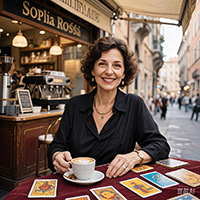
I made us coffee first—because in my world, warmth is not decoration. It’s a tool. The crema settled like a soft, tawny lid, and I noticed how Jordan held their cup: close, both hands, like they were borrowing stability from the heat.
“Before we pull cards,” I said, “take one breath you can actually feel. Not a performance-breath. Just… a real one.”
As they exhaled, I shuffled slowly. Not like a spell—like a reset. A pause between input and reaction.
Today, I told them, we’d use the Celtic Cross · Context Edition.
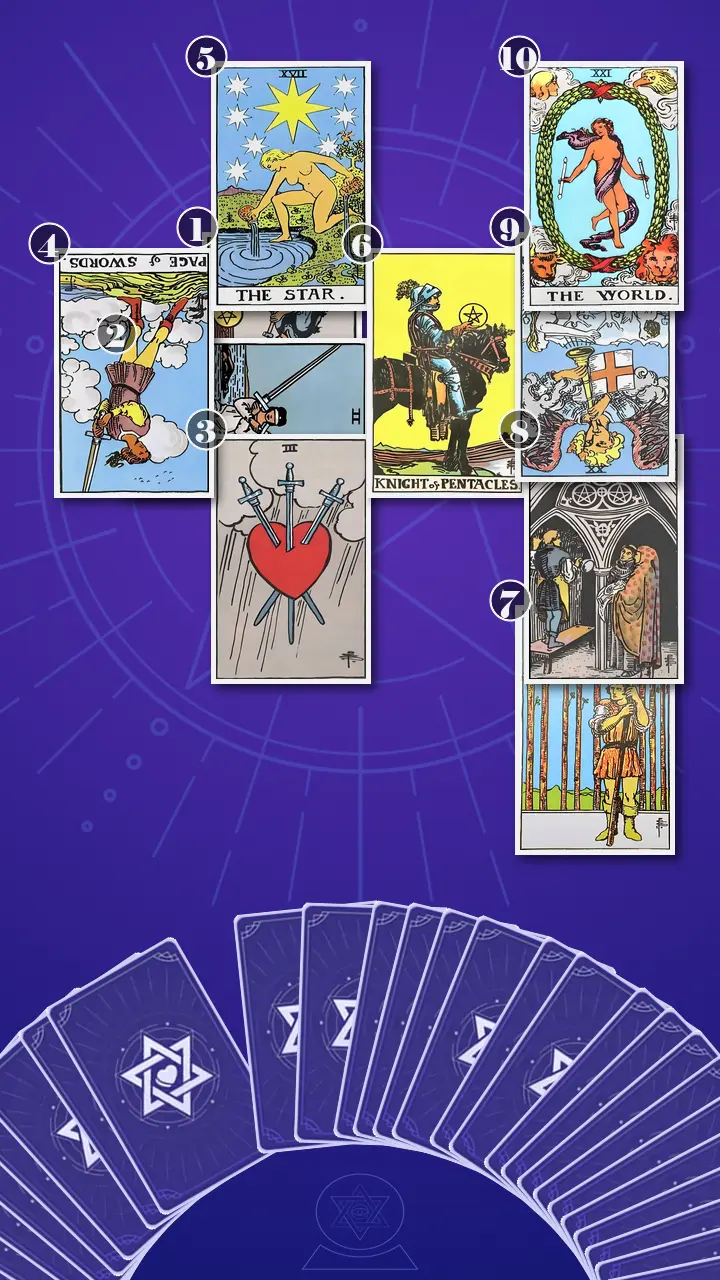
And for you reading along: this spread works well for a perfectionism-driven creative freeze because it doesn’t just diagnose the surface behavior (“why can’t I finish my portfolio even though I keep working on it”). It traces the full chain—what’s happening now, what blocks the finish line, what wound the block is guarding, and what practical structure actually gets you moving again. It’s a map from symptom to source to next steps.
I tapped the table lightly where the center cross would sit. “Card 1 will show your current freeze—what it looks like in your everyday behavior. Card 2 crosses it: the immediate mechanism that turns ‘I care about quality’ into a full stop. And deeper down, Card 3 reveals the wound underneath—the pain this freeze is trying to prevent you from feeling again. Then we climb the staff on the right: your stance, your environment, your hopes and fears around visibility, and what completion can realistically look like.”
Reading the Map: The Cross at the Center
Position 1 — The current creative freeze: how the half-finished portfolio shows up day to day
“Now we turn over the card that represents the current creative freeze,” I said. “And we have Eight of Pentacles, in reversed position.”
In the Rider-Waite image, a craftsperson is bent over a bench, building pentacles one by one. Upright, it’s devotion. Skill. Steady practice. Reversed, the motion can turn into a loop—effort without release.
“This is like when you spend hours perfecting one portfolio screen while the ‘finished’ projects are technically there but still don’t count in your mind until everything matches an ideal standard,” I said, keeping my voice plain. “Craftsmanship gets trapped in perfectionism. Improvement becomes a reason not to finish.”
I pointed gently at the card. “Energy-wise, this is blocked Earth: you’re working, but the work isn’t circulating. The ‘export’ step stays untouched, so your effort piles up like coffee grounds that never become a drink.”
Jordan let out a quick laugh—small, bitter, almost involuntary. “That is… too accurate,” they said. “Kind of brutal.”
“Good,” I replied, not unkindly. “Not because I want it to sting. Because accuracy means we’re not lost. We can work with what’s real.”
And because I live in extraction—espresso, all day—I felt the metaphor land in my own hands. When coffee is over-extracted, you don’t get ‘better coffee.’ You get bitterness. The same ingredients. The same intention. The wrong relationship to time and control.
“This freeze isn’t proof you’re lazy,” I said. “It’s proof you care, and you don’t have a ‘done’ definition that your nervous system trusts.”
Position 2 — What directly blocks finishing: the mechanism that turns care into a stop sign
“Now we turn over the card that represents what directly blocks finishing,” I said. “Two of Swords, upright.”
Blindfold. Crossed swords over the heart. Calm water behind. This card never screams. It simply refuses.
“This is like when you avoid opening the Applications tab because pressing submit would force a choice about what counts as finished,” I said. “And the blindfold becomes: ‘I’ll decide later.’”
Energy-wise, Two of Swords is defensive Air: your mind protecting your heart by freezing the decision. The block isn’t skill. It’s choice.
I leaned in slightly. “Here’s the tab-switch moment I see a lot: you open the Applications tab, your hand hesitates—and it reflexively jumps to ‘Best UX portfolio examples.’ Your inner monologue goes: If I don’t decide, I can’t be wrong.”
Jordan’s eyes unfocused for a second, like they were watching their own screen in their head. Their shoulders rose—then dropped, a fraction. A quiet “oh” without words.
“Clarity versus safety,” I said. “Choosing a version creates clarity. But safety wants endless options.”
They swallowed. “I keep saying ‘it’s not ready.’ But… yeah. I’m postponing the decision.”
“And that’s not a character flaw,” I said. “It’s a protection strategy. We can thank it for trying. And we can renegotiate it.”
Position 3 — The perfectionism wound underneath: what pain the freeze is trying to prevent
“Now we turn over the card that represents the perfectionism wound underneath,” I said. “Three of Swords, upright.”
The image is blunt: a heart pierced by three swords under gray rain. No symbolism gymnastics required.
“This is like when you imagine a recruiter’s quick ‘no’ and your body treats it as proof you’re not talented,” I said, keeping the rhythm clean and unsoftened. “Tight chest. Sinking stomach. Jaw clench. The rejection hasn’t happened. But your body reacts like it already did.”
Jordan’s fingers tightened around their cup. Their throat moved with a hard swallow. They didn’t look away, but their eyes shone—just slightly, like a surface trying not to ripple.
“This is the tenderness under the perfectionism,” I said. “And I’m going to say something I say often in this café, because it’s true in both coffee and careers: perfectionism is often just shame with a project plan.”
They exhaled through their nose, a shaky little release. “I hate that that’s true.”
“You don’t have to love it,” I replied. “You just have to see it. Because if critique equals injury, your system will choose control every time.”
Position 4 — The recent pattern that reinforced the freeze: what’s been training your inner critic lately
“Now we turn over the card that represents the recent pattern reinforcing the freeze,” I said. “Page of Swords, reversed.”
“This is like when you read your own portfolio and hear it in a recruiter’s imagined voice, then rewrite it to avoid any possible misunderstanding—even if it costs clarity and momentum,” I said.
Reversed, the Page’s curiosity becomes surveillance. Not learning. Inspecting. Energy-wise, it’s excess Air—too much scanning, not enough saying.
“One risk here,” I added, “is defensive writing. You start solving anxiety by adding more text—pre-empting every critique—until your case study reads like a legal brief.”
Jordan winced like I’d tapped a bruise. “I literally have a section titled ‘Why we didn’t do X,’” they admitted. “And it’s… long.”
“That’s the Page reversed,” I said. “Your mind checking for danger instead of communicating.”
I lifted my own cup. “In my café, when something tastes sharp, I don’t argue with it for six hours. I adjust the grind. I change the ratio. And I taste again. Clarity beats defense. Always.”
Position 5 — What you consciously want from finishing: the healthier desire beneath “make it perfect”
“Now we turn over the card that represents what you consciously want from finishing,” I said. “The Star, upright.”
The Star always changes the room. It doesn’t hype you. It rinses you.
“This is like when you imagine a portfolio that feels simple, breathable, and true—where you explain decisions clearly and let the work speak without defensive over-explaining,” I said.
Energy-wise, The Star brings Water: emotional solvent. It doesn’t erase the Three of Swords. It makes the sting less governing.
Jordan’s face softened. “I want it to feel honest,” they said. “Not like I’m trying to sound… ‘more senior’ in every sentence.”
“Exactly,” I said. “You’re not trying to win a trial. You’re trying to restore trust with yourself.”
Position 6 — The next developmental step: the kind of progress available soon
“Now we turn over the card that represents the next developmental step,” I said. “Knight of Pentacles, upright.”
Grounded horse. Still posture. Pentacle held forward like an offering.
“This is like when you treat the portfolio like a weekly deliverable: same time block, same scope, and a defined ‘done’ so it can be shipped and improved later,” I said.
Energy-wise, this is balanced Earth: boring on purpose. Reliable. A container that doesn’t require inspiration to function.
I let the image become practical. “I’m seeing a cadence montage,” I said. “Wednesday 7:00–7:45 p.m. Coffee cooling. Checklist visible. No dramatic breakthrough required. Just: I don’t need motivation; I need a container.”
Jordan’s shoulders dropped a little more. Their hands stopped fidgeting. An exhale they didn’t know they were holding.
Position 7 — Your stance and coping style: how you’re holding yourself while trying to complete it
“Now we turn over the card that represents your stance and coping style,” I said. “Nine of Wands, upright.”
Bandaged head. Tight grip. A barricade behind.
“This is resilience,” I said. “And it’s also bracing.”
Modern life translation? “This is like when you open your portfolio and immediately think, ‘I need to defend every decision,’ so you keep adding polish and explanations instead of letting the work be simple and readable.”
Energy-wise, it’s excess Fire in self-protection mode: staying ready for a hit that may not come. That vigilance keeps you working, but it also keeps you isolated.
Jordan stared at the cards. “I feel like if I relax, I’ll get exposed,” they said quietly.
“That makes sense,” I said. “But the cost of bracing is you never get the relief that comes from safe feedback.”
Position 8 — External supports and pressures: where feedback and collaboration can help
“Now we turn over the card that represents your environment—external supports and pressures,” I said. “Three of Pentacles, upright.”
Three figures in a structured space. A plan. Shared standards.
“This is like when you stop guessing what’s ‘portfolio-ready’ and instead get a clear rubric from real people—what’s confusing, what lands, what to cut—so the next edit is purposeful,” I said.
And I used the echo exactly where it belonged: “I’m seeing a review room scene,” I told them. “One friend on Zoom. One mentor in a DM. One peer in a Slack channel. A calendar invite. A notes doc. Screen share. Not the whole internet. A small room.”
Jordan’s expression changed—visible relief first, then a cautious little hope. “That sounds… doable,” they said. “I always think feedback means publishing to the world.”
“That’s your nervous system confusing visibility with danger,” I said. “Three of Pentacles says: move standards out of your head and into collaboration.”
When Judgement Spoke Backwards: The Inner Tribunal on the Publish Button
Position 9 — The visibility dilemma: what you hope will happen vs what you fear it will mean
I let my hands rest on the deck for a moment. The espresso machine behind the counter hissed—steam like a sharp intake of breath. Even the café seemed to pause with us.
“Now we turn over the card that represents your hopes and fears around being seen,” I said. “This is the heart of the reading.”
Judgement, in reversed position.
“This is like when you hesitate to hit ‘publish’ because it feels like walking onto a stage, and you can already hear the imagined scorecards before anyone has even looked,” I said. “The call is there, but the inner court keeps postponing your response.”
Energy-wise, this is blocked awakening: not because you’re not ready to grow, but because you’re trying to guarantee the outcome first.
Setup (and I kept it close to their real life): “You know that moment at 11:40 p.m. when your Figma file is open, LinkedIn is open, and your cursor hovers over ‘Publish’ like it’s a trap door—and your jaw tightens because one click feels like a permanent verdict.”
Jordan’s mouth pressed into a line. Their eyes flicked to their laptop bag like it might contain the evidence. Their breathing went shallow.
Delivery—I let the sentence land cleanly, the way a good espresso lands: short, hot, unmistakable.
Not a flawless trial, but a brave response—answer the trumpet by shipping Version 1 and letting real feedback replace the inner tribunal.
I didn’t rush to explain it. I let the quiet do its job.
Reinforcement—Jordan’s reaction came in layers, like a delayed wave. First, a small freeze: their fingers stopped moving, hovering mid-air above the cup. Then the cognitive seep: their gaze went unfixed, as if replaying every near-export, every canceled submission, every “tomorrow when it’s cohesive.” Then the emotion hit: their eyes watered fast, surprising them. They blinked hard, annoyed at their own body, then gave up and let it happen.
“But if I ship Version 1,” they said, voice tight, “what if it proves I’m not—” They stopped, like the rest of the sentence tasted dangerous.
Here’s where my café instincts and my tarot instincts are the same: I don’t argue with heat. I measure it. I translate it.
“Can I do a quick scan?” I asked. “It’s one of my tools.”
They nodded, uncertain.
“This is my Caffeine Energy Scan,” I said, tapping the side of their cup. “Not mystical. Just body data. When you’re about to be judged—your system goes contracted. Jaw tight. Chest tight. Hands restless. That’s your visibility alarm. It doesn’t mean ‘don’t ship.’ It means ‘I’m scared, and I need structure.’”
Then I layered in the metaphor that always cuts through shame for creatives: “In coffee, when you over-extract, you get bitterness. Not because the beans are bad. Because you tried to force certainty out of the process. Your portfolio is being over-extracted. You’re asking it to deliver proof of worth instead of a clear story.”
Jordan let out a breath that sounded like it had been trapped behind their ribs for months. Their shoulders lowered. Their hands unclenched. And then, because clarity can feel like standing up too fast, they looked a little dizzy with it.
I leaned forward. “Now—use this new lens and look back at last week. Was there a moment where this insight could have changed how you felt? A moment where you switched tabs, or canceled export, or rewrote a headline for the fourth time?”
They nodded slowly. “Saturday,” they said. “I was mid-export. I saw one spacing issue. And I canceled.” Their voice cracked on the last word—not dramatic, just honest. “It felt like… if I let it out, it would be permanent.”
“That’s Judgement reversed,” I said. “And this—this is the shift: your portfolio doesn’t need a perfect verdict. It needs a release cycle.”
I watched their face as the idea settled: we weren’t moving from ‘self-doubt’ to ‘unshakeable confidence’ in one afternoon. We were moving from tight self-protection toward the discomfort of being seen—on purpose, in small doses—so real feedback could replace imaginary prosecution.
Position 10 — Integration potential: what completion looks like when it’s a living cycle
“Now we turn over the card that represents integration potential—what completion can look like,” I said. “The World, upright.”
Wreath. Wholeness. A dancer who isn’t armored—just present.
“This is like when you finally have a portfolio link that feels representative and usable, and you stop rebuilding from scratch because you trust the cycle of updates,” I said. “Completion isn’t a final exam. It’s a coherent Version 1 that can travel.”
Energy-wise, The World is integrated Earth: your work can circulate. Not perfect—complete enough to be real.
Jordan stared at the card for a long moment. “So… the goal isn’t ‘never feel scared,’” they said.
“No,” I said. “The goal is: don’t let fear be your project manager.”
From Insight to Action: The Version 1 Release Cycle (Clarity Over Defense)
I gathered the story the cards had been telling into one thread, so it didn’t stay abstract.
“Here’s the chain,” I said. “Right now, you’re in blocked craftsmanship—working hard but not releasing (Eight of Pentacles reversed). The immediate mechanism is a protective stalemate: if you don’t choose a version, you can’t be wrong (Two of Swords). Under it is a real tenderness—your body expects criticism to hurt like rejection, so control becomes protection (Three of Swords). Recently, your inner critic has been scanning for danger and pushing you into defensive over-explaining (Page of Swords reversed). But your conscious desire is actually healing: you want an honest, breathable portfolio (The Star). The way out isn’t a dramatic overnight makeover—it’s a boring, reliable routine (Knight of Pentacles) plus a small-room feedback structure (Three of Pentacles). And the major choke point is Judgement reversed: the inner tribunal turning publishing into a verdict. The World says completion comes when you treat the portfolio as a living document.”
“Your cognitive blind spot,” I added gently, “is thinking that the only safe way to be seen is to be flawless. But flawless doesn’t exist—and chasing it keeps you in drafts forever.”
“So what do I do this week?” Jordan asked, and there it was: a tiny spark of agency through the fog.
I nodded. “We keep it small enough that you can actually do it. And we build your system around your body—not around your inner tribunal.”
- Define “Version 1 Done” (One Case Study Only)Pick one case study. Write a four-line ‘done’ definition in a notes doc: (a) problem, (b) your role, (c) 3 key decisions, (d) outcome/learning. Nothing else is required for Version 1.If your brain argues this is “too small to matter,” treat that as the perfectionism reflex. Keep the scope tiny on purpose—completion is the rep.
- The 45-Minute Three-Edits Rule (Clarity Pass, Then Export)Once this week, set a 45-minute timer. Make exactly three clarity edits: (1) headline, (2) a two-sentence summary for a busy recruiter, (3) one screenshot caption. Then export/share a view-only link immediately—no “one more tweak.”Use my Cup Temperature Scan: if your coffee is cold by minute 20, your energy is dropping—stand up, reset your posture, and finish the last 25 minutes with the checklist. Don’t negotiate with the timer.
- Send to One Safe Human (One Question Only)Send the link the same day to one trusted person and ask only: “What was unclear or missing?” (No fishing for praise. No defending.)If your chest tightens, do my 5-Minute Coffee Meditation first: grind or open fresh coffee, inhale the aroma for three slow breaths, feet on the floor. Your job is a small release, not forcing bravery.
Jordan looked at the list like it was surprisingly… kind. “I can do that,” they said, and the sentence sounded new in their mouth.

A Week Later: The Quiet Proof
Six days later, mid-morning, the café was loud in the good way—milk steaming, chairs scraping, someone laughing too hard at a first date joke. My phone buzzed. Jordan.
“Sent it,” their message said. “One case study. View-only link. Asked ‘what’s unclear.’ I wanted to throw up for ten minutes, then it passed. They said my role was clear and told me one section to cut. I didn’t spiral.”
I stared at the screen for a second longer than I needed to, feeling that familiar, small satisfaction: not fireworks—proof.
This was their Journey to Clarity in real life: not from fear to zero fear, but from draft-only living to one real release, one real data point, one small iteration that wasn’t soaked in shame.
When you hover over “publish” with a tight chest, it’s not because you don’t care—it’s because some part of you believes an imperfect portfolio would become public proof that you’re not enough.
If you treated your portfolio like a living document (not a final exam), what’s one tiny Version 1 release you’d be willing to make this week—just enough to let reality give you feedback instead of your inner tribunal?
Every reading at AceTarot is a Journey to connect with inner wisdom and empower next step.
Learn more about our Journey to Clarity.