From Favor-Text Dread to Self-Respect: Measuring Friendship by Effort

The Lock-Screen Preview That Said “Quick Favor?”
I knew what Sophie (name changed for privacy) had come to me for before she finished sitting down. She set her phone face-down on my table the way people do when the device has started to feel like a tiny source of dread, and then she said, almost too casually, “I think I need help figuring out why friends only text me when they need something… and why I still keep calling it friendship.”
I hear versions of that question all the time from young professionals in big cities, especially from the kind of reliable, warm person who has become everyone’s unofficial fixer. Sophie was twenty-six, worked in communications in Toronto, and described the exact scene that had finally pushed her to book: 12:18 p.m., office kitchen off King Street, fluorescent lights humming, Slack pinging, a half-eaten salad going warm on the counter. A name she had not seen in nineteen days lit up her phone. The preview was not a check-in. It was a request to proofread something by tonight.
As she told it, I could almost hear the plastic fork click against the bowl. I could feel the metallic taste she mentioned, the one that arrived right before she typed back yes. Then, like she always did, she added a softer follow-up question to make the thread feel more human than it was. That was the real ache: not just a favor-only text, but the instant impulse to turn access to her effort into closeness.
“My stomach drops before I even open it,” she told me. “And then I still answer fast. I know it’s one-sided, but I still don’t want to be unfair.”
I nodded. “Your body usually notices the imbalance before your story does,” I said. “And what you’re describing is one of the clearest forms of confusing being needed with being valued in a one-sided friendship.”
The hurt in her did not feel dramatic. It felt quieter and worse—like a cold coin lodged behind the throat, something small enough to dismiss and heavy enough to keep swallowing around all day. I could hear resentment in it, and loneliness, and that painful little flicker of hope that keeps a transactional friendship alive long after the pattern has gone thin.
I told her I was not interested in making her cynical, and I was not going to tell her to cut everyone off because The Cut had made boundaries discourse fashionable. “What I want to do,” I said, “is help you see what part of this belongs to the present, what part belongs to an older script, and what clarity would look like if we stopped grading this relationship on vibes alone. Let’s make a map through the fog.”

Choosing the Compass: A Past-Present-Future Spread
I asked Sophie to take one slow breath, keep her question simple—What past makes this feel like friendship?—and watch the cards with me as I shuffled. I treat this part less like ceremony and more like a mental threshold. It helps the nervous system stop doom-scrolling for explanations and focus on one clean inquiry.
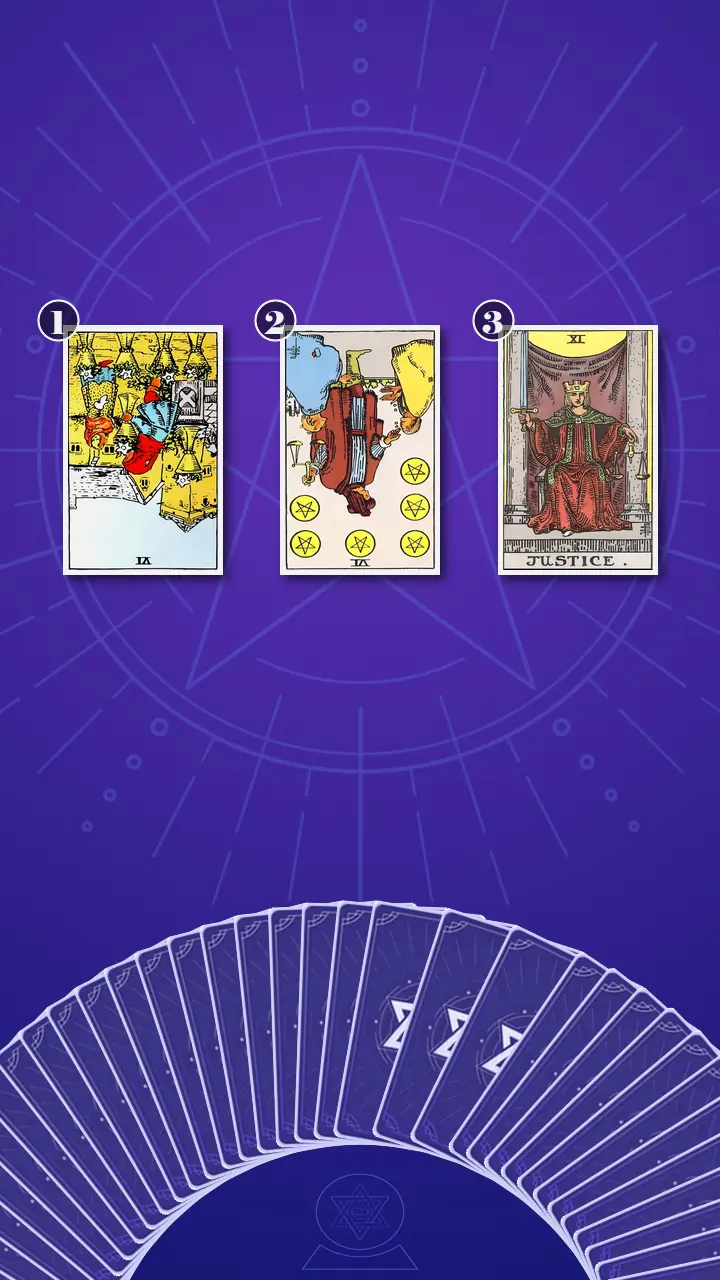
For her, I chose a Past-Present-Future tarot spread. When people ask me how tarot works in situations like this, I usually say the cards are not here to flatter a feeling or accuse a person. They are here to organize reality. Sophie’s question was explicitly temporal: something in the past was shaping how a present-day favor-only dynamic still felt emotionally real. A three-card Past-Present-Future spread was the smallest, clearest structure for that exact problem.
I explained the logic to her as I laid the cards left to right. The first position would show the learned friendship template from the past—the older emotional pattern that trained her to read usefulness as connection. The second would show the current reenactment of that template—the visible imbalance happening now, in actual text threads, actual favors, actual emotional labor. The third would show the healthier future-facing direction—the standard that could help her tell reciprocity from simple access to her time and care.
I liked the spread for another reason too: its line was honest. Old script. Present repetition. Clearer standard. It felt, to me, like walking across a short bridge from the child who earns closeness by being good to the adult who gets to ask whether care is actually mutual.
Flowers, Coins, and the Pattern in Plain Sight
The Past Template: Six of Cups Reversed
I turned over the first card and said, “This is the position of the learned friendship template from the past that trained you to read usefulness as connection.” The card was Six of Cups, reversed.
I always slow down with this card, because people assume nostalgia is soft when, in practice, it can behave like autofill pulling an outdated address every time you start typing. In Sophie’s case, the card immediately brought in an older emotional imprint: a connection to people whose names still carried the glow of being chosen once, included once, wanted once. A university friend. An old work friend. Someone tied to a version of belonging that had felt golden at the time.
I told her what I saw in modern terms. “This is the part of you that gets a fresh request-text and, instead of reading the last ten exchanges, jumps straight to the handful of warm voice notes, birthday messages, or shared photos that once made the connection feel real. The card is reversed, which tells me the memory is still active but no longer accurate. Memory is not the same as reciprocity.”
As I said it, Sophie looked down so quickly I knew the line had landed. She had already told me about those 11:43 p.m. Friday nights in her west-end apartment—streetcar rattling outside, phone screen blue against the duvet, scrolling up into last summer’s voice notes like old footage could override the present season. I asked her gently, “When that name pops up, what older fear arrives first—being unfair, being left out, or finding out the bond is thinner than you hoped?”
She let out a short laugh that had more sting than humor in it. “Wow,” she said. “That’s… kind of brutal. I’ve definitely been grading some of these people on old footage.” Her fingers tightened around her mug, then loosened again. It was the exact reaction I was hoping for: not collapse, just recognition.
I explained the energy more precisely. Reversed, the Six of Cups often shows emotional familiarity turning into distortion. Not because the past was fake, but because it has been given too much voting power in the present. The tenderness was real. The script it wrote for adulthood was outdated. This was not a card telling Sophie to become harder. It was a card asking her to stop letting one flower-filled memory outrank months of current evidence.
The Present Reenactment: Six of Pentacles Reversed
I turned to the center card. “Now we’re looking at the current reenactment of that template in a favor-only dynamic—the visible imbalance happening now.” The card was Six of Pentacles, reversed.
This one was almost painfully clean. In the Rider-Waite-Smith imagery, we get scales, coins, and a visible power dynamic. In Sophie’s life, that translated immediately into the thread that opens with a need: edit this deck, make an intro, read this resume, listen to this spiral, fix this logistical mess. She replies fast, handles the task, then adds a meme or a caring question to keep the conversation alive. The second the labor is done, the thread goes flat again.
“A favor can be real help without being real intimacy,” I told her. “And that is the correction this card is trying to make.”
I could see her throat tighten at that. She knew exactly what I meant. She had described herself on rainy TTC rides home doing the thing so many people do in a transactional friendship: drafting the practical answer, then rewriting it warmer, then adding one more line—How have you actually been?—as if the extra emotional labor might convert a service ticket into closeness.
Reversed, the energy here was not generosity in balance. It was generosity in excess on one side and reciprocity in deficiency on the other. Or, more bluntly, a friendship economy where her usefulness had become the subscription login they remembered only when they needed access. I asked her to picture the last five interactions in one of those threads. Who initiated? What happened once the favor was complete? Did curiosity about her life survive when she stopped being useful?
She gave me the smallest wince and said, “I hate that I know the answer. I do the thing where I help, then I add extra warmth, and if they disappear again I tell myself they’re just busy.”
“That’s the reenactment,” I said. “The old hope for warmth is now being acted out through labor.”
For a second, she went very still. Shoulders lifted. Breath paused. Then her gaze slid off the card, as if she were replaying one specific lunch break in real time. When she looked back at me, there was no denial left, just hurt. Deep emotional sync has a look to it; it is the face people make when the card says the quiet part out loud.
When Justice Held the Scales in Full View
The Future Standard: Justice
By the time I reached the third card, even the room felt different. The radiator had gone quiet. Somewhere outside, a streetcar bell rang and faded. I turned over the final position—the healthier future-facing direction that could help her distinguish reciprocity from access to her labor—and there it was: Justice, upright.
I have a special respect for Justice. When I worked on Wall Street, long before I became a reader, I learned that a beautiful story and a reliable structure are not the same thing. A term sheet does not care what someone meant; it cares what is actually there. Seeing Justice still brings back the trading floor part of my brain. Fairness is not a mood. It is a structure.
I looked at Sophie and gave the setup in plain language. “This is the moment in the office kitchen: Slack pinging, salad getting warm, your stomach dropping when a name you haven’t seen in weeks pops up with a favor. You reply quickly, then add a softer line because some part of you is still trying to keep the thread alive. Justice enters exactly there—at the point where guilt, hope, and usefulness get tangled.”
Stop calling imbalance loyalty; start weighing the relationship by what is actually mutual, like Justice's scales held in full view.
I let the sentence sit between us.
Then I added, more gently, “Being needed is not the same as being known.”
Sophie’s reaction came in three visible waves. First, a freeze: her fingers stopped at the edge of the card, and even her breathing seemed to pause mid-inhale. Then the thought broke through: her eyes lost focus for a moment, the way they do when someone is replaying half a dozen text threads at once and watching the pattern rearrange itself in real time. Then the feeling arrived: her shoulders dropped, her jaw unclenched, and she let out a shaky breath that sounded almost like a laugh until I saw the water gather at the rim of her eyes.
But what came next was not immediate relief. It was resistance. “But if that’s true,” she said, and there was real heat in her voice now, “doesn’t that mean I’ve been carrying these friendships and calling it kindness?”
I answered her carefully, because this is where people need precision, not performance. “It means you’ve been keeping some connections alive with effort that was mostly yours. That is painful. It is not pathetic. And it does not make your care fake. Justice is not here to humiliate you for wanting closeness. It is here to stop self-betrayal from dressing up as loyalty.”
This was the moment I brought in one of my own diagnostic frameworks, the tool I reach for when feelings are true but foggy. “I want to show you something I call Influence Credit Scoring,” I said. “Not to rank human worth. Never that. I use it to rate relationship capital when the emotional marketing copy is stronger than the actual returns.” She smiled faintly at that—communications people always appreciate a clean metaphor.
“Tier 5,” I continued, “is a relationship where curiosity goes both ways, contact exists when nothing is needed, details are remembered, and repair happens after misses. Tier 3 is intermittent warmth but inconsistent presence. Tier 1 is request-only access: the person reaches for your time, skill, or emotional labor, but not really for you. Justice asks a very adult question: less ‘Am I being nice enough?’ and more ‘Is this mutual enough?’”
I watched that framework change her posture. The shame drained out of the problem the second it became measurable. That is why I love Justice in readings about adult friendship. It takes people from vibes to receipts, from nostalgia to evidence, from overhelping to discernment. I asked her, “Now, with this lens, can you think of one moment from last week that would have felt different?”
She nodded almost immediately. “The lunch-break text,” she said. “If I had used this lens, I would’ve seen that I was answering the request and auditioning for closeness at the same time.”
“Exactly,” I said. “And that is the shift. Not from warm to cold. From self-doubt to clear-eyed self-respect. From helpfulness as proof of connection to mutual effort as the measure of friendship.”
I gave her the smallest possible reinforcement while the insight was still warm. “Within ten minutes of leaving here,” I told her, “open one thread and label the last few exchanges: request, check-in, or mutual. If your chest starts racing, stop after three. You do not need to decide everything today. You just need to let the pattern become visible.”
Receipts Over Nostalgia
When I stepped back from the spread, the story was elegantly blunt. The reversed Six of Cups showed the flower-filled memory: an older template where being warm, useful, and easy to rely on once felt like the safest route to closeness. The reversed Six of Pentacles showed the current cost of that template: one-way giving, favor-first contact, and the habit of adding extra emotional labor so a thin exchange can still feel like friendship. Justice did not ask Sophie to become suspicious of everyone. It asked her to stop using her own consistency as evidence of theirs.
That was the blind spot. She had been asking whether she was overreacting, petty, or ungenerous. The better question—the one Justice insists on—was whether the relationship itself showed reciprocity, emotional presence, and mutual curiosity. The transformation was not dramatic. It was adult. It was the move from using helpfulness as proof of connection to using mutual effort as the measure of friendship. Mutual effort is the receipt.
I translated that into small, practical next steps she could actually try in a real week, with a real phone, in a real nervous system:
- The Reciprocity Audit Open one recurring favor-based thread in your Notes app and label the last five exchanges as request, check-in, or mutual. Mark who initiated each one, note whether they showed curiosity about your life when nothing was needed, then give the connection a private label for now: friend, acquaintance, or useful-only contact. If it helps, add my Influence Credit Score from 1 to 5 based on mutual effort, consistency, and emotional presence. Tip: Do not argue with the data while you’re collecting it. If you start spiraling, stop after three exchanges instead of five.
- The One-Hour Pause + Palmar Check Before replying to the next non-urgent favor text, set a one-hour timer and draft your answer in Notes first. Then use my quiet version of a handshake energy exchange: put the phone down, press your thumb into the center of your opposite palm, and notice whether your hand feels braced, hot, clammy, or steady. Decide yes, no, or not this week before adding any extra emoji, softener, or “how have you been?” line. Tip: If an hour feels impossible, make it ten minutes. A pause is not cruelty; it is information.
- The Mutual Curiosity Test Send one low-pressure check-in or coffee invite to someone who already feels more reciprocal, and notice how different your body feels in that thread. With a favor-only contact, ask one simple non-service question on a neutral day and observe what happens next: does curiosity come back, or does the chat go quiet unless labor is available? Tip: This is not a trap and it is not scorekeeping. You are gathering clean information about where real friendship already exists.

A Week Later, the Quiet Proof
A week later, Sophie sent me a message that made me smile because it was so ordinary. She had done the Reciprocity Audit on one thread she kept defending. Four of the last five exchanges were requests. The fifth was a check-in that turned into a request three messages later. She wrote, “It’s weirdly relieving to stop pretending I don’t see it.”
Then came the part that mattered even more: the next time that person texted asking for a quick deck review, she did not answer in two minutes. She set a timer. She pressed her thumb into her palm and waited for her shoulders to come down from her ears. Forty minutes later, she sent: “I can look tomorrow afternoon.” No extra meme. No soft audition for closeness. Just the answer.
The conversation did what favor-only conversations often do when they are not being padded with extra warmth: it stayed brief. That stung her a little. Of course it did. Clearer standards do not erase grief on contact. But she also told me her breathing felt steadier afterward, and that evening she sat alone in a coffee shop with her Notes app open, not triumphant, just quieter. Clear, and still a little tender.
That is what I most value about a Past-Present-Future tarot spread for friendship clarity. It does not force a villain, and it does not require a dramatic boundary speech by Tuesday. It simply shows the bridge: old script, present pattern, better standard. In Sophie’s case, that bridge led from nostalgia-fueled overgiving and self-doubt toward something far more useful—clear-eyed self-respect and relational discernment.
When a phone lights up and a stomach drops before the message is even open, I know a person is often holding two pains at once: the request itself, and the fear that if usefulness stops, the silence will finally say what they have been trying not to hear.
If I set Justice’s scales beside your thread—mutual effort as the receipt, not your helpfulness—what might become easier for you to name this week?