When the Group Photo Triggered Her Helper Reflex—and How She Stayed In

The 1:18 p.m. Half-Step Back Before the Group Photo
When a client in her mid-twenties asks me why she always offers to take the group photo when she wants to be in it, I already know I am looking at one of those tiny, devastating social habits that hurts far more than it seems.
Maya (name changed for privacy) sat across from me and said, with a laugh that was trying very hard to be casual, ‘I always end up being the one who takes the photo.’ Then she asked the real question, almost exactly the way someone would type it into a search bar: ‘Why do I always offer to take the group photo when I want to be included?’ I could see the Toronto scene immediately—1:18 p.m. on a Saturday in Ossington, half-cleared plates, iced coffee sweating onto the table, cutlery clinking, patio heat pressing against skin, the phone already warm in her palm. Someone says, ‘Wait, let’s get a photo,’ and before the sentence finishes, her hand is there and her body has already made the decision: chest tight, jaw set, one half-step back.
She told me she hated how small it sounded. But it was not small. It was the cleanest possible expression of her real contradiction: wanting closeness and visible inclusion, while fearing rejection, indifference, or looking needy for asking. So she acted chill. She became the useful one. She made the moment easy for everybody else before anybody had to answer whether they wanted her in it too.
Longing, in that moment, did not look dramatic. It looked like a notification she kept swiping away before reading it. I told her, gently, ‘This is not vanity, and it is not you being weird about photos. You made the memory smoother and still left yourself out of it.’ Her face changed at that. ‘Yeah,’ she said quietly. ‘That’s exactly it.’ I nodded and reached for the deck. ‘Then let’s make a map of the moment. We are not here to shame the reflex. We are here to find clarity inside it.’

Choosing the Compass: The Shadow Spread for Friendship Belonging
I asked Maya to take one slow breath and hold the exact social beat in mind: someone pulling out a phone, a group clustering together, her instinct to solve the moment before she could inhabit it. Then I shuffled. I use this kind of opening the same way I use scent in my studio—not as mystique, but as a threshold. A way to help the nervous system stop spinning and notice what is actually happening.
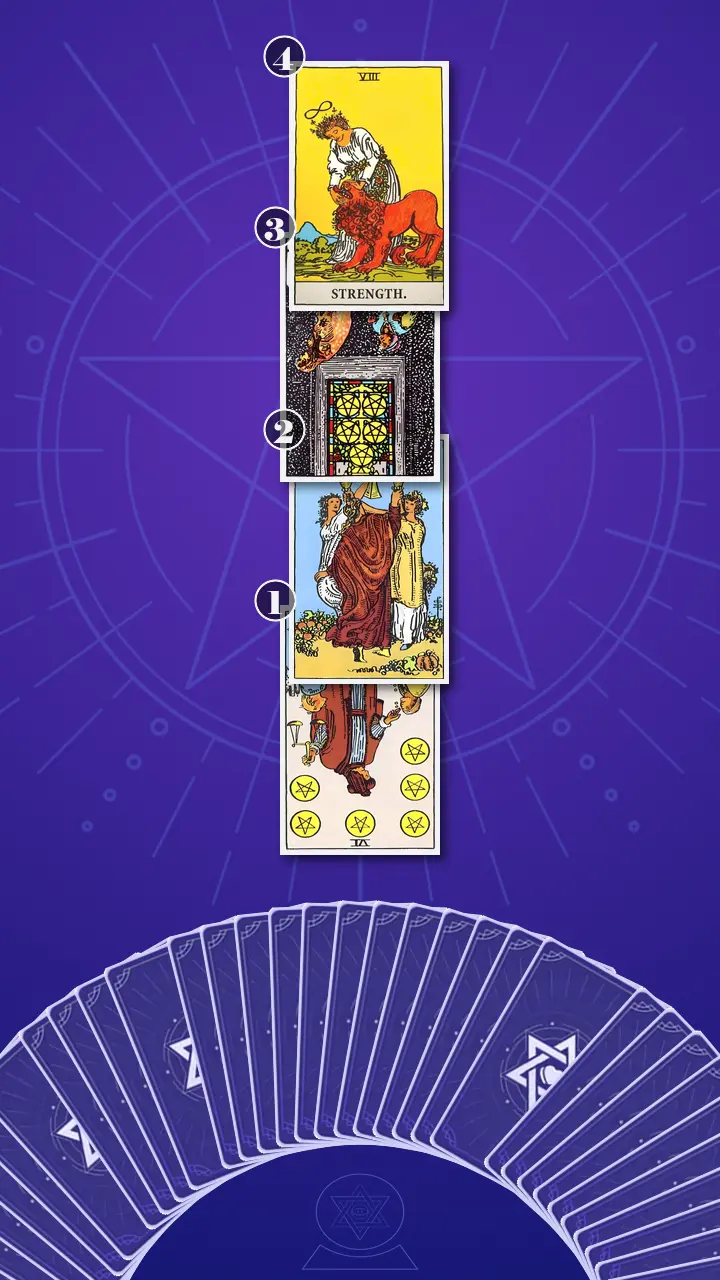
For her question, I chose The Shadow Spread, a compact four-card tarot spread for friendship belonging, visibility, and those group photo triggers that can leave you feeling stuck later. I chose it because the issue was not photography. It was a recurring inner bargain between belonging and self-protection. This spread gives me a clean logic chain with almost no noise: surface behavior, hidden need, shadow fear, and integration.
I explained the structure simply. The first card would show the visible coping pattern—the social mask that appears in the first few seconds. The second would reveal the feeling underneath it. The third would uncover the fear keeping the whole loop alive. And the fourth, our key card, would show the more whole response: how to stay present long enough to ask plainly for a place instead of earning closeness through usefulness.
Reading the Map of Being the Useful One
Position 1: The Helpful Exit — Six of Pentacles Reversed
I turned over the first card, the one that represents the observable coping move in this question: volunteering to take the group photo so she does not have to risk asking for inclusion. Six of Pentacles, reversed.
In modern life, this card is painfully specific. At brunch or a birthday, Maya clocks the social opening and immediately grabs the phone, fixes the angle, and gives everyone else a clean, easy moment to step into. It looks generous on the surface. But the exchange underneath is uneven: she trades her own place in the memory for the safety of being needed.
Reversed, the energy here is overextended and imbalanced. Too much giving. Not enough equal participation. The raised scales on the card always make me think of instant social math: How can I be useful enough to stay safe here? In my Social Pattern Analysis work, this is one of the clearest hidden interaction barriers I see. The second visibility rises, desire gets converted into logistics. Maya was not choosing photography. She was choosing control over exposure.
I said, ‘This is the inner sentence, isn’t it? If I make this easy, nobody has to answer whether they wanted me in it.’ She gave me a quick exhale and a wince-laugh. ‘Wow,’ she said. ‘That is accurate enough to feel rude.’ Then she shook her head. ‘I do this all the time.’ Her fingers started circling the rim of her glass, not quite restless, not quite still. The pattern had recognition on it now.
Position 2: The Wish Underneath — Three of Cups
I turned to the second card, the position that reveals the unmet need under the mask. Three of Cups, upright.
The whole tone of the reading softened. This card is friendship from the inside: raised cups, shared joy, mutuality, the feeling of being in the circle instead of managing it from the edge. In Maya’s world, it looked like overlapping laughter over shared fries, a rooftop birthday with sunset on everyone’s faces, the warm and very ordinary wish to be part of the photo dump afterward instead of being the unpaid producer of the hangout.
‘This is important,’ I told her. ‘Because it means the issue is not vanity. It is belonging. You are not trying to be the center of attention. You just want to be part of the memory too.’ Usefulness can hide longing. That is what this card does so beautifully in context—it translates the behavior out of self-judgment and back into a normal human need.
Her expression changed before she said anything. Her forehead smoothed. Her mouth lost that practiced little smile. Then she looked down at the card and said, almost under her breath, ‘I hate how relieved that makes me feel.’ I smiled. ‘Relief is information. It means we are closer to the truth.’
Position 3: The Doorway She Assumed Was Closed — Five of Pentacles Reversed
I turned the third card into the shadow position, the one that uncovers the deeper fear: that asking for a place may expose a lack of belonging. Five of Pentacles, reversed.
This card always catches me in a sensory way. I spent years training my nose to notice what lingers in shared air, and the Five of Pentacles feels like standing just outside warmth you can almost smell and still moving as if the door were locked. The stained-glass window in the image is the whole story. Support may be nearby. Space may be available. But shame can make a person walk past the light as though exclusion has already been confirmed.
For Maya, the modern version was brutally familiar. Even when the group would probably make room, she had already started the mind-reading spiral: They probably do not care. It will be awkward. Do not make it a thing. It was like reading a typing bubble as a verdict before the message had even arrived. The risk was never the photo. It was being visible enough to ask.
Reversed, this card suggests blocked recovery. The warmth is not absent; it is hard to trust. That is why the sadness lands later—on the streetcar home, scrolling tagged photos in the window reflection, hearting everyone else’s slide in the carousel while noticing she is missing from it again. She is not only hurt by the absence. She is hurt by how quickly she assumed there was no room.
She went through the kind of three-part reaction I have learned to respect. First, a tiny physical freeze—her breath paused halfway in. Then the recognition sank below words—her gaze unfocused, as if replaying some rooftop or patio scene in fast-forward. Then the feeling arrived—she pressed her thumb into the side of her cup and let out a low breath. ‘This part hurt,’ she said. ‘Because I do pre-reject myself. Instantly.’
When Strength Kept Her in the Frame
Position 4: The Integration Point — Strength
When I turned the final card, the room changed. Late afternoon light moved across the table, and the cedar on a blotter strip near my notebook lifted as if the air itself wanted to underline the moment. This was the card crowning the spread, the antidote, the new response. Strength, upright.
When people ask me how tarot works in real life, this is the kind of moment I mean. A card does not descend to make you fearless. It gives language, structure, and a usable next move. Strength is not social performance. It is gentle courage, self-compassion, and permission to be visible.
I looked at the woman’s calm hand on the lion and thought, as I often do in perfumery, about the difference between a top note and a base note. The first hit is not the whole composition. Heat in the face is not the whole truth. A tight chest is not the whole truth. The body can flare without being the final authority.
I said, ‘You know that split second at brunch or a birthday when everyone leans in, the phone comes out, and your hand moves before your heart gets to answer what it actually wanted.’
You do not have to vanish to keep the moment comfortable; ask for your place and let Strength's gentle hand on the lion teach you that soft courage is stronger than self-erasure.
I let the sentence stay in the air for a beat, then added, ‘You do not have to turn yourself into the tripod to belong. Sometimes the bravest social move is one plain sentence that lets you stay in the frame.’
What came over Maya was not instant relief. First her jaw tightened. Then her fingers hovered at the sleeve of her sweater. Then came the pushback, quick and sharp: ‘But if I have to ask, doesn’t that mean it was never naturally mine?’
I answered her without rushing. ‘No. It means you are letting the moment become mutual instead of deciding the answer before anyone else gets a vote. Belonging is relational. It is not less real because you participated in it.’
That hit somewhere deeper. Her eyes glossed slightly. Her shoulders dropped a fraction. She pulled in one breath, then another, like her nervous system had been working with old data and had just been handed an update. I said, ‘Try this sentence inside the moment: My body can be loud without making the decision for me. That is Strength. Staying, not performing.’
Then I invited her to use the new lens immediately. ‘Now, with this perspective, can you think of a moment from last week that would have felt different?’
She nodded. ‘Thursday. Rooftop birthday. I grabbed the phone so fast it was almost funny. And I remember thinking that if I asked to be in it too, it would prove I cared more than everyone else.’ She stopped, and a shaky little laugh escaped. ‘Which I did. I did care.’
‘Exactly,’ I said. ‘And this is the key shift: from protective self-erasure and friendship belonging anxiety to gentle courage and visible participation. Not a total reinvention. Just one step from pre-rejecting yourself to staying present. From earning belonging to participating in it.’
Before we left the card, I gave her something concrete. ‘Within the next ten minutes, put one low-pressure line in your notes app: “Can someone get one with me in it too?” Then say it out loud once, slowly. Notice your chest, your jaw, your hands. If it feels too activating, stop there and come back later. The goal is not to force yourself into a moment. The goal is to practice not abandoning yourself the instant visibility shows up.’
From Tripod to Participant: Actionable Advice for the Next Social Moment
With all four cards on the table, the storyline was clean. First came the visible pattern: become the photographer, the planner, the dependable one, the person who makes everything smooth. Under that sat the real truth: the wish to be included without having to earn it. Under that was the blind spot: Maya kept treating belonging like a scarce resource and answering on other people’s behalf before they had even answered for themselves. The transformation direction was not to become louder, cooler, or impossibly unbothered. It was to interrupt the automatic service role, name one small inclusion need out loud in real time, and stay in the frame one breath longer.
I said the blind spot plainly because clarity needs plain language. ‘Part of you believes that if a place is truly yours, you should not have to ask for it. But adult friendship does not work like a perfect algorithm. Sometimes closeness grows because you let the moment be mutual instead of silently managing it from outside the frame.’
Maya made a face. ‘But I do this so fast,’ she said. ‘Sometimes I honestly do not even feel like I have five seconds.’ I appreciated that response. It was real. It also meant we could build advice she might actually use.
‘Then we go smaller,’ I told her. ‘No personality overhaul. Just one interrupted reflex.’
- The Ten-Second PauseAt one social event this week, when someone says “photo” or any group task appears, keep both hands off your phone for one full breath—up to ten seconds if you can. Notice who naturally reaches in when you do not instantly become the organizer.Treat the pause as data gathering, not a confidence test. If ten seconds feels huge, begin with one breath and stop there.
- The Soft Courage SentenceUse one direct line in a low-stakes moment: “Can someone get one with me in it too?” If somebody hands you the phone, hand it back once and say, “Wait, I want one in it too.”Keep the sentence ordinary. No apology, no speech, no over-explaining. The smaller it sounds, the easier it is for your nervous system to let it be normal.
- The Body-Cue and Scent AnchorBefore you speak, silently name three body cues—tight chest, hot face, fidgety hands—then exhale once. I suggested a skin-close cedar-and-citrus wrist spray, my way of blending professional presence enhancement with woody accords and social energy renewal with cleansing citrus, so her body had a sensory reminder to stay rather than disappear into a helper task.The scent is not there to make you more impressive. It is there to give your system one steady cue: visible does not mean unsafe.
That final step is one of my favorite bridges between insight and action. In fragrance, sillage is the trail something leaves in shared air. In social life, presence works similarly. Maya had been leaving usefulness instead of herself. I wanted her next social moment to carry a different message back to her own body: soft courage is staying in the frame one breath longer.

A Week Later: The Quiet Proof
Four days later, Maya texted me after a team patio night downtown. ‘Team photo,’ the message began. ‘I did the pause. Someone else grabbed the phone. Then I said the sentence. I was in it.’ A beat later she sent another: ‘My face was hot the whole time lol, but I stayed.’
I loved that update because it was not cinematic. It was better than cinematic. It was usable. This is what The Shadow Spread tarot reading for friendship belonging and visibility can do at its best: not hand someone a new personality, but help them make one different move inside a familiar trigger. Later she told me she sat alone in a coffee shop looking at the photo for a few extra minutes—half relieved, half disbelieving—because the old script was still there, whispering, Was that okay? But this time it was only a whisper.
That is how I think about a real journey to clarity. Not certainty. Not social perfection. Just the first honest proof that you can move from self-erasure to visibility, from being the useful one by default to being a participant on purpose.
If you know that private, chest-tightening moment too, I want to leave you with this: sometimes the loneliest part is not other people leaving you out, but stepping out of the frame before anyone has even answered whether there was room. And if you let yourself stay in that tiny visible moment for one breath longer next time, what is one plain sentence you might say so someone else can hold the phone, and you can be part of it too?