That Group-Chat 'LET'S GOOO' Moment—When You Stop Adding 'But'

Minimizing Your Wins When Friends Celebrate You (and Why Praise Feels Unsafe)
If your friends hype your win in the group chat and you instantly answer with “lol it was nothing” because compliment deflection feels safer than being seen… you’re not alone. And you’re not “bad at taking compliments.” You’re doing something your nervous system thinks is smart.
Jordan (name changed for privacy) met me over a video call from their Toronto condo, the kind with the permanently-in-use kitchen island and the faint glow of a laptop that never fully closes. They angled their phone toward the window without thinking—streetcar bells were soft in the distance, and the fridge did that steady hum that makes silence feel even louder.
“It keeps happening,” they said, rubbing their thumb over the edge of their phone case like it was a worry stone. “My friends are genuinely excited for me, like full ‘LET’S GOOOO’ energy. And I… shrink it. I make it smaller. I crack a joke. It’s like I hit undo-send on pride.”
They described Wednesday at 9:41 p.m.: thumbs hovering over the group chat, typing I got the offer, then editing it into something safer—lol don’t get excited, it’s probably not a big deal. The moment they hit send, their throat tightened like they’d swallowed a zipper halfway up. Not panic exactly—more like a body-level alarm that said: don’t take up space.
“I want to be seen,” Jordan said, voice quiet with that particular kind of embarrassment that isn’t about shame as much as exposure. “But being seen feels… risky. Like if I accept it, I’m inviting judgment. Or jealousy. Or a fall.”
I nodded, letting the words land between us. I’ve spent years training my nose to catch what’s present even when it’s faint—how fear can hide under humor the way bitterness hides under sugar. “We can work with that,” I said gently. “Not by forcing you to be louder. By finding clarity about what you learned, and giving you one safer way to stay in the moment when the spotlight hits.”

Choosing the Compass: How the Five-Card Line Tarot Spread Works Here
I asked Jordan to take one slow inhale, one slow exhale—not as a ritual for the universe, but as a clean transition from spiraling to observing. While I shuffled, I spritzed a single cleansing citrus spray into the air beside my desk. It’s a tiny sensory reset I use in sessions: bright, brief, not performative—just enough to remind the body, we’re here, now.
“For this,” I told them, “I want to use a Five-Card Line tarot spread.”
For you reading this: the reason I like the Five-Card Line for questions like Why do I minimize my wins when friends hype me up? is that it stays honest and practical. It maps a full psychological loop without turning the reading into a personality label or a prediction. It gives us: the reflex in the moment, the past script behind it, the hidden driver keeping it alive, the inner skill that changes the relationship to praise, and one real-world practice you can try this week.
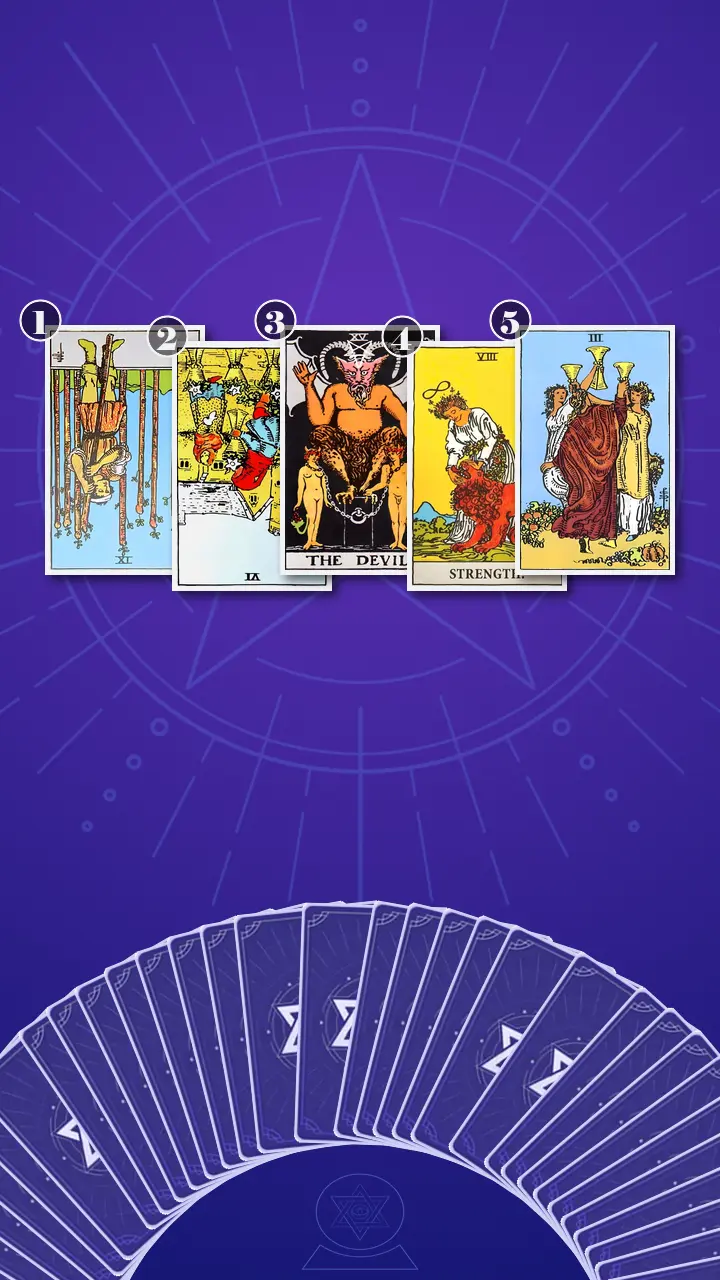
I pointed to the imagined layout between us—left to right, like a timeline you can actually follow. “Card one is your present-day reflex when friends hype you. Card two is what the past taught you to do with praise. Card three sits in the middle as the unseen engine—the core fear or attachment. Card four is the key reframe—your inner capacity. And card five is the grounded next step, socially—how to practice receiving in community.”
Reading the Map: Compliment Deflection, Old Rules, and Safer Visibility
Position 1: The reflex—what you do within five seconds
“Now I turn over the card that represents your present-day reflex when friends hype your win—the specific minimizing behavior,” I said. “Nine of Wands, reversed.”
In everyday life, this is exactly what Jordan had described: your friends are genuinely excited for you, but your body reacts like you’re about to be singled out in a way that turns sour. You read “SO PROUD OF YOU” and immediately go into guard mode—typing a reply that shrinks the win (luck, timing, “not a big deal”) so no one can ‘come for you’ later.
Reversed, the Nine of Wands isn’t “no resilience.” It’s over-resilience—a protective energy that’s become a little rigid. The card’s usual grit has turned into bracing. In energy terms, this is a blockage: you’re guarding in rooms that are already safe.
I leaned closer to the camera. “This is the moment you add the ‘but.’ ‘Thank you, but it was luck.’ ‘I’m excited, but let’s not jinx it.’ ‘I did it, but it’s not a big deal.’”
I let my voice soften. “A disclaimer is just fear in a polite outfit.”
Jordan’s reaction surprised me in the best way. They didn’t nod earnestly. They gave a small laugh that had teeth in it—half recognition, half surrender. “Okay,” they said, exhaling through their nose. “That’s… too accurate. Even feels kind of brutal.” Their shoulders stayed high, but their eyes relaxed like someone finally describing the weather they’ve been living in.
Position 2: The learned script—what the past taught you about being noticed
“Now I turn over the card that represents what the past taught you to do with praise—the learned script,” I said. “Six of Cups, reversed.”
This card is praise as a gift—someone offering something warm and uncomplicated. Reversed, it shows how receiving stopped feeling simple. In modern terms: a supportive moment in the present triggers an old social rule. Even if your current friends are safe, your nervous system treats celebration like it comes with strings—pressure to stay perfect, teasing, comparison, or the sense that standing out will cost you something later.
As I spoke, a flashback feeling passed through Jordan’s face—not a specific story they had to confess, just a familiar vibe. The kind you can smell in the air of a school hallway: that metallic mix of fluorescent lights and other people’s opinions. The kind you can taste at a family dinner where praise can turn into comparison with one sideways comment. Your body learned “don’t make a fuss” before you had words for it.
“Receiving is a skill, not a personality test,” I said. “Somewhere, you learned that the safest way to keep the room smooth was to stay modest. Shrink first. Don’t invite reaction.”
Jordan blinked a few times and looked down, like they were watching an old clip on mute. “Yeah,” they said quietly. “I don’t even know the exact moment. It’s just… a rule. Like an old workplace policy that’s still running on my system even though I changed jobs years ago.”
That was the click we needed: this isn’t about their friends. It’s about an old rule time-traveling into a new room.
Position 3: The engine—what keeps the pattern locked in place
“Now I turn over the card that represents the unseen driver that keeps the minimizing pattern in place—the core fear or attachment,” I said. “The Devil, upright.”
The Devil is never my “doom” card. It’s my attachment card. It says: something feels compulsory, but the chains are looser than you think.
I offered Jordan an image using what I call my Social Pattern Analysis lens—diagnosing hidden interaction barriers. “In your social world,” I said, “it’s like you have two tabs open.”
“Tab A is the real moment: your friends cheering, your group chat going ‘main character moment,’ your manager saying ‘great work.’”
“Tab B is the imagined court of public opinion: someone rolling their eyes, someone feeling jealous, someone waiting to humble you. You’re reacting to Tab B while standing in Tab A.”
Jordan’s mouth opened slightly, then closed. A sharp exhale. A pause that wasn’t empty—more like a door unlatching. “Image-management autopilot,” they said, almost to themselves.
“Exactly,” I replied. “You’re not minimizing because your win isn’t real. You’re minimizing because you’re managing an invisible audience.”
I watched Jordan’s jaw flex. The Devil here is a fixation—an energy of control that feels like safety. And it works, short-term. You shrink the win, you exit the spotlight, your body gets relief. But there’s a long-term cost: Staying small feels safe—until it starts costing you your own evidence.
Jordan nodded once, slow. “And then my friends don’t know how to celebrate me,” they added. “It’s like I shut the door while they’re holding balloons.”
“That’s the hidden interaction barrier,” I said gently. “Not that they’re unsafe—just that your autopilot keeps you from staying in connection when you’re the one being held.”
Position 4: The antidote—how to receive recognition without shrinking
Before I flipped the next card, I felt the room change—even through the screen. The air got quieter, like when you pause a podcast mid-sentence because something finally matters more than the noise.
“Now I turn over the card that represents the inner capacity that helps you receive recognition without shrinking—the key reframe,” I said. “Strength, upright.”
Setup: Jordan knew this moment too well: group chat exploding with love, their fingers automatically typing “lol it was nothing”—like they’re trying to defuse the spotlight before it can turn on them. In their mind, receiving praise wasn’t neutral. It was a risk assessment.
Delivery:
Not ‘I must downplay this so no one turns on me,’ but ‘I can soften my grip and stay present’—like Strength’s gentle hands on the lion.
Reinforcement: Jordan froze for half a second—breath caught mid-chest, like a laptop buffering on a truth it wasn’t sure it could load. Then their gaze went slightly unfocused, not dissociating, just replaying recent moments: the Slack praise in a public channel, the friend voice note, the instinct to minimize. Their shoulders dropped a fraction, and their hands—until then gripping their phone—loosened as if they’d remembered the phone wouldn’t fall if they didn’t clamp down.
“That’s… different,” they whispered. Not relieved like a movie ending—more like someone stepping onto a balcony after being in a loud room, blinking at the air. Their eyes watered, but they didn’t cry. Their jaw unclenched, then tightened again, then unclenched—three small waves, like the body negotiating a new option.
I stayed with them, calm. Strength is regulated power. It’s not hype. It’s not bravado. It’s calm self-respect under attention.
This is where my perfumer brain always shows up: people assume confidence has to project. But in fragrance, projection is a choice. Sillage—the scent trail you leave—isn’t about shouting. It’s about presence. Too much, and you overwhelm a room. Too little, and you disappear even when you want to be noticed. Strength is that middle: soft hands, steady breath, a grounded “thank you” with no performance.
“You can accept the hype without auditioning for humility,” I said.
Then I asked the question I always ask when Strength appears: “Now, with this new lens—soft hands, steady breath—can you think of one moment last week where this would’ve changed how you felt? Even by five percent?”
Jordan swallowed. “Yesterday,” they said. “My friend wrote ‘I’m SO proud of you.’ And I answered with ‘stop, you’re being dramatic.’ I could’ve just said… thank you.”
“That’s it,” I said. “This card marks a very specific emotional shift: from compliment deflection and visibility anxiety to grounded pride and calm self-trust under attention. Not overnight. But as a practice.”
Position 5: The social practice—how to make it real with friends this week
“Now I turn over the card that represents a concrete way to practice healthier receiving with your friends this week,” I said. “Three of Cups, upright.”
This is the corrective experience, plain and simple: celebration as a safe container. In modern terms, it’s you staying in the group chat long enough to actually feel supported instead of disappearing behind a joke.
I painted it Toronto-realistic, not Pinterest-perfect. “This looks like a quick patio drink on Dundas, bubble tea, a walk by the lake, or even a ten-minute FaceTime,” I said. “A small ‘celebration container.’ Not an event. A moment.”
“And when they hype you,” I continued, “you don’t pivot away in two seconds. You let it be mutual. You say thank you. You stay present for thirty seconds. Then, later, you can toast them back—without shrinking yourself to do it.”
Jordan smiled—small, but real. “I can do thirty seconds,” they said, like someone agreeing to a manageable workout plan. “Thirty seconds sounds… human.”
The One-Sentence Thank-You: Actionable Next Steps for Finding Clarity
I slid the whole line of cards together in my mind—because tarot is at its best when it tells one coherent story, not five disconnected meanings.
Here’s what the Five-Card Line showed us: your present reflex (Nine of Wands reversed) is guard mode—bracing as if praise equals threat. Under it is an old receiving script (Six of Cups reversed)—a learned rule that “don’t make a fuss” keeps relationships safer. The engine in the middle (The Devil) is image-management autopilot—trying to control reactions from an invisible audience. Strength is the hinge: soft, regulated self-trust that can hold attention without gripping for control. And Three of Cups is the new behavior: letting friends celebrate you in a small, socially safe way.
The cognitive blind spot isn’t “I’m humble.” It’s: you’re acting like you’re in trouble when you’re being loved. The transformation direction is simple and brave: move from pre-emptively shrinking the win to naming it plainly once, without qualifiers, and letting it land for ten seconds.
Here are the micro-steps I gave Jordan—clean, doable, and built for real life (not perfect moods):
- The No-‘But’ Thank YouIn your next hype moment (group chat, in-person, or a Slack compliment), reply with one clean sentence: “Thank you—yeah, I worked hard for that.” Then stop. One full breath before you add anything else.If “cringe” spikes, treat it as the old safety rule talking. You’re not making a speech—you’re completing the moment.
- Ten-Second Let-It-Land PauseRight after you say thank you, do a 10-second pause: feel your feet, unclench your jaw, and notice the urge to deflect without obeying it.Make it smaller if needed: do three seconds. The point is proof that you can stay present without managing the room.
- A Celebration Container (Three of Cups)Pick one low-stakes celebration this week—a quick drink, bubble tea, a walk, or a call. Tell one friend: “I want to celebrate this without me downplaying it—can you help me practice?” Stay in the moment for 30 seconds when they hype you.Choose someone safe. If you start to spiral, you can say, “I’m taking this in—give me a second,” and pivot after you’ve received.
And because I’m me—and scent is a language your body believes faster than your brain—here’s the optional sensory anchor I offered Jordan using my First impression calibration through sillage control strategy: choose a grounding woody accord (cedar, sandalwood, vetiver—something steady). Wear it only on days you’re likely to be praised (presentation day, offer day, performance review day). Not to “be confident,” but to cue the body: we can be present without gripping.

A Week Later: Ownership, Not Certainty
A week after our session, Jordan messaged me a screenshot—just a slice of their group chat. Someone had written, “LET’S GOOOOOO you deserve this.”
Jordan’s reply was almost comically simple: “Thank you—yeah, I worked hard for that.” No joke. No disclaimer. No quick pivot. Under it, they’d typed to me: “My chest went tight. I did the ten seconds anyway. Then it passed.”
They added one more line: “I still woke up the next morning and my first thought was ‘what if I jinxed it?’—but I noticed it, and I didn’t edit myself down.”
That’s the real proof of this kind of clarity: not a perfect new personality, but a new option in the moment. The Five-Card Line tarot spread didn’t tell Jordan who to be. It showed them where the lock was—and what key actually fits: calm self-respect under attention, practiced in small, human doses.
When the spotlight finally lands on you, it can feel less like warmth and more like a trap—so you shrink your win first, just to make sure you’re still safe.
If you didn’t have to earn your safety by staying small, what’s one win you’d let land for ten quiet seconds this week?