Stuck After Close Friends Removal—And a Way Out of Scan Mode
Finding Clarity in the L Train Glow
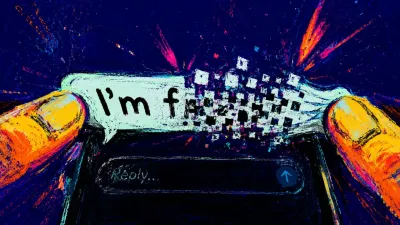
If you’ve ever watched the green Close Friends ring disappear and immediately started replaying your last few DMs like you’re doing a post-mortem, you’re not imagining how hard that hits (Close Friends removal).
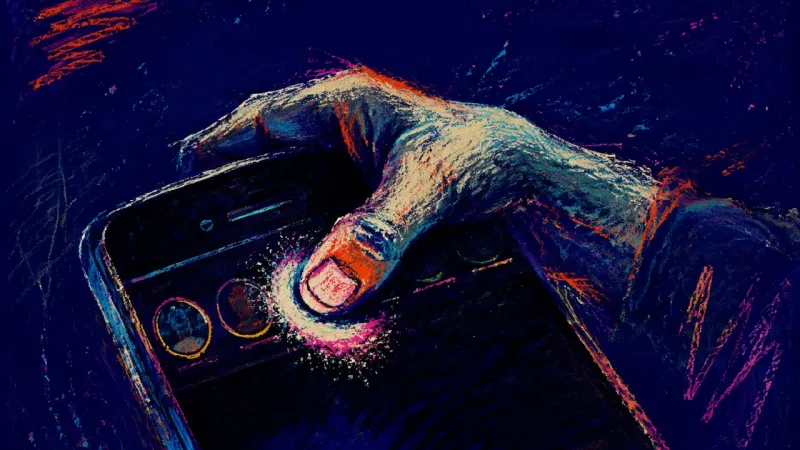
Maya (name changed for privacy) met me on a video call from her apartment in New York City. I could see the soft blue cast of her laptop screen on her cheekbones, like she’d been lit by a phone for hours. She told me it happened on the L train—8:53 PM, metal-smell air, someone’s takeout fogging the car—one hand on the pole, the other scrolling. A mutual friend’s Story had the green ring. Her stomach went cold and dropped in one clean motion, like an elevator cable snapped.
“It’s so stupid that a green ring can ruin my day,” she said, but her laugh didn’t land. Her chest looked tight even through a hoodie. She kept touching her phone, then stopping herself, then touching it again—as if the device was both the bruise and the bandage.
Under the words, I heard the engine: craving to feel included and chosen vs. fear of being quietly rejected and therefore “not important.” The shame wasn’t loud; it was precise. It made her want to look unbothered while privately hunting for proof.
“We can work with this,” I told her. “Not to make you ‘not care’—that’s not the point. Let’s try to turn this into clarity: what’s actually happening, what story your nervous system is writing, and what your next step can be without outsourcing your worth to an app.”
Choosing the Compass: The Four-Layer Insight Ladder
I asked Maya to take one slow breath in, and a longer breath out—nothing mystical, just a way to signal to her body that we were moving from reaction to reflection. Then I shuffled, listening to the soft slap of cardstock the way I listen to the planetarium projector warming up: a familiar, steadying sound that says, we’re about to look at the whole sky, not just one bright point.
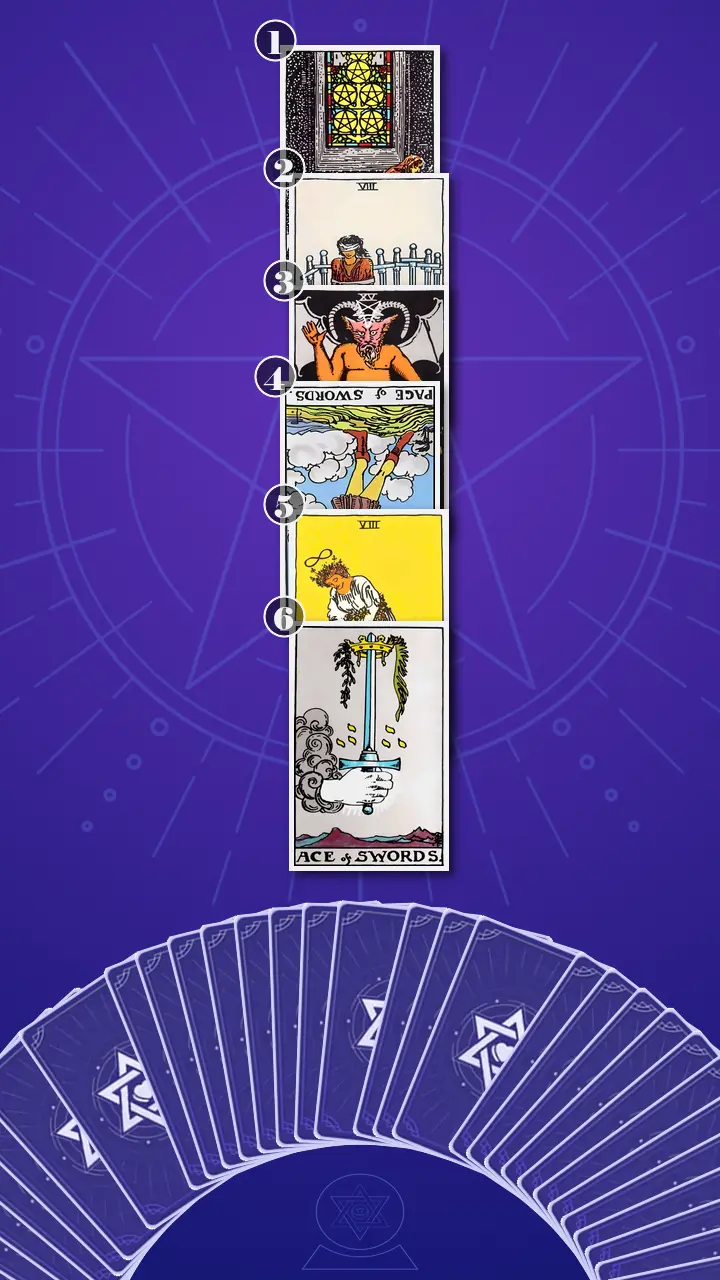
“Today we’ll use a spread called the Four-Layer Insight Ladder · Context Edition,” I said. “It’s a linear tarot spread for clarity and boundaries—especially when something modern and ambiguous, like Instagram micro-exclusion, triggers a deep self-worth bruise.”
For anyone reading: this is why the structure works for this exact question. It doesn’t try to predict what the other person ‘really meant.’ Instead it maps the inner mechanics—surface wound → mental bind → root driver → protective coping → turning-point medicine → one practical integration step. When someone is feeling rejected and spiraling after being removed from Instagram Close Friends, that map matters more than a timeline.
“Card one will name the exact bruise—the exclusion moment,” I told Maya. “Card three will show what’s underneath it—the deeper fear. Card five is the turning point: the medicine. And card six gives us one clean next step.”
Reading the Map: When a UI Change Becomes a Verdict
Position 1 — Surface impact: the exclusion moment
“Now flipped over is the card representing Surface impact: the specific ‘exclusion moment’ and the immediate self-worth bruise it triggers,” I said.
Five of Pentacles, upright.
I angled the card toward the camera. “This is the scene your body keeps replaying. Two figures outside a warm stained-glass window. That contrast—visible warmth you can’t access—is exactly what Close Friends exclusion feels like.”
I used the modern translation plainly, because it’s the clearest bridge: “You’re on your couch after work, half-eating takeout, and you realize the green Close Friends ring is gone. It’s not dramatic on paper, but it lands like being left outside a party you can literally see through the window. You can see the warmth… but you can’t touch it—and your brain starts narrating that gap as ‘I’m not wanted.’”
The Five of Pentacles is Earth energy in a hard mode: scarcity, cold, the body believing it’s been left out in the weather. In Maya, it wasn’t abstract. It was the sinking stomach, the tight chest, the restless urge to check for more evidence.
Maya let out a small, bitter laugh—one that sounded like it surprised her. “That’s… brutal. Like, accurate, but brutal.” Her thumb hovered over her phone on the desk, then pulled back like she’d touched something hot.
“It’s not the green ring,” I said gently, “It’s the meaning your brain assigns to losing it.”
Position 2 — The mental bind: the thought pattern that turns ambiguity into a verdict
“Now flipped over is the card representing The mental bind: the thought pattern that turns ambiguity into a verdict about you,” I said.
Eight of Swords, upright.
“This is what happens the second after the Five of Pentacles sting,” I explained. “The moment you notice the change, your mind closes like a trap: you assume there’s only one explanation, and it’s the one that hurts.”
I watched Maya’s eyes flick away from the camera, like she was seeing her own screen in her head. “You start policing your vibe—what you post, how you text, how quickly you respond—like one wrong move will confirm you’re ‘too much.’ It feels like you can’t move without making it worse, so you freeze and obsess.”
Energetically, the Eight of Swords is Air in a deficiency-and-blockage combo: thoughts without oxygen. The blindfold isn’t just ‘not knowing.’ It’s thinking you know, and thinking it’s bad. The loose bindings say: you’re not truly trapped—but when you’re activated, it feels like you are.
In my mind I flashed to the planetarium dome: a laser pointer looks like a straight truth until you realize the dome curves. On a curved surface, a straight line can mislead you. Social media cues are like that—projected, distorted, easy to misread when you’re already braced for impact.
Maya swallowed. “The sentence is: ‘I’m not important.’ And then I… I start doing the thing.” Her gaze dropped to the phone again. “The checking.”
Position 3 — Root driver: the deeper attachment underneath the reaction
“Now flipped over is the card representing Root driver: the deeper attachment or fear underneath the reaction,” I said.
The Devil, upright.
“This is the engine,” I told her, keeping my voice steady. “This is the part where Close Friends becomes a status meter. You’re not just missing stories—you’re craving the receipt that you’re chosen.”
I leaned into the modern metaphor because it’s what makes this card practical, not scary. “The chains here are loose. They’re not welded. They’re more like notifications and access—tiny pings that say ‘in’ or ‘out.’ The feature isn’t evil; the attachment is what hurts.”
Maya’s face tightened with recognition. “You don’t miss them—you miss the proof,” she repeated quietly, like she was testing how it felt in her mouth.
“Exactly.” I kept it blunt-but-kind. “Refreshing Stories can turn into pulling a slot machine lever for a hit of ‘maybe I still matter.’ Pull—refresh. Pull—refresh. Sometimes you see something that feels like a payout. Most of the time you feel worse. That’s not because you’re dramatic. It’s because your nervous system is trying to convert uncertainty into certainty.”
Here’s where my research brain and my occult brain always meet: patterns repeat across scales. I said, “One of my diagnostic tools is what I call Cosmic Redshift Communication—noticing early signs of distance in relationships. The tricky part? Social media can create false redshifts. A setting changes, the ‘signal’ looks like they’re moving away, and your brain treats it as astronomical proof.”
“But you don’t have enough data,” I continued. “And The Devil shows the deeper fear beneath the data hunt: ‘If I’m excluded, it proves I’m replaceable.’ That’s the chain.”
Maya’s jaw flexed. “I hate that I’m measuring my value with someone else’s settings.” Her eyes watered, then she blinked fast, as if blinking could keep the feeling from becoming real.
Position 4 — Protective coping: the control move that keeps the loop alive
“Now flipped over is the card representing Protective coping: what you do to regain control in the moment that unintentionally keeps the loop alive,” I said.
Page of Swords, reversed.
“This is The Watcher,” I told her. “You become the inner reporter. You refresh Stories in short bursts, check their profile ‘just once,’ scan mutuals for the green ring, and reread your last DM like it’s a transcript.”
I zoomed in on micro-actions, because that’s how you make a loop visible: “Face ID. Thumb already typing their handle. Sound off. Tap-tap-tap through Stories. Then back to the DM thread—scanning punctuation like it’s evidence. You call it being careful, but your nervous system is on high alert—collecting data that never becomes clarity.”
“Checking isn’t clarity. It’s a way to borrow control for 30 seconds.” I let that sit.
The Page of Swords reversed is Air in excess: too much scanning, not enough understanding. In the Eight of Swords you feel stuck; in the reversed Page you try to move by gathering more information—but the movement is jittery, circular.
Maya nodded, then stopped herself and exhaled sharply, like she’d been caught. “I literally do the punctuation thing,” she said. “I zoom in on a period like it’s proof I sounded ‘too much.’” Her laugh came back, smaller and more tender. “I have, like… twelve mental tabs open and none of them answer the question.”
“That’s the bind,” I said. “Control looks like more checking. Clarity looks like fewer checks and more facts.”
When Strength Spoke: Holding the Lion Instead of the Phone
Position 5 — Turning-point medicine: the inner quality that restores agency
I slowed down before turning the next card. Even over video, I felt the atmosphere shift—like when the planetarium lights dim and the room quietly agrees to pay attention.
“Now flipped over is the card representing Turning-point medicine: the inner quality that directly loosens the core fear and restores agency,” I said.
Strength, upright.
I showed her the image: the gentle hands on the lion, the infinity symbol, the calm posture. “This is not about being tough. This is about being steady without erasing yourself.”
I grounded it in her actual life: “Instead of trying to win your way back in, you pause and take care of the part of you that’s embarrassed it cares. You feel the urge to check like a lion tugging the leash—real, intense, protective. Strength is you putting a hand on your chest, breathing out slowly, and choosing not to punish yourself for wanting to belong.”
Setup—because I could see she was right on the edge of the usual spiral: “When you spot the green ring is gone, you replay your last DM like it’s evidence in a trial. Your thumb hovers over ‘Send,’ your stomach drops, and you try to stare harder at the screen like it will tell you what you mean to them.”
Not “earn the green ring back,” but practice gentle Strength—hold the lion of rejection fear instead of letting it drag you into checking and proving.
Reinforcement hit in layers. Maya’s reaction wasn’t instant peace—it was complex, and it was real.
First, her body froze: her breath caught mid-chest, and her shoulders lifted as if bracing for a punch. Then the thought landed behind her eyes—her gaze unfocused, like she was replaying a moment on the L train: the green ring, the drop, the frantic tapping. Then emotion moved through: her face flushed with a quick flash of anger.
“But if I do that,” she said, voice sharper than before, “doesn’t that mean I was wrong? Like I made it a big thing and it wasn’t?”
I didn’t flinch. “It means you’re human,” I said. “And it means your nervous system did what nervous systems do: it looked for safety. The shame is the part that calls you ‘stupid’ for caring. Strength is the part that says: ‘I care—and I can still lead myself.’”
I offered her a tiny, concrete reset—because Strength has to be physical to be usable: “Put your phone face-down for two minutes. Just two. Then do six slow exhales—longer out than in. If it makes you feel worse, stop. This is optional. Then open Notes and make two columns: What I actually know vs What I’m assuming.”
As she listened, her shoulders dropped a fraction. She pressed her palm to her chest, almost unconsciously. Her exhale shook on the way out, then steadied. The lion didn’t vanish—but it stopped dragging her across the room.
“Okay,” she whispered. “That feels… different. Like I don’t have to perform or disappear.”
“That’s the pivot,” I said. “This is the move from shame-driven social-media surveillance to self-compassionate clarity and self-respecting boundaries. Not certainty. Leadership.”
And because my sky-language is how I make things stick, I added: “Another tool of mine is Binary Star System—how two bodies can get tidal-locked, always facing each other, always reacting. Your attention has been tidal-locked to their settings. Strength is you reintroducing orbit: you can be close without being trapped.”
I looked at her and asked the question I always ask after Strength: “Now, with this new lens—was there a moment last week where this could have changed how you felt?”
Maya blinked, then nodded slowly. “Sunday,” she said. “Netflix on, not watching. I kept hovering over their profile like… like I was pressing a bruise. If I’d done this, I think I would’ve muted them for a night instead of feeding it.”
Position 6 — Integration step: one clear, bounded next move
“Now flipped over is the card representing Integration step: one clear, bounded next action or communication choice that reflects self-respect,” I said.
Ace of Swords, upright.
“This is the clean blade,” I told her. “Not a dramatic confrontation. One precise truth that ends a week of decoding.”
I used the card’s lived translation: “You stop trying to decode the app and choose a bounded truth: either you send one simple check-in that doesn’t accuse, or you set a boundary that stops you from chasing ambiguous access. It’s clarity with self-respect—cutting the fog without making it a fight.”
And I gave her a decision threshold, because that’s how you turn insight into action: “If you can’t ask for clarity, then you don’t get to keep poking the wound all day. One clean question beats a week of decoding.”
The One-Week ‘Facts vs Assumptions’ Reset (Actionable Advice)
I pulled the whole ladder together for her in one short story, the way I’d summarize a night sky to visitors: “First, a tiny UI change lands like being left out in the cold (Five of Pentacles). Then your mind blindfolds itself and decides it must mean you’re not important (Eight of Swords). Under that is an attachment to proof—belonging as access (The Devil). To cope, you become The Watcher, collecting data for relief that lasts thirty seconds (Page of Swords reversed). Strength is the medicine: soothe the part that’s hurt before you try to solve the relationship. Then the Ace of Swords says: choose one clear move—ask, or set a boundary.”
“Your cognitive blind spot,” I told her, “is treating ambiguity as a verdict. The transformation direction is: reality-test the story, name the need, and choose a direct, bounded way to connect (or disengage) without outsourcing your worth to the app.”
Then I gave her the smallest possible next steps—things a tired NYC nervous system could actually do on a Tuesday.
- Strength Before Scroll (60 seconds)Before you open Instagram, do one long exhale (count 6 out) and name the feeling in one word—“shame,” “hurt,” or “panic.” Then choose intentionally: open, or don’t.Your brain may call this “cringe.” That’s the shame talking. Sixty seconds counts.
- The Facts-vs-Story Check (Notes app)Start a Note titled: “Facts vs Assumptions (Close Friends).” Each time you want to check, add one fact (e.g., “I’m not seeing Close Friends stories lately”) and one assumption (e.g., “They don’t value me”).Facts only means observable. No mind-reading. This is how to reality-test social media assumptions.
- The Two-Sentence Clarity TextDraft (and only if you choose, send) one message: “Hey—this is a little awkward, but I noticed I’m not seeing your Close Friends stories lately and I felt oddly stung. Are we okay?” If you don’t feel safe sending it, choose the boundary path instead: mute their stories for 72 hours.Outcome-light and non-accusatory. You’re asking for basic clarity, not begging for access.
A Week Later: Ownership, Not Certainty
Six days later, I got a message from Maya. Not a paragraph. Just a screenshot of her Notes app: two columns, messy but honest. Under “Facts,” she’d written: “No direct conflict. They replied normally yesterday.” Under “Assumptions,” she’d written: “I’m replaceable.” Under that, one more line: “That’s a feeling, not a fact.”
She didn’t tell me the friendship was magically fixed. She told me she slept through the night for the first time in a week—and in the morning her first thought was still, What if I’m wrong? But this time, she noticed the thought, breathed out, and didn’t open the app like it was an emergency.
That’s what a Journey to Clarity usually looks like in real life: not a dramatic glow-up, but a quiet reclaiming of attention. Strength first. Then truth you can live with.
When a tiny green ring disappears and your stomach drops, it’s not just “social media”—it’s that brutal split-second where you want to feel chosen, and your body hears, “You’re replaceable.”
If you didn’t have to earn access to be worthy today, what’s one small, clean choice you’d make—ask one honest question, or stop checking and give yourself back your attention?
Every reading at AceTarot is a journey to connect with inner wisdom and empower your next step. The stories shared here are psychological mirrors, not private records—crafted to reflect universal emotional loops and help you find your own clarity. Learn more about our Journey to Clarity.
Author Profile