From Boundary Guilt to Calm Follow-Through: Unlearning the Repair-Meme Reflex
The 9:06 PM iMessage Freeze
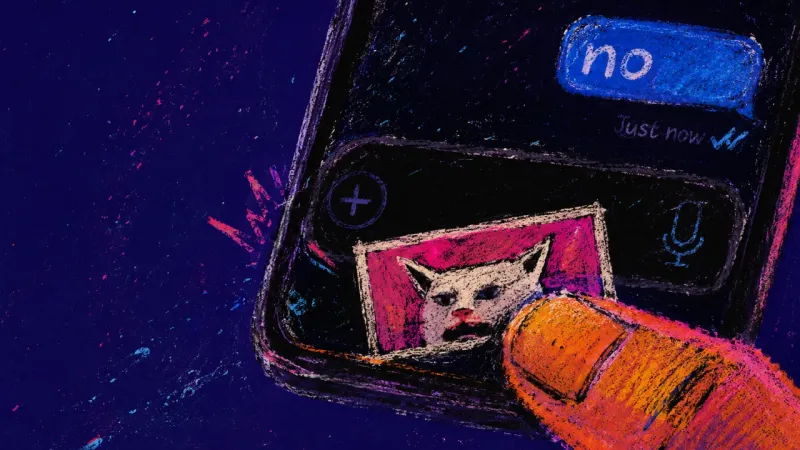
You say “no” to a friend, then immediately send a meme so they don’t think you’re mad—classic conflict avoidance over text.
Alex (name changed for privacy) came into my café in Toronto with that exact look I’ve learned to recognize over twenty years of pulling espresso for half-awake strangers: eyes bright from too much screen time, shoulders slightly lifted like they’d been bracing for impact all day.
They sat at the little table by the window where the streetlight always makes the napkins look a bit too white. Outside, a streetcar sighed through a turn. Inside, the air smelled like toasted sugar and dark roast. Alex set their phone down like it was hot.
“I told my friend no,” they said, and it came out fast, like ripping off tape. “And then I sent a meme. Like… instantly. I hate that I do that.”
They described the scene without me needing to ask: Wednesday night, 9:06 PM, condo couch. Laptop half-closed. Slack still popping with “quick question” messages. iMessage open, typed I can’t tonight, deleted it twice, added sorry!!, removed it. Hit send anyway.
“The second it went through, my chest did that tight thing,” they said, pressing a palm lightly to their sternum. “And my thumb was already scrolling my saved memes like… I was reaching for a fire extinguisher.”
The unease wasn’t abstract. It was physical—like their body had turned into a room with an alarm that wouldn’t stop chirping. Waiting for the typing indicator felt like standing over a dropped plate, listening for the shatter that hadn’t happened yet.
I nodded, letting the quiet be kind instead of rushed. “We can work with this,” I said. “Not by shaming the meme, and not by forcing yourself to become a different person overnight. Let’s make a map of what happens in those first sixty seconds—and how to find clarity inside that tiny, loud moment.”

Choosing the Compass: The Transformation Path Grid (6)
I slid a small glass of water toward Alex and asked them to take one slow breath—not as a ritual for mystery, but as a clean transition. Like wiping down the counter before the next customer. Like resetting the machine before the next shot.
While they breathed, I shuffled. The cards made that soft papery whisper that always reminds me of pastry bags and receipts—ordinary things that still carry a story.
“Today, I want to use a spread I built for situations exactly like this,” I told them, and also told you, because I never like to hide the structure. “It’s called the Transformation Path Grid (6) · Context Edition.”
This is how tarot works best for a real-life question like ‘Said no, then sent a meme—how do I stop conflict-avoiding?’: not by predicting what your friend will do, but by identifying the pattern, naming the fear underneath it, and turning insight into a practice you can actually do on a Tuesday night.
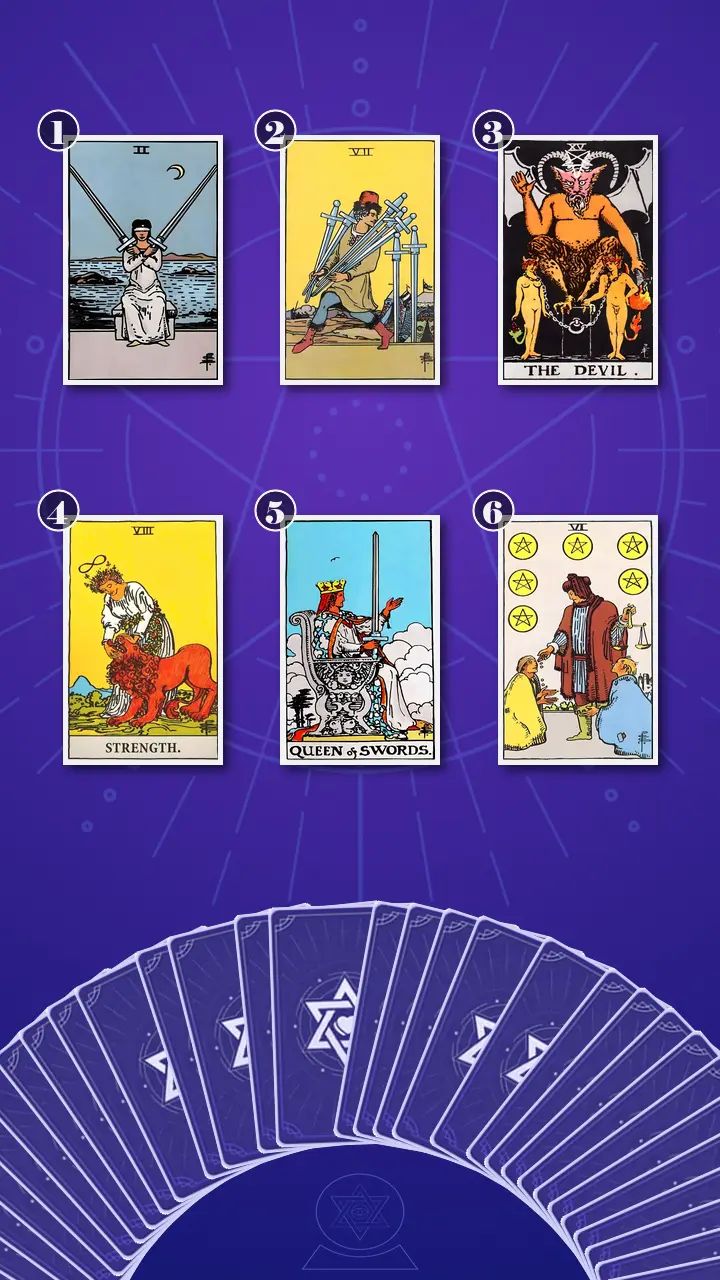
The grid is simple on purpose. The top row diagnoses the loop—present behavior → main blockage → root cause. The bottom row gives a change sequence—key shift → action step → integration. It keeps the focus on self-regulation, clean boundary language, and reciprocity in friendships, instead of spiraling into “what do they think of me right now?”
“Card one will show what your nervous system does immediately after you set the boundary,” I said. “Card two will name the exact habit that undermines the no. Card four—down here—will be the turning point: the capacity that makes directness possible.”
Reading the Map: From Freeze to Workaround
Position 1 — The Moment After Hitting Send
“Now we’re looking at the card that represents your present situation: the observable pattern right after you say ‘no’—the freeze, the monitoring, the impulse to manage tone,” I said, turning over the first card.
Two of Swords, upright.
It landed like a snapshot. “This is 9:12 PM in Toronto,” I said, deliberately using their real world, not a fantasy. “You’re on the couch with Slack still half-open, and you’ve just texted, ‘I can’t tonight.’ The message is sent—and then you go into freeze mode. Screen brightness too high. Thumb hovering. Heart doing that tight-chest thing. You keep reopening the chat to check if they’re typing, then you re-read your own sentence like it’s a legal document.”
I tapped the image lightly. “This card is often misread as ‘calm.’ But the blindfold and the crossed swords tell me something different: this is guarded neutrality. It’s not balance—it’s a brace. An effortful posture.”
In energy terms, it’s an Air-state of blockage: your mind trying to keep everything perfectly even, because you don’t want to feel what comes next.
“That post-no scramble isn’t you being dramatic—it’s your repair reflex,” I added, because naming it matters.
Alex let out a short laugh that had a bitter edge to it. “That’s… too accurate,” they said. “Like, kind of rude.” But they were smiling, and I watched their shoulders drop a millimeter—the relief of being seen without being judged.
“What feeling are you trying not to experience in the first sixty seconds after you set the boundary?” I asked.
They didn’t answer right away. Their gaze went slightly unfocused, like they were replaying a chat thread in their head. “Awkwardness,” they said finally. “And… the possibility they’re annoyed.”
Position 2 — The Habit That Keeps the No From Landing
“Now we’re looking at the card that represents your main blockage: the specific communication habit that keeps the boundary from landing cleanly,” I said, and turned over the second card.
Seven of Swords, upright.
“This is the workaround,” I said. “Right after the boundary, you send the meme. Or a ‘lol.’ Or a playful sticker so the vibe doesn’t get weird. You’re basically trying to smuggle reassurance into the conversation without saying, ‘Please don’t be mad at me.’”
I spoke it like a cinematic micro-scene, because that’s how this pattern works: fast, specific, automatic.
“You hit send on the no,” I continued, “and then—almost before you can breathe—you open your meme folder like it’s a toolkit. Your inner script goes: ‘I set a boundary.’ → ‘Now I have to make sure they don’t feel bad.’”
“And the meme isn’t evil,” I said, holding the nuance steady. “But here, it becomes strategy. It’s warmth being used as control. Not control in a villain way—control in a nervous-system way. You’re trying to steer their reaction so you don’t have to sit in uncertainty.”
In energy terms, this is Air in excess: cleverness, perception management, adjusting in real-time based on the typing indicator like it’s an emotional weather report.
Alex winced and nodded, once. Their fingers made a small restless movement toward their phone and then stopped, like their body had been caught mid-habit.
“I literally watch whether they react with the ‘😂’,” they admitted. “Like… it’s a grade.”
Position 3 — The Chain Under the Chain
“Now we’re looking at the card that represents your root cause: the deeper fear that fuels the behavior—approval as safety and belonging,” I said, turning over the third card.
The Devil, upright.
I didn’t soften it. I grounded it. “The meme isn’t the real issue,” I said. “It’s what the silence means in your nervous system.”
“A friend’s neutral pause feels like a social threat: ‘They’re pulling away.’ So you ‘pay’ for connection with extra friendliness, extra context, extra proof you’re still safe to be around.”
I pointed to the loose chains in the image. “This is important: the chains look tight, but they’re not locked. The pattern feels compulsory, but you’re not actually trapped.”
“It’s like your belonging is on a subscription model and you’re terrified of missing a payment,” I said, letting the metaphor land in the body. “So you over-deliver warmth to keep the account active.”
Alex went still. I saw the three-step micro-reaction unfold in real time: a tiny breath-hold (freeze), then their eyes shifting away from the card as if something inside clicked into place (cognition), and then a quiet release—barely audible. “Oh,” they said.
I kept my voice matter-of-fact, because this isn’t moral failure. “You’re not responsible for keeping the vibe comfortable while you’re uncomfortable,” I told them. “But your nervous system has been acting like you are.”
“If your friend is briefly disappointed,” I asked, “what’s the scary story your mind writes about what that means for your place in the friendship?”
Alex swallowed. “That I’m… difficult,” they said. “That I’m not worth the effort. That I’ll get quietly replaced.”
When Strength Held the Lion of Awkwardness
Position 4 — The Turning Point You Can Practice
I could feel the reading pivoting—the way the room changes right before a good espresso shot turns golden. The café was suddenly quieter, as if even the fridge hum had decided to be polite.
“We’re flipping the card that represents the key shift,” I said. “The inner capacity that transforms the pattern: staying present with discomfort instead of fixing it.”
Strength, upright.
Before I interpreted it, I watched Alex’s thumb hover above their phone again, almost unconsciously—like the body rehearsing the repair meme without permission. They caught themselves and pulled their hand back into their lap.
This is where my café brain and my tarot brain always meet. In espresso, there’s an optimal extraction time. Too short and it’s sour—unfinished. Too long and it’s bitter—overworked. Social moments have an extraction time too.
“I call this Social Espresso Extraction,” I said. “In different social contexts, there’s a moment where you want to pull the shot early—send the meme—because the heat feels scary. But if you end it too soon, you never get the full, stable flavor of your boundary.”
Strength isn’t force. It’s not becoming blunt. It’s a repeatable skill—that infinity symbol—of staying with the heat until it settles.
Setup: “You hit send on ‘no,’ your chest tightens, and suddenly the typing indicator feels like a verdict,” I said. “Your brain starts hunting for a way to make the moment less sharp—anything to avoid that spike of awkwardness.”
Delivery:
Stop trying to tame the moment with jokes—hold the lion of awkwardness gently, and your boundary can stay real.
I let the sentence hang, the way I let crema settle before I hand someone their cup.
Reinforcement: Alex’s face changed in layers. First, a tiny widen of the eyes—like they’d been told something obvious that no one had ever said out loud. Then their mouth tightened, not in disagreement, but in a kind of grief. Their shoulders, which had been creeping upward all session, dropped suddenly, as if the muscles finally got permission to unclench.
They went through a three-step reaction chain so cleanly I could almost chart it: their breath stopped for half a second (freeze), their gaze drifted to the window and the streetlight reflection on the glass (the mind replaying a recent chat), and then—an exhale that sounded like surrender and relief at once.
“But if I don’t make it funny,” they said, and there was a flash of irritation at themself, “it sounds harsh.”
I didn’t argue with them. I met the fear with steadiness. “Strength isn’t saying it harsher,” I said. “It’s staying present long enough to learn that awkwardness isn’t danger. Your body treats the pause like a cliff. Strength teaches your body it’s just… a pause.”
“Try this once,” I offered, keeping it practical. “After you send a clear no, set a 20-second timer. Put a hand on your chest. Inhale slowly, exhale slowly until the timer ends. If that feels like too much, do 10 seconds. No forcing. The goal is simply to experience the discomfort without immediately fixing it with another text.”
Then I asked the question that makes the insight real. “Now, with this new perspective—think back to last week. Was there a moment where you said no, and the silence hit, and this could’ve changed how you felt?”
Alex nodded slowly. “Tuesday,” they said. “Friend asked for a favor. I said no. They replied ‘ok.’ And I… spiraled for hours.” Their voice softened. “If I’d just held it for twenty seconds, maybe I wouldn’t have turned it into a whole storyline.”
I watched something shift: not into certainty, but into self-respect. This was the first step from post-no unease toward steadier connection.
Position 5 — The Queen’s Clean Sentence
“Now we’re looking at the card that represents your action step: how you can communicate in a clean, kind, sustainable way this week,” I said, turning over the fifth card.
Queen of Swords, upright.
“This is clarity with compassion,” I told them. “It’s being willing to be understood rather than liked in every single moment.”
And it’s specific in modern life: “You send one clear follow-up that doesn’t negotiate with the chat thread: ‘I’m not able to do that this week. Hope it goes well though.’ No extra paragraph. No apology spiral. No ‘I swear I’m not flaking.’ Then you close the app.”
I glanced at Alex. “Let the no stand. Don’t negotiate with the chat thread.”
The Queen’s energy is Air in balance: precise, adult, direct—without becoming cold. It turns Strength’s inner steadiness into words.
Alex’s expression shifted into something like relief mixed with fear. “Closing the app is the part that scares me,” they admitted.
“Of course it does,” I said gently. “Because you’ve been using the chat thread like a control panel. The Queen is asking you to stop treating it like a cockpit.”
Position 6 — The Scales That Replace the Social Credit Score
“Now we’re looking at the card that represents integration: what healthy reciprocity and post-boundary stability looks like once you practice the new pattern,” I said, turning over the final card.
Six of Pentacles, upright.
“This is where we move from Air—tone and overthinking—into Earth,” I said. “Actual standards. Observable balance.”
“Over a couple of weeks, you start noticing something practical: which friends stay steady when you say no, and which friendships only feel ‘good’ when you’re over-functioning,” I told Alex. “Instead of paying for harmony with constant reassurance, you look at the exchange—who initiates, who accommodates, who respects a simple limit.”
My café brain offered one more metaphor, because it’s the only language I’ve spoken consistently since my twenties. “Some relationships are like blends,” I said. “If you keep dumping in more beans—more effort, more emotional labor—just to make it drinkable, the problem isn’t your technique. The blend is off. Six of Pentacles asks for the scales: what’s a fair pour, for you?”
Alex nodded, slower this time. Not the nod of being caught, but the nod of someone considering a new standard.
From Insight to Action: The Repair-Meme Detox (Without Becoming Cold)
I gathered the story the cards were telling into one thread, so Alex didn’t leave with six separate ideas floating around like open tabs.
“Here’s the pattern,” I said. “Two of Swords shows the freeze after you hit send—your body bracing while your mind pretends it’s ‘being chill.’ Seven of Swords shows the workaround: indirect mood management, the repair meme, the little social hotfix. The Devil explains why it’s so urgent—because a normal pause feels like a threat to belonging, like your place in the friendship is conditional. Strength is the bridge: you build the capacity to stay present for the heat. Queen of Swords turns that steadiness into one clean sentence. And Six of Pentacles grounds it into reciprocity: you stop asking for instant proof you’re liked, and start looking for balanced exchange.”
“Your cognitive blind spot,” I added gently, “is thinking the problem is your wording. Like if you could just find the perfect combination of emojis, explanation, and humor, you’d be safe. But the spread is clear: the transformation direction is from managing their reaction to regulating yourself first, then speaking plainly with warmth.”
“And yes,” I said, because Alex’s face had that pre-guilt flinch, “it will feel awkward. That’s not evidence you did anything wrong. That’s evidence you stopped performing reassurance.”
- The 20-Second Strength PauseAfter you send a clear “no,” keep your hands off the keyboard. Put one hand on your chest, inhale slowly, exhale slowly, and wait 20 seconds before you open the chat again or send anything else.If 20 seconds spikes your anxiety, do 10. Call it a win. You’re building awkwardness tolerance, not proving toughness.
- The One-Sentence No (Queen of Swords Script)Pick one reusable sentence and send it as-is this week: “I can’t make it tonight, but I hope it’s fun.” / “I’m not able to take that on this week.” / “No for me, but thank you for asking.” Then close the app and switch tasks (get water, wash a dish, step onto the balcony) before you check for a reply.Use my “Social Thermometer” rule: keep the message warm, not boiling. Warmth is one sentence; boiling is over-explaining + memes + emotional extra credit.
- The Reciprocity Scales Check (Six of Pentacles)After one boundary this week, do a private 2-bullet check: (1) What I gave recently (time/help/emotional labor). (2) What I received (effort/respect/support). No judgment—just data.Set a 3-minute timer so it doesn’t turn into a full friendship audit. The point is to shift from “Do they like me?” to “Is this balanced?”

A Week Later: Ownership, Not Certainty
A week later, between the lunch rush and a quiet lull where the espresso machine finally gets to rest, I got a message from Alex.
“Did the 20 seconds,” they wrote. “Felt like resisting gravity. Sent one sentence. Closed the app. No meme. Friend replied: ‘All good, rest up.’ I didn’t spiral. Like… I started to, but it didn’t take over.”
I pictured it: them in bed, phone inches from their face, the old silence trying to become a loud room again—except this time they let it be loud without racing to fix it. They slept a full night. In the morning, the first thought was still, What if I was wrong?—but they smiled anyway, because now they had a practice.
This is the real Journey to Clarity. Not a perfect personality makeover. Just a new relationship with that sixty-second window: the moment your nervous system asks you to perform, and you choose presence instead.
When you set a simple boundary and the chat goes quiet, it can feel like your chest tightens around one thought: “I just risked being unwanted.”
If you didn’t have to prove you’re still lovable in the 60 seconds after saying no, what would you do with that tiny pocket of space instead?