From Peace Feeling Suspicious to Trusting Calm a Little Longer

The 11:43 p.m. Scroll
If you’re a twenty-something city professional who can run a clean marketing deck by 3 p.m. but still reread a perfectly normal “Sleep well :)” text at midnight like it’s evidence, this is relationship hypervigilance—not a lack of love.
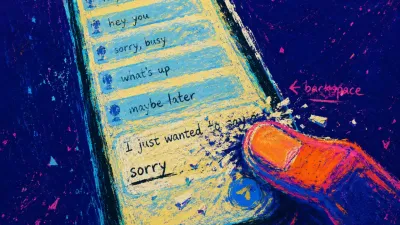
When Maya (name changed for privacy) sat across from me, she did not bring a dramatic betrayal story. She brought a Thursday night in downtown Toronto: 11:43 p.m., flat on her back under a warm duvet, radiator humming, phone six inches from her face. The screen light was cold on the ceiling. Her thumb hovered over the keyboard, retreated, then hovered again while she toggled between the message thread and his contact photo as if the truth might be hiding in the metadata.
By day, she was the polished one in a fast-moving office, the person who could read Slack tone, client mood, and room temperature in under a minute. By night, a more alarmed version of her clocked in—very Severance, if you know the feeling. She had watched the TikToks on anxious attachment, half-sent Heidi Priebe clips to friends, and still found herself asking the late-night search-bar question: why does a calm relationship make me anxious when nothing is wrong?
“He’s kind,” she told me. “He’s consistent. It’s actually healthy, which is what makes me feel ridiculous. We’ll have a really nice night, and then I get home and start thinking, ‘Wait, are we okay?’ Sometimes I want to start a serious talk right after things went well. If it feels this easy, I start waiting for the catch.”
I could feel the core contradiction immediately: wanting a calm, steady relationship, yet fearing that calm means something is missing because chaos had once been what love sounded like at home. The feeling in her was not abstract anxiety. It was a tight chest, shoulders inching toward her ears, an unease like standing in a silent condo after the fire alarm stopped while your ears still strain for the next blast.
“You’re not making it up,” I said. “You may just be reading a safe moment with an old alarm system. Let’s make a map for that kind of fog.”

Choosing the Bridge: A Situation-Obstacle-Advice-Outcome Spread for Finding Clarity
I asked her to put both feet on the floor, take one slow breath, and hold the exact moment that usually starts the spiral: the goodnight text after a good date, the calm Sunday kitchen, the sudden urge to ask a heavy question when nothing obvious is wrong. Then I shuffled slowly and had her cut the deck. For me, that pause is not theatre. It is the nervous system’s way of crossing from reaction into reflection.
For a question like this, I chose the Situation-Obstacle-Advice-Outcome spread. This is the four-card structure I reach for when a calm partner feels wrong, not because the partner is wrong, but because the real engine of the conflict is internal. A bigger spread could add more detail, but not more precision. What I needed was one card for the symptom, one for the inherited blockage beneath it, one for the medicine, and one for what safety might look like once it is practiced instead of suspected.
In other words, this was not a fortune-telling moment. It was a bridge from storm-watch to homecoming. The first card would show why steadiness with a calm partner gets read as “something is off.” The second would reveal the old alarm system behind that reaction. The third—our hinge card—would name the shift from testing for danger to pacing trust. The fourth would show what relational safety can feel like when it stops needing drama to prove it is alive.
Reading the Storm Signals
Position 1: The Loop That Calls Itself Research
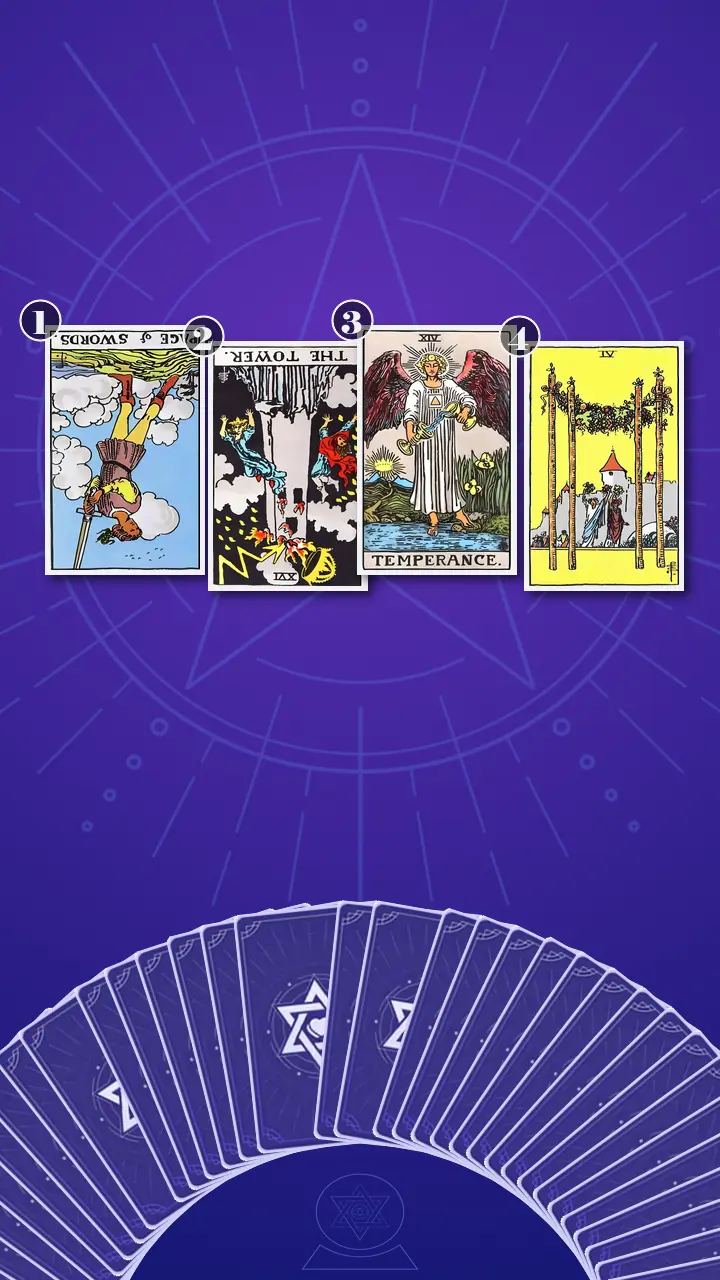
Now I turned the card representing the visible symptom from her diagnosis: why steadiness with a calm partner gets read as “something is off.” It was the Page of Swords, reversed.
This card looked exactly like the version of Maya lying awake after a genuinely nice evening, rereading a short iMessage and tracking tone, punctuation, and timing as if the relationship’s truth were hidden in the metadata. The connection itself was not unstable in that moment; her attention was. The raised sword became her thumb hovering over “Are we okay?” The wind-blown clouds became every tiny change in phrasing turning into emotional weather.
In energy terms, this was excess Air—thought moving faster than reality, curiosity curdling into suspicion, mental sharpness turning into restless patrol. At work, that skill probably makes her excellent. It lets her sense the room before anyone else does. In intimacy, though, the same intelligence becomes over-interpretation. Why was that shorter? Why no extra sentence? Why fourteen minutes? Why a smiley and not a heart? When a nervous system has been trained on chaos, it keeps recommending threat even when the current data is boringly fine.
She let out a quick laugh, but there was something sore in it. Her chin tucked. One hand went to her forehead. “The punctuation thing is too real,” she said. “It sounds so unhinged out loud.”
“Not unhinged,” I told her. “Just watchful. This is what happens when Slack-brain follows you into bed.”
Position 2: The Quiet Room That Still Feels Like a Warning
The next card was the one that reveals the main obstacle: the learned alarm system shaped by chaos at home and the fear that calm is temporary. I turned The Tower, reversed.
Whenever I see The Tower reversed, I think of something my grandmother used to say about Highland weather: after a hard winter, the body still flinches at harmless wind. Through my Generational Pattern Reading lens, this card is rarely about current collapse. It is about aftershock. The lightning is not striking now, but the nervous system never got the memo.
So I translated it back into Maya’s life. This was the calm Sunday kitchen: dish soap on the counter, leftover pad thai in the fridge, a partner scrolling Netflix on the couch, late light going gold across the cabinets. Nothing dramatic happening. And still that hollow pre-storm feeling opening in her chest, the old home rule whispering, “Yes, but what if this is the part before it drops?” The issue was not that her partner had become cold. The issue was that peace itself felt suspicious in relationships because stillness once meant impact might be coming.
That is blocked Fire in the psyche: stored rupture, braced expectation, energy that cannot relax because it is busy preventing surprise. The blind logic sounds practical—if I stay alert, I will not be blindsided—but it keeps calm in the role of a question mark. It is one of the clearest reasons healthy love can feel boring, flat, or unreal after chaos at home. Safety can feel boring before it feels safe.
Her body answered before her words did. First her fingers froze around her tea mug. Then her gaze slipped past the table, as if she were watching an old room replay itself. Finally she exhaled so slowly it almost sounded like embarrassment leaving the chest.
“Nothing is wrong,” she said quietly. “So why do I feel like I need to brace?”
“Because part of you still trusts rupture more than rest,” I said. “And that part learned honestly.”
When Temperance Poured Between Two Cups
Position 3: The Antidote, Not Another Test
By the time I turned the third card, the room had gone very still. Even the traffic outside seemed farther away, as if the city had lowered its volume for a minute. This was the card naming the key shift: moving from testing for danger to pacing trust slowly enough to stay present with calm. It was Temperance, upright.
This is where the reading stopped being about symptom and started becoming medicine. In real life, Temperance looks small. It looks like noticing the urge to send the loaded text, setting a timer instead, opening Notes, writing one fact, taking one sip of water, and putting both feet on the floor. One foot on land and one in water: grounded while emotion moves. Not numb. Not flooded. More like a playlist crossfade than a jarring track switch.
Through my Generational Pattern Reading, I often tell clients that families do not only pass down stories. They pass down pace. Some homes teach the heart to move like weather radar—scan, brace, react, test. Temperance does not ask Maya to become less perceptive. It asks her to stop handing today’s partner yesterday’s forecast. This is what Temperance means in a relationship spread for anxious attachment or relationship hypervigilance: not dramatic love versus dull love, but old alarm versus new pace.
She was still caught in the familiar logic that had been running her nights: if I do not press on the bruise, how will I know whether it is still there? That is the trap. The urge to test starts feeling like proof that testing is necessary.
Stop treating peace as proof that something is missing and start letting love be mixed slowly, because like Temperance's cups, real connection can deepen through balance rather than drama.
I let the sentence sit between us for a beat.
She reacted with something sharper than relief. Her chin lifted. Her eyes flashed. “But if I stop testing it,” she said, “doesn’t that mean I might miss something? Doesn’t it mean I’ve been creating problems where there weren’t any?”
“No,” I said. “It means your nervous system learned to call speed accuracy. We are not shaming the part that protected you. We are updating it.”
First she went completely still. Her breath caught halfway in, and her fingertips hovered above the table like they had forgotten their next instruction. Then her eyes lost focus—not dissociation, more like replay. I could almost feel her mind opening an old Notes draft at midnight, seeing the unsent “Hey, random question, are we good?” message, seeing how many times she had softened it, deleted it, rewritten it, because she wanted reassurance without admitting how much. Finally her shoulders dropped, not dramatically, just enough to show that something rigid had unclenched. The release carried its own fragility. When people put down an old weight, there is often a second where they sway a little from the absence of it. Her voice came out quiet and almost surprised. “So the feeling isn’t the instruction.”
“Exactly,” I said. “That is the hinge—from uneasy vigilance around calm to grounded trust in low-drama intimacy. Not certainty. Not blindness. Just enough measured self-trust to let a steady moment stay steady long enough to mean something. Not every quiet moment is a gap in love. Sometimes it’s the room love finally gets to breathe in.”
“The next time the urge to test shows up,” I added, “try a ten-minute facts-before-story pause: write three observable facts, name one body sensation, and wait before texting. If the question still feels true after the pause, ask one direct question—or stop there.”
“Now,” I asked her, “with this new lens, think back to last week. Was there a moment when this would have changed how you felt—maybe a goodnight text, a calm drive home, a Sunday sink full of mugs?”
Position 4: Welcome Instead of Fireworks
The final card showed the lived integration of that guidance: what relational safety can begin to feel like when it is built through repeatable, low-drama connection. It was the Four of Wands, upright.
I loved the honesty of this outcome. Not a cinematic reunion. Not some dramatic declaration that would spike her adrenaline and temporarily satisfy the part of her that still mistakes intensity for intimacy. This card showed something far sturdier: a standing Thursday dinner, a Sunday coffee, groceries carried up together, a simple “made it home” text that says what it says and keeps saying it over time. The home in the background of the card mattered to me. It said the relationship could stop feeling like a test and start feeling like a place.
Energetically, this was Fire restored in a livable form. Not Tower fire—rupture, shock, impact. Hearth fire. Warmth with structure. Trust becoming a standing calendar invite instead of a surprise party. Belonging often looks repetitive before it feels profound.
Maya’s mouth softened into the first real smile I had seen all session. “That sounds almost too normal,” she said.
“Yes,” I said, smiling back. “That is exactly why it can heal you.”
Facts First, Story Second
By the end of the spread, the whole story was clear to me. The Page of Swords reversed showed the surface behavior: the late-night overreading, the text autopsy, the instinct to monitor tone and timing. The Tower reversed showed why that behavior feels so convincing: an old family alarm still expects love to turn without warning. Temperance became the hinge, slowing the jump from body alarm to relationship story. And the Four of Wands showed the destination—not high drama, but a repeatable atmosphere of welcome.
The cognitive blind spot was not that Maya was “too sensitive.” It was that she had started treating discomfort as evidence and speed as truth. Her transformation direction was much gentler and much braver: stop testing whether calm is real, and stay present long enough to discover that steadiness can hold intimacy too.
I said it plainly: “Facts first. Story second. That is your medicine here. If there is truly something to address, a direct question can bring clarity. A spiral just makes fear louder.”
Then I gave her three very specific next steps:
- The 20-Minute No-Test WindowThe next time a neutral text lands wrong—especially at night in bed or on the TTC ride home—set a 20-minute timer, open Notes, and write three observable facts plus one body cue before you respond. Example: “He said goodnight. He used a smiley. He replied after the gym like he said he would. My chest tightened.”If twenty minutes feels impossible, start with five. The pause is not denial; it is space.
- The One Direct Question RuleIf the concern still feels true after the pause, ask one clean question in the actual moment: “You seem quieter tonight—are you tired, or is something up?” Use it with your partner once instead of layering several soft probes into a tense relationship talk.One direct question is clarity. Three speculative questions are just fear wearing a polite outfit.
- The Threshold of Belonging PracticePick one repeatable low-drama ritual this week and keep it almost boring on purpose: rinse the dinner mugs together, take the same Thursday walk, or agree on one good-morning or goodnight check-in you do not analyze. This is where I use my relationship harmonizing through daily chores strategy—let an ordinary task become evidence that steadiness can hold warmth.Do not turn the ritual into a performance metric. One small repetition is enough to start teaching your body a new rhythm.
None of this asked her to suppress real needs, pretend everything was fine, or stop caring. It simply gave her a way to separate old weather from today’s forecast.

A Week Later: The Quiet Proof
A week later, Maya sent me a message. It was short, which made me smile for obvious reasons. “Did the timer,” it read. “Wrote the facts. Didn’t send the ‘are we okay?’ text. We made pasta, rinsed the mugs, and it was just… Tuesday. In a good way.”
She told me she had slept a full night after that. The old thought still flickered the next morning—what if I’m missing something?—but this time she noticed it, touched the cool glass of water by her bed, and let it pass.
That is what a Journey to Clarity usually looks like in real life. Not a thunderclap. Not a personality transplant. Just the first solid step from emotional patrol toward grounded connection, from old alarm to new pace.
When calm finally arrives and your chest tightens instead of softening, it can be painfully lonely to realize that part of you still trusts rupture more than rest. If you are there tonight, and your thumb is hovering over the text that would turn a steady moment into a test, what small, ordinary piece of proof—a goodnight message, a rinsed mug, a promised call that came—would you be willing to stay with for ten seconds longer?
Every reading at AceTarot is a Journey to connect with inner wisdom and empower next step.
Learn more about our Journey to Clarity.