I Kept Deleting a Simple Slack Question—And Stayed Up Doing It Alone

Finding Clarity in the 12:47 a.m. Draft You Never Send
If you can draft a perfect help-request text three different ways but still can’t press send, because asking feels like incompetence.
Alex (name changed for privacy) sat across from me with their phone face-down on my small table, as if it might light up and accuse them. They were 28, Toronto-tired in that specific way that isn’t about sleep as much as it’s about carrying too much in public and feeling stranded in private.
They told me about Tuesday at 12:47 a.m.—kitchen table, condo silence, laptop open, Slack draft half-written. The blue screen glow bounced off a cold mug, and the laptop fan whined like it was stressed too. They’d typed: “Hey—quick question on the reporting logic…” then reread it, removed an emoji, added “Sorry to bother you”, deleted that, added “no rush”, deleted the whole thing. Over and over.
“My throat tightens when I imagine asking,” they said, fingers rubbing the pad of their thumb like they were trying to sand down a feeling. “Then my chest does this… clamp thing. And I get this buzzy urge to just handle it immediately. Like if I move fast enough, I won’t have to need anyone.”
The shame wasn’t an abstract emotion in the room—it had a shape. It was a door locking from the inside, right at the base of their throat, every time they reached for the word help.
“Not pressing send is still a decision—and your body is making it for you,” I said gently, watching Alex’s shoulders lift as if bracing for impact. “We can work with that. Not by forcing a big personality change, but by understanding the pattern—and then giving you a next step that feels safe enough to actually do.”
They exhaled like they’d been holding air in their ribcage for days. “My mom left this old voicemail,” they added, quieter. “Just… ‘handle it.’ It’s like I heard it and suddenly I couldn’t ask anyone for anything. Even stuff that’s normal.”
“Okay,” I said, keeping my voice steady. “Let’s try to map the moment your adult self wants support… and the part of you that thinks support is a grade.”

Choosing the Compass: The Four-Layer Insight Ladder Tarot Spread
I started the session the way I always do—not as a performance, but as a transition. I invited Alex to place one hand on their chest for ten seconds and notice the sensation, not the story. Then I shuffled slowly, the soft slap of cardstock grounding the room in something physical and present.
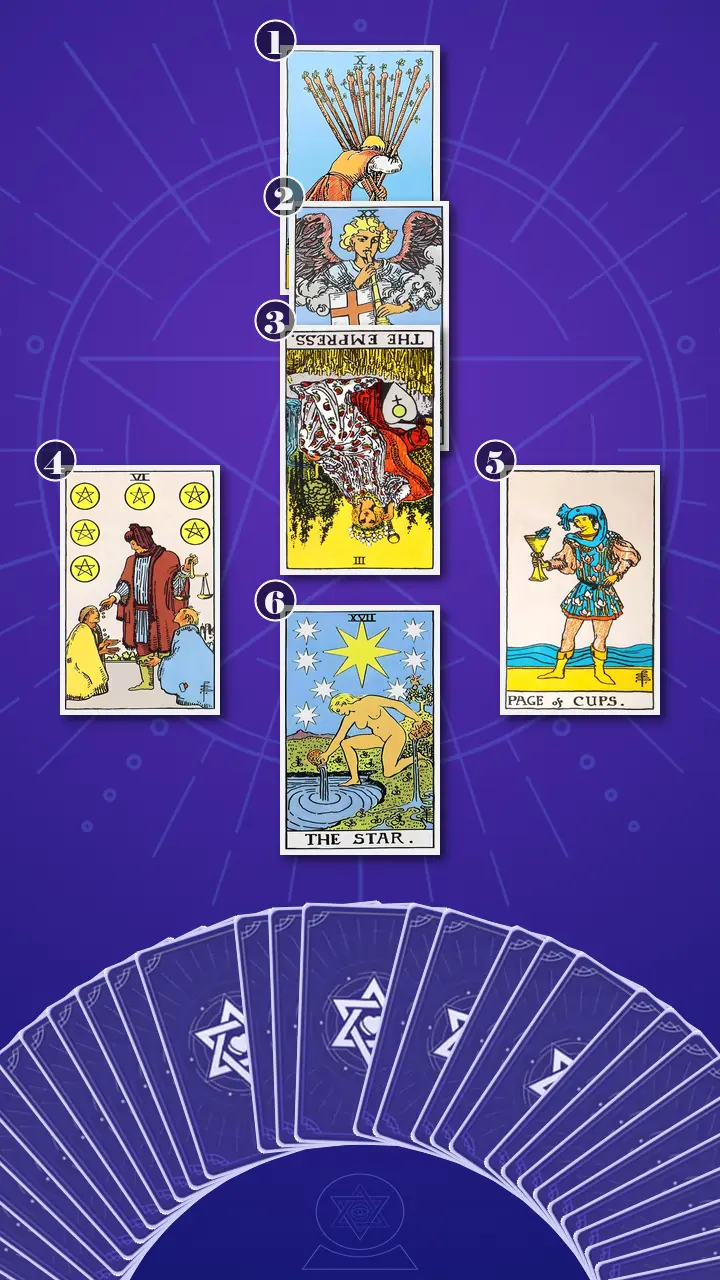
“Today, I’m going to use a spread I call the Four-Layer Insight Ladder · Context Edition,” I told them. “It’s a six-card tarot spread for inner patterns—especially the kind that show up as hyper-independence, help-avoidance, and that ‘I’ll handle it’ reflex.”
For anyone reading this and wondering how tarot works when the problem isn’t ‘What will happen?’ but ‘Why do I keep doing this?’—this spread is designed to diagnose and then translate insight into practical next steps. Positions 1–3 move from your visible behavior to the trigger that flips the switch, down into the root belief that keeps the pattern in place. Positions 4–6 climb back up with a resource, a small practice, and an integration outcome. It’s like walking down into a basement to find the old wiring—then coming back upstairs with a repaired circuit.
“We’ll look at: what the pattern looks like day-to-day,” I said, tapping the top card spot, “then the trigger—the voicemail effect,” tapping the second, “then the deeper receiving-block underneath. And once we know what we’re working with, we’ll build a fair, workable way to ask.”
Reading the Map: The Descent Into the Old Wiring
Alex cut the deck with careful hands. The room was quiet enough that I could hear the streetcar outside, and underneath it, that familiar Toronto winter hush—like the city itself was conserving energy.
Position 1: When “I’ll Handle It” Becomes Your Whole Personality
“Now we turn over the card for what the ‘I’ll handle it’ pattern looks like in your current day-to-day behavior,” I said.
Ten of Wands, upright.
It landed like a screenshot of Alex’s week: carrying a bundle so big it blocks your view, leaning forward, pushing through anyway.
“This is that late-night scene,” I told them, using the card meanings in context rather than abstract keywords. “It’s late, you’re still at the kitchen table finishing something that could’ve been delegated. You’ve got fourteen browser tabs open, three half-written messages asking for clarification, and you keep telling yourself, ‘I’ll just handle it.’ You’re not choosing the hard way because it’s efficient—you’re choosing it because it protects you from the feeling of being judged.”
The Ten of Wands is excess fire—effort and grit pushed past usefulness into over-functioning. In this energy, competence gets measured by endurance. The heavier the load, the safer you feel. Until you don’t.
Alex let out a short laugh that didn’t reach their eyes. “That’s… yeah. That’s so accurate it’s almost rude.”
I nodded. “If you always choose the heavier load, eventually it stops looking like strength.”
Their gaze dropped to the card. Their shoulders stayed lifted, but their jaw softened by a millimeter—as if something in them recognized the pattern without wanting to admit it.
Position 2: The Voicemail as a Nervous-System Push Notification
“Now we turn over the card for the trigger moment that reactivates the old message and pulls you into the familiar script,” I said.
Judgement, upright.
Judgement is the card of a call being heard—an awakening point. For Alex, it was almost literal.
“This is the voicemail effect,” I said. “You find the old message and the tone hits you like a push notification straight to your nervous system. Suddenly your adult life is running a childhood script: ‘Needing help is embarrassing. Don’t bother anyone.’ Nothing external changed in your current situation—just the meaning your body attached to asking.”
I watched their fingers flex as if they could still feel the phone warm in their hand. “It’s like a film sound cue,” I added. “The voicemail plays, and the adult room blurs for half a second. You’re in your kid-body posture before you even decide to be.”
Judgement here isn’t punishment; it’s consciousness. It’s the moment the autopilot becomes a choice-point. That energy is balance—a spotlight. A wake-up card that says: you can respond differently now that you can see it.
Alex swallowed. Their throat moved like it was trying to push something down. “I hate how fast it happens,” they said. “It’s embarrassing. I’m sitting there with a lease and a job and then suddenly I’m… twelve.”
“Let’s name the rule,” I said, calm and direct. “One sentence.”
They hesitated, then said it like reading a verdict aloud: “Needing help equals failing.”
“Good,” I said. “Now we can test whether that rule belongs to adult-you.”
Position 3: The Receiving Gate That’s Been Turned Down
“Now we turn over the card for the deep block around receiving—what part of you learned that needing support is unsafe or unacceptable,” I said.
The Empress, reversed.
In my work as a perfumer, I learned that the brain doesn’t store memory like a neat file folder—it stores it like a scent trail. One whiff, one tone, and suddenly you’re back inside an old room. With The Empress reversed, that old room often contains an unspoken lesson: care is conditional, and being ‘low-maintenance’ is how you stay lovable.
“Here’s the heartbreak under the competence,” I told them. “Someone offers something genuinely reasonable—feedback, a ride, dinner, a quick call—and you decline automatically. Not because you don’t want it, but because receiving sets off an internal alarm: ‘If I accept, I’m a burden.’ Then you overcompensate—work more, explain more, pay back fast—so you don’t have to sit in the vulnerability of being cared for.”
As I spoke, I let the meaning land in a micro-scene, because this is where people recognize themselves:
“A friend texts: ‘Want me to bring you something? I’m near your place.’ Your fingers hover. Your stomach drops—like accepting would create a debt you can’t repay. You think: I want to say yes → If I say yes, I’ll owe → If I owe, I’m trapped → So I’ll say no and call it independence.”
“You refuse the offer, then grieve the support you didn’t let in,” I added softly.
Alex went very still—micro-freeze first. Their eyes unfocused—memory replay second. Then a long, shaky exhale—release third.
“I do that exact reflex-no thing,” they said, voice low. “And then I feel awful after.”
“That’s The Empress reversed,” I said. “Not a lack of support in your life—more like a ‘receive help’ setting toggled off inside you.”
As part of my Family Energy Diagnosis, I asked one question I often ask when family patterns are activated: “When you think of your mom’s ‘handle it’ tone—what does it smell like?”
Alex blinked, thrown off in a good way. “Laundry detergent,” they said immediately. “Like… sharp. Clean. That ‘get it done’ smell.”
I nodded. “That makes sense. Scent and sound can team up. Your body hears the tone, and the whole ‘handle it’ atmosphere returns. Not because you’re broken—because your nervous system is loyal to an old survival rule.”
When the Scales Spoke: Six of Pentacles and Dignified Interdependence
“Now we turn over the card for the healthiest version of support available to you right now and what fair reciprocity could look like,” I said.
As I lifted the card, the room felt different—like the air got quieter on purpose.
Six of Pentacles, upright.
On the card, the scales are right there—clear, simple, not emotional. This is earth energy at its best: structured support. Practical. Dignified. No mind games.
I looked at Alex and kept my voice steady, almost like I was offering them a railing to hold. “This card is saying: help can be a fair exchange with clear boundaries, not a debt or a verdict.”
They nodded, but the nod was tight—as if agreement was fighting with an internal alarm.
Setup (30–50 words): It’s 12:47 a.m., the message is drafted, and your chest tightens like you’re about to be exposed—so you delete it and carry the whole thing alone again. In that moment, your brain treats a normal request like a trial you have to win.
Delivery:
Not ‘I have to carry it all to deserve respect’; choose reciprocal support—let the scales of the Six of Pentacles balance giving and receiving.
I let the sentence hang there for a beat.
Reinforcement (100–200 words): Alex’s face changed in layers. First: a blink-stall, like their eyes needed a second to focus. Then their pupils widened slightly, and the corners of their mouth pulled in—not a smile, more like the edge of a protest. Their shoulders stayed high, but their hands opened on their lap, fingers uncurling as if they’d been gripping a handle in their mind. Then the surprise: a flash of anger, quick and honest.
“But if that’s true,” they said, voice sharper, “doesn’t it mean I’ve been doing it wrong for years?”
“It means you’ve been doing what worked,” I replied. “Your system learned: ‘If I don’t need anything, I can’t be dismissed.’ That’s not wrong. It’s protective. But you’re allowed to renegotiate the contract now.”
“Help isn’t a verdict. It’s a resource,” I added, and I saw their throat bob as if the words hit the exact locked door.
“Do a five-minute scales check now,” I said, sliding a notepad toward them. “Pick one task you’re carrying. Choose one person. Write one bounded ask with a time limit—like, ‘Can you sanity-check this for 10 minutes tomorrow before 4?’ If your body spikes, you can pause, breathe, and either send it as-is or downgrade the ask. Your consent matters at every step.”
I leaned in slightly. “Now, using this new lens—can you think of one moment last week where this would have changed how you felt?”
Alex stared at the notepad, then whispered, “Wednesday. My coworker offered to take first pass at a deck. I laughed and said, ‘Oh no, you’re good—I’ve got it.’ And then I worked through dinner.” Their shoulders dropped a fraction, like something heavy finally got set down—not gone, just down.
“That,” I said, “is your bridge from ‘I’m on my own’ toward ‘I can belong without performing invincibility.’”
The Smallest Honest Message: From the Page to the Star
Position 5: The Two-Sentence Ask That Doesn’t Abandon You
“Now we turn over the card for a small, specific practice for asking—how to make a request without over-explaining or self-abandoning,” I said.
Page of Cups, upright.
“This is the tender messenger,” I told them. “You send the simplest possible message to someone safe: ‘I’m overwhelmed. Can you talk for 15 minutes?’ No paragraph. No apology tour. Then you sit through the discomfort of waiting—letting the answer be information, not a referendum on your belonging.”
The Page of Cups is water energy in balance: emotional honesty without drowning in it. And it always comes with the fish—the unexpected emotion that pops up when you try to be real. Awkwardness. Embarrassment. Softness.
Alex made a face. “I hate the wait.”
“Of course you do,” I said. “Your old system prefers control. But this practice is about building self-trust through a bounded request—and tolerating the tiny discomfort of receiving.”
I tapped the notepad. “Clarity beats a perfect tone. Two sentences is enough.”
Position 6: A Recovery Plan, Not a Hero Arc
“Now we turn over the card for how integration feels when you begin receiving support without losing your self-respect,” I said.
The Star, upright.
“This is what it looks like when your nervous system starts to believe you don’t have to earn rest,” I said. “You start living like support is normal: you accept small help, you rest before crisis, you stop performing competence as proof of worth. The shift is subtle but real—less buzzing urgency, more steady calm.”
The Star is balance returning through repetition. Two streams of water: one for the practical world (land), one for emotional replenishment (pool). In modern terms: two tabs open on purpose—practical support and emotional soothing. Both count.
Alex’s breath slowed as they looked at the card. “That sounds… nice,” they said, and their voice carried a small grief with the hope, like realizing how long they’d been going without something basic.
From Insight to Action: The Scales Check, Plus a Scent You Can Borrow
I took a moment to thread the whole spread into one coherent story, so it wouldn’t just be six separate insights.
“Here’s the arc I’m seeing,” I said. “The Ten of Wands shows how you’ve been proving your worth through carrying too much. Judgement shows the trigger—the old voicemail tone—that boots up ‘kid mode’ and makes a normal ask feel dangerous. The Empress reversed shows the deeper block: your inner permission to receive is muted, so offers of care get filtered out. Then the Six of Pentacles gives you a repair: reciprocity with scope and time—support as fair exchange. The Page of Cups gives you the practice: one honest sentence. And The Star shows the outcome: a recovery plan instead of a hero arc.”
“The cognitive blind spot,” I continued, “is that you’ve been treating receiving like it automatically creates debt—or risk of dismissal. But your transformation direction is different: shifting from proving competence by doing it alone to building self-trust through small, specific requests and tolerating the discomfort of receiving.”
Alex nodded, then immediately frowned. “Okay, but… I don’t even have five minutes for experiments. I’m behind at work, and my calendar is chaos.”
That was the real-world obstacle, right on time.
“Perfect,” I said, not sarcastic—genuinely. “That’s exactly when the old system screams, ‘Handle it alone.’ So we’re going to make the action so small your nervous system can’t argue with it.”
As my Dialogue atmosphere enhancement with calming scents strategy, I pulled out a fragrance blotter I’d prepared—soft neroli with a clean, grounding cedar note. Nothing dramatic. Just enough to signal safety. “Before you send the ask,” I said, “smell this once. It’s a physical cue to your body: ‘I’m here. I’m an adult. This is not a courtroom.’”
Then I gave them actionable advice—clear next steps, not a lecture:
- The 10-Minute Scales Check AskToday, choose one task you’re carrying (a deck slide, a logic check, a link you can’t find). Choose one person. Send: “Could you sanity-check this for 10 minutes before 4 p.m.?”Expect the throat/chest spike. If you start over-explaining, delete everything except the sentence that contains the ask. If 10 minutes feels too big, make it 3.
- The Two-Sentence Template (No Backstory)Copy/paste: “I’m stuck on X. Could you help me with Y?” Then stop typing. No apology tour, no evidence file, no ‘I tried everything.’Clarity beats a perfect tone. If you feel yourself soft-launching the need (hinting), replace the hint with the direct question.
- Receive-Without-Repaying (One-Line Reply)If they say yes, reply only: “Thank you. That helps a lot.” No immediate repayment plan, no over-justifying, no ‘I’ll owe you.’If shame says “now you’re a burden,” label it: “This is my old rule talking.” Let the help land for 30 seconds before you do anything else.
“And because that voicemail is a scent-and-sound trigger,” I added, bringing in my Intergenerational Communication Decoding, “I want you to build a counter-memory that doesn’t require you to fix everything. After you receive even a small help moment, choose one scent you like—citrus hand cream, a soap, a tiny sample—and use it only on ‘receiving days.’ That’s memory anchoring. It’s a way of teaching your body: ‘Support happened. I stayed myself.’”
Alex looked skeptical, then curious. “Like… making ‘help’ smell different than detergent and panic?”
“Exactly,” I said. “We’re not erasing your mom’s voice. We’re updating what your body believes it means.”
A Week Later: Ownership, Not Certainty
A week later, Alex texted me a screenshot. One Slack message—two sentences. No paragraph. No apology. Just: “I’m stuck on the reporting logic for the variance column. Could you sanity-check it for 10 minutes before 3?”
Under it, their coworker’s reply: “Yep—send it over.”
Alex’s caption was simple: “My chest still did the thing. But I sent it anyway. Then I sat by the window for ten minutes instead of opening twelve tabs.”
It wasn’t a dramatic reinvention. It was quieter than that—more like a jaw unclenching without fanfare. Clear scope. A fair ask. A moment of waiting. And then, proof that receiving didn’t make them disappear.
That’s the real Journey to Clarity I see in the cards, over and over: not certainty, but ownership. Not ‘I’ll never feel shame again,’ but ‘I can feel the door lock—and still reach for the handle.’
We’ve all had that moment where you want to reach out, but your chest tightens like a door locking—because a part of you still believes being turned away would mean you never really belonged.
If you didn’t have to earn support by suffering first, what’s one small, time-bounded ask you’d be curious to try—just to see how it feels to let it land?