From 'We Need to Talk' Dread to Adult Boundaries in Real Time

The 8:47 p.m. Text That Turns Into a Fire Alarm
You’re 29, crushing it at a startup, and still one “we need to talk” text from Dad can trigger a full body drop like it’s a fire alarm in your nervous system.
Jordan said it like she hated how true it sounded. When she came to see me, she still had that aftershock in her posture—shoulders slightly lifted, jaw doing that tiny, constant clench you don’t notice until someone mentions it.
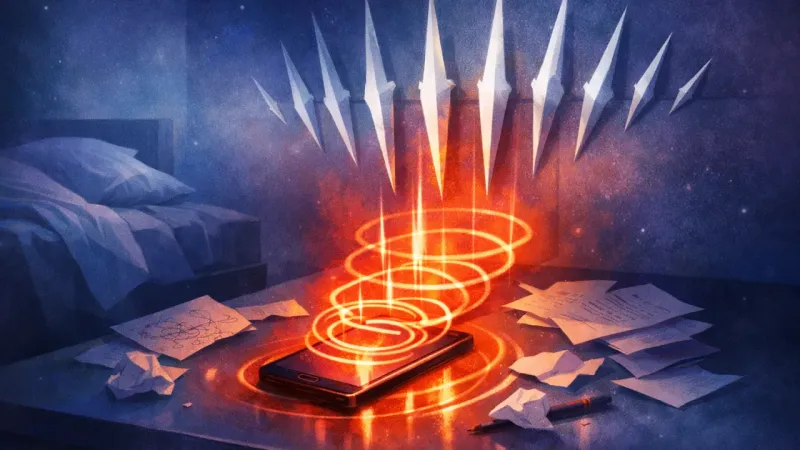
She described Tuesday night in her Toronto condo bedroom: 8:47 p.m., half under the duvet, blue light from a laptop and an iPhone bouncing off pale walls. The phone was warm from being gripped too long. Outside, the city was doing its usual muted hum—HVAC, distant sirens, the faint whoosh of traffic—while inside her chest felt tight enough that breathing became something she had to remember to do.
“He just texted, ‘we need to talk,’” she told me, voice controlled in that way project managers master. “And I know it could be anything. But my stomach drops. Then I’m suddenly… not me. I’ll open Notion. I’ll volunteer for extra work. I’ll rewrite a reply in Notes like it’s a dissertation. And then I can’t sleep, and I’ll cancel a date or I’ll go and I’m basically a ghost.”
I watched her thumb mimic the same motion it probably did in bed: hover, scroll, hover again. Her dread wasn’t an idea—it was a physical weather system. Like a cold front rolling in under her ribs, bringing that wired-but-tired energy that makes sleep feel like trying to lie down on a moving subway platform.
“You have a grown-up life,” I said softly, letting the truth land without making it a diagnosis. “And yet one text makes you feel like you’re about to be in trouble. Let’s not call that dramatic. Let’s call it information. We’re going to use tarot as a mirror, and we’ll do what I always do: we’ll make a map through the fog until it feels like clarity again.”
Choosing the Compass: The Celtic Cross · Context Edition
I don’t treat the beginning as a mystical ceremony. I treat it as a nervous-system handrail.
I asked Jordan to put her phone face-down for one full breath—just one—and to hold the question in her mind: When Dad texts “we need to talk,” why do work, sleep, and dating spiral? Then I shuffled slowly, the way you stir tea when you’re trying not to spill it.
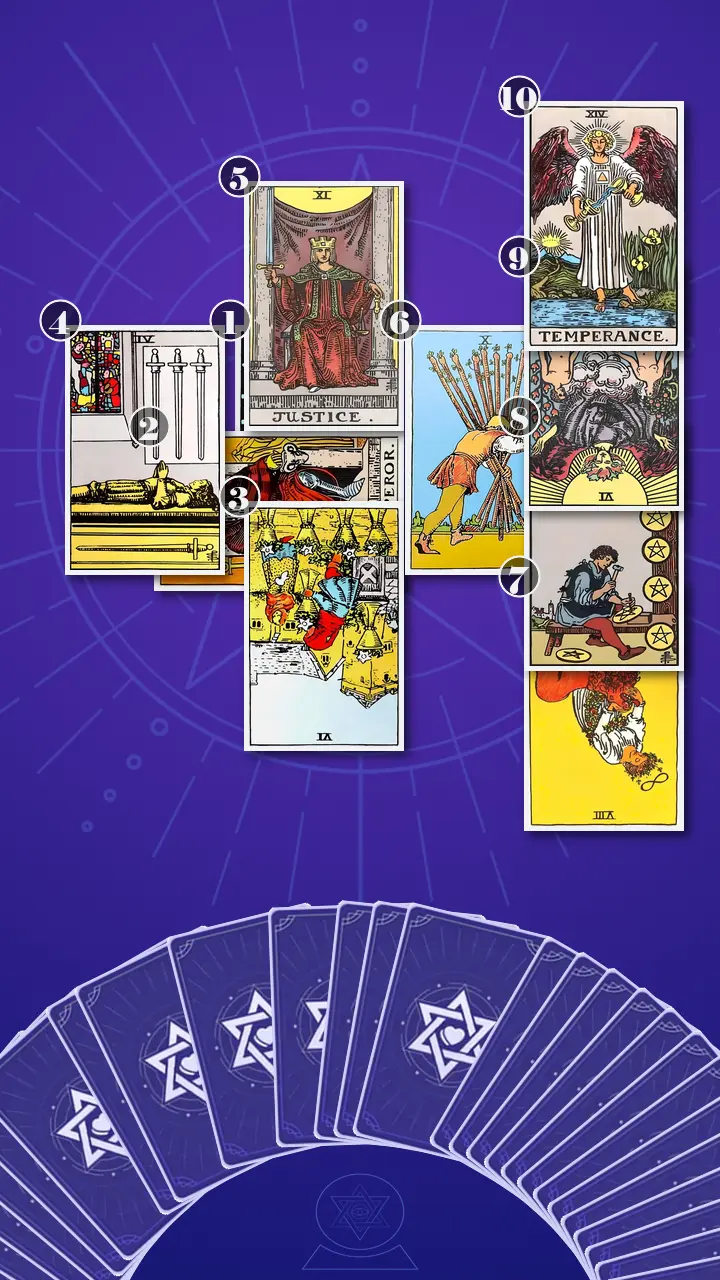
“Today,” I told her, “we’ll use a spread called the Celtic Cross · Context Edition.”
And for you reading this: this spread works so well for parent-trigger spirals because it doesn’t only describe the symptom—feeling stuck, sleepless, obsessively productive. It traces the whole chain: the present spiral, the trigger that presses on it, the older root underneath, and then the integration path—what actually helps you find clarity across real life domains, not just in your head.
In this version, two positions matter a lot for Jordan’s story: the crossing card—the trigger and challenge—and the environment card—because Toronto startup life can reward overwork so convincingly it starts to look like maturity.
“Here’s what we’ll watch for,” I said, tapping the cloth lightly. “The first card will show the spiral as it appears in your real life. The crossing card will name what ‘we need to talk’ activates inside you. And the final card will show the balancing principle—how you stop treating a vague message like an emergency.”
Reading the Map: From the Bedroom Courtroom to a Scheduled Conversation
Position 1: The immediate spiral state (what it looks like in real life)
“Now we turn over the card that represents the immediate spiral state across work, sleep, and dating once the text lands,” I said. “The present situation.”
Nine of Swords, upright.
In the picture, a figure sits bolt upright in bed, hands to face, with swords lined up on the wall like accusations. It’s the exact energy of 2 a.m. rumination—your brain opening seventeen tabs titled What did I do? and none of them containing new information.
“This,” I told Jordan, “is the bedroom mind-court. The glow of the phone. The buzzing silence. The replay loop.” I kept my voice calm and ordinary, because the Nine of Swords doesn’t need drama; it needs a light switched on. “You’re exhausted, but your mind keeps prosecuting you anyway. ‘If I respond wrong → I’ll be judged → I’ll be exposed.’”
Energy-wise, this card is excess air: too much thinking without contact with facts. It’s mental overwork pretending to be preparation.
Jordan let out a short laugh that had a bitter edge to it—an unexpected little flinch of recognition. “Okay,” she said, half amused, half offended. “That’s… too accurate. Like, kind of rude.”
“I know,” I said, and I meant it like a hand on the shoulder. “But accuracy is how we stop shaming it. If we can name it, we can interrupt it.”
Position 2: The trigger and primary challenge (what “we need to talk” activates)
I paused before turning the next card, because I could feel Jordan’s attention narrow—the way it does when a notification lands and your whole day starts orbiting it.
“Now we turn over the card that represents the trigger and primary challenge—what that text activates inside you about authority, evaluation, and control.”
The Emperor, reversed.
Even upside down, he’s unmistakable: stone throne, armor beneath a red robe, the whole vibe of structure and authority. Reversed, that structure doesn’t feel protective—it feels like a grip tightening under uncertainty.
“This is the moment your nervous system mistakes vagueness for judgment,” I said. “It’s not the text. It’s what the text represents.”
I translated it into the modern control behaviors Jordan had already confessed: drafting an overlong reply in Notes; switching into a formal, performance-review tone; trying to pre-earn approval by sounding perfectly responsible; deleting everything because it feels ‘too much’—then writing it again.
“Caption for this card,” I added, gentle but clear: This is an authority alarm, not proof you’re in trouble.
Energy-wise, The Emperor reversed is blockage. Authority is meant to be a steady spine—adult structure you choose. Reversed, it turns into an internalized rulebook that tightens when you’re scared. It makes you feel like you have to be flawless to be safe.
Jordan’s eyes flicked away from the card, then back. She swallowed once, like her throat had gone dry on a single word.
This was where I brought in my own craft—what my family calls listening for inheritance. My grandmother used to say patterns travel through families the way weather crosses the Highlands: you don’t cause the storm, but you do learn to read the sky.
“I’m going to use one of my core methods,” I told her. “I call it Generational Pattern Reading. Not to blame anyone. Just to locate the old script.”
“Okay,” she said cautiously.
“When your dad says ‘we need to talk,’ who do you become?” I asked. “Not intellectually. In your body.”
Her answer came fast, like it had been waiting. “Thirteen,” she said. “Like… I’m about to be corrected.”
In that moment, the reversed Emperor wasn’t a villain. It was a family role grabbing the steering wheel: child under authority, worth under review, safety earned through performance.
The key-card aha: replacing the inner Emperor’s grip
The air in the room felt slightly denser, like the hush right before a snowfall. “We’ve just turned over the core card,” I said. “This is the hinge.”
Setup: Jordan was still mid-workday in her memory—phone face-up beside her laptop, the text landing, stomach dropping. Her mind was already rewriting replies in Notes, refreshing the thread, adding “one more task” at midnight like productivity could buy emotional safety.
Delivery:
Not “I’m in trouble,” but “my inner Emperor is gripping”—choose your own structure instead of letting a vague message rule the whole kingdom.
I let silence do its work.
Reinforcement: Jordan’s reaction happened in layers, not all at once—the way real insight does. First, a brief freeze: her breath stopped, and her hands hovered above her knees like she’d forgotten what to do with them. Then the cognitive seep-in: her gaze unfocused, as if a memory loop had started playing—old kitchen-table talks, that undertone of being evaluated. Finally, the emotional release: a long exhale that seemed to come from under her sternum, and her shoulders dropped a few millimeters like someone had loosened a strap.
“But… if that’s true,” she said, and there was a flash of irritation—more at the pattern than at me, a protective spark. “Does that mean I’m still letting him control me?”
“It means you learned a rule really well,” I answered. “And you can renegotiate it.” I kept my tone steady, the way you talk to someone who’s just realized their smoke alarm is too close to the stove. “A vague text isn’t a verdict. It’s just a request for a conversation—and you’re allowed to meet it with adult structure instead of child-level panic.”
“Now,” I said, “use this new lens. Think back to last week. Was there a moment when the alarm went off and you could have said, even silently, ‘my inner Emperor is gripping’?”
She nodded once, small and stunned. “On the TTC,” she whispered. “I saw the missed call and I… I basically started drafting my defense.”
“Exactly,” I said. “This is not about willpower. It’s about switching leadership back to you.”
And I named the shift the cards were already asking for: “This is the first step from your starting state—notification-as-fire-alarm—toward your desired state: holding uncertainty without punishing yourself for it. From dread and mind-reading to steadier self-trust.”
Position 3: The deeper root (the older imprint)
“Now we turn over the card that represents the deeper root—the older pattern that makes this message feel loaded.”
Six of Cups, reversed.
Upright, it’s sweetness and memory. Reversed, it’s the past pulling you backward by the sleeve.
“This is age-regression without your permission,” I told her. “Not because you’re weak. Because your body remembers what ‘serious talk with Dad’ has historically meant.”
Energy-wise, this is blockage again—not of love, but of time. The present moment can’t stay present; it keeps getting filtered through a younger version of you.
Jordan’s fingers curled, then uncurling—like she was catching herself bracing. “I hate that,” she said quietly. “I have an adult job. I pay my rent. And then I’m… small.”
“That’s why we’re building adult structure,” I said. “Not to be cold. To be free.”
Position 4: Recent baseline (what your nervous system was like before the trigger)
“Now we turn over the card that represents your recent baseline—what your life rhythm has been like just before the text.”
Four of Swords, upright.
It’s a different bed than the Nine of Swords: not a courtroom, a sanctuary. Deliberate stillness. The kind of rest you choose rather than collapse into.
“Your system has been asking for recovery,” I said. “So when uncertainty hits, it hits harder. There’s no cushion.”
Energy-wise, this is balance trying to happen. The capacity for rest exists, but it requires a decision—especially in a city where the phone is never really off.
Jordan’s mouth tightened in a familiar confession. “I keep telling myself I’ll rest after this week.”
“And the weeks keep coming,” I said, without cruelty.
Position 5: Your conscious aim (what you’re reaching for)
“Now we turn over the card that represents your conscious aim—what you’re trying to create.”
Justice, upright.
I felt Jordan’s focus sharpen—not into panic, but into something cleaner. Justice sits straight-on, scales balanced, sword upright. Not harsh. Clear.
“This is you wanting adult-to-adult communication,” I said. “You’re not seeking drama. You’re seeking specifics and proportion.”
I gave her a micro-scene, because Justice works best as a single doable move: “Cursor hovering. One clean sentence instead of a paragraph. Facts versus stories—like checking your bank balance instead of guessing based on vibes.”
Jordan’s face softened a fraction. “Oh,” she said, like a click of relief. “I can just… ask.”
“Exactly,” I told her. “Clarity is not disrespect. It’s adulthood.”
Position 6: What you tend to do next if the pattern continues
“Now we turn over the card that represents what happens next if the pattern continues—the default coping move.”
Ten of Wands, upright.
Someone carrying every wand alone, bent under the load, view blocked. It’s the “I’ll deal with it after I finish everything” trap—because everything never ends.
“This is when work becomes weight and armor,” I said. “You carry every grocery bag at once so you don’t have to take two trips—then your hands go numb.”
Energy-wise, this is excess fire-through-effort. Doing more to force certainty. It feels productive, but it narrows your world until there’s only burden.
Jordan nodded, eyes down. “I’ll rewrite a Slack update five times,” she admitted. “Like… if I’m perfect at work, I won’t be judged anywhere else.”
Position 7: Your internal stance (self-trust and resilience)
“Now we turn over the card that represents you—your inner stance in the moment.”
Strength, reversed.
Reversed Strength isn’t weakness. It’s access. The calm, gentle hand that steadies the lion becomes harder to reach when the authority alarm is blaring.
“Under pressure, you switch from self-trust to self-control,” I told her. “And self-control feels like clenching.”
Energy-wise, this is deficiency—not of courage, but of softness. Your nervous system forgets it’s allowed to be human while still being capable.
Jordan’s eyes watered slightly, then she blinked it back like she was in a meeting. “I hate that I can’t just be normal,” she said.
“Normal isn’t the goal,” I replied. “Grounded is.”
Position 8: External reinforcement (the environment that rewards the coping)
“Now we turn over the card that represents your environment—the external context that reinforces this.”
Eight of Pentacles, upright.
A craftsperson at a bench, making one coin after another. Mastery. Metrics. The socially acceptable hiding place.
“Your world rewards output,” I said. “In a startup, grinding can look like virtue—even when it’s actually self-protection. Like an app that rewards streaks… even when the streak is self-abandonment.”
Energy-wise, this is balance with a risk. Practice is healthy—until it becomes avoidance dressed as responsibility.
Jordan gave a tight smile. “If I’m busy, no one asks how I’m doing.”
“And you don’t have to ask yourself,” I added gently.
Position 9: Hopes and fears around intimacy (spillover into dating)
“Now we turn over the card that represents hopes and fears around intimacy—how this lands in dating.”
The Lovers, reversed.
Jordan exhaled a laugh that sounded like a wince. “Yep.”
I offered her the split-screen the card was already showing: “You’re on Ossington, ice clinking in your glass, citrus on your tongue. Someone’s telling you a story. And meanwhile, in your head, you’re drafting a family-defense closing argument. ‘If I’m messy, I’ll be unchosen.’”
Energy-wise, this is blockage again—not of desire, but of choice. Instead of choosing connection on purpose, you withdraw by reflex because being seen feels risky when you’re already bracing for judgment somewhere else.
Jordan rubbed her palm against her thigh as if trying to wipe off static. “I’ll literally start composing a breakup text in my head,” she said. “It’s insane.”
“It’s protective,” I corrected, “and it’s expensive.”
Position 10: Integration path (the balancing principle)
“Now we turn over the card that represents your integration path—the principle that restores sleep, focus, and presence.”
Temperance, upright.
An angel pours between two cups. One foot on land, one in water. A long path toward the horizon. This is titration—mixing a little at a time instead of dumping the whole bottle in and calling it coping.
“Your way through isn’t more control,” I said. “It’s pacing. Regulation. A dimmer switch, not an on/off switch.”
Energy-wise, this is balance—blending work, rest, and relationships so one vague message can’t tip the whole system.
Jordan’s shoulders dropped again, a second small surrender. “I want that,” she said. “I want the phone to stop running my whole night.”
Schedule It, Don’t Spiral It: Actionable Advice for Work, Sleep, and Dating
I leaned back and let the whole spread become one story instead of ten separate meanings.
“Here’s the chain,” I said. “The Nine of Swords shows the symptom: your bed becomes a courtroom. The Emperor reversed explains the mechanism: an internal authority alarm goes off, and you try to regain safety through control. The Six of Cups reversed tells us why it’s so intense: you time-travel into an old role. The Four of Swords shows you were already depleted, so the spike hits harder. Justice is your adult aim—clarity and fair communication. If nothing changes, Ten of Wands turns it into overwork, and your environment (Eight of Pentacles) rewards that loop. Underneath, Strength reversed says you lose access to gentleness, and Lovers reversed shows the cost: you pull away from intimacy. The way out is Temperance—measured steps, a container, and nervous-system balance.”
“Your cognitive blind spot,” I added, “is this: you treat vagueness like a verdict on your worth. That’s why one text can rewrite your entire day. The transformation direction is exactly what the cards insist on: shift from ‘verdict’ to ‘schedule’. From ‘I’m in trouble’ to ‘I can clarify and choose my response.’”
Then I gave her next steps—not big life changes, but small, doable moves that would actually work on a Tuesday at 9:56 p.m.
- The Justice Text Template (topic + time)When the vague message hits, copy/paste one clarifying boundary: “I can talk tomorrow after 6. What’s this about so I can come prepared?” If you need, offer two options: “Wed 6:30 or Thu 7:15.”If asking feels “rude,” remind yourself: clarity is neutral. Keep it logistical. Send the template before you start drafting essays in Notes.
- The 10-minute Facts vs Stories Reset (Justice + Strength)Set a 10-minute timer (or 3 minutes if you’re activated). Write two columns: FACTS (only what you know) vs STORIES (what your brain is predicting). Then put your phone on Do Not Disturb for 60 minutes—or just until the timer ends.Treat this like turning down the volume so you can think, not “fixing the whole relationship.” Stopping is allowed.
- “Bed is not a courtroom” + a 3-minute home-energy checkFor the first 10 minutes in bed, place your phone on a charger across the room. Then do my simplest Home Energy Diagnosis: look at one houseplant for 30 seconds. Notice: drooping? dry soil? yellowing leaves? Water it, or wipe a leaf, as a tiny act of order that isn’t overwork. Let the plant be your nervous system’s mirror.If you don’t have a plant, use a glass of water by the sink—drink it slowly. Grounding isn’t aesthetic; it’s a reset button.
I watched Jordan’s face as the steps turned into something she could actually do. “So I’m allowed to… not do it all tonight,” she said.
“You can schedule hard conversations,” I replied. “You’re not on-call for them.”

A Week Later: Ownership, Not Certainty
Six days later, I got a message from Jordan with no preamble—classic Toronto efficiency.
“I sent the Justice text,” she wrote. “He said it was about Grandma’s birthday plans. I slept. Like… actually slept.”
Then, another line: “Also I didn’t cancel my date. I told him, one sentence, ‘Family stuff can throw me off sometimes, but I’m working on staying present.’ And it was fine. I didn’t implode.”
I could picture it: clarity not as fireworks, but as a small, quiet proof. She’d probably woken up after a full night’s sleep and still had that first flicker of, What if I handled it wrong?—and then, instead of spiraling, she’d smiled once and rolled her shoulders back down where they belonged.
That’s what I call a journey to clarity: not the absence of uncertainty, but the return of self-leadership. A vague text didn’t become a verdict. It became a calendarable conversation. The inner Emperor’s grip loosened—just enough for her adult self to step back into the room.
When a single “we need to talk” text makes your stomach drop, your chest tighten, and your whole day start orbiting around not being seen as a disappointment, it’s not drama—it’s an old role grabbing the steering wheel.
If you treated the next vague message as a scheduling request—not a judgment—what’s one tiny boundary you’d want to try first: asking for the topic, naming a time, or giving yourself one hour of phone-free space?