From Wired-Tired Dread to a Steady Rhythm After a Credit Score Alert

The Push Notification That Turned Into a Siren
You’re a junior PM in a high-cost city (Toronto), and one credit score alert can hijack your whole day—suddenly you’re in a “financial alert spiral” refreshing apps between meetings like it’s part of your job.
Jordan (name changed for privacy) told me that sentence with a dry little laugh, like it was supposed to be funny. But their hand never stopped worrying the edge of their phone case.
They described 12:17 a.m. in their downtown condo: lights off, streetlight glow leaking through the blinds, the fridge humming like it had opinions. Their phone screen was warm against their palm. Borrowell. Bank app. Half-built Google Sheets budget. Refresh. Refresh. Refresh.
“It’s like if I fall asleep, I’ll miss the thing that ruins me,” they said. Their chest felt tight—wired-tired in a way that made rest feel unsafe, like closing their eyes was the same as signing off on disaster.
And that’s the contradiction, right there in the room with us: Jordan wanted to rebalance work, money, and health—but one alert made them treat their entire life like an emergency. So they’d either push for more hours to “earn” safety, or freeze on the real money tasks (the call, the plan, the due-date shift) because those tasks felt weirdly heavy.
I’m Alison Melody. Most people know me from radio—ten years of talking about sound, nervous systems, and what happens when we live in constant ping-mode. Tarot is one of the clearest tools I’ve found for this exact moment: not predicting your future, but turning panic into a workable map.
“Let’s not try to solve your life tonight,” I told them softly. “Let’s just find clarity—enough to take the next step without your body staying on-call.”

Choosing the Compass: The Horseshoe Spread for a Credit Alert Spiral
I asked Jordan to take one slow breath—not as a mystical ritual, but as a clean transition. The kind you do before you answer a hard email: you put your feet on the floor, you notice you’re here, and you stop pretending your nervous system doesn’t exist.
I shuffled while they held the question in plain language: “Credit score alert—what’s my next step to rebalance work, money, health?”
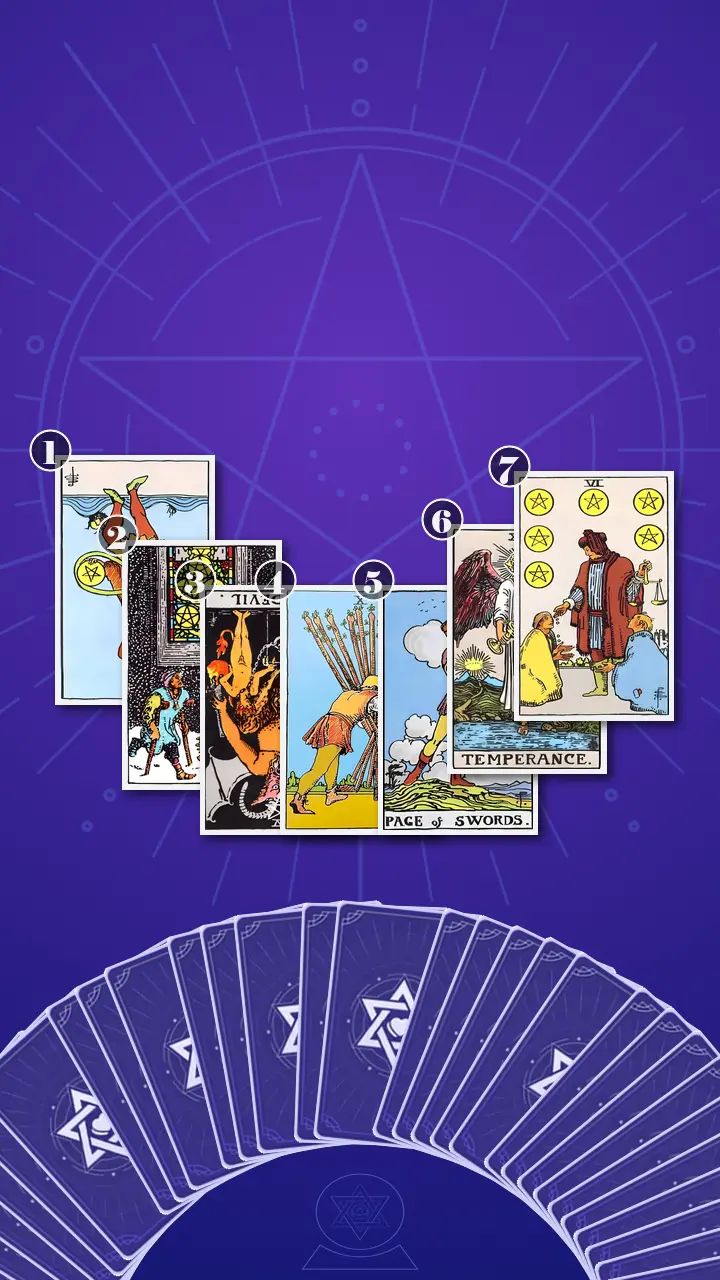
“Today we’ll use the Horseshoe Spread,” I said, laying seven cards in a gentle arc like a protective bowl. “It’s perfect for a career crossroads moment that isn’t just career. A credit score alert hits money, work behavior, and health capacity all at once.”
For anyone reading along who’s ever Googled ‘Got a credit score alert—what should I do first?’: this spread works because it moves from what’s happening (the symptom) to what’s driving it (hidden loop + main obstacle) to what systems are amplifying it (external influences), and then it gives actionable advice and a grounded next direction. It’s “how tarot works” in the most practical way: context → pattern → leverage point → next steps.
I pointed to three key positions so Jordan could feel the structure. “This one shows the current pressure. This one names the main blocker. And this one”—I tapped the advice position—“is the remedy, the bridge back to stability.”
Reading the Arc: From Monitoring to a Plan
Position 1 — The setup you’ve been living inside
“Now flipped over is the card that shows the recent balancing act that set the stage,” I said. “Two of Pentacles, reversed.”
In the classic image, someone juggles two coins in an infinity loop while the sea behind them stays just barely manageable. Reversed, that loop turns into tab-switching chaos.
I said it in Jordan’s language: “Before the alert even happened, you were already juggling too many small moving pieces without a stable rhythm—minimum payments, rent auto-withdrawal, work deadlines, and the basics of feeding and sleeping yourself. This looks like three apps open late at night—bank, credit score, spreadsheet—switching fast. Busy, not progressing.”
The energy here is blockage: not a lack of intelligence, but a system without a steady beat. When the rhythm breaks, any little wobble feels like a collapse.
Jordan let out a short laugh that had no joy in it. “That’s… kind of brutal. Also exactly right.” Their eyes flicked down like they were seeing their own browser history hovering over the table.
“Brutal isn’t the goal,” I told them. “Accurate is. Because accuracy gives you options.”
Position 2 — What the alert is doing to you right now
“Now flipped over is the card that captures what the credit score alert is doing to your attention and sense of stability,” I said. “Five of Pentacles, upright.”
In modern life, this is the moment the push notification lands and it feels like you’re locked out of your own life. Cold dread. Isolation. The story that everyone else got the adulting rulebook and you somehow missed it.
“This card is scarcity-with-a-spotlight,” I said. “It’s not always about actual lack. It’s about perceived lack taking over your body.”
Jordan nodded once, sharp. “I can be doing fine and then one number changes and suddenly I’m… doomed.”
“And your brain thinks monitoring will save you,” I said. “But refreshing your score is not the same thing as protecting your future.”
The Five of Pentacles also shows a lit window—help exists, but panic makes it feel inaccessible. Payment plans. Due-date changes. A fee reversal request. A conversation with an institution. The difference between being shut out and walking through a door is often one call—but the nervous system has to be regulated enough to make it.
Position 3 — The hidden loop that keeps restarting
“Now flipped over is the card that reveals what you may not be fully seeing,” I said. “The Devil, reversed.”
I always slow down here—not to dramatize it, but to de-shame it. “Reversed Devil isn’t ‘you’re trapped forever.’ It’s the moment you notice the chain is loose.”
“Underneath the practical worry is a compulsion loop,” I said, keeping my voice steady. “You keep checking because checking gives a tiny hit of relief—like, ‘I’m doing something.’ The chain isn’t your finances. The chain is the refresh gesture, the screenshot habit, and the ‘responsible adult’ voice that says you can’t stop scanning.”
Jordan’s mouth twisted into an uncomfortable half-smile. “I literally screenshot changes to ‘track’ them. Like I’m doing an investigation.”
“Exactly,” I said. “Responsibility versus reassurance-seeking. You’re not bad with money. You’re trying to buy safety with vigilance.”
The energy is excess—too much mental grip. Reversed Devil is the possibility of a pattern interrupt: not a personality overhaul, just one week of loosening the chain.
Position 4 — The main blocker: why it feels heavier than it needs to be
“Now flipped over is the card that names the main blocker to rebalancing work, money, and health,” I said. “Ten of Wands, upright.”
I used what I call a capacity snapshot—the clearest way to make this card land in real life. “Picture you carrying a literal stack: Slack pings, rent auto-withdrawal, a late-fee email, and the credit alert—balanced on your forearms—while trying to walk faster to fix it.”
Then I let the inner monologue speak out loud, the one so many young professionals know too well: “If I just add one more thing, I can finally feel safe… why do I feel worse?”
Jordan exhaled—quiet, like air leaving a tire. Their shoulders dropped half an inch, then tightened again, like the body didn’t fully trust relief yet.
“Your obstacle isn’t ignorance,” I said. “It’s load. You respond to a money scare by adding weight: extra hours, extra tracking, extra pressure. The result is predictable—you’re too depleted to do the clean, effective tasks.”
I looked at them, not the cards. “Your health isn’t a reward for fixing money—it's the capacity that lets you fix money.”
Position 5 — The external system that keeps your nervous system on-call
“Now flipped over is the card that shows how systems and environment are shaping your reactions,” I said. “Page of Swords, upright.”
“This is your phone screen,” I said plainly. “Wind is the information stream. Borrowell/Credit Karma alerts. Banking notifications. Teams. Slack. Fine print. Policy changes. It trains your body to react.”
I watched Jordan’s thumb twitch like it wanted to unlock their phone on reflex. That micro-trigger chain is real: notification → instant research mode → body goes on-call.
“Information can be handled, not inhaled,” I said. “This Page can be a resource if we give it boundaries: gather only what you need—what changed, which account, which date—then move from research into one direct conversation or action.”
They nodded, sharper this time, like someone adjusting a setting in their head. I’d seen that look a lot on-air when callers finally understood the difference between noise and signal.
When Temperance Poured Between Two Cups
Position 6 — The integrative remedy (the bridge back to balance)
When I reached for the sixth card, the room went noticeably quieter—like even the fridge decided to stop auditioning for attention. “We’re turning over the core remedy now,” I said, “the card that shows how to rebalance in a way that supports both money stability and health capacity.”
Temperance, upright.
Jordan stared at the angel pouring liquid between two cups—one foot on land, one in water. A calm that didn’t look like perfection. A calm that looked like method.
Here’s what it translated to in their life: stop trying to fix everything overnight. Build a repeatable cadence: a defined finance window, then a defined body-protecting action. Not dramatic. Not punishing. Sustainable.
Setup: I mirrored the moment I knew they lived in: that 12:14 a.m. flip between credit score, bank transactions, and a budget tab—heart a little tight—telling yourself you’ll sleep after one more check.
Stop trying to ‘outwork’ the alert and start blending your resources like Temperance’s cups—one practical step for money, one protective step for your body, repeated.
I let it hang for a beat, like the pause after a song ends and you realize you’ve been holding your breath.
Reinforcement: Jordan’s reaction came in layers—a three-step chain I’ve learned to listen for as carefully as I listen to music in a studio.
First, a tiny freeze: their inhale stalled, eyes fixed on the card, pupils slightly wider. Then the cognition landed: their gaze went unfocused for a second, like they were replaying last night’s tab-switching in their head. Then the emotion moved: their shoulders softened, but their jaw stayed guarded—relief with skepticism. “That sounds too simple,” they said, voice low. “But also… doable.”
“Good,” I said. “Simple is not the same as easy. Simple is how you rebuild trust with your nervous system.”
I slid a notepad toward them. “Set a 10-minute timer. For the first 5 minutes, write one line: ‘The next money action I can complete today is ______.’ Make it a single action you can actually finish—call the issuer and ask what caused the score change, set one due-date reminder, request a payment plan.”
“For the next 5 minutes,” I continued, “do one body-protecting action that doesn’t require motivation: drink a full glass of water, eat something with protein, or take a slow lap around the block. If your brain says it’s ‘not enough,’ that’s the old system trying to regain control through intensity. Small is the point.”
Temperance is the alchemist, and in my world—sound therapy—alchemy is also mixing. In radio, I’ve watched people try to crank the volume on one track to drown out another. It never makes a clean song; it just distorts. Balance is a mix, not a mute button.
“My signature lens here is what I call Space Tuning,” I told Jordan. “Because your environment is part of the loop. Tonight, your bedroom has become a control room. If the credit app lives on your home screen, your nervous system is literally living in a siren test.”
We made it concrete: finance apps off the home screen. Non-essential notifications off. And a tiny sound cue to mark the switch from money → body. “Pick a gentle tone—any calm track you already like. When the 15-minute money window ends, you press play. That’s not woo. That’s a boundary your body can hear.”
I leaned in. “Now—using this new lens—think back to last week. Was there a moment when this insight would’ve changed how you felt? A moment where you monitored instead of acted, or overworked instead of recovered?”
Jordan swallowed. “Tuesday. After standup. I was going to call at lunch. I didn’t eat lunch. I just… opened more tabs.”
“That,” I said gently, “is the exact step from wired-tired dread toward grounded relief. Not a big leap. A repeatable one.”
Position 7 — The next-direction: stability in motion
“Now flipped over is the card that describes the grounded next-step direction if you follow the advice,” I said. “Six of Pentacles, upright.”
This is the scales: fair exchange, realistic allocation, support. Not self-punishment disguised as budgeting.
“This card normalizes negotiation,” I said. “Due date changes. Payment plans. Asking for terms. Getting clarity. It’s the opposite of Five of Pentacles isolation.”
I watched Jordan’s expression shift—like permission clicking into place. “So… it’s okay to ask?”
“It’s adult,” I said, a little wry. “Fair plans beat shame plans. A fair plan covers essentials and protects your recovery, because your recovery is what makes follow-through possible.”
The Two-Cup Window System: Actionable Advice You Can Start Tonight
I stitched the whole arc together for Jordan in one clean story—because clarity comes from coherence:
“Before the alert, you were already juggling too many moving pieces (Two of Pentacles reversed). The alert hit and your body interpreted it as scarcity and social exclusion (Five of Pentacles). Then the hidden driver kicked in: reassurance-seeking through compulsive monitoring (Devil reversed). The main blocker isn’t laziness—it’s overload that collapses capacity (Ten of Wands), amplified by a notification environment that keeps you on-call (Page of Swords). The remedy is integration—money action plus body action, on purpose, on a schedule (Temperance). And the next direction is a fair, structured plan with support and negotiation (Six of Pentacles).”
The blind spot I named gently: “You’ve been treating monitoring like progress. But surveillance drains the very capacity you need for real money tasks and basic health.”
The transformation direction was simple enough to live: shift from monitoring the problem to running one small, scheduled financial action plus one small health-protecting action each day.
Then I gave Jordan the next steps—small enough to do even on a day when you’re already fried.
- Block a Daily “Two-Cup Window”Put a calendar block on your phone for 30 minutes: 15 minutes money action + 15 minutes body action (example: 6:10–6:40 p.m.). In the money half, pick one task you can finish: confirm one due date, turn on autopay for one account, set one reminder, or call one issuer.Expect your brain to argue it’s “not enough.” Lower the bar on purpose: if 15 minutes feels impossible, do 7. Consistency is the flex.
- Use the Call-Script-and-Timer MethodOpen Notes and write: “Hi, I got a credit score change and I’m trying to understand what caused it—can you tell me what factor changed and what my options are?” Set a 8-minute timer: 2 minutes to dial, 6 minutes to ask. One institution, one ask (due date change, payment plan, fee reversal, or clarification of statement balance).If the call spikes anxiety, you’re allowed to hang up and try again later. Partial progress still counts—this is practice, not a test.
- Schedule Credit Checking (Don’t Let It Schedule You)Choose one weekly credit check appointment (example: Saturday 11:00 a.m.). Remove the widget/shortcut from your home screen and turn off non-essential push alerts. If you feel the urge to check outside the window, write what you’re actually looking for (reassurance? certainty? a reason?) before deciding.If you slip and check anyway, you’re not “back at zero.” You just return to the next scheduled window—like getting back on beat after a missed note.
Because I work with sound, I offered one extra layer that felt like Temperance in audio form: “If you want, borrow my 21-Day Sound Bath idea. Three minutes a day. Same track. Same time. It’s not about being zen; it’s about teaching your body that progress doesn’t require panic.”

A Week Later: Quiet Proof
A week later, Jordan DM’d me a screenshot—not of their credit score, which felt like a small miracle—but of a Google Calendar block that actually stayed put: “Two-Cup Window.” Under it: “Called issuer (8 min). Ate a real snack.”
They added, “I still woke up thinking, ‘What if I messed this up?’ But I didn’t spiral. I did the window. Then I went to bed.”
It was clear, and it was human: clarity without perfection. A system that held them on the days motivation didn’t.
That’s the real Journey to Clarity I care about—not a promise that numbers never change, but proof you can meet change with rhythm instead of alarm.
When one credit score alert hits and your chest tightens, it’s not that you’re “bad with money”—it’s that you’ve been trying to buy safety with constant vigilance, and your body is the one paying the interest.
If you treated stability like something you practice (not something you prove), what’s the tiniest money step—and the tiniest body-protecting step—you’d be willing to pair together tomorrow?