From Slack Shout-Out Shame to Grounded Self-Worth: Signal→Soothe→Speak

The Monday Morning #wins Stomach-Drop
If you can be genuinely happy for a teammate and still feel your self-worth wobble in the same minute, you’re not a bad friend—you’re triggered by the scoreboard.
Jordan (name changed for privacy) joined my video call from Toronto with her camera angled a little too high, like she’d set it up quickly and then sat back down before she could talk herself out of it. She was 27, an early-career product manager, and her voice had that careful brightness people use when they don’t want to sound “dramatic” about something that has already rearranged their whole day.
She described a Monday that started before her feet hit the floor: blinds barely open, phone screen warm in her palm, Slack loading while her room still looked half-asleep. “I tapped #wins,” she said, “and there it was—‘Huge shoutout to Alex.’ Not me. Not my part. And it just… dropped me. Like my stomach went cold.”
I listened for the contradiction underneath her words—the part that felt loyal and generous, and the part that felt panicked and small. She found it herself. “I’m happy for them,” she said, quickly, like she needed me to know that. Then, quieter: “And I feel demoted. I hate that one Slack message can ruin my whole afternoon.”
The shame wasn’t an abstract cloud. It lived in her body like a heavy elevator that suddenly loses a floor—stomach sinking, chest tightening, hands restless and ready to type, as if she could fix the feeling by shipping something undeniable.
“That makes sense,” I told her, and I meant it. “We’re not here to scold the part of you that wants to be seen. We’re here to understand the pattern—so you can choose your next move with clarity, instead of letting a channel decide your worth.”

Choosing the Compass: The Transformation Path Grid for Finding Clarity
I work as a tour guide at a planetarium in Tokyo—ten years of explaining celestial motion to people who swear they’re “not science-y,” and then watching them soften when the stars finally make sense. Tarot, for me, is similar. Not a prediction machine. A map of motion: what pulls you, what speeds you up, what locks you into the same orbit.
I asked Jordan to take one slow breath—not as a ritual for luck, but as a reset for attention. Then I shuffled while she held the question steady: “Friend praised someone else in our Slack—why did it hit my self-worth?”
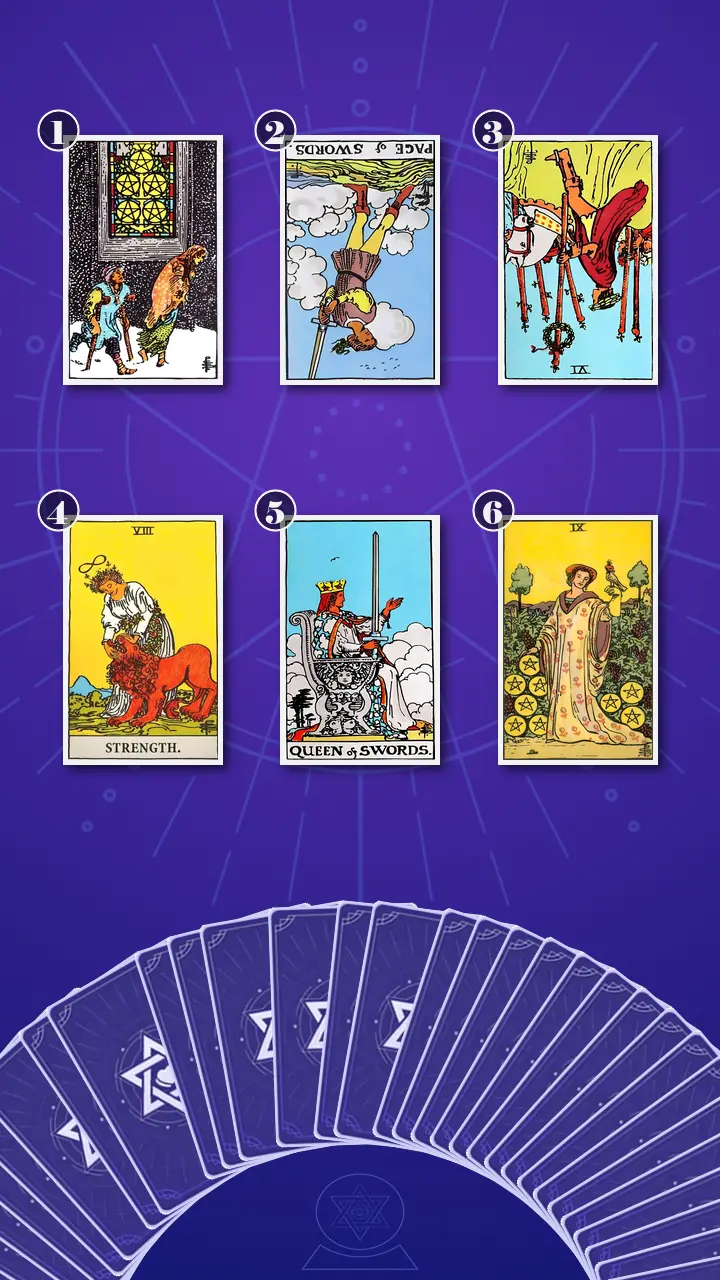
“Today I’m using a spread called the Transformation Path Grid (6) · Context Edition,” I said. “It’s built for loops—trigger, interpretation, collapse, compensation—because Slack recognition can turn into decision fatigue fast. This layout separates the surface moment from the mental habit that keeps it looping, then it gives us a turning point, a clean next step, and what integration can look like.”
For anyone reading this who’s ever typed a ‘quick update’ that turned into a miniature performance review: a six-card grid is the smallest spread that still shows the whole mechanism. Position 1 catches the exact sting. Position 2 shows what keeps you refreshing. Position 3 reveals the root belief—the hidden rule your nervous system thinks it’s living under. Then we drop to Position 4, the hinge: the internal shift that changes the processing in real time. Positions 5 and 6 are the practical outcome—communication and integration.
Reading the Map: Slack as a Window You Can’t Stop Staring Through
Position 1 — The Moment It Hit: Five of Pentacles (upright)
“Now we’re turning over the card that represents the surface trigger and the specific ‘self-worth hit’ moment in the Slack scenario,” I said.
The Five of Pentacles, upright.
I pointed out the traditional image—two figures outside in the snow, shoulders rounded, trudging past a stained-glass window glowing with warmth. “In modern life,” I told her, “this is you in Toronto winter mode—coffee, commute, Slack open—and a public shout-out lands on someone else. Even though nothing was taken from you, your nervous system reacts like you’ve been left outside the team’s warmth. You start scanning the thread for your name the way you’d scan a guest list: ‘Am I in? Do they see me?’”
The energy here isn’t laziness or failure. It’s scarcity—the belief that belonging is a warm room you get invited into, and if you’re not named, the door must be closed.
Jordan let out a small laugh that sounded like it had sharp edges. “That’s… so accurate it’s kind of mean,” she said, and then her mouth pressed into a line, like she was trying not to show how much it landed.
“I’m not interested in being mean,” I said gently. “I’m interested in being precise. This card doesn’t call you petty. It calls you human. It says: this sting is a belonging signal, not a character flaw.”
Position 2 — What Keeps the Loop Alive: Page of Swords (reversed)
“Now we’re turning over the card that represents what keeps the reaction looping: the habitual interpretation or behavior that escalates the sting,” I said.
Page of Swords, reversed.
This is the card of mental alertness, but reversed it becomes hypervigilance—sharpness that turns inward. I watched Jordan’s eyes flicker the way they do when someone recognizes their own micro-habits in a mirror.
“Here’s the modern scenario,” I said. “Slack becomes your status radar. You keep it open on a second monitor, reread the praise line-by-line, check who reacted, and build a whole narrative from minimal context. You draft a ‘casual’ follow-up that subtly proves you mattered too—because certainty feels safer than ambiguity.”
That’s excess Air: too much interpretation, too much tone-checking, too much meaning-making. It can look like productivity, but it functions like self-punishment. The trap is the promise: “If I can decode the tone, I can control the outcome.”
I added, quietly, one of the phrases I’ve seen loosen shame in a room: “If your message is secretly a plea, your nervous system will feel it.”
Jordan winced, then nodded once. “I do the counting,” she admitted. “Emoji reactions. Who saw it. Who didn’t.”
“That’s the Page reversed,” I said. “Information-seeking that isn’t actually about information. It’s about trying to earn safety through monitoring.”
Position 3 — The Root Belief Underneath: Six of Wands (reversed)
“Now we’re turning over the card that represents the deeper root belief about recognition and belonging that makes public praise feel like a verdict,” I said.
Six of Wands, reversed.
Even people who don’t know tarot know this vibe: the laurel wreath, the crowd, the elevated rider. In reverse, the crown never feels like it’s on your head. You can do good work and still feel like you’re one shout-out away from disappearing.
“The modern life scenario here is straightforward,” I told her. “You don’t just want to do good work—you want the work to be witnessed. When someone else gets the public win, it feels like the crown passed you over, even if you contributed. Your brain treats visibility as belonging, so applause going elsewhere reads like you’re slipping down the ladder.”
This is deficiency in internal validation, paired with an over-reliance on the social parade. It doesn’t mean you’re arrogant. It means you learned, somewhere along the line, that being seen equals being safe.
I asked her the question this position demands: “If you weren’t publicly recognized this week, what do you fear would become true about your place on the team—or your value as a person?”
Jordan stared slightly past the camera, as if reading a line of text on a wall behind me. “That I’m… replaceable,” she said. “That I’m just the person who does the boring parts, and nobody notices until I’m gone.”
In the planetarium, when I talk about gravity, I tell people it’s not personal—it’s consistent. What tugged at Jordan wasn’t a teammate’s success. It was the belief that there’s only so much spotlight to go around.
When Strength Held the Lion: Don’t Negotiate Your Worth in a Public Channel
I let the room go quiet on purpose before we turned the next card. Through my office window, the city noise was distant; inside, the only sound was the soft friction of card stock. “We’re opening the hinge of the whole reading now,” I said. “This is the turning point.”
Position 4 — The Internal Shift in Real Time: Strength (upright)
“Now we’re turning over the card that represents the key internal shift that can change how you process public praise and comparison in real time,” I said.
Strength, upright.
It showed the image I’ve always loved: not a battle, but a calm woman closing a lion’s mouth with steady gentleness. “In modern life,” I said, “this is you feeling the sting and the urge to ‘fix it’ immediately with a perfect message or extra work. Strength is the moment you pause with the discomfort—hand on chest, one slow exhale—and choose not to audition for worth in the thread. You don’t deny the feeling; you stop letting it steer.”
I saw Jordan’s shoulders lift like they were preparing to defend themselves, then hover there, waiting.
Setup. She was still living inside that familiar split-screen: one part of her half-awake in bed with Slack open, thumb hovering over #wins; another part already drafting the “quick update” that would turn into twelve bullet points. Her stomach drop had become a command: Earn your place back. Now.
Delivery.
Stop treating the Slack spotlight as the judge of your value; start practicing quiet courage by holding the lion gently and staying loyal to what you know you’ve built.
I let it sit there for a beat, like a planetarium pause before the stars come back on.
Reinforcement. Jordan’s reaction came in layers, the way real truth lands. First, a tiny freeze—her breath stopped halfway in, and her hands went still in her lap as if she’d been caught mid-refresh. Then her gaze unfocused for a second, replaying a memory: the thread, the shout-out, the instinct to type a message that was really a request for reassurance wearing an update’s clothes. And then, quietly, the release—she exhaled in a long line, shoulders dropping a fraction, like she’d been holding a backpack strap too tight and finally noticed.
“I always think I have to respond,” she said, voice thinner than before. “Like… if I don’t do something fast, the story becomes true.”
“That’s the lion,” I said. “Not evil. Not wrong. Just loud.”
And this is where my own lens comes in—the one I’ve built from studying motion and relationships in the sky. “I have a framework I call the Binary Star System,” I told her. “Two stars can become tidally locked—gravity pulls them into a pattern where they always show the same face to each other. In your case, your self-worth and public recognition have become a binary pair. The moment Slack shines on someone else, your nervous system swings to face the spotlight like it’s the only light source.”
“Strength,” I continued, “is the small torque that breaks tidal locking. Not by winning. By regulating. By choosing a pause so your worth doesn’t have to orbit the channel.”
Jordan swallowed, eyes bright in a way that didn’t look like drama—it looked like relief mixed with a little anger. “But if I stop doing that,” she said, “doesn’t it mean I was wrong? Like… I made it all too big?”
I nodded. “That’s a real fear. And it’s also a sign you’re about to gain power. You weren’t ‘wrong’ for having a nervous system that learned visibility equals safety. You’re just ready to update the rule.”
I leaned closer to the camera, as if it could make the moment more reachable. “Right now, with this new frame—can you think of a moment last week when you felt the sting and went straight into proof-of-worth mode? If Strength had been available to you, what would you have done in the first 30 seconds instead?”
Jordan’s eyes dropped. “I would’ve… exhaled. I would’ve not opened the thread again. I would’ve gone back to my actual work instead of trying to win Slack.”
“That’s the shift,” I said. “This isn’t about not caring. It’s about moving from shame-driven comparison and scoreboard vigilance toward grounded self-worth—so you can communicate cleanly instead of performing.”
Position 5 — The Dignified Next Move: Queen of Swords (upright)
“Now we’re turning over the card that represents a concrete relational/career move: how to communicate, set boundaries, or ask for feedback without performing,” I said.
Queen of Swords, upright.
Her sword is not for cutting people down. It’s for cutting through fuzz. “This is the after,” I said. “Instead of posting a long proof-of-work update, you choose one direct sentence in the right place—a 1:1. You ask what visibility looks like, what outcomes you own, and how progress should be shared. It’s not a dramatic confrontation—it’s clarity that protects your self-respect and reduces the need to mind-read.”
I offered Jordan a before/after contrast, because this is where people feel the relief in their jaw.
“Before: three paragraphs that start with ‘Quick update!’ and end with you feeling exposed. After: one Queen-of-Swords sentence. One breath.”
I said it the way I’d write a clean Jira ticket—scoped, specific, no apology tour. “Clear asks beat perfect performances,” I reminded her.
Position 6 — Integration: Nine of Pentacles (upright)
“Now we’re turning over the card that represents what integration looks like when self-worth is less dependent on public validation,” I said.
Nine of Pentacles, upright.
We began with two figures outside a warm window. We end in a contained garden—walled, tended, already fruitful. “The modern scenario,” I said, “is a private impact log you actually read when insecurity spikes. You notice you’re competent even when untagged. Praise becomes a bonus, not oxygen. You still appreciate recognition—but you’re no longer using Slack as the sole mirror that tells you who you are.”
This is Earth in balance: cultivated self-worth. “Private proof turns public praise into a bonus,” I added, because it’s the cleanest summary I know.
From Insight to Action: The Slack Scoreboard Detox
I tied the six cards together for Jordan the way I’d tie constellations together for visitors under an artificial sky—simple lines, so the shape becomes visible.
“Here’s the story the spread tells,” I said. “A public shout-out triggers a Five of Pentacles feeling—like you’re outside the warm room. Then the Page of Swords reversed kicks in: you monitor, reread, count reactions, draft-and-delete, trying to decode your status and control the outcome. Under that is the Six of Wands reversed—the belief that visibility equals belonging, so being unnamed feels like being replaceable. Strength is the hinge: regulate the sting first so it doesn’t drive your behavior. Then Queen of Swords turns regulation into one clean request. And Nine of Pentacles is the longer arc: build private proof so your nervous system doesn’t need the channel to breathe.”
“The blind spot,” I named carefully, “is that your brain treats Slack applause like objective measurement. But it’s not a fair scoreboard—nobody agreed on the rules. That’s why it feels so brutal. The transformation direction here is: stop outsourcing your worth to public validation, choose one internal metric, and make one direct visibility request without performing.”
Then I gave her next steps—small, testable, doable on a real Tuesday, not a fantasy Monday.
- Signal → Soothe (90 seconds)When a Slack shout-out hits and you feel your stomach drop, do one slow exhale for 6 counts before you reread the thread. Then type one line in Notes: “This is shame + comparison. My body thinks I’m being left out.” Set a 2-minute timer: no replying, no drafting, no ‘quick update.’If your brain says “this is cringe,” make it smaller: 30 seconds counts. If you’re in public, skip the hand-on-chest—just exhale and drop your shoulders.
- The Private Proof Practice (7 days)Start a private impact log called “Impact Log (Private).” Each day write three bullets: (1) one outcome you moved, (2) one collaborator you supported, (3) one skill you practiced. Before you open #wins, read yesterday’s three bullets first.Lower the bar: you’re collecting receipts for your own brain, not writing a diary. If it starts sounding like a Slack update, cut it in half.
- One Queen-of-Swords sentence (in the right place)Draft one clean ask for a 1:1 (not the channel). To your manager: “Can we align on what impact you want me to prioritize and how you want me to share progress so it’s visible?” To a friend who posts shout-outs: “I’m genuinely happy for them—and I noticed I felt a little invisible. Could you tag contributors next time if it fits?”Say it once, no over-explaining. You’re not asking for a personality award—you’re aligning on impact and communication.
To make it even more practical, I offered one of my own tools—something I use with teams the way I use star charts with visitors. “I call it a Social Star Map,” I said, “and it’s not mystical. It’s a weekly plan for where you’ll spend your social and visibility energy so you don’t leak it into Slack refreshes.”
We sketched hers in two minutes: one 10-minute window per day to check #wins (not five scattered micro-checks), one midweek 1:1 touchpoint with her manager to align on what “visible impact” means, and one end-of-week review of her private impact log. “You’re giving your nervous system predictable ‘transits,’” I told her. “So it stops trying to predict safety from emoji analytics.”

A Week Later: Ownership, Not Certainty
Seven days later, Jordan messaged me a screenshot—not of #wins, but of her Notes app. Three bullets per day, small and unglamorous. Underneath, one line: “Read this before Slack. It helped.”
She’d also drafted (not yet sent) a single Queen-of-Swords sentence to her manager. “I didn’t send it the same day,” she wrote. “But I wrote it without spiraling. That felt new.”
She wasn’t suddenly immune to recognition culture. But she’d stopped negotiating her worth in public threads. She’d created a private garden of proof she could walk into when the window-glow of someone else’s praise tried to convince her she was outside.
That’s what a Journey to Clarity looks like in real life: not certainty, but ownership—one exhale, one clean sentence, one small record of what you’ve built.
When someone else gets praised in public and your stomach drops, it’s not because you’re petty—it’s because part of you learned that being seen is the same as being safe, and being overlooked feels like disappearing.
If you didn’t have to earn your place back in the thread tonight, what’s one small way you’d choose to recognize your own impact—privately, on purpose—before you ask the room to do it?