Rewriting the Tour Offer Email All Day—Until I Chose a 3–6 Month Rule

The Email You Keep Reopening in the Elevator
You’ve reopened the same tour offer email so many times today your inbox basically thinks it’s your full-time job.
Jordan told me that before they even sat down—like a confession that was also a punchline. They were 24, Toronto-tired, and carrying that particular kind of city pressure that lives in your body before it ever becomes a coherent thought.
“This morning,” they said, “8:47 a.m. in my condo elevator downtown. Tinny elevator music. My phone brightness is basically a spotlight. I’m rereading the offer and just… hovering over Reply.”
I watched their jaw work as they spoke—tight, like they were holding a bite they refused to swallow. Their shoulders stayed a little too high. One knee bounced under the table with a steady, restless metronome.
“The tour offer is due today,” Jordan added. “If I take it, I might have to give up my internship. If I keep the internship, I’m terrified I’m passing up my one real shot.” They exhaled through their nose. “And I keep drafting and deleting a response like it’s going to define my entire career trajectory.”
The pressure around them felt like standing too close to a subway track: not danger, exactly—just that buzzy urgency that makes it hard to focus on anything else.
“A due-today decision doesn’t mean you’re behind—it means the timeline is loud,” I said, keeping my voice steady on purpose. “Let’s make today less like a verdict and more like a map. We’re here for clarity—and for a next step you can actually live with after you hit send.”

Choosing the Compass: The Decision Cross Spread
I asked Jordan to put both feet flat on the floor and take one slow breath—inhale for four, exhale for six. Not as a ritual for fate, but as a way to bring their nervous system back into the room. Then I shuffled while they held the question in plain language: “Tour offer due today: take the tour or keep my internship?”
Today I used a classic spread called the Decision Cross. For readers who wonder how tarot works in moments like this: the point isn’t to predict a guaranteed outcome. The point is to translate each option into its psychological “ask”—what it will require from you in identity, values, pacing, and follow-through—so you’re not trapped in decision fatigue or a career crossroads spiral.
This spread is built for an A-versus-B choice with a same-day deadline. It keeps the reading ethical and practical: we compare the tour path and the internship path, name the hidden pressure that’s distorting the moment, and then land on integration advice—how to choose cleanly, without demonizing the door you don’t walk through.
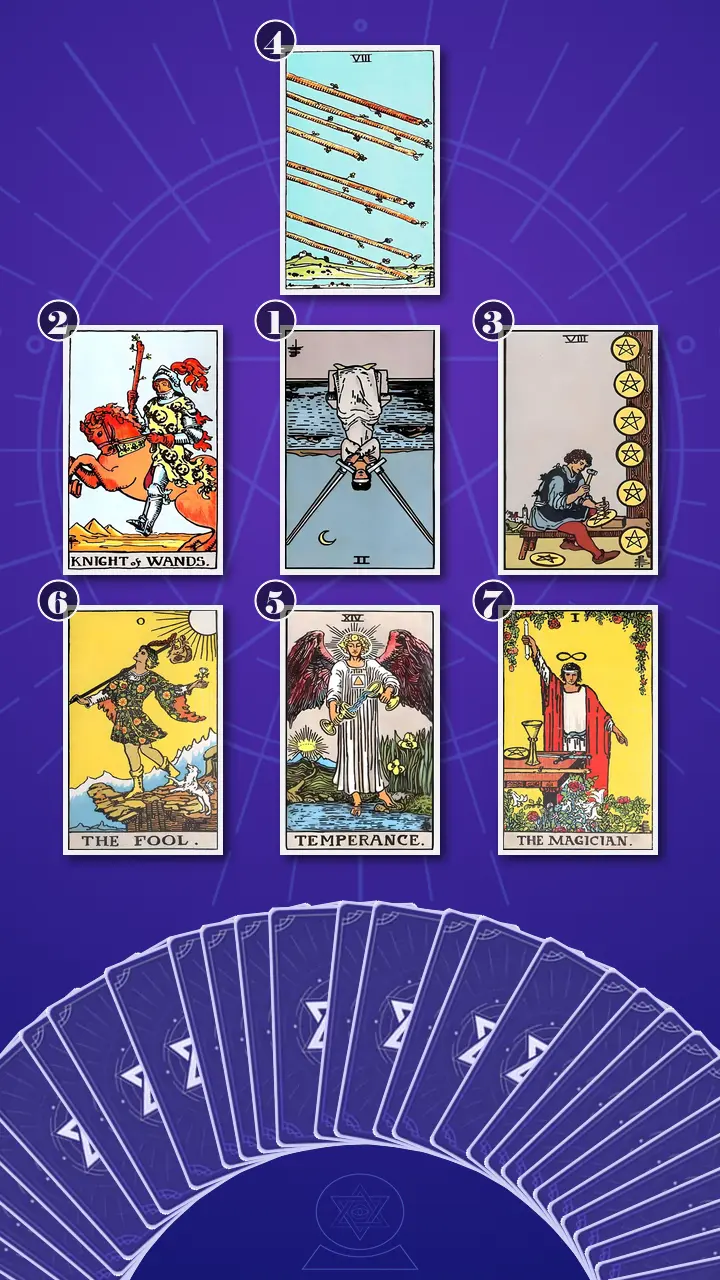
“Here’s the structure,” I said, laying the cards in a cross. “The first card shows what your mind is doing right now—the stuck loop. The overhead card shows what’s amplifying urgency today. Then we read the tour path and the internship path side by side. After that, we ground into integration—how to decide in a way you can sustain.”
Reading the Map: When a Deadline Turns Into a Personality Test
Position 1: What your mind is doing right now
“Now flipped over,” I said, “is the card representing what your mind is doing right now: the observable stuck point and why the deadline feels so loud.”
Two of Swords, in reversed position.
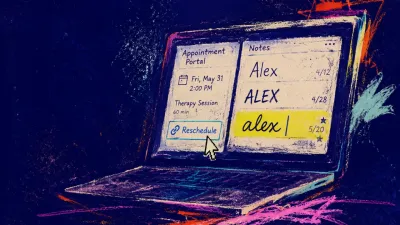
I didn’t even have to reach for symbolism first, because the modern-life translation was already sitting on Jordan’s screen: “It’s the ‘email tab open all day’ situation: you keep rereading the tour offer and your internship schedule like if you stare long enough, the correct answer will reveal itself. You draft and delete because you’re trying to write a reply that can’t be judged later. The cost is that your actual work and your nervous system both get stuck in limbo.”
Reversed, this card is a blockage—not a lack of intelligence, but a protective strategy collapsing. The energy here isn’t “indecision” as a personality trait; it’s “mental guarding” under time pressure. Your brain is trying to keep both doors open because it thinks that’s safety. But the cost of that safety is control slipping through your fingers.
I described what I saw in them, and what I’ve seen in a hundred deadline-driven choice paralysis sessions: the inbox-refresh montage. Laptop brightness too high. Three tabs open. The cursor blinking in the reply box like a metronome. The inner monologue that goes, “If I send X, then Y… unless Z…” until your thoughts feel like a spreadsheet that won’t stop recalculating.
Jordan let out a small, sharp laugh—bitter at the edges. “Okay. That’s… that’s too accurate. Like, borderline rude.”
“I’ll take ‘borderline rude’ as confirmation,” I said gently. “One clean send beats twelve anxious drafts. And we’re not going to shame the drafts—your mind is trying to protect you from regret. We’re just going to stop letting protection run the meeting.”
Position 4: Hidden pressure point
“Now,” I said, “we flip the card representing the hidden pressure point: the factor that’s amplifying urgency or distortion in your thinking today.”
Eight of Wands, upright.
This card is the accelerant. In modern terms: “This is the ‘everything is happening at once’ day: a due-today deadline, unread messages, calendar conflicts, and your brain treating the clock like a personal attack. The pressure isn’t proof you’re failing—it’s simply momentum. Your move is to respond cleanly, not to stop time.”
Upright, the Eight of Wands is excess speed—not inherently bad, just loud. It makes everything feel equally urgent because it’s all arriving at once, like your brain on push notifications. And when you’re already stuck in the Two of Swords loop, speed doesn’t motivate—you panic-optimize.
Jordan’s shoulders dropped by maybe half an inch when I said, “This isn’t your character flaw. It’s timing.” Their eyes softened, like the deadline had been insulting them personally all day and someone finally took the insult away.
“I keep thinking, ‘If I were competent, I’d know,’” they admitted.
“Competent people still feel this,” I said. “They just build decision rules so the clock doesn’t get to write the story.”
Position 2: Tour path
“Now we look at the left side,” I said, “the card representing the tour path: what taking the tour is asking you to embody.”
Knight of Wands, upright.
The modern-life scenario clicked immediately: “Taking the tour looks like saying yes to motion: hopping on a fast-moving opportunity, meeting people quickly, being visible, learning by doing. It’s the part of you that feels alive when the plan involves travel, uncertainty, and a story worth telling—provided you’re not saying yes purely to outrun anxiety or chase FOMO.”
Upright, this is balanced Fire—energy that wants to move. But it’s also Fire that can tip into excess if it becomes adrenaline decision-making: the “yes” that’s really a sprint away from discomfort.
Jordan’s mouth twitched with a half-smile. “It does feel alive,” they said, and then immediately, like they were bracing for a scolding: “But Toronto is expensive. I can’t just… vibe my way through a schedule change.”
“Good,” I said. “That’s not you being boring. That’s you being real.”
Position 3: Internship path
“Now we read the right side,” I said, “the card representing the internship path: what staying is asking you to embody.”
Eight of Pentacles, upright.
In modern life: “Keeping the internship looks like compounding: showing up, getting feedback, building portfolio pieces, and letting competence stack week by week. It’s not flashy, but it’s real. The question is whether you’d be choosing it as a deliberate mastery investment—or defaulting to it because disruption feels scary.”
This is balanced Earth: craft, apprenticeship, repetition. The energy here is sustainable—but it can become deficiency if you shrink into it as a hiding place. Staying can be an intentional investment, or it can be a way to avoid being seen. The card doesn’t moralize it; it just names the fork.
Jordan nodded, slowly. “My internship makes me feel… on track,” they said, and their voice tightened on the last words like they didn’t trust themselves to want that. “But it also sometimes feels small.”
“Small can be strategic,” I said. “And ‘exciting’ can be strategic too. The question is: which one is aligned with what you want to learn in the next 3–6 months?”
When Temperance Poured Between Two Cups
Position 5: Integration and decision advice
I let the room go quiet on purpose, the way a trading floor goes quiet for a split second right before a major market open—everyone still moving, but the air changing. “We’re turning over the integration card now,” I said, “the one representing integration and decision advice: the key shift that helps you choose cleanly and follow through.”
Temperance, upright.
In modern terms, Temperance is the moment you stop trying to win against uncertainty and start pacing yourself through it: “Instead of picking the ‘most impressive’ option, you pick the option that matches your values and your capacity. You write a response that’s both brave and practical, and you back it up with a plan (money, schedule, communication).”
Upright, Temperance is balance—not “halfway,” but “sustainable.” It’s the internal mix that holds after the adrenaline wears off.
Setup: Jordan’s eyes flicked to their phone again, like they could feel the reply box blinking through the table. Their jaw clenched, then unclenched, then clenched again—trying to find the one sentence that guarantees they won’t regret anything.
Delivery:
Stop treating this as a one-shot, all-or-nothing verdict; choose the blend you can live with, like Temperance pouring two cups into one steady stream.
I paused and let that sentence sit between us, the way you let a hard truth settle before you rush to soften it.
Reinforcement: Jordan went through a three-part reaction so cleanly I could almost timestamp it. First: a physical freeze—breath held, fingers hovering mid-air like they’d been caught reaching for the same reassurance loop again. Second: the mind catching up—eyes unfocused for a beat, as if replaying every draft-delete-refresh cycle from the last twelve hours. Third: a release that wasn’t dramatic, just real—one long exhale from the chest, shoulders dropping, a blink too slow to be casual.
“But if I pick wrong—” they started, and then stopped, irritated. “Doesn’t this mean I should’ve known already?”
“No,” I said, direct but kind. “It means you’ve been trying to purchase certainty with effort. Temperance says: build a decision you can carry.” I slid into my own language—the one I learned long before tarot, back when decisions had dollar signs attached. “Think of it as a three-scenario forecast. Best case, base case, worst case—for each path. Not to predict, but to stop treating either option like a fantasy or a catastrophe. Then you probability-weight based on your values: learning speed, money stability, mentorship depth, or visibility.”
I leaned forward. “Now—using this new lens—think back to last week. Was there a moment you felt a real ‘lean’ in your body toward one option, and then you overrode it because you couldn’t justify it?”
Jordan swallowed. Their gaze dropped to the Temperance card—the angel pouring between cups, one foot in water, one on land. “Yesterday,” they said quietly. “I drafted a yes. It felt… scary but clean. And then I saw someone on LinkedIn posting a tour announcement and I panicked and started rewriting everything like I had to prove I deserved it.”
“That’s the shift,” I said. “From time-pressure panic to values clarity. Not perfect certainty—just enough truth to move.”
And I named it explicitly for them: “This is you moving from self-doubt under pressure toward grounded confidence through follow-through.”
Position 6: If you choose the tour
“Now,” I said, “we look at if you choose the tour: the practical growth edge to plan for so you don’t romanticize or self-sabotage.”
The Fool, upright.
Modern life translation: “If you choose the tour, the growth edge is being new on purpose: accepting you won’t have perfect clarity upfront and trusting your ability to adapt. You travel light: you define minimum needs (money/rest) and take the step anyway, staying curious rather than trying to prove you’re fearless.”
This is balanced beginner energy—but only if it’s supported. The Fool isn’t “reckless.” It’s “I’m willing to start without demanding I feel ready.” The dog at the heel is your reality check: money, sleep, logistics, communication. The cliff edge is real, but so is your ability to take one honest step.
Jordan’s face softened. “That actually feels… possible,” they said. “If I don’t pretend it’s going to magically solve everything.”
Position 7: If you keep the internship
“Last card,” I said, “for if you keep the internship: the practical growth edge to lean into so you don’t shrink or stagnate.”
The Magician, upright.
Modern translation: “If you keep the internship, the growth edge is agency: you don’t wait to be ‘discovered’—you use what’s on the table (skills, tools, contacts) and you ask for the work you want to learn. You turn ‘intern’ into a platform: defined projects, mentorship, and a next-step path you can actually point to.”
This is balanced agency. If you stay, don’t stay as a passenger. Stay as someone who can initiate—one clear ask, one concrete project, one visible contribution. The Magician doesn’t beg the universe. They use the tools on the table.
The One-Page Temperance Check: Actionable Advice for a Due-Today Choice
I took a breath and summarized what the full map was saying: your mind (Two of Swords reversed) is using overanalysis as protection. The environment (Eight of Wands) is speeding everything up until it feels like an emergency. The tour path (Knight of Wands + Fool) is real momentum and real learning-by-doing—if you plan for basic stability. The internship path (Eight of Pentacles + Magician) is real compounding skill—if you choose it with agency instead of fear.
The cognitive blind spot I named for Jordan was simple: they were treating one email reply like a lifetime identity verdict. That’s what made their jaw ache. That’s what made “professionalism” turn into endless drafting.
“You’re not choosing the rest of your life. You’re choosing the next 3–6 months you can actually follow through on,” I said. “That’s the transformation direction: from trying to guarantee the ‘right’ future to choosing based on values and learning priorities.”
Jordan frowned. “But I can’t even find, like, five minutes to do a whole process. I have Slack pings, my supervisor’s expecting me to finish a task, and the offer’s due today.”
“Perfect,” I said, and I meant it. “Then we use my trading-floor version: a pre-commitment focus reset and a ten-minute rapid assessment. Not more thinking—cleaner thinking.”
- The 20-Minute Trade-Off TimerSet a 20-minute timer. Write exactly two sentences for each option: “If I choose the tour, I’m choosing it because I value ___, and I’m willing to trade ___.” “If I choose the internship, I’m choosing it because I value ___, and I’m willing to trade ___.”If you feel the urge to “just check one more thing,” treat that as your stop signal. Do one proofread out loud (not five).
- Circle One Decision Rule (No Renegotiating)Choose one decision rule for the next 3–6 months: learning speed, financial stability, mentorship/skill depth, or visibility/network. Circle it on paper so your brain can’t keep renegotiating it.This is your “Risk-Reward Matrix” shortcut: you’re weighting what matters most right now, not forever.
- The 4-Line Clean Email (Send, Don’t Perform)Draft a 4-line reply that is clean and boring (that’s the point): 1) gratitude, 2) clear yes/no, 3) one practical next step (dates/call/confirmation), 4) sign-off. Save it as “Version A,” and do not keep rewriting beyond one final proofread.You don’t owe a perfect explanation to make a valid choice. If anxiety spikes, pause 60 seconds—feet on the floor, inhale 4, exhale 6—then hit send.

A Week Later: Ownership, Not Certainty
Five days later, Jordan texted me a screenshot: a sent email, time-stamped, subject line visible. Under it they wrote, “I did the two sentences. Circled learning speed. Sent Version A. My hands were shaking, but I didn’t rewrite it into a personality essay.”
They added one more line: “I celebrated by sitting alone in a coffee shop for an hour. It was weirdly quiet. I kept thinking, ‘What if I messed up?’—but I also felt… lighter.”
That’s the kind of proof I trust. Not the fantasy of certainty—just the quiet shift from spiraling to ownership. A decision made with a plan. A nervous system allowed to come down from the ledge.
When a deadline forces your hand, it’s easy to confuse a single email with a lifetime identity verdict—so you hold both options so tightly your jaw aches, hoping control will protect you from regret.
If you let this be a 3–6 month experiment instead of a forever verdict, what would a steady, livable ‘yes’ look like for you—on your calendar, in your bank account, and in your body?