Condo Offer Due at 5pm and Can't Decide—A Values-Led Way to Choose

The 5 p.m. Offer Tab Spiral
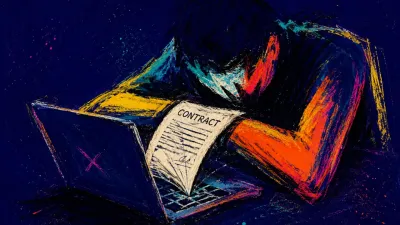
If you’ve reopened the same offer PDF so many times today you could recite the condo fees from memory—yet you still feel more stuck with every reread—this is that 5pm decision paralysis.
Jordan showed up on video from her Toronto rental living room at 4:41 PM, blinds half-closed like the room itself didn’t want to witness the verdict. Her phone kept lighting up with unsatisfying silence—no typing bubbles, no “yeah do it!” from the friends she’d texted: Can you look at this super quick? The only consistent sound was the faint hum of her laptop fan and the sharp little taps of her leg bouncing against the coffee table.
On her screen I could see the familiar chaos: the offer PDF, a Ratehub mortgage calculator tab, HouseSigma comps, and a half-open Reddit thread from r/TorontoRealEstate that made every option feel like a trap if you stared at it long enough.
“It’s due at five,” she said, and the words landed like a countdown siren. “If I buy and it’s wrong, I’m stuck with my mistake. If I don’t buy… I’ll feel like I missed my chance again.”
The pressure wasn’t an idea. It was physical: a tight chest, a keyed-up restlessness—like her body was bracing for impact while her mind tried to build a spreadsheet strong enough to stop it.
“Okay,” I told her, gently, the way I’d speak to someone on a ship who’s convinced the horizon is closing in. “We’re not here to force a perfect answer out of a messy housing market. We’re here to find clarity—something you can stand behind at 5:01, even if you still feel nervous.”

Choosing the Compass: The Decision Cross in Real Life
I asked Jordan to put both feet on the floor and take three slower breaths—not as a mystical ritual, but as a handbrake for the nervous system. Then I shuffled while she held the question in plain language: Buy now or keep renting—what’s the responsible move today?
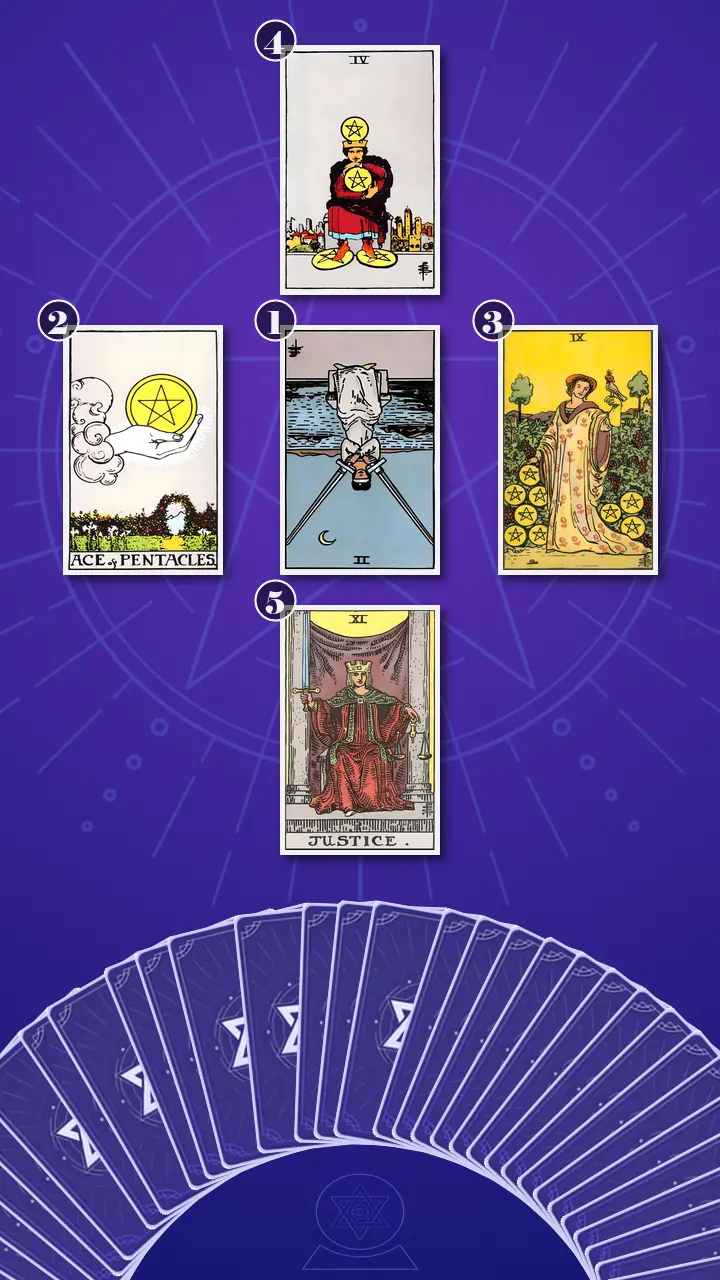
“For this,” I said, “I’m using the Decision Cross · Context Edition. It’s a tarot spread for a buy vs rent decision under a deadline—no outcome prediction, no pretending we can forecast Toronto inventory or interest rates. This spread is built to map the pressure, compare the lived energy of each path, reveal what’s secretly driving the paralysis, and then land on a decision principle you can actually use today.”
For you reading along: the rationale is simple. A same-day deadline turns choices into identity tests. The Decision Cross gives structure without false certainty. Position 1 shows the current loop. Positions 2 and 3 lay the two paths side-by-side. Position 4 tells the truth about what’s really making this feel like life-or-death. Position 5 replaces “what will happen?” with “what’s the clean next step?”—ethical, practical, empowering.
I described the layout like a literal crossroads sign: one card in the center, two options flanking it, the hidden driver above, and the grounded next step below—roots and footing, not prophecy.
Reading the Crossroads: What Buying and Renting Actually Ask of You
Position 1: The Immediate Decision Pressure — Two of Swords (Reversed)
“Now flipped over,” I told her, “is the card representing the immediate decision pressure: what your mind is doing at the 5pm deadline and how the dilemma is showing up in behavior.”
Two of Swords, reversed.
I didn’t have to reach for symbolism; Jordan was already living inside it. “This is the 3–5 PM tab-flip spiral,” I said. “Offer PDF. Listing photos. Rate changes. Status certificate notes. Three texts waiting for replies. You’re trying to keep it ‘purely logical,’ but your body is keyed up—and the more you re-check, the less you trust your ability to choose.”
The blindfold in this card always gets me, because it looks like composure from the outside and like numbness from the inside. “You’re holding your breath and calling it ‘being rational,’” I added. “And under a countdown clock, that doesn’t calm you—it jams the system.”
I leaned forward a little. “More tabs don’t always mean more clarity—sometimes they’re just a way to delay the moment you have to trust yourself.”
Jordan gave a small laugh that sounded like it came with nausea. Her shoulders tightened, then she nodded once—sharp, almost annoyed at how accurate it felt. “Yep,” she said. “That’s exactly what I’m doing. It’s like… if I just find the one clause or the one number, I’ll finally be allowed to decide.”
“That sentence,” I said softly, “is the whole loop.”
Position 2: Path A Energy (Buy Now) — Ace of Pentacles (Upright)
“Now flipped over,” I said, “is the card representing Path A energy—buy now: what committing to the offer is asking of you and what it could help you build internally.”
Ace of Pentacles, upright.
“Buying here looks like receiving something real,” I told her. “Not a fantasy moodboard. More like autopay set up, an emergency buffer, and being willing to tend the unglamorous parts—fees, upkeep, less flexibility—because the foundation itself supports you.”
I watched her eyes flick briefly to the listing photos tab, then back to me, like she was trying to separate the staged couch from the actual contract. “The offered coin in this card is the opportunity,” I said, “but the path beyond the archway is stewardship. The question isn’t ‘Would ownership make me look grown-up?’ It’s: Can I responsibly tend this seed for the next twelve months?”
Jordan’s jaw unclenched a millimeter. “I can,” she said, then hesitated. “I think. I can if it’s within the ceiling I set… and if I’m not pretending I’m fine with being less mobile.”
“That,” I said, “is you turning toward measurable reality instead of vibes and panic.”
Position 3: Path B Energy (Keep Renting) — Nine of Pentacles (Upright)
“Now flipped over,” I said, “is the card representing Path B energy—keep renting: what staying flexible protects, and what it may cost or preserve emotionally.”
Nine of Pentacles, upright.
“I want you to hear this clearly,” I told her. “Renting can be intentional independence. This card is a walled garden—boundaries, systems, competence. It’s automated savings, a clear timeline, planned review windows, the ability to pivot jobs or neighborhoods without your home decision dictating everything.”
Jordan’s expression softened, but I could see a wave of comparison fatigue behind her eyes—the Instagram Stories of keys and renovations, the Wealthsimple notifications, the group chat where someone casually says, we just bought like it’s a new personality trait.
“Both paths can be grown-up choices when they’re intentional,” I said. “The hard part is telling the difference between renting as a strategy and renting as a default because commitment feels too exposing.”
She nodded slowly this time, more grounded. “I hate that renting feels like I’m ‘waiting,’” she admitted. “But it also feels like… breathing room.”
“Then we name it honestly,” I said. “Breathing room isn’t failure. It’s capacity management.”
Position 4: The Hidden Driver — Four of Pentacles (Upright)
“Now flipped over,” I said, “is the card representing the hidden driver: the underlying fear/need that is amplifying the stakes and keeping you stuck.”
Four of Pentacles, upright.
“Underneath buy-versus-rent,” I said, keeping my voice careful, “is a tight grip. You’re trying to make one signature prove you have good judgment and can keep yourself safe. That turns normal uncertainty into a threat, so you clutch the numbers and details like armor—hoping control will erase regret.”
As I spoke, I tracked her body the way I do in my Jungian work: the shoulders creeping up, the chest held tight, the jaw set like she was biting down on the entire city’s housing market. This card always reminds me of white-knuckling a steering wheel in traffic—gripping harder doesn’t control the other cars, but it convinces your nervous system you’re doing something.
“Finish this sentence,” I invited her. “I’m afraid that if I choose wrong, it will prove that I’m ___. What word shows up first?”
She froze for a beat—breath paused, eyes slightly wider—then looked down at her desk like the answer was written there. “Reckless,” she said. “Or… stupid. Like I can’t protect myself.”
I nodded. “That fear makes sense. And it’s also why the tabs don’t help. You’re not searching for information—you’re searching for a guarantee. Advice can be helpful. Outsourcing your authority never is.”
When Justice Spoke: The Standards That End the Spiral
I let a quiet moment settle. Outside her window, late-afternoon light shifted, the kind that makes everything look temporarily more honest. “We’re turning over the key card now,” I said. “The one that tells us how to choose responsibly today without demanding perfect certainty.”
Justice, upright.
Setup. It’s 4:30 PM, you’re staring at the same offer PDF you’ve reopened all day, and your body is acting like the decision is a threat—tight chest, restless energy, the urge to text one more person. Your mind is still trying to find the one ‘correct’ choice before the clock runs out.
Delivery.
Stop trying to outthink risk; choose with clear standards and sign only what you can stand behind—like Justice holding the scales steady.
Jordan’s face tightened in a way that surprised her. The first thing that hit wasn’t relief—it was a flash of anger. “But if that’s true,” she said, voice sharper, “doesn’t that mean I’ve wasted the whole day? Like I did all this… for nothing?”
I didn’t rush to soothe it. I’d seen this before on transoceanic voyages, when a ship has a docking window and passengers try to bargain with the clock: more pacing, more questions, more frantic scans of the horizon. The bargaining feels like control until you realize the port doesn’t negotiate.
“No,” I said. “It means you finally found the lever. The research wasn’t wrong—it just wasn’t the decision.”
Reinforcement. Her body ran a three-step sequence so clean I could almost timestamp it: first, a brief physiological freeze—her breath caught, fingers hovering over her trackpad like she’d been caught mid-scroll. Second, a cognitive seep—her gaze went unfocused, as if replaying the day: the Ratehub refreshes, the maintenance-fee zoom, the ‘quick Q!!’ texts. Third, an emotional release that came out as a long exhale; her shoulders dropped, not dramatically, but undeniably, as if she’d been carrying a backpack she forgot was there.
“Okay,” she whispered, and her voice wobbled with something like grief and relief mixed together. “So the goal isn’t to feel zero fear before five. It’s to do something fair.”
“Exactly,” I said. “Justice is values-based clarity. Accountability. Clean decision-making under pressure. Not because you’re ‘sure,’ but because you’re aligned.”
This is where I used my Choice X-Ray—my way of making hidden costs and benefits visible without getting lost in infinite scenarios. “Let’s X-ray both paths for a second,” I said. “Not for perfection. For truth.”
“Buying has visible costs—monthly all-in payment, fees, less mobility. But the hidden benefit could be emotional steadiness: a base you can plan from. Renting has visible benefits—flexibility, buffer. But the hidden cost, if it’s not intentional, is a low-grade self-doubt: that feeling of ‘I’m behind’ every time someone posts keys.”
She nodded, eyes wet but steady. “This isn’t ‘buy vs rent,’” I reminded her, “It’s ‘what can I responsibly tend right now?’”
I asked her the question I always ask when Justice appears: “Now, with this new perspective, think back to last week—was there a moment when the pressure spiked, when this insight could have made you feel different?”
She swallowed. “My landlord sent the rent increase email,” she said. “I spiraled for like… two days. I thought I had to fix my whole life instantly.”
“And now?” I asked.
“Now I can… choose a rule,” she said, sitting up straighter. “Not a mood.”
I let the moment land with the simplest line Justice always demands: “You don’t need certainty. You need standards—then a clean cut.”
The One-Page Justice Rule (Actionable Next Steps)
Here’s the story the spread told, in one thread: your mind is stuck in reactive Air—analysis under a countdown (Two of Swords reversed)—and both options are real, grounded Earth paths (Ace and Nine of Pentacles). The problem isn’t that one path is “right” and the other is “wrong.” The problem is the hidden control-grip (Four of Pentacles) that turns a housing decision into a test of whether you can keep yourself safe. Justice doesn’t remove risk; it gives you a fair process so you can stop negotiating with panic.
The blind spot was subtle but decisive: you were trying to buy certainty with more information. The transformation direction was equally clear: shift from “guarantee the right outcome” to “use a decision principle—non-negotiables, budget reality, commitment tolerance—then commit to one next step.”
I gave Jordan a plan that fit the time window. Not a life overhaul—just a clean dock-and-departure move. (On ships we call it a docking decision: you don’t need to love the weather; you need to know whether you can safely step onto the pier.)
- The 20-Minute Sign/No-Sign PageSet a 20-minute timer and write two lists on paper (not your phone): “I sign today if…” (3 bullets) and “I don’t sign today if…” (3 bullets). Use plain language like you’re explaining to Future You.If 20 minutes feels impossible, do a 7-minute version and write only the three “I sign if…” bullets—then stop.
- One Deal-Breaker Check OnlyPick one check that genuinely changes the decision (not just the anxiety): confirm monthly all-in cost (mortgage + taxes + condo fees) is within your preset ceiling or confirm your financing condition timeline is realistic with your broker/lender.Ask: “Would any new info in the next 30 minutes realistically change my choice, or am I trying to numb fear?” If it’s numbing, stop.
- The Clean Cut MessageSend one final message to your agent/lawyer: “My decision rule is X. Based on the offer terms, do we meet it? Yes/no + any red-flag clause I should understand in one sentence.”After you send it, close the laptop lid for 60 seconds. Let your body register that you acted—no immediate tab-reopening.
Then I added a small boundary, my version of Reality Testing: “For the next 48 hours,” I told her, “we don’t re-litigate. If you submit, you don’t punish yourself with midnight mortgage-calculator obsession. If you don’t submit, you don’t doomscroll listings to make yourself feel behind. You document your rule once—and you respect it.”

A Week Later: The Quiet Proof
Jordan didn’t suddenly become a person who loves big commitments. That wasn’t the point. The point was that she stopped treating fear as evidence she was unsafe.
Six days later she texted me a photo: a single sheet of paper titled Justice Rule, folded at the corners, coffee-stained like it had actually lived on her table. Under it she wrote, “I made the call by my ceiling + financing timeline. Sent the message. Closed the laptop. I didn’t reopen tabs all night.”
Clear but still human: she slept a full night, and the next morning her first thought was, What if I’m wrong?—then she paused, exhaled, and wrote, “If I’m wrong, I still made a fair decision.”
That’s the journey I care about most: from panic to grounded clarity, from outsourcing authority to making an accountable choice you can respect.
When the clock is counting down, it can feel like your signature isn’t just an offer—it’s a test of whether you can keep yourself safe, so your body clenches and your mind keeps begging for one more fact to make the fear disappear.
If you stopped trying to guarantee the perfect outcome and focused on being fair to your future self, what would your one decision rule be—just for today?
Every reading at AceTarot is a Journey to connect with inner wisdom and empower next step.
Learn more about our Journey to Clarity.