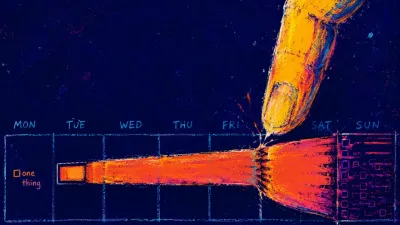
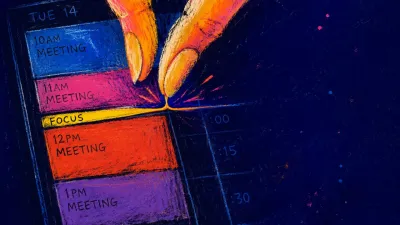
The 3:18 PM Tab-Switch Shuffle—and the Moment 'Done' Spoke Up

The 3:18 PM Green Dot Spiral
If you finish your task early and your first instinct is to keep Slack open and start tab-switching so your screen looks active (hello, green dot anxiety), you’re not alone.
Taylor (name changed for privacy) slid into the chair across from me like they’d been holding their breath since lunch. They’re 28, a project coordinator in Toronto, hybrid schedule, the kind of person who can make a messy plan look clean in half the time it takes everyone else. And somehow that’s the problem.
They described a Wednesday—3:18 PM—fluorescent lights buzzing in the office, HVAC blowing cold like a petty grudge. One monitor: a finished status deck. The other: an email draft that didn’t need to exist. Every time footsteps moved down the aisle, their fingers did what they called “the tab-switch shuffle.” Like shaking a phone so the screen never sleeps—pure motion to avoid the discomfort of stillness.
“I’m efficient,” they said, eyes fixed on the table edge instead of me. “But it doesn’t feel safe to look efficient.”
I watched their jaw set and release in tiny increments, like they were negotiating with themselves in the space between breaths. The empty calendar wasn’t relaxing—it was a spotlight. Their shoulders kept creeping up toward their ears, as if their body believed quiet time at work could be used as evidence against them.
“So the question,” I reflected back, “isn’t just why you look busy. It’s: what are you afraid will happen if someone sees you’re done?”
They nodded, but it wasn’t the relieved kind. More like the kind you do when someone says a private thing out loud.
As a planetarium tour guide, I’ve watched thousands of people react to silence in a dark dome—how stillness makes your thoughts louder. Taylor had that same look: like the show had ended, but they were still clapping because silence might draw attention to them. “Let’s give the fear a shape,” I said softly. “We’re going to use tarot the way I use star maps—less ‘prediction,’ more finding clarity in the pattern.”

Choosing the Compass: The Four-Layer Insight Ladder
I asked Taylor to take one slow breath in through the nose, out through the mouth—not as a ritual for the universe, but as a clean transition for the nervous system. Then I shuffled, the cards making that dry-paper whisper I’ve always thought sounds like turning pages in a quiet library.
“Today we’ll use a spread I call the Four-Layer Insight Ladder · Context Edition,” I said. “It’s built for questions like yours—why do I pretend to be busy at work when I’m done?—because it doesn’t treat this as a time-management issue. It treats it as an inner-mechanics issue.”
For you reading this: the reason this spread works so well as a tarot spread for workplace anxiety about being seen as done is that it moves in a tight arc—surface behavior to immediate protection, down into the root fear and inner rule-set, then back up into a practical next step. No drifting into vague advice. No fortune-telling. Just a structured look at what’s actually running the show.
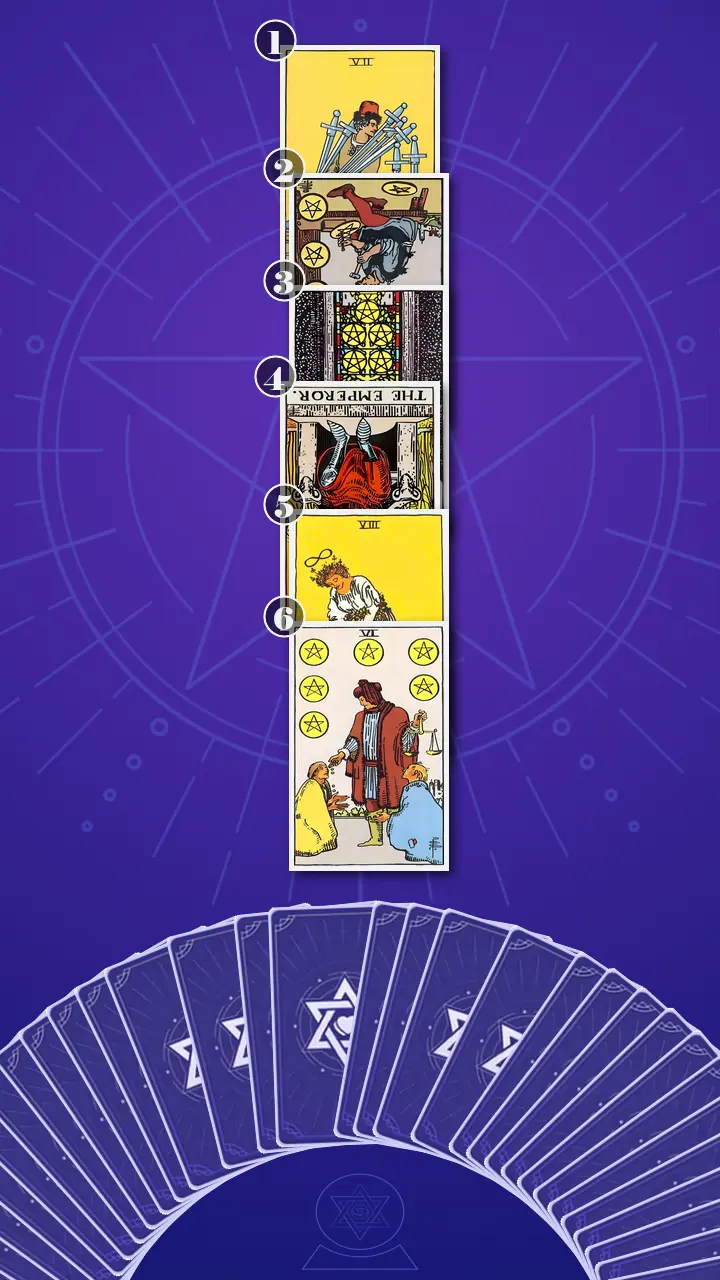
I pointed to the layout—six cards in a simple vertical line, like steps. “Card 1 shows the visible pattern—the work theater. Card 3 names the fear underneath. Card 5 is the key shift: the inner capacity you build so you can stop proving and start leading yourself.”
Reading the Map: How Work Theater Builds Its Own Gravity
Position 1 — Surface pattern: what you do when you finish early and start “looking busy.”
“Now turning over,” I said, “is the card representing the surface pattern.”
The Seven of Swords, upright.
In the card, someone moves sideways—strategic, careful—looking back over their shoulder. In modern life, it lands like this: You’ve completed the task, but you keep a spreadsheet, inbox, and a dashboard open like props. The second you sense someone nearby (or you see your manager come online), you start switching tabs so fast it looks like urgency.
“This isn’t laziness,” I told Taylor. “This is stealth self-protection. The energy here is blocked honesty—not because you’re dishonest as a person, but because stillness feels like getting caught.”
Taylor let out a small laugh that had no humor in it. “That’s… brutal. Like, accurate. But brutal.” Their fingers rubbed their thumb like they were trying to erase a thought.
“Tab-switching is a coping strategy, not a character trait,” I said. “Your brain is trying to control what story other people can tell about you when there’s nothing left to do.”
Position 2 — Immediate protection: what your busyness performance is trying to prevent in the moment.
“Now turning over,” I said, “is the card representing the immediate protection—what the performance is trying to prevent.”
Eight of Pentacles, reversed.
Reversed, this card is craft energy that’s gone into overcorrection. The modern translation is painfully familiar: Instead of closing the file, you re-open it and tinker—reformat the deck, adjust headings, add a tracking column no one asked for, rewrite a Slack update three times.
“This is the ‘one more pass’ loop,” I said. “The energy is excess—too much effort poured into tiny edits because the real threat isn’t the work. The threat is the moment you’d have to admit: ‘This is done.’”
Taylor’s eyes flicked up fast. “Because if it’s done, then I’m just… sitting there.”
“And sitting there feels like you’re about to be evaluated,” I finished. They didn’t nod, exactly. Their shoulders tightened like they’d heard their own internal soundtrack playing out loud.
Position 3 — Core fear: what you imagine will happen if someone sees you are done.
“Now turning over,” I said, “is the card representing the core fear.”
Five of Pentacles, upright.
This card is winter-in-the-city. Warmth visible but not felt. In modern life: A quiet afternoon feels like being outside the circle. Your brain treats ‘done’ as a signal that you might be overlooked, replaced, or quietly deprioritized.
I leaned in a little, keeping my voice steady. “This is scarcity and exclusion. Not money-scarcity only—belonging-scarcity. The energy is contracted, like your whole body is bracing for the door to close.”
As I spoke, I watched Taylor’s reaction chain happen in real time: their breathing paused (freeze), their gaze went unfocused like they were replaying a memory (penetration), then a heavy exhale left their chest like a weight finally set down (release).
“Oh…” they whispered. “Yeah. It’s like… if they notice the quiet, they’ll connect it to my value. Like the warmth is right there, but I’m not sure I’m allowed in.”
In my head, I flashed to the planetarium’s lobby in January—people clustered near the heater, coats steaming, pretending they weren’t cold. The Five of Pentacles is that: the story that says support exists, but access is conditional.
Position 4 — Inner rule: the authority script you feel you must obey to stay safe and valued.
“Now turning over,” I said, “is the card representing the inner rule—the script that tells you what you must do to be safe here.”
The Emperor, reversed.
Reversed, The Emperor is authority energy gone rigid—control masquerading as safety. The modern translation: You’re following an internal rulebook that says: ‘If you’re not constantly demonstrating effort, you’re unsafe.’
“I want to stage this as two narrators,” I told Taylor. “Because I can hear them.”
Inner Boss: ‘If you look done, you look disposable. Stay available. Stay visible. No gaps.’
Current Reality: ‘I delivered the deck early. No one has criticized me. I’m allowed to ask what’s next.’
Right on cue, Taylor’s phone made the soft Slack notification sound—tiny, bright, insistent. Their posture snapped straighter like a string had been pulled.
“That,” I said gently, “is The Emperor reversed in your body. The energy is blockage through control. You’re obeying an internal manager voice that talks in consequences—even when there’s no evidence that consequence is coming.”
Taylor nodded, once, slow. “It’s like living in permanent ‘camera on’ mode.”
When Strength Held the Lion—and the Room Got Quiet
Position 5 — Key shift: the inner capacity to build so you can stop proving and start leading yourself.
I let my hand rest on the deck for a beat. The office noise from the hallway outside my reading space felt far away, like someone had turned down the volume on the world.
“Now turning over,” I said, “is the card representing the key shift—the medicine.”
Strength, upright.
Here’s the setup I named for Taylor: you finish earlier than planned, your calendar suddenly looks too empty, and you “wake up” inside Slack—watching the green dots and switching tabs like the quiet itself might get you in trouble.
Stop treating stillness like evidence against you, and start practicing calm courage—like Strength’s gentle hand on the lion—so your worth isn’t negotiated through busyness.
Taylor went still in a different way this time. First, their breath hitched—like their lungs forgot the next line. Then their eyes softened, unfocusing for a second as if they were seeing a specific afternoon: the monitor glow, the empty calendar block, the moment their hand hovered over the trackpad ready to start the tab ballet. Finally, their shoulders dropped—slowly, unmistakably—like a backpack sliding off without a sound. Their jaw unclenched so visibly it almost looked like surprise.
“But if I stop doing that,” they said, a flash of irritation cutting through the tenderness, “doesn’t that mean I’ve been… wrong? Like I’ve been wasting time?”
I nodded because the anger made sense. “It means you’ve been surviving a rule-set,” I said. “Not failing a moral test.”
This is where I brought in my own lens—what I call Orbital Resonance. In astronomy, resonance is when two bodies influence each other’s rhythm. In workplaces, it’s similar: your nervous system starts syncing to the ‘always-on’ culture, the green dots, the response-time folklore. “Your ‘look busy’ impulse isn’t random,” I told them. “It’s your system trying to match the environment’s frequency. Strength is you choosing a steadier orbit.”
“Now,” I asked, “with this new lens—calm courage instead of frantic proving—think back to last week. Was there a moment when the tab-switch urge surged, and you could have chosen one honest step instead?”
Taylor swallowed, eyes shining but not spilling. “Thursday. 2:50. I’d finished, and I started rewriting a message three times. I could’ve just… logged that it was done.”
“Exactly,” I said. “This is the beginning of the shift: from hypervigilant busyness-as-worth anxiety to self-trust and calm, transparent completion. Not overnight. But real.”
Position 6 — Grounded next step: a practical way to be visible, responsible, and at ease without performative busyness.
“Now turning over,” I said, “is the card representing the grounded next step.”
Six of Pentacles, upright.
This is the opposite of the Seven of Swords. Hidden hands become open hands. The modern translation is almost boring—in the best way: ‘Wrapped X. I can pick up Y or Z next—what’s the priority?’
“The energy here is balance,” I said. “Not begging for work. Not hiding your pace. Just a fair exchange: clarity about what’s done, clarity about what’s next.”
Taylor’s brow furrowed. “But if I message that, won’t I just get dumped on?”
“That’s a real risk in some cultures,” I said. “And if it happens, it’s data—not proof you were wrong to seek clarity. Six of Pentacles is about the scales. You can still say: ‘I can take one of these today—what’s most urgent?’ You’re being available, not endlessly absorbent.”
The One-Page Exit Ramp: Actionable Advice for Being Seen as Done
I stitched the ladder together out loud, so it felt like a single story instead of six separate truths.
“Here’s the arc I’m seeing,” I said. “On the surface (Seven of Swords), you manage perception—tabs as props, Slack as surveillance—because quiet feels dangerous. Then you pad the day with busywork (Eight of Pentacles reversed), not for impact but for cover. Underneath, the real engine is the Five of Pentacles: fear of being outside the warm window—being overlooked, replaced, quietly deprioritized. And that fear gets enforced by an internal authority script (Emperor reversed) that treats every calm moment like an active performance review. Strength is the antidote: nervous system leadership, choosing a steadier orbit. Six of Pentacles grounds it: make your work visible through clarity, not theater.”
Your cognitive blind spot is subtle: you’ve been treating “done-ness” as suspicious—like it proves you didn’t work hard enough—when it can also be evidence you’re capable and well-paced. The transformation direction is clear: from proving worth through constant visible effort to practicing transparent self-management—naming completion, choosing the next meaningful step, and letting “done” be part of competence.
Then I offered Taylor a few small experiments—because real change usually comes from what you can do on a random Tuesday, not what you promise in a burst of motivation.
- The Two-Sentence Completion Note (10 minutes)Once per day this week, open a blank note titled “Done is data.” Write: (1) “Completed: ___ (specific deliverable + timestamp).” (2) “Next: I can take ___ or ___; confirm priority.” If it feels safe, paste it into one Slack/Teams message to your lead. If not, save it as a draft to yourself.Keep it neutral and factual—no apologizing for finishing. One message is enough; you don’t need proof-of-life pings.
- The One-More-Pass Limit (7 minutes)When you feel yourself re-opening a finished doc “just to tweak,” set a 7-minute timer. Do one final read-through, then close the file completely. Physically switch to your task board (Jira/Asana/Trello) or stand up and refill water—an intentional transition out of bench-work.Expect the cringe-resistance. Treat it like weather, not a verdict: discomfort can pass without you obeying it.
- The Strength Pause (a 10-minute done-time micro-boundary)When you finish early, plant both feet on the floor. One slow breath cycle. Then say (silently or in a note): “I can feel the surge, and still choose the next honest step.” Pick one: log completion, ask for priority, or take a real 10-minute break.If your environment pushes back, use my “Solar Sail Principle”: you don’t fight resistance head-on—you angle with it. Choose the lowest-risk honest step today (even if it’s just a private note).

A Week Later: The Quiet Proof
Seven days later, Taylor messaged me a screenshot: a simple Slack note—two sentences, no apology. They’d sent it at 3:07 PM. Then they took their break anyway. “I still felt weird,” they wrote. “But I didn’t tab-switch. I just… let it be true.” They’d slept a full night—then admitted their first thought at dawn was still, What if I’m wrong?—only this time, they didn’t spiral.
That’s how clarity usually arrives: not as certainty, but as ownership. Strength doesn’t erase the lion. It teaches you how to keep your hand steady when it growls.
When your work is done and the room goes quiet, it can feel like you’re standing outside the warm window—so you keep moving, not because you’re lazy, but because you’re scared stillness will be used as evidence you don’t belong.
If you let “done” count as competence for just one moment this week, what’s the smallest, most honest way you’d want to make your completion visible—without turning your whole afternoon into a performance?
Author Profile