When 'Graded' Feels Like a Verdict: Learning to Split Fact From Fear

Finding Clarity in the 11:42 p.m. Quercus Freeze
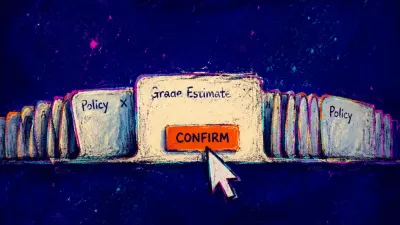
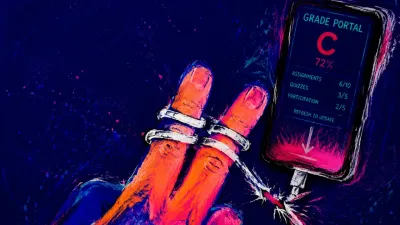
When Maya (name changed for privacy) came onto my screen, she gave me the whole problem in one sentence: the portal said 'graded,' and she still could not click. She was twenty, in her second year at a Toronto university, balancing café shifts with a full course load, the kind of student who looked organized from the outside. But what she wanted and what she feared were locked together: she wanted the certainty of knowing the grade, and she feared the grade might confirm that she was somehow not good enough.
As she spoke, I could see the setting that had already become a private little horror film in her week. A half-zipped backpack lay on the floor beside her bed. Quercus was open on her laptop, the cold blue light flattening the duvet, while the radiator hissed behind her and the smell of stale coffee still clung to her hoodie after a late shift. Her phone sat warm in one hand. Her cursor hovered over the link. She looked at the trackpad the way people look at a door they know is unlocked but still cannot make themselves open.
She described the feeling with impressive precision: tight chest, stomach dropped out, breath caught high and thin. To me, it sounded like having seventeen tabs open in one skull, with the loudest one autoplaying the worst-case version before the page had even loaded. The five seconds before the click can feel louder than the grade itself.
'I can handle a bad grade in theory,' she said, trying on a smile that did not quite hold, 'just not in the five seconds before I see it.'
I nodded. 'That makes sense to me,' I told her. 'You're not weak for stalling; you're bracing. And that usually means the page is carrying more than a number. So let me help you draw a map of what your mind is doing there, and where the clarity actually starts.'
Choosing the Compass for Student Portal Dread
I asked Maya to plant both feet on the floor and give me one full exhale while I shuffled. Not as theatre, and not because the cards need drama. I do that because the nervous system tells the truth faster than the mouth does, and one steady breath is often the first move out of panic tempo.
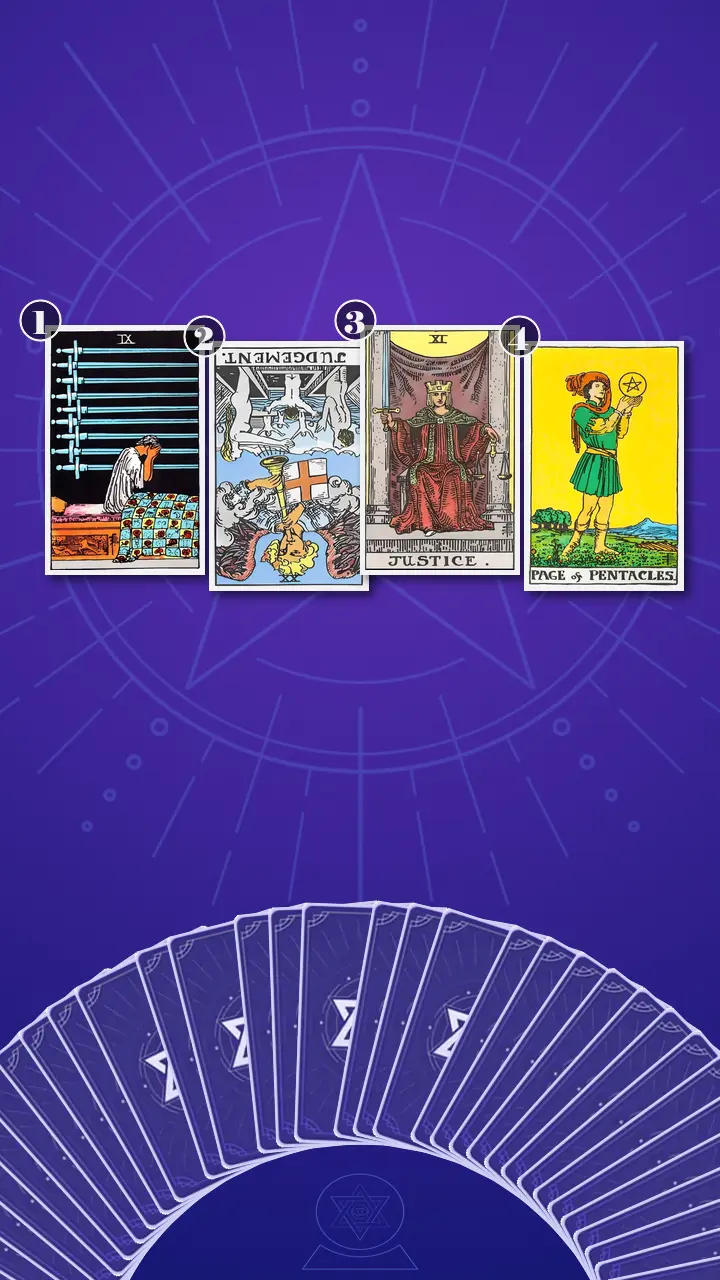
For her reading, I chose the Situation-Obstacle-Advice-Outcome · Context Edition, a four-card spread I use often for grade anxiety and student portal dread. This is how tarot works best for me in moments like this: not by predicting a mark, but by showing the chain. The first card names the visible symptom—the freeze before the click. The second shows the deeper fear that makes the click feel dangerous. The third offers the corrective lens, the shift that helps separate performance from personhood. The fourth grounds that shift in one practical student response, so we do not end in insight alone. It is a clean left-to-right corridor: symptom, deeper fear, reframe, next step.
I told Maya that the spread mattered because her real question was not only 'Why am I scared to check my grades?' It was also 'Why does one mark feel like a verdict on me?' Those are different questions. The cards were there to sort them.
Reading the Corridor: Where the Spiral Begins
Position 1: The Five Seconds Before the Click
I turned over the card that shows the surface symptom: the portal-triggered dread and the specific freeze response before clicking. The card was the Nine of Swords, upright.
I told her exactly what I saw. 'This is the late-night Quercus scene. You're on the bed, you refresh, you see the status flip, and before you open a single line of feedback, you open Calculator to do worst-case GPA math. Then you flip to Instagram or a random tab as if you only need one harmless second first. Nothing on the screen has officially hurt you yet, but your shoulders lock and your whole system behaves like the loss is already confirmed.'
Nine of Swords is excess Air—too much thought outrunning too little fact. The swords in the image hang above the body, not through it, which is why this card is so exact for pre-click anxiety. The suffering is real, but it is being generated in anticipation. I asked her, 'Before you click, what do you actually know—and what is fear supplying without evidence?' That is the question this card always asks.
Maya gave a short laugh that had something bruised in it. 'Wow,' she said. 'That is so accurate it feels a little rude.' Then she looked back at the card and winced. 'Also... yes. If it were good, I would've clicked already. That's literally the line.'
Position 2: The Courtroom Behind the Screen
Next, I turned over the card that reveals the underlying fear or belief that turns a grade into a threat to self-worth. It was Judgement, reversed.
'Here is why the portal feels bigger than it is,' I said. 'This is not just feedback landing as feedback. This is feedback landing as exposure. A private screen starts feeling weirdly public—like the course chat ping, the classmates posting marks, the LinkedIn internship updates, the whole comparison-heavy ecosystem is about to announce your place in the system. It has that Black Mirror metric panic to it. One number suddenly feels like it decides whether you're keeping up with life or quietly failing at it.'
Judgement reversed is blocked reckoning. Instead of honest self-evaluation leading to renewal, the mind turns prosecutor. One professor comment becomes character evidence. One lower mark rewrites 'I'm organized' into 'maybe I'm falling behind.' This is the real blockage: not the grade itself, but the reflex to treat evaluation like condemnation. I told her, gently, 'You're not preparing to receive data. You're preparing to sentence yourself.'
She went very still after that. First her breath paused. Then her eyes slid away from me and fixed on some point just past the laptop camera, as if a recent memory had started replaying. Then the exhale came out long and low. 'Yes,' she said quietly. 'I don't need the portal to be kind. I need it to stop feeling like a courtroom.'
When Justice Looked Straight Back
Position 3: The Card That Separates Fact from Fear
When I turned over the third card, the room changed. Even over video, I felt it. The radiator made a soft click and went quiet for a second, and Maya's face sharpened with the kind of attention people get when something important is finally about to say its name. This was the key card of the reading, the antidote. The card was Justice, upright.
'This position offers the corrective perspective that can separate evaluation from identity and loosen the fear response,' I said. 'And Justice is almost embarrassingly precise here. This is the move from one emotional blur into three actual pieces: score, rubric, comments. This is the part of the reading that asks not, “What does this say about me?” but, “What happened on this assignment, specifically?”'
Whenever Justice appears in a reading like this, my mind flashes to 12 Angry Men—that hot, cramped room where one person finally insists that speculation is not evidence. Justice does not remove consequence. It removes distortion. It does not tell you to feel nothing. It tells you to stop letting one result swear itself in as truth about your entire character.
I reminded Maya of the exact moment that had been haunting her: the late-night portal tab open, her thumb stalled, her brain doing GPA algebra before she had even read a single rubric box. 'That pause feels enormous,' I said, 'because your mind is treating the page like a verdict, not information.'
Stop treating every mark like a conviction; let the scales sort fact from fear, and use the sword of clarity to cut your worth loose from one result.
I let the sentence sit there between us for a moment.
The Einstein Thought Experiment
This is where I used one of my favorite tools—an Einstein thought experiment. I asked her to imagine a parallel version of the same week in which the exact same mark appeared in the portal of her smartest friend. 'Would you read that score as proof she lacks worth,' I asked, 'or as feedback on one piece of work?' Maya shook her head immediately. Of course she would not call her friend a failure. That is the point of the experiment: when the equation changes the second the name changes, fear has inserted itself into the data.
'But if I do that,' she said, and now there was a flash of resistance in her voice, almost anger, 'doesn't that mean I've been making this way bigger than it is?'
'It means your nervous system has been trying to protect you with a courtroom drama,' I said. 'Protection can be sincere and still inaccurate. Justice is not here to shame you for the spiral. It's here to give you proportion.'
Her reaction came in three waves. First, the physical freeze: her fingers stopped on the rim of her mug and even the small movement in her throat went still, like her body needed a second to decide whether this was threat or relief. Then the thought dropped deeper; her eyes unfocused and drifted left, replaying a recent grade screen I could not see but could almost feel in the silence between us. Then the release arrived. Her shoulders dropped once, then farther. Her jaw unclenched. She took one fuller breath, the kind that sounds almost surprised when it finally leaves. 'Oh,' she said, voice thinner and softer now. 'I never read the rubric and the comments as different things. I just read the number and assumed the rest was going to explain why I was disappointing.'
I asked her, 'With this lens, was there a moment last week when your body would have felt different?' She nodded immediately. 'Right after the score,' she said. 'I would've known I didn't have to turn it into a biography that fast.'
That was the hinge of the reading: not from bad news to good news, but from portal-triggered dread and self-sentencing toward evidence-based steadiness. Justice in plain language is this: a grade can rate a submission without rating your worth.
Position 4: The Apprentice After the Spike
The last card showed the likely integration if she embodied that Justice shift—the grounded student mindset and next workable response after the result is seen. It was the Page of Pentacles, upright.
'This is the part of you that studies one thing instead of trying to redeem your entire life by midnight,' I told her. 'The Page does not rebuild the whole semester in Notion at 1:00 a.m. and order new highlighters because shame wants a costume change. The Page highlights one sentence in the feedback, writes one office-hours question, and practices one repeatable skill before the next assignment. That is Earth after too much Air: slower, tangible, teachable.'
I connected it to the exact modern move the card suggested for her: after the grade lands, phone down, one comment highlighted, one question written, one next action chosen. Not punishment. Not a total identity overhaul. Just learning. Page of Pentacles is balance through contact with the real material.
Maya leaned closer to the screen at that point, as if the future had suddenly become less abstract. She opened her Notes app while we were still talking. I smiled and said the line I wanted her to remember after the reading ended: 'One comment, one question, one next step—that's enough for tonight.'
From Verdict to Data: Actionable Advice for the Next 24 Hours
Once all four cards were on the table, the story they told was clean. Nine of Swords showed me the suspense loop: thought filling the information gap with catastrophic previews. Judgement reversed showed the engine underneath it: a single grade getting translated into a statement about worth. Justice interrupted the fusion by separating score, rubric, and comments into distinct pieces. Page of Pentacles then grounded the whole thing in one practical academic move. In other words, the portal had become a courtroom because Maya was collapsing fact, fear, comparison, GPA math, and self-story into one emotional blob.
I named her blind spot directly: she had been treating evaluation as exposure. So the transformation direction was equally direct: separate performance from personhood, read the grade like data rather than destiny, and only then decide what is useful. I also told her to mute the group chat before checking anything. You do not owe the group chat your mark before you understand it yourself.
The three practices I gave her
- The Two-Column Reality CheckBefore opening any new grade this week, Maya was to open Notes and pre-type two headers: 'What this measures' and 'What this does not measure.' After she clicked, she only needed one line under each. That is the Justice move in action: the assignment gets evaluated without her whole self going on trial.If it feels awkward or overly structured, good. Awkward still creates space. One bullet under each header counts.
- The 60-Second Click WindowI told her to pick one grade-check slot in daylight—at a desk, library table, or campus common area where she feels reasonably steady, not in bed at 1:00 a.m. When the notification appears, she sets a 60-second timer and makes a clean choice: click within the minute or deliberately wait for the scheduled slot. No endless hovering.Do not force the click on the TTC, mid-shift, or in front of people you do not want to process around. If sixty seconds feels too big, use twenty. The point is not bravery theatre; it is shortening the dread window.
- One-Next-Step ResetWithin 24 hours of seeing the result, she was to highlight one comment she did not fully understand, draft exactly one follow-up question for office hours or email, and name one repeatable skill to practice on the next assignment—thesis clarity, citation format, paragraph structure, whatever the feedback actually pointed to.If the screen starts to blur into panic again, I had her use my Gallery Walk Revision trick: open the score, the rubric, and the next assignment brief in three separate windows or lay them out in three physical spots. Let your brain move station to station instead of drowning in one pile.
These steps were intentionally small. I was not trying to make Maya fearless. I was helping her become fair—to the assignment, to the feedback, and to herself.
A Week Later, the Cursor Moved
A week later, Maya sent me a message that made me grin. 'I still hated the minute before it,' she wrote, 'but I did the Notes headers first. I clicked before opening Instagram. Then I read the rubric. Then the comments. I did not, in fact, explode.'
The shift was modest, which is exactly why I trusted it. She checked the next result alone at a campus common-area table in daylight. Her first thought was still, what if it's bad? But this time she smiled, put both feet on the floor, and opened Notes before panic could write the script.
That is the kind of proof I care about most. Tarot did not make the portal kind. It did not promise perfect marks. What it did was return Maya to herself as the decision-maker. For afraid-to-check-grades spirals, this Situation-Obstacle-Advice-Outcome tarot spread for grade anxiety and student portal dread works because it turns one frightening click into something you can see clearly, pace carefully, and respond to on purpose.
When I see a hand freeze over a trackpad and a chest drop before the page even opens, I know the reaction is usually not to a number alone—it's to the fear that the number might say something permanent. So if the next result tries to turn your portal into a courtroom, what is the first tiny thing you will notice, write down, or ask before you let one mark audition for the role of your whole biography?
Every reading at AceTarot is a Journey to connect with inner wisdom and empower next step.
Learn more about our Journey to Clarity.