The Shift Roster, Midterm Tabs, and Laundry Pile—How One Task Landed
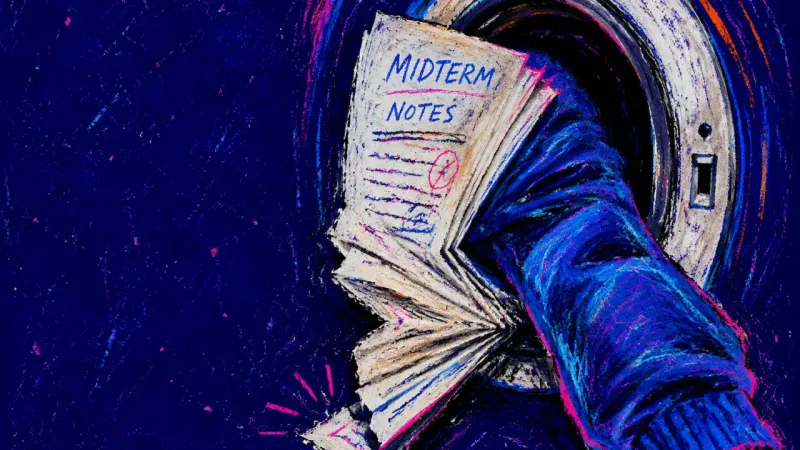
The 9:42 PM Dashboard Crash in a Toronto Hallway
You keep planning like the plan is going to save you—Google Calendar open, Notes app open, and somehow you still haven’t touched the midterm slides.
Jordan (name changed for privacy) sat across from me with their tote bag still hooked around one shoulder, like they hadn’t fully arrived anywhere all day. They lived in Toronto, in the kind of shared apartment where clutter shows up fast and privacy is a rumor. They told me they’d gotten home at 9:42 PM the night before, dropped the bag by the door, and the hallway smelled faintly like detergent and takeout. The laundry pile was right there—unignorable, practically fluorescent.
“I opened my laptop for midterm notes,” they said, “but my thumb kept tapping between my shift schedule app and Canvas. I was moving, but nothing was… landing.”
I watched the way their shoulders hovered, not relaxed but on standby. Their stomach wasn’t “nervous,” exactly—more like it was full of restless weight, as if their body wanted motion but couldn’t pick a direction. Overwhelm, in Jordan’s body, looked like bracing for impact in a room that never actually hit.
“It’s like I’m standing in front of three blinking dashboards at once,” they added. “Schedule. Studying. Home. And I’m trying to silence every alarm at the same time.”
Under that was the real contradiction: wanting to feel on top of responsibilities, while fearing that choosing the wrong next step would make them fall further behind. The more pressure they felt, the more their mind demanded a perfect priority order—like a GPS refusing to move until it can guarantee the optimal route.
“You’re not lazy,” I said softly, because I needed them to hear it as a fact, not a pep talk. “You’re overloaded, and your brain is trying to solve it by switching. Let’s try to turn this fog into a map—something that gives you clarity and a next step you can actually do tonight.”

Choosing the Compass: The Transformation Path Grid (6)
I asked Jordan to take three slow breaths—not as a mystical thing, just a nervous-system gear shift. While they exhaled, I shuffled slowly, the way I do when the question isn’t “What will happen?” but “What’s the next grounded move when multiple demands collide?”
“Today we’ll use a spread I built for situations like this,” I told them. “It’s called the Transformation Path Grid (6) · Context Edition.”
And for you reading: this is why I like this spread for overwhelm, decision fatigue, and that why do I keep rewriting my to-do list instead of doing anything spiral. A minimal timeline spread can’t explain the mechanics of why nothing lands. A huge diagnostic spread adds more information than a flooded nervous system can use. This six-card grid forms a clean chain—surface symptom → blockage → root cause → catalyst → next action → integration—so the reading ends with actionable advice, not more pressure.
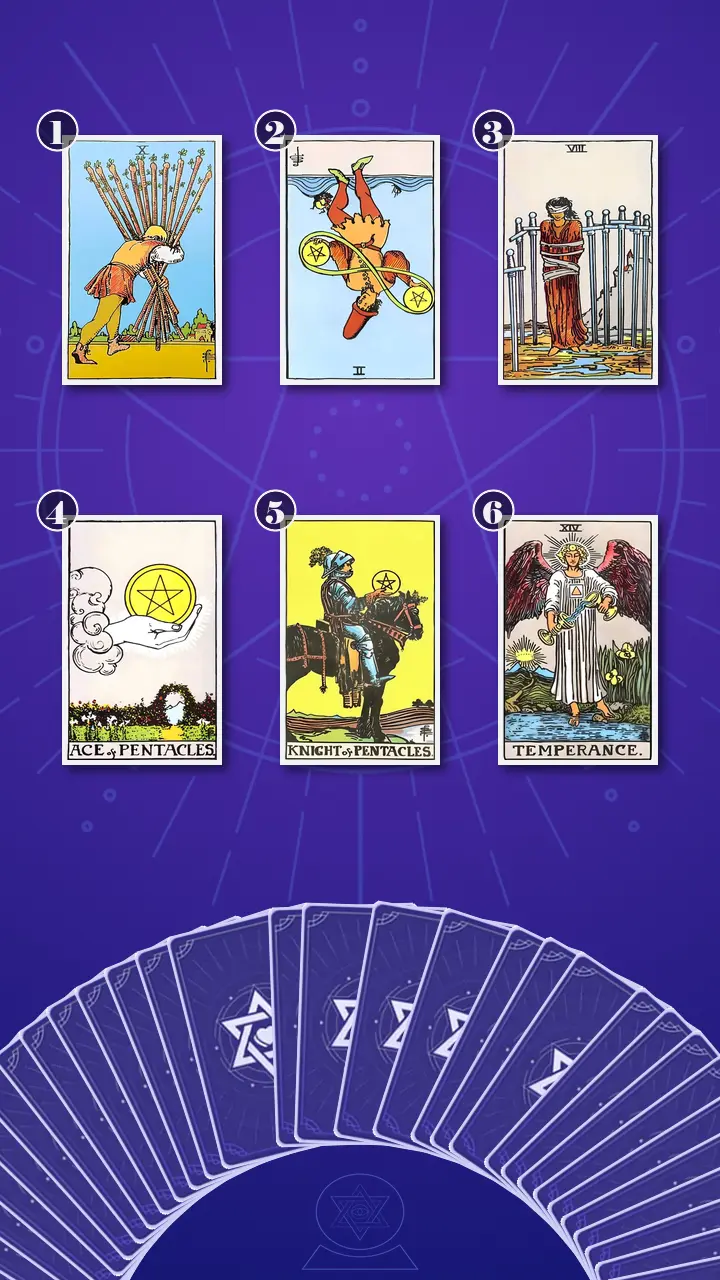
In this grid, the first card shows what the overwhelm looks like in real life (what someone would literally see you doing). The second reveals the primary blockage—the “why nothing lands” leak. The third names the deeper mental trap. Then the fourth card is the turning point: the smallest catalyst that creates movement without requiring your whole life to be fixed. From there, we translate it into a workday-proof next step, and finally what “manageable” feels like when it’s real.
Reading the Map: The Messy Desktop, Then the Hidden Rule
Position 1 — Surface symptom: what the overwhelm looks like
“Now we’re turning over the card that represents the surface symptom—what the overwhelm looks like in concrete, observable behavior across shifts, studying, and home tasks,” I said.
Ten of Wands, upright.
It landed with the exact posture I’d been seeing in Jordan’s body: arms full, vision blocked, moving forward anyway.
And the modern translation was almost painfully specific: You get home to your Toronto shared apartment after a late shift, kick off your shoes, and immediately see three separate “alarms”: the next week’s roster notification, the open tab with midterm slides, and the laundry pile creeping toward the bedroom door. You try to hold all three in your head at once—so you keep moving without landing anything: you start a load but don’t press Start, you open notes but don’t read a page, you check the schedule again “just to be sure.” It’s not laziness; it’s carrying an armful so full you can’t see the next step.
“This card isn’t calling you disorganized,” I told them. “It’s showing overloaded drive—Fire energy in excess. You’re pushing, carrying, forcing motion. The problem is: when your arms are full, even a small step feels dangerous because you can’t see what you’re stepping toward.”
Jordan let out a quick laugh—small, sharp, a little bitter. “That’s… too accurate. Like, kind of rude.”
“Fair,” I said, smiling in the way that means I’m not offended. “Tarot can be blunt, but it’s not here to shame you. It’s here to show the pattern so we can change it.”
Position 2 — Primary blockage: the ‘why nothing lands’ problem
“Now we’re turning over the card that represents the primary blockage—the specific way time, attention, and priorities are currently failing to organize,” I said.
Two of Pentacles, reversed.
This is Earth energy—practical life—gone unstable. In upright form it’s adaptability. Reversed, it becomes a loop that eats time.
Here’s the lived scene: Your system is stuck in constant triage mode. You keep re-ordering your to-do list (Notes app → Notion → a sticky note → back to Notes), checking your shift swaps, and doing tiny “starter moves” (fold two shirts, highlight two lines, open Canvas) that feel productive but don’t create a real ‘done.’ The week stays wobbly because you’re spending your best focus on juggling rather than letting one thing land—so your time gets eaten by switching and re-planning.
I mirrored it back like an app-switching montage: “Shift app. Canvas. Notes. Laundry basket. Back to the shift app, ‘just to confirm.’ And while you’re doing that, your shoulders creep up and your stomach stays in that heavy-restless mode.”
I held the contrast steady, because it mattered: “You’re touching everything… and finishing nothing.”
Jordan’s face tightened into a nod—tight, precise, like a screw turning. “Yeah,” they said quietly. “That’s exactly it.”
“And this is the key: if nothing lands, you’re not behind—you’re stuck in the reshuffle,” I said. “This is why effort doesn’t translate into ‘done’ right now.”
Position 3 — Deep mechanism: the mental trap underneath the mess
“Now we’re turning over the card that represents the deep mechanism—the limiting belief or mental trap that keeps the overwhelm cycle going even when you have good intentions,” I said.
Eight of Swords, upright.
Air energy takes over here: the mind trying to solve a logistics problem by tightening constraints. It looks like control, but it behaves like a cage.
The modern scenario is the one Jordan kept describing without realizing it: A rare free hour opens up—no shift right now, no one needs you—and instead of starting, you get mentally pinned: “If I can’t do a full, perfect review session, it doesn’t count.” You sit at your desk with your laptop open, tabs multiplying, and you keep thinking your way out of overwhelm like it’s a logic puzzle. Meanwhile your body is tense, your stomach feels hollow-restless, and you don’t move because every option feels like the wrong first move.
I said it the way it actually sounds inside someone’s head: “If I can’t do it perfectly, it doesn’t count… so I’ll wait…” Then I paused. “That’s the blindfold. That’s the invisible rule.”
Jordan froze in a three-part way I’ve learned to recognize: their breath caught; their eyes unfocused like they were replaying last night’s loop; then their shoulders dropped a fraction, like their body had been waiting for someone to name the thing out loud.
“I hate that,” they said. Not dramatic—just honest. “Because it feels true.”
“It feels absolute,” I agreed. “But the bindings in this card are loose. The rule is real in feeling, not always real in fact.”
When the Ace Offered One Coin: The Small Start That Changes Everything
Position 4 — Key trigger: the smallest concrete action that creates momentum
I looked at Jordan and said, “We’re about to turn over the catalyst—the lever. This is the card that answers: What is the smallest concrete action that shifts the energy without demanding your whole life be fixed first?”
Ace of Pentacles, upright.
Earth returns, clean and simple: one coin, one seed, one tangible unit of reality.
The modern scene is almost a script note: Instead of making the perfect plan, you choose one concrete ‘coin’ you can hold: something that changes the room or your workload in 15 minutes. You press Start on one laundry load, or you write a 6-line summary of one lecture, or you pack tomorrow’s bag and put it by the door. The momentum shift is subtle but real: your brain gets proof that progress can exist without a flawless priority order.
I felt my own artist-brain light up—the way it does when a symbol is so clean you can build a whole film around it. Hands full (Ten of Wands). Hands juggling (Two of Pentacles reversed). Hands bound (Eight of Swords). And now: a hand offering one coin.
I used my favorite diagnostic lens here—what I call an Einstein-style thought experiment. “Okay,” I told Jordan, “imagine two universes.”
“Universe A: you go home, you open the schedule, you try to engineer the perfect order. You keep switching tabs because you’re trying to avoid regret. Forty minutes later, you’ve ‘managed’ everything and completed nothing.”
“Universe B: you don’t negotiate. You accept one coin—one task you can physically complete in 10–15 minutes. You give your nervous system proof.”
“One of these universes makes you feel safer in the moment,” I said. “And one of them actually moves you.”
Setup. I leaned in slightly. “You know that moment: you’re home from a shift, the laundry pile is in your peripheral vision, Canvas is open, your schedule app is open, and your shoulders are already up around your ears. You’re trapped in ‘I need the right order or I’ll waste my only time.’”
Stop waiting to feel caught up; start by accepting one small ‘coin’ you can actually hold, and let that single real task anchor the rest.
Reinforcement. Jordan’s face changed in layers. First: a blink like I’d snapped a finger in front of their eyes. Then: their mouth parted slightly, like their brain was testing the sentence for truth. Their hands—still clenched around their tote strap—loosened and slid down into their lap. They exhaled, and it wasn’t a dramatic release; it was the kind where you realize you’ve been holding your breath without noticing.
“Your brain doesn’t need a better lecture from you,” I said gently. “It needs evidence.”
“So here’s the proof-frame: set a 12-minute timer. Choose one ‘coin’ task that creates a visible change—press Start on one laundry load, clear one surface, or write a 6-line lecture summary. Do only that until the timer ends. If the urge to switch hits, don’t obey it; write it on a sticky note (‘check schedule,’ ‘reorder list’) and return. You can stop when the timer ends—continuing is optional, not a test.”
I let the room go quiet for a beat, the way a good film does right before the character makes the choice that changes the pace of the story.
Then I asked, “Now, with this new lens—can you think back to last week? Was there a moment where pressing Start, writing six lines, or clearing one surface would’ve made you feel different?”
Jordan swallowed. “Tuesday,” they said. “I stood by the washer with my laptop open and just… didn’t press Start. Like it was a commitment I couldn’t afford.”
“That’s the shift,” I said. “From tight urgency and mental noise toward something grounded: one small action that builds self-trust. You don’t need the perfect plan—you need one concrete start.”
Position 5 — Next step: the workday-proof approach for the next 24–72 hours
“Now we’re turning over the card that represents the practical next step—a realistic, repeatable approach that matches your actual capacity and schedule,” I said.
Knight of Pentacles, upright.
This is Earth energy stabilized: boring, dependable, and strong because it repeats.
The modern translation is anti-glamour on purpose: You build a low-drama ‘anchor routine’ that survives rotating shifts: same length, same order, no optimization spiral. Example: when you walk in the door, you do (1) 20 minutes of midterm notes with a timer, (2) start one laundry load, (3) stop—regardless of what else is screaming for attention. Success isn’t ‘caught up’; it’s repeating the same small sequence for the next 24–72 hours so you stop depending on adrenaline.
I heard myself slip into my coach voice. “Boring is the feature: repetition beats adrenaline. This is how you study when you work rotating shifts. Not by building an ideal-week schedule you’ll break the moment the roster changes—but by having one workday-proof anchor that doesn’t require debate.”
Jordan’s expression flickered into a skeptical-but-interested half smile. “Okay. That… actually sounds doable.”
Position 6 — Integration: what ‘manageable’ feels like when aligned
“Now we’re turning over the card that represents cognitive integration—what manageable feels like once you’re back in a sustainable rhythm,” I said.
Temperance, upright.
If the Two of Pentacles reversed is chaotic juggling, Temperance is intentional blending. Balance isn’t a mood. It’s a blend you practice.
The modern scene looks like this: Manageable starts to feel like this: you do one small study block, one small home reset, and one small decompression ritual—so your nervous system stops treating life like an emergency room. You’re not perfectly on top of everything, but your day becomes steerable. The laundry pile stops being a moral verdict, and your notes stop being a mountain—because you’re mixing responsibilities with recovery on purpose.
In my head, I flashed to The Bear—that relentless kitchen pace, the way chaos feels like competence until it starts to burn you alive. Temperance isn’t “calm” as an aesthetic. It’s the system behind the scenes that keeps the kitchen from catching fire.
From Insight to Action: The One-Coin Start and the Workday-Proof Anchor
Here’s the story your grid told, in one line: you’re carrying too much at once (Ten of Wands), so you try to juggle by staying endlessly flexible (Two of Pentacles reversed), but the hidden rule says you can’t begin unless you choose perfectly (Eight of Swords). The way out isn’t more planning—it’s one tangible “done” (Ace of Pentacles), repeated with low-drama consistency (Knight of Pentacles), until life becomes a practiced blend instead of an emergency (Temperance).
The blind spot was subtle but brutal: Jordan kept treating planning as the safest form of progress. But in this spread, planning had become a defense strategy—a way to avoid the discomfort of choosing one thing and risking that it wasn’t optimal.
The transformation direction was equally simple: shift from juggling everything at once to completing one small, tangible task first—and letting that completion set the next priority. Completion-first grounding. A done signal before optimization.
Jordan hesitated right here, and it mattered. “But I swear I don’t even have five minutes sometimes,” they said. “My roommate’s in the kitchen, I’m exhausted, my shift tomorrow is early—like, I can’t create some perfect routine.”
“Good,” I said, and I meant it. “We’re not building a perfect routine. We’re building a routine that survives imperfection.”
Then I gave them a short, practical plan—small steps, zero moralizing, built for a changing schedule:
- The One-Coin Start (Tonight)Before you open your planner or rewrite a to-do list, do one 10–15 minute task that creates a visible change: press Start on one laundry load, clear one surface, take out one bag of trash, or write a 6-line summary of one lecture.If your brain says “too small to matter,” treat that as the Eight of Swords talking. Shrink it further—10 minutes counts. Starting the load counts even if you don’t fold tonight.
- Top 1 + Tiny 2 (Next 24–72 Hours)Once per day, write a list with one must-do under 30 minutes (ex: one practice set, one lecture summary) + two tiny optional tasks under 10 minutes (ex: email a TA, pack tomorrow’s bag). When the list is written, you are done planning for the day.No new apps. No re-writing the list after the first draft. If you want to “optimize,” channel it into doing the must-do instead.
- The No-Switch Timer (12 Minutes)Set a 12-minute timer: one tab, one task. When you feel the urge to check the schedule or reorder priorities, write the urge on a sticky note and return to the task until the timer ends.If it helps, use my Manuscript Mindmaps trick: write the task name once in mirrored letters at the top of the page. It’s weird—but it forces your attention to lock onto one target before your brain can open a new tab.

A Week Later: The Quiet Proof of Finding Clarity
A week later, Jordan messaged me after a late shift. Not a long update. Just a photo: the washer running, and a notebook page with six lines of summary under one lecture title. The caption said, “I did the coin first. Then I checked my schedule once. My shoulders actually dropped. Weird.”
It wasn’t a perfect life. It wasn’t “caught up.” It was something better: steerable. A system that gave them a done signal before the spiral could start.
That’s the Journey to Clarity I trust most—when the relief isn’t dramatic, just real. When your nervous system stops treating your week like an emergency room, and you begin to believe yourself again through repetition.
When you’re staring at your shifts, your midterm notes, and the laundry pile all at once, it can feel like your body is braced for impact—because picking one thing means risking the fear that you chose wrong and proved you’re not in control.
If you let yourself stop hunting for the perfect order, what’s one small “done” you’d actually want to give your future self tonight—just as proof you can move?
Every reading at AceTarot is a Journey to connect with inner wisdom and empower next step.
Learn more about our Journey to Clarity.