From Seminar Dread to Self-Trust: Practicing One Small Risk Out Loud

Finding Clarity in the 8:58 a.m. Highlighted-to-Death Silence
If you’re the kind of postgrad who shows up with the readings highlighted to death and still can’t find the first sentence fast enough when the professor says “Any thoughts?”—this is that academic visibility shame.
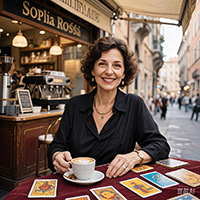
Maya met me on a drizzly London morning in my café, the kind of rain that makes the whole street smell like wet stone and espresso grounds. She sat at the small table by the window where the light is soft enough to feel forgiving, but not soft enough to hide. Her laptop was already open—out of habit, she told me—PDF margins glowing neon like a highlighter had been used as a coping mechanism. Her fingers kept worrying the cap of her pen, click-click, like her body was trying to edit time itself.
“It’s always right before I speak,” she said. “I have the thought, but I can’t find the first sentence fast enough. And then—someone else jumps in. I nod like I’m fine. But inside it’s like… my throat gets tight and my chest won’t expand all the way.”
She paused, then gave me the line that was really the whole story: “I want to contribute and be taken seriously. But I’m terrified one imperfect sentence will label me as not smart.”
What she carried wasn’t abstract anxiety. It was anticipatory dread with a physical address: a locked throat, shallow breathing, shoulders that wanted to climb up around her ears, restless hands that needed somewhere to put the electricity.
I set down a small glass of water next to her coffee. “Okay,” I said, gently, the way you speak to someone standing on ice. “Let’s not try to force confidence. Let’s map the system that’s happening in the five seconds before you could speak—and find one next step that’s real. Our whole journey today is about finding clarity without demanding perfection.”
Choosing the Compass: Celtic Cross · Context Edition
I invited Maya to take one slow breath—not as a ritual for the universe, just a way to tell the nervous system, we’re not running. I shuffled slowly, the cards making that soft paper sound that always reminds me of tamping coffee: steady pressure, no drama, just enough to make the next thing possible.
“Today we’ll use a spread called the Celtic Cross · Context Edition,” I told her. “It’s one of the clearest ways to see how tarot works as a practical tool: not predicting your life, but showing the chain—what freezes you, what feeds it, where it started, and what could actually shift it.”
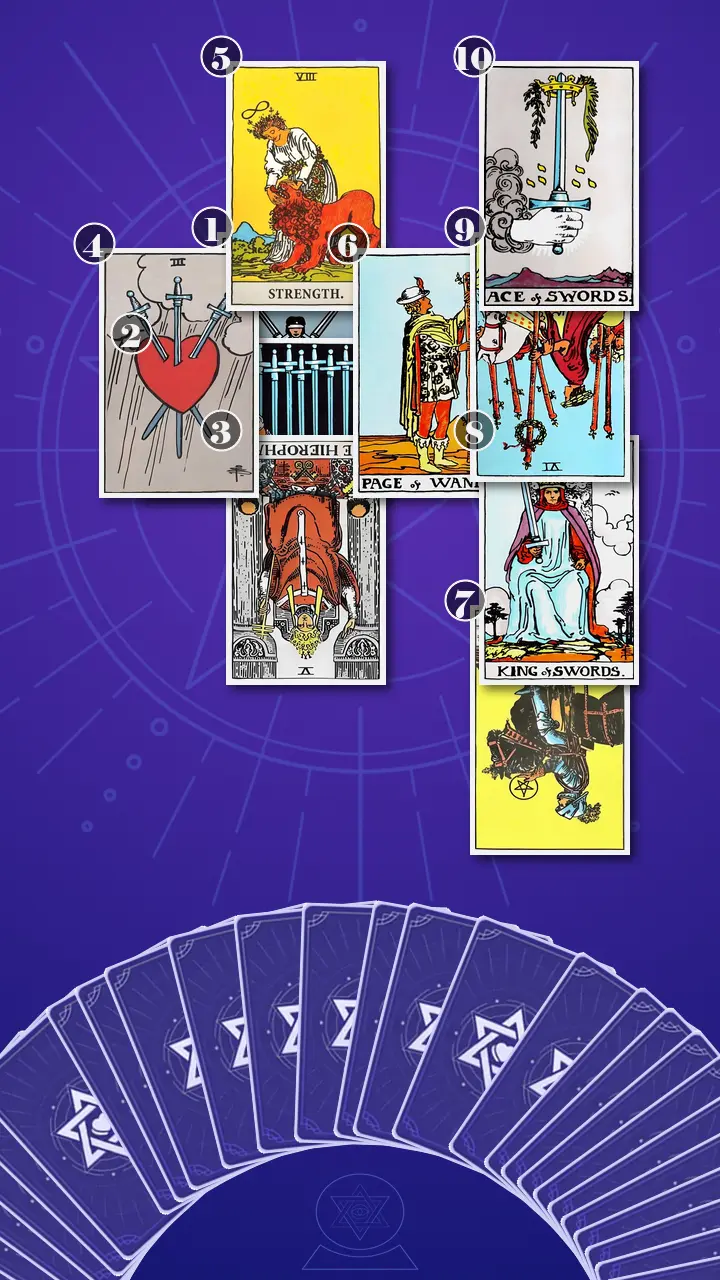
For you reading this: I chose this spread because Maya’s question isn’t a simple yes/no. She needs a full mechanism. The center of the cross shows the present freeze and the immediate obstacle. The lower cards reveal the root belief system and the past shame imprint. The crown card shows what she’s trying to embody, and the near-future card gives a next step she can try in the very next seminar. Then the side “staff” tracks self-position, environment, hopes/fears, and integration—how clarity gets built over time.
“We’ll pay special attention to three places,” I said, tracing the layout with my finger: “the freeze point, the past shame imprint, and the bridge—the inner quality that gets you from silence into speech.”
Reading the Map: Card Meanings in Context
Position 1 — The Micro-Freeze Before Your Voice: Two of Swords (upright)
I turned over the first card. “Now we open the card that represents the present freeze point: what happens in you right before you speak.”
Two of Swords, upright.
I watched Maya’s eyes flick to the blindfolded figure and the crossed blades over the chest. “This is like being in the seminar circle with your notebook open like a shield,” I said. “You can feel a decent point forming, but you keep it behind a mental don’t-risk-it filter while you hunt for the perfect first sentence. By the time you’re ready, the conversation has already changed topics—and you tell yourself you’ll speak next time.”
Energy-wise, this is blockage: not a lack of intelligence, but a self-protective pause that blocks breath and timing. The crossed swords aren’t ‘bad’—they’re defensive architecture.
To make it concrete, I mirrored the inner monologue I hear so often in rooms like hers: “Not that word. Too obvious. Wait. That sounds basic. Someone else will say it better. Don’t start wrong.”
Maya let out a short laugh that had a little bitterness tucked inside it. “That’s… honestly kind of cruel,” she said. “But yeah. That’s exactly it.” Her hand went to her chest like she’d caught herself doing it.
“This isn’t a lack of intelligence,” I told her. “It’s a nervous system doing math under a spotlight.”
Position 2 — The Crossing Obstacle: Nine of Swords (upright)
“Now we open the card that represents the immediate mental/emotional obstacle that blocks speaking in the moment.”
Nine of Swords, upright.
“The real obstacle isn’t the content,” I said. “It’s the internal post-game.” I nodded toward her phone, face-down on the table like a tiny sleeping judge. “You imagine being corrected, dismissed, or remembered for the wrong sentence, so your brain rehearses every possible critique in advance. Then you leave class and replay it on the Tube like a doom-loop—tense even though nothing is happening now.”
This card is excess in Air energy: too much analysis, too much negative rehearsal, too much ‘pre-mortem’—like having thirty browser tabs open and calling it research when it’s really avoidance-by-optimization.
When I said “Tube replay,” her jaw tightened, then she noticed it and consciously unclenched. She didn’t look at me; she looked at the rain streaking down the glass. “It’s like I’m building a courtroom around a sentence I never even said,” she whispered.
Position 3 — The Root Mechanism Underneath: The Hierophant (reversed)
“Now we open the card that represents the root mechanism: the deeper belief system that makes speaking feel high-stakes.”
The Hierophant, reversed.
“This is the internal gatekeeper,” I said. “You treat speaking as if you’re submitting a graded essay in real time. There’s an invisible rubric in your head: the approved academic tone, the exact reference, the flawless wording. You keep editing until you sound like the version of a student you think the room rewards.”
This is blockage again, but with a specific flavor: authority pressure internalized. It’s not that your professor is a villain. It’s that your body reacts as if one wrong sentence would revoke your membership card.
“You’re not on trial,” I added, and I meant it. “You’re in a conversation that gets smarter in real time.”
Maya’s shoulders lowered on a long exhale, like she’d been holding a breath since October. “It does feel like… Succession vibes,” she said, half-wry. “Like everything is status.”
“Exactly,” I said. “And when your brain thinks it’s a status room, it demands status-language. Certainty. The perfect citation. No typos.”
Position 4 — The Past Shame Imprint: Three of Swords (upright)
“Now we open the card that represents the past shame imprint: the old wound that still shapes your voice today.”
Three of Swords, upright.
I didn’t invent an event. Tarot doesn’t need me to. The image does the work: heart, storm, sharpness. “This points to a past moment where being seen hurt,” I said. “A correction that landed too fast. A dismissal. That particular kind of silence after you spoke. In today’s seminar, nothing like that is necessarily happening—but your body reacts as if the same storm is about to hit.”
The energy here is learned association. Speech equals exposure; exposure equals pain. So silence starts to look like safety.
Maya’s fingers curled around her cup, then released. Her eyes went glassy for a second—not tears, just recognition. “I hate that it still runs me,” she said. “It was years ago. Different class. Different people.”
“That’s the thing about shame,” I said quietly. “It’s loyal. It keeps trying to protect you long after the original danger passed.”
Position 5 — The Bridge You’re Trying to Embody: Strength (upright)
I let the café settle for a beat: the espresso machine hissed once in the back, a spoon clinked against porcelain, and outside the rain eased into a softer tapping. “We’re turning over the most central card in this reading,” I said. “The one that represents what you’re trying to embody—the bridge between fear and action.”
Strength, upright.
Setup—because I wanted it to land in her body, not just her mind: Maya was still trapped in the same moment she’d described—professor looks up, room goes quiet, her chest tightens, and she rewrites the first sentence for the third time as the opening disappears. Her strategy was ‘think better.’ But her problem wasn’t a lack of ideas.
Stop treating seminar as a trial you must survive, and start practicing calm bravery—open the lion’s mouth gently, one sentence at a time.
The sentence hung there. Maya’s breathing actually paused—like her system had to decide whether to accept it. Then her eyes unfocused for a second, as if she was replaying a memory on the Central line. Her throat bobbed in a swallow. Her fingers froze mid-fidget, hovering above the pen. And then—slowly—her shoulders dropped, not all at once, but in a series of tiny releases, like she was setting down a bag she’d forgotten she was carrying. She let out a shaky exhale that sounded almost like a laugh, except it wasn’t funny; it was relief.
“But if I do that…” she said, and there was a flash of anger in it, protective and hot. “Doesn’t it mean I’ve been doing it wrong this whole time?”
I shook my head. “It means you’ve been doing what worked to keep you safe. Strength isn’t about forcing yourself to ‘be confident.’ It’s regulation. It’s compassion plus a tiny act.”
Here’s where my café brain kicks in—my own little inner flashback. When an espresso shot tastes harsh, you can’t fix it by staring at the cup harder. You adjust the grind, the pressure, the timing. Speaking is the same. Your nervous system is the machine. Strength is learning the settings.
I leaned in. “You know my thing—I diagnose focus like I diagnose caffeine.” I tapped the table once, gentle. “Your body is sensitive to stimulation. If you walk into seminar already buzzing from adrenaline and a double espresso, you’re asking your system to speak while it’s vibrating. Strength says: steady the body first. Then speak.”
“Now,” I asked her, “with this new lens—regulated courage—can you think of a moment last week when you felt the opening and lost it? What would have changed if the goal was one sentence counts, not ‘deliver the whole thesis’?”
Maya’s face softened. “There was a pause when someone mentioned the author’s assumptions,” she said. “I had a clean thought. I just… tried to make it perfect.”
“That’s the shift,” I said. “This isn’t just about a seminar comment. It’s a move from tight dread to controlled discomfort while taking a small risk—toward steadier self-trust.”
Position 6 — The Next Realistic Step: Page of Wands (upright)
“Now we open the card that represents the next step: the most realistic, actionable move you can take in the next seminar.”
Page of Wands, upright.
“This is the brave beginner,” I said. “Your next move is a small experiment: you go in with one seed sentence prepared, then say it early. It’s not a perfect thesis—just a spark. You let the conversation shape it, and you discover you can refine your thinking out loud instead of finishing it privately first.”
Energy-wise this is balance—Fire returning. Not burning the room down. Just enough heat to move.
“Clarity isn’t something you wait for—it’s something you make out loud,” I added, because this is exactly where people need permission to stop treating speech like a final draft.
Position 7 — Your Default Under Pressure: Knight of Pentacles (reversed)
“Now we open the card that represents your self-position: how you show up internally and the habit you default to under pressure.”
Knight of Pentacles, reversed.
“You’re reliable,” I told her. “Prepared. Diligent. But under pressure, that becomes stalled motion. You keep polishing notes, adding highlights, stacking sources, treating every comment like a deliverable.”
This is deficiency of movement: work without forward motion. The horse is still. The pentacle becomes weight.
Maya nodded once, sharp. “I have a Notion participation tracker,” she admitted. “Like… I’m tracking not speaking.”
“That is so painfully on-brand for this card,” I said, and she smiled despite herself.
Position 8 — The Seminar Vibe Around You: King of Swords (upright)
“Now we open the card that represents the environment: the social tone, authority cues, and context you’re reacting to.”
King of Swords, upright.
“This room rewards clarity and structure,” I said. “People speak in clean claims, quick challenges, strong opinions. Even if no one is targeting you, your system reads the tone as cross-examination.”
The energy here is excess of sharpness—useful, but intimidating. And it pairs with Hierophant reversed to create that ‘approved voice’ pressure.
“So we adapt without shrinking,” I continued. “You don’t need a perfect speech. You need a structure you can trust: one claim, one support, one question.”
Position 9 — The Visibility Knot: Six of Wands (reversed)
“Now we open the card that represents your hopes and fears: what you secretly want from speaking and what you fear it could cost.”
Six of Wands, reversed.
“You want recognition,” I said plainly, “but attention feels risky—like being measured. So you aim for invisibility while secretly craving impact. You only want to speak if it’ll land as impressive, which turns participation into a status gamble instead of a practice.”
This is blockage around visibility. The fear isn’t just being wrong. It’s being seen while imperfect.
Maya’s mouth tightened. “I hate how much I’m tracking who gets nodded at,” she said. “It’s like… I’m watching the leaderboard.”
“And that’s why we redefine winning,” I said. “Not applause. One rep.”
Position 10 — Integration Through Practice: Ace of Swords (upright)
“Now we open the card that represents integration: what becomes possible when you take the next step and keep practicing.”
Ace of Swords, upright.
“When you speak—even briefly—you cut through the fog,” I said. “The sharpness you’ve been waiting to feel internally shows up after you say the simple version out loud. You leave with one clean sentence of what you meant, and it becomes evidence that your voice can be clear without being perfect.”
This is balance in Air: mind as a tool again, not a courtroom.
Maya looked at the card for a long second. “So the clarity comes after,” she said. “Not before.”
“Exactly,” I said. “You don’t get to pre-feel certainty. You get to practice honesty.”
From Insight to Action: Your Next Seminar Reps
When I stepped back and told Maya the story the spread was telling, it went like this: You freeze (Two of Swords) because your mind predicts pain and runs a private trial (Nine of Swords). Underneath that is an internal gatekeeper demanding an ‘approved’ smart voice (Hierophant reversed), reinforced by an old sting memory where being seen hurt (Three of Swords). The bridge isn’t more prep—it’s regulated courage (Strength), which makes a beginner-level experiment possible (Page of Wands). You stop mistaking diligence for safety (Knight of Pentacles reversed), adapt to a crisp room with simple structure (King of Swords), untie the visibility knot (Six of Wands reversed), and let clarity arrive through one clean, spoken point (Ace of Swords).
The cognitive blind spot was clear: Maya had been treating the five-second seminar opening like a final exam—so her brain demanded a final-draft sentence. The transformation direction is smaller and kinder: shift from trying to deliver a flawless statement to offering a small, testable contribution you can refine aloud.
Here’s the practical plan I gave her—actionable advice, not self-improvement punishment. One sentence counts.
- Write the Seed Line (2 minutes, before you leave)At the top of your notes, write one starter you can say as-is: “One way to read this is…” or “I’m wondering if the author assumes…” Keep it to one sentence—no citations, no disclaimers.Use my Latte Memory Technique: if you’re grabbing coffee anyway, write the seed line on the back of the receipt or in the foam as a visual cue. You’re training recall, not performing genius.
- Speak Once in the First 20 MinutesWhen the first opening appears, plant both feet on the floor, take one full exhale, and say only the seed sentence. Stop. Let the room respond. That’s the rep.If you freeze, treat it as a body moment, not a character flaw: feel your feet, exhale, and say the smallest true version. Aim for 12–20 seconds max.
- Filter the Aftershock (30 seconds, after class)Write one neutral line: “What I meant was ___.” Not a post-mortem. Just the clean takeaway. This becomes your evidence of clarity, not the fear narrative.My Knowledge Filtration rule: if a thought is just mental sludge (rankings, imagined tone, ‘they’ll remember me’), don’t drink it. Let it stay in the filter. Keep only what’s useful.
One extra note—because I’m a café owner and I think in caffeine: if you’re already running hot on seminar mornings, don’t spike yourself. Use a gentle “focus blend” instead of a jitters blend. I told Maya to try half-caff or a smaller coffee, earlier, so her system isn’t fighting both adrenaline and espresso at 11 a.m. That’s my Focus Period Diagnosis in plain English: set your body up to succeed before you ask it to speak.
A Week Later: Ownership, Not Certainty
A week later, Maya messaged me after her seminar. “I did it,” she wrote. “I spoke once early. Literally one sentence. My voice shook a bit, but nobody died.”
She described it in a way I loved because it was so human: she’d walked into Bloomsbury with rain in her hair, sat down, felt the familiar throat-lock… then put her feet flat, exhaled, and said, “I’m wondering if the author assumes stability where there isn’t any.” She stopped. Someone built on it. The discussion moved forward like a door that actually opens when you push it.
Her bittersweet proof, in under fifty words: she slept through the night for the first time in weeks—then woke up and her first thought was still, What if I sounded obvious? Only this time she noticed it, took one breath, and got dressed anyway.
That’s the real Journey to Clarity: not becoming fearless, but becoming less ruled. Not proving brilliance in one sentence, but practicing a voice you can trust in public, one gentle rep at a time.
When the room goes quiet and you feel your throat lock, it’s not that you have nothing to say—it’s that part of you is still trying to avoid the old sting of being seen and judged in public.
If you didn’t have to prove you belong in one sentence, what’s the smallest honest ‘seed line’ you’d be willing to try out loud next time—just as an experiment?
Every reading at AceTarot is designed to connect you with your inner wisdom and empower your next step.
Learn more about our Journey to Clarity.