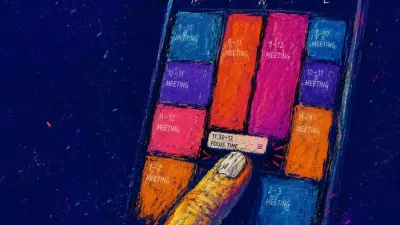
When 'No Rush' Lands Like an Alarm: From Panic Replies to Steady Pace

When ‘No Rush’ Lands Like an Alarm
Jordan had brought me the exact late-night search-bar question I hear all the time: why does ‘no rush’ make me anxious at work, and why do I reply to Slack immediately even when it isn’t urgent? If you’re the dependable one in a Toronto office who apologizes for normal timelines and still checks messages in the kitchen after dinner, I usually know before I touch the cards that I’m not looking at a time-management problem. I’m looking at self-created urgency at work—the kind that makes a flexible deadline feel tighter, not kinder.
Jordan (name changed for privacy) came to me after closing, when my café was down to the smell of espresso grounds, wiped tables, and rain ticking softly against the front window. She sat across from me with her coat still cool from the streetcar, both hands around a cup she kept forgetting to drink. “My manager keeps saying there’s no rush,” she said. “And I know he means it. But I still answer right away. I still keep adding more. If I slow down, I start feeling like I missed something.”
Then she gave me the scene that told me everything. Tuesday, 9:40 p.m., shared kitchen in her Toronto apartment. The dishwasher humming. Tea gone cold. Slack open in the corner like a tiny green surveillance light. Laptop glare too white against the dark room. Her shoulders nearly touching her ears while she turned a simple follow-up email into a polished mini-report nobody had asked for. They said no rush, but her body heard: move now, or regret it later.
The feeling in her wasn’t abstract. It was like someone had zip-tied a smoke alarm inside her ribcage—nothing visibly burning, but the whole system screaming drill, drill, drill. I could see it in the shallow breathing, the jaw set half a second too hard, the way her fingers kept drifting toward her phone between sentences as if calm itself might be a trick.
I rested my palm lightly on the deck. “That makes sense to me,” I told her. “Your body can treat neutral like urgent. We’re not here to shame that. We’re here to trace it. Let’s make a map for this loop and see what old rule is still running the room. That’s our journey to clarity tonight.”

Choosing the Four-Layer Ladder for Work Anxiety
I asked her to take one slow breath over the cup in front of her and think of the last message that said there was no rush. Then I shuffled. In my space, that moment is never about theatre for its own sake. It’s simply a bridge between spiraling and noticing—a way of letting the question settle into one clear shape.
For her, I chose the Four-Layer Insight Ladder · Context Edition. When someone asks me whether tarot can help them understand panic productivity at work, this is how tarot works best in my hands: not as a dramatic prediction, but as precise pattern recognition. Jordan didn’t need a sprawling spread about every possible future. She needed a tarot spread to uncover the family rule behind overworking, one that could move from symptom to root to regulating shift to practical next step.
I explained the structure plainly. The first card would show the visible pattern—what her over-speed behavior actually looks like when the external pressure is low. The second would reveal the root layer—the inherited authority rule or fear that makes slowing down feel unsafe. The third, the heart of the reading, would identify the healing energy that could interrupt the old loop. The fourth would translate that shift into a concrete work habit she could test in real life.
Bigger spreads can be beautiful, but they sometimes add more scenery than the question needs. Jordan didn’t need ten cards of atmosphere. She needed one ladder down into the pattern, and one step back out.

Reading the First Rungs of the Pattern
Position 1: The Message That Wasn’t Urgent, Except in Her Body
I turned over the card representing the visible symptom from the diagnosis: the concrete over-speed behavior and contracted emotional signature that show up when external pressure is low.
Knight of Swords, reversed.
It was almost painfully exact. In modern life, this is the moment a manager writes, ‘No rush—tomorrow or Friday is fine,’ and you still reply four minutes later, then spend the evening turning a simple update into a polished mini-report because more detail feels safer than enough detail. It has pure The Bear ticket-printer energy applied to a completely normal Slack message.
The rearing horse is a nervous system already in motion. The raised sword is the instant draft, the over-explaining paragraph, the reflex to send before you’ve even checked whether anything is truly urgent. Reversed, this isn’t clean decisiveness. It’s excess Air—thoughts outrunning facts, momentum outrunning context, your own mind quietly becoming the deadline. The pattern sounds like this: just do it now. Better safe. Better early. Better impossible to question.
Jordan gave a short laugh that held no real amusement. “Okay,” she said, rubbing the center of her chest, “that’s accurate enough to be rude.”
I smiled. “I’m not calling you dramatic. I’m saying you learned a very efficient protection strategy. You can be highly reliable and still be running on fear.” Her eyes dropped back to the card, and I watched recognition land with that tiny wince people make when something names them too well.
Position 2: The Calm Email Through an Old Filter
I turned over the card representing the root layer: the inherited family rule, authority imprint, or underlying fear that keeps slowing down linked to danger.
The Emperor, reversed.
This card always makes me pay attention to the rules nobody remembers choosing. In modern life, it looks like a calm manager’s email getting translated by a Succession-level authority voice in your head. ‘When you have time’ becomes ‘Do it tonight so nobody has to wonder about you.’ The armor beneath the robes is self-protection disguised as professionalism. The stone throne is the private law that says usefulness must come before ease.
Reversed, The Emperor shows distorted authority—structure that stopped regulating and started policing. This is what happens when a normal work cue passes through an old household filter. Not necessarily because anyone set out to wound you, but because the nervous system is an excellent archivist. If staying ahead, staying useful, or not making adults worry once helped keep the atmosphere predictable, the body can keep obeying that rule long after the room has changed.
I asked her, “When a manager sounds relaxed, what private sentence shows up underneath it?”
She answered too fast for it to be new. “Don’t make them ask twice.” Then she paused, looked away toward the pastry case I had already covered for the night, and added, quieter, “Stay useful before anyone gets disappointed.”
There it was. First her breath caught. Then her gaze went slightly unfocused, as if a much older kitchen had just walked into my café. Then the exhale came long and thin through her nose. The body recognizes an old boss in the nervous system before the mind does.
“Exactly,” I said softly. “Your current manager may be calm. But every normal email is still being run through an old parental-settings filter before it reaches your body. That’s why flexible deadlines can feel like hidden tests.”
When Temperance Poured Between Two Cups
Position 3: The Antidote
When I reached for the third card, the room changed. The espresso machine behind me had gone quiet enough to click as it cooled, and the amber light over our table softened the hard edges in Jordan’s face. We were at the center of the reading now—the card that would show the regulating insight capable of loosening the old rule.
Temperance, upright.
Seeing Temperance, my mind did what it always does after twenty years of making coffee before sunrise. I did not think first of an angel. I thought of extraction. In my café, I call this Sacred Timing: pull a shot too fast and it turns sharp and aggressive; leave it too long and the life goes flat. The best cup is not the fastest cup. It is the calibrated one. Temperance carries that exact intelligence—water moving between two cups, one foot on land and one in water, regulation instead of reaction, proportion instead of compulsion.
In Jordan’s life, this is the moment she leaves a non-urgent draft alone through one lunch break, comes back, rereads the actual ask, cuts the extra proving language, and notices that nothing collapses. The task still gets done. The relationship still holds. Pace becomes data, not danger.
She was still tangled in the old equation, though. I could feel it. Her mind wanted to leap straight back into the belief that a slower response meant weaker character. She had been living like someone driving with one foot on the gas even on an empty road, treating the surge in her chest as proof.
You are not required to prove safety by sprinting; let Temperance's measured pour show you that steady regulation protects you better than panic.
Jordan went completely still. Her fingers froze around the porcelain handle. Then her eyes lost focus—not blank, but replaying—and I knew she was somewhere between last week’s Slack messages and a much older room where being quick had once meant being good. When she looked back at me, her mouth tightened first, almost angry. “But if that’s true,” she said, her voice suddenly thinner, “then I’ve been calling fear professionalism.”
I let the silence hold for one beat. Outside, a streetcar bell sounded and moved on. “Maybe,” I said. “Or maybe fear was the tool that helped you become very competent. We just don’t need it driving every shift anymore.” The fight went out of her shoulders in stages: first the neck loosened, then the chest rose into one deeper breath, then the hands uncurled against the cup. Relief came with that strange little dizziness people get when they set down a heavy bag they forgot they were carrying.
I asked her, “With this new lens, think back to last week. Was there a moment when leaving something until after lunch would still have been responsible?”
She nodded almost immediately. “Yes,” she said. Then, after a second, “More than one.”
That was the crossing point of the whole reading: the first real movement from panic responsiveness and hyper-vigilant self-pressure toward measured self-trust and calm reliability. Speed is not the same thing as safety.
Position 4: The Quiet Horse That Still Delivers
I turned over the final card, the one representing the action layer: the embodied next step that interrupts the old pattern in everyday work behavior.
Knight of Pentacles, upright.
I loved the visual conversation immediately. The reading had opened with one knight charging through storm; now it closed with another standing still in a field. Both figures are committed. Only one is regulated. That contrast matters. The deeper problem was never whether Jordan worked hard. It was which pace she believed kept her safe.
In real life, this card looks like blocking 2:00 to 3:30 p.m. for one important-but-not-urgent task, turning off banner notifications, putting a realistic delivery time in the project board, and finishing the actual assignment in sequence. Then sending it when she said she would—not early, not apologetically, just solid. The still horse is the point. Dependable progress does not need emergency body chemistry.
This is balanced Earth: reliability without panic, steadiness without self-abandonment. Not overcorrecting by going fully offline. Not proving freedom by becoming unreachable. Just follow-through with clear edges.
Jordan tipped her head. “So I’m not supposed to disappear for half a day and call that healing?”
I shook my head. “No. That would only teach your body a different kind of chaos. Think of this like catching the next train on purpose instead of sprinting for every closing door. Let steady be loud enough to count.” This time she nodded without wincing. The idea felt practical enough for her to trust.
From Panic Productivity to Actionable Next Steps
When I laid the four cards together, the story became clean. The reversed Knight of Swords showed the visible loop: a calm cue, a body alarm, an immediate urge to over-deliver. The reversed Emperor showed the hidden engine: an inherited rule that said relaxed authority could not be trusted and usefulness had to be prepaid. Temperance replaced fear-based speed with regulation, enough-for-now calibration, and paced responsiveness. The Knight of Pentacles grounded that shift in a work style built on sequence, steadiness, and calm reliability. That is the precision of the Four-Layer Insight Ladder: it traces workplace hypervigilance back to the family rule beneath it, then gives the nervous system a more adult structure to practice instead.
I told Jordan the blind spot as gently and clearly as I could: “You’ve been treating the spike in your body as proof that the task is urgent. But most of the time, it’s proof that an old rule just got activated.” Her face changed in that subtle way it does when shame finally loses an argument.
Then I gave her the direction of change in one line: move from using speed as proof of safety to using steady pacing as evidence of self-trust.
She lifted a hand before I went further. “But I’m a project coordinator,” she said. “Sometimes fast really is part of the job.”
“Of course,” I told her. “We are not practicing rebellion. We are practicing calibration. Use these experiments only with low-stakes, non-urgent messages and clearly bounded tasks. Temperance is measured pace, not avoidance.”
- Morning Espresso Reply Window Pick one non-urgent Slack or email this week and answer it 10 to 30 minutes later than your reflex wants. While your first coffee or tea is still warm, open Notes and write two lines: ‘Actual request’ and ‘What my body thinks this means.’ Then reply to the real request only once—no extra proving paragraph. If 30 minutes feels too activating, make it 10, or even 60 seconds. A delayed reply is not a moral failure. You are collecting evidence, not trying to become a different person by force.
- Actual Request vs Added Rule For one assignment, split a page into two columns. In the first, write the exact request you were given. In the second, write the private musts that appear automatically: send tonight, make it perfect, add extra proof. Complete the task using only the first column, then stop when the original ask has been met. The added rule will feel smarter, safer, and more professional than the real request. Let that feeling be information, not instruction. One sentence is enough; you do not need to excavate your whole family history in the middle of a workday.
- The Steady Builder Block Choose one 60- to 90-minute work block for something important but not urgent. Turn off banner notifications, set one realistic finish point, write the delivery time in your calendar or project board, and work the task in sequence. Send it when you said you would. Pick a task with clean edges. If anxiety spikes hard, check once for genuine urgency and then return. This is not about becoming unreachable; it is about letting steady be loud enough to count.
They were small actions on purpose. I have learned, in both tarot and coffee, that the nervous system trusts what it can taste. A dramatic vow rarely teaches much. Ten honest minutes often do.

A Week Later, the Quiet Proof
Five days later, Jordan sent me a screenshot from her Notes app. At the top it said: Actual request—confirm Friday is fine. Under it: What my body added—reply now or they’ll think you’re slipping. She had waited twelve minutes, sent a clean two-sentence answer, and then finished the task in a single 2:00 to 3:15 block. No one panicked. No one questioned her. The world did not punish the pause.
Her next message was my favorite part: “I still hated the first five minutes,” she wrote, “but then the chest buzz dropped from like a 9 to a 4.” That is real change. Not a new personality. Just new evidence.
That night she slept straight through, and in the morning her first thought was still, What if I missed something? This time she smiled, checked once, and kept making her coffee.
That is the journey to clarity I trust most. Not a dramatic reinvention. A person learning, one ordinary work cue at a time, that calm feedback can be believed and reliability does not have to wear the costume of emergency.
When a completely normal ‘no rush’ makes your shoulders climb and your chest buzz, it can feel painfully personal, as if being useful were still the only reliable way to stay secure. If that feeling is familiar, where in your workweek would you be most curious to try one measured pour instead of a sprint?