The iPad Tip Presets in a Crowded Cafe, and the Rule That Stopped the Replay

The Tip-Screen Guilt Spiral on a Rainy Streetcar
If you’ve ever tapped a higher tip just to escape the awkwardness, then opened your banking app on the sidewalk to “make sure you didn’t mess up,” you already know the shape of the loop I’m about to describe.
Taylor (name changed for privacy) met me over a video call from Toronto—hair still damp at the temples, as if she’d just run in from weather that couldn’t decide what it wanted. Behind her, a condo hallway light bled under a door. She kept a coffee cup close to her chest like it was doing a job.
“It’s so stupid,” she said, but the word landed like a stone in her throat. “I can handle a spreadsheet. I can plan my month. But the second the café iPad flips around with those 20% presets and there’s a line behind me… my body acts like I’m in trouble.”
She described the moment with the precision of someone who’s replayed it too many times: the terminal glow on her face, the hiss of the milk steamer, her thumb hovering over 18% / 22% / 25% while her breath locks up. Then the quick tap—usually higher than she meant—followed by a two-second relief that evaporated as soon as she stepped outside and refreshed her banking app.
“I hate that this tiny screen can ruin my whole mood,” she said. “Why does tipping feel like a personality test? I’m not trying to be cheap, I’m trying to be okay.”
I watched her jaw clench as she spoke, the way her shoulders rose like she was bracing against wind. The guilt she named wasn’t abstract. It had weight—like carrying a wet coat you can’t take off, even after you’re indoors.
“You’re not alone,” I told her, keeping my voice steady and ordinary on purpose. “We’re going to treat this like a pattern you can understand—so you can get your agency back. Let’s make a map through the fog and find some clarity.”

Choosing the Compass: The Transformation Path Grid (6) · Context Edition
I asked Taylor to take one slow inhale and one slow exhale—not as a spell, just as a nervous-system reset. While she breathed, I shuffled my well-worn Rider–Waite–Smith deck, letting the cards make that soft papery whisper that always reminds me of wind in dry grass.
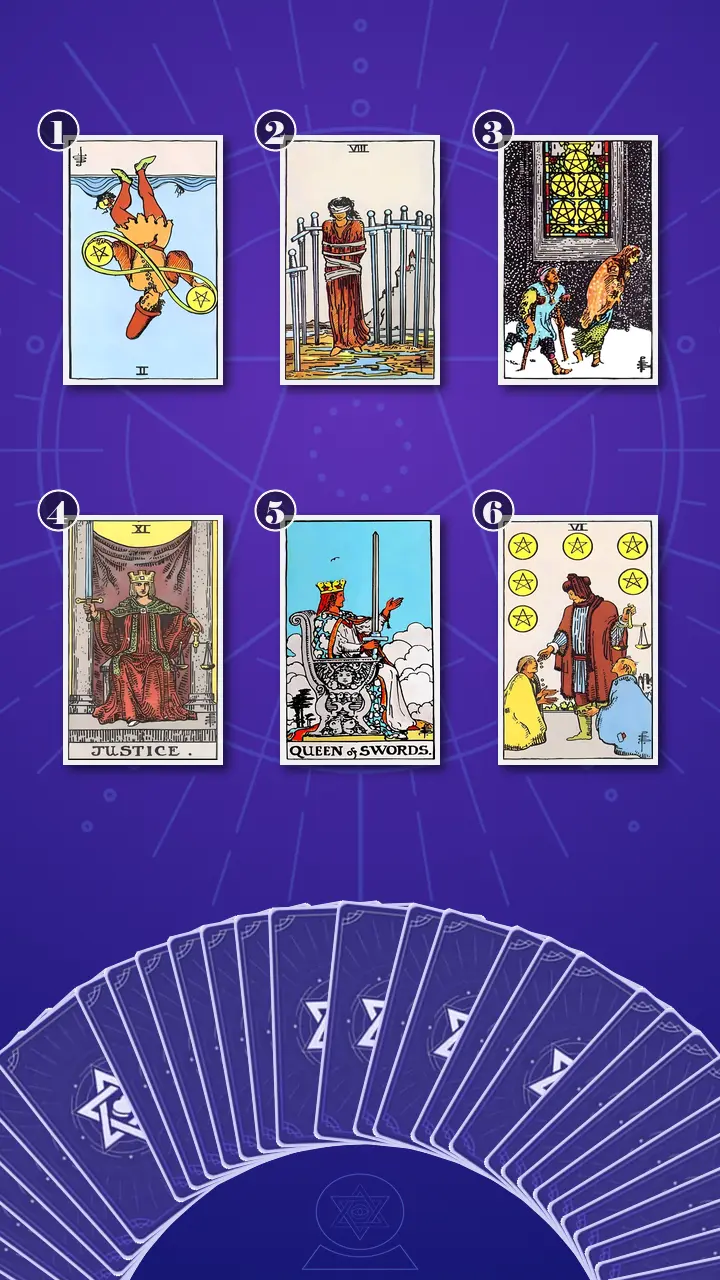
“Today I’m going to use a spread called the Transformation Path Grid (6) · Context Edition,” I said. “It’s a tarot spread for money shame and guilt patterns—especially those anxiety loops where something small becomes loaded.”
For anyone reading along: this issue isn’t about predicting whether you should tip, or what percentage makes you a “good person.” It’s about unpacking a repeatable internal loop—people-pleasing, fear of judgment, and a deeper scarcity sting that gets activated in public money moments. A big spread like the Celtic Cross would be more than we need, and a simple three-card pull can’t reliably separate the present trigger from the mental trap and the deeper root.
This six-card grid does exactly what Taylor was asking for: it moves from observable checkout behavior → the cognitive blockage → the underlying money-and-belonging wound → the reframe that breaks the loop → one practical next step → and finally, what balanced giving looks like when it’s embodied.
“We’ll look at the first card as the exact moment your body spikes at the terminal,” I told her. “The second will name what snaps shut in your mind. The fourth—our turning point—will show the reframe that restores choice.”
Reading the Map: How Tarot Works in Real Life (Not in Comment-Section Theory)
Position 1: The Present Trigger at Checkout
“Now we’re turning over the card that captures the specific, observable checkout behavior—the start of the guilt–money–anxiety loop,” I said.
The card was Two of Pentacles, reversed.
In modern life, this is morning coffee on the way to the TTC: the barista flips the iPad toward you and the presets start at 20%. Your thumb hovers while your brain tries to juggle rent, groceries, and the social vibe in one breath. You tap a higher tip to end the awkwardness fast, then feel a wave of regret hit as soon as you’re outside—like you traded a few dollars for two seconds of not feeling watched.
“That tip screen isn’t asking who you are. It’s asking what you’ll do under pressure,” I said, and I watched Taylor’s face change at that—her eyes narrowed, then softened, as if something finally got named without being shamed.
The Two of Pentacles is all about managing resources and rhythm. Reversed, it’s the energy of juggling tipping into overload. The infinity loop ribbon on the card—those two coins spinning in a never-ending figure-eight—looks like six browser tabs open at once: budget, social optics, inflation discourse, guilt, self-image, and “what’s normal.” Your brain crashes right at the terminal, not because you’re incapable, but because you’re trying to do too many calculations in a public, time-pressured moment.
Taylor gave a tight, almost embarrassed laugh. “Okay… yeah. That’s exactly it. And it feels kind of brutal when you say it like that.”
“Brutal is often just accurate,” I said gently. “And accuracy is how we get free.”
I leaned in a little. “Here’s the key: if you have to buy relief, it’s not generosity—it’s nervous-system spending.”
Her shoulders lifted—then dropped a fraction, as if her body recognized itself in that sentence before her mind did.
Position 2: The Immediate Mental Block
“Now we’re turning over the card that names what keeps the situation stuck—the mental trap that snaps shut at the screen,” I said.
The card was Eight of Swords, upright.
In real life, this is that trapped feeling at the terminal, like every option is wrong. You can’t look at the screen without also imagining what the cashier thinks of you. You choose quickly, not because it’s your value, but because you want out of the moment. Later, you replay it like a post-game analysis, even though no one else is thinking about it anymore.
The Eight of Swords is the classic “bind made of thoughts.” There’s a blindfold. There are loose ropes. There’s a ring of swords that looks terrifying until you notice there’s space to walk out. Upright, this energy is blocked not by the world—but by what your nervous system is convinced the world will do.
I spoke the fear the way it actually sounds in someone’s head, like caption text over a checkout scene: They can tell.They’ll think I’m cheap.Everyone behind me is watching.
Then I offered the “loose ropes” truth without telling her what number to tap. “Custom tip exists. Flat amount exists. No tip exists in some contexts. Your pre-decided rule exists. Mind-reading the cashier is still mind-reading, even when it feels like survival.”
Taylor exhaled like she’d been holding her breath for an entire year. Her gaze drifted off-screen for a second, unfocused, like she was watching her own memory play on mute. Then she nodded once—small, but real.
Position 3: The Deeper Root
“Now we’re turning over the card that reveals the deeper layer feeding the pattern—the money belief underneath the visible behavior,” I said.
The card was Five of Pentacles, upright.
In modern life, this is the feeling that tipping doesn’t just hit your budget—it hits your belonging. In a city where everything is expensive and status-coded, the prompt can trigger a cold, old feeling of: I shouldn’t be here unless I can be generous. So you tip like you’re buying entry into warmth, then walk out feeling financially exposed and a little ashamed.
The Five of Pentacles always makes me think of winter. Two figures moving past a lit window, warmth so close it practically glows through the glass—yet they’re outside, convinced they don’t qualify for it. In my family’s Highland stories, winter wasn’t romantic. It was practical. You didn’t prove your goodness by burning through your firewood in one night. You proved it by keeping the hearth going.
“This card doesn’t call you selfish,” I told Taylor. “It shows money shame—a fear of being ‘outside.’ Like generosity is the entry fee to not being judged.”
She swallowed, and her hand went to the base of her throat, right where she’d described that quiet dread living. “That’s… grossly accurate,” she said, half-laughing, half-wincing. “It’s like my brain thinks I have to pay to be allowed to exist in the vibe.”
“Yes,” I said. “And that’s why the tip screen feels bigger than it is. It’s not only about dollars. It’s about worth.”
When Justice Spoke: A Values-Based Fairness Standard
Position 4: The Catalyst Reframe
I let my hands rest on the deck for a beat before turning the next card. The pause wasn’t theatrical—it was respect. This was the turning point position, the one that unlocks movement.
“Now we’re turning over the card that identifies the reframe that restores your agency and challenges the fear story,” I said.
The card was Justice, upright.
In modern life, Justice is deciding your tip is a policy, not a performance. Before you even walk in, you know what “fair and sustainable” means for you today. At the screen, you take two breaths, tap your number cleanly, and let it stand—no mental trial, no second-guessing on the sidewalk.
The scales in Justice are even. The sword is upright. This energy is balanced evaluation plus a clean decision. It’s the opposite of bargaining with guilt.
Setup: I could almost feel Taylor’s familiar split second—the iPad flips around, the presets start high, and her breath locks because a stranger might have an opinion. Her mind tries to solve it with speed: end the discomfort now, punish yourself later. It’s a toll booth that doubles as a character test.
Stop using the tip screen to buy approval; use Justice’s scales to choose what’s fair for you and the situation, then let the decision stand.
The sentence hung between us. Outside my window, a gust moved through the leaves of the potted fern beside my table, a soft shiver like a breath finally released.
Reinforcement: Taylor’s reaction came in layers. First: a freeze—her eyes widened a fraction and her mouth parted, like her brain had paused mid-scroll. Second: the thought landed—her gaze dropped to the edge of her desk, unfocused, as if she was replaying every checkout moment where she’d tried to outrun judgment. Third: the release—her shoulders sank, and she let out a shaky little laugh that turned into a long exhale. “But… if I do that,” she said, voice tight with something close to anger, “doesn’t it mean I’ve been doing it wrong? Like I’ve been… pathetic?”
“It means you’ve been trying to stay safe,” I answered, firm and kind. “Your nervous system chose the fastest exit. That’s not pathetic. It’s adaptive. Justice just offers a different kind of safety: structure.”
I brought in my Nature Empathy Technique the way I’d learned it as a girl—by listening first. “Toronto’s winter teaches this better than any lecture,” I said. “In winter, you don’t spend heat to impress anyone. You choose what’s fair and sustainable so you can keep going. Fair and sustainable is a valid choice, even when it’s not the most impressive one.”
“Now,” I asked her, “with this new perspective, look back at last week. Was there a moment—one terminal, one app screen—where using Justice’s scales would have changed how you felt?”
Taylor blinked hard. “Yesterday. Coffee. I tipped 25% and then felt sick all day. If I’d had a rule… I could’ve just… done it. And moved on.”
That was the shift: from guilt-driven, performance-based tipping to fair-and-sustainable self-respect and grounded generosity. Not a personality makeover—an internal re-allocation of power.
Position 5: The Next Step Practice
“Now we’re turning over the card that offers practical advice—a repeatable behavior you can practice in real checkout moments this week,” I said.
The card was Queen of Swords, upright.
In modern life, this is one clear inner sentence at checkout: “I’m doing my standard tip today.” No apologizing. No over-explaining. You tolerate a brief moment of discomfort and move on, protecting your budget and your self-respect at the same time.
The Queen of Swords isn’t cold for sport. She’s clear because clarity ends spirals. Her raised sword says, decide. Her open hand says, pause.
Taylor’s eyebrows lifted. “But what if I can’t handle the awkwardness? Like… what if they actually think I’m cheap?”
“Then you’ll practice a very modern, very brave skill,” I said. “You’re allowed to be briefly misunderstood and still be a decent person.”
And because I’m me, I offered her a small protective image—nothing mystical, just practical: “Imagine your choice is inside a clear glass jar. People can look at the jar, but they can’t climb into your budget. You don’t owe strangers your financial nervous system.”
She nodded slowly, lips pressed together, as if testing what it would feel like to let that be true.
Position 6: The Integration Outcome
“Now we’re turning over the final card—the picture of what this looks like when it’s embodied, when the lesson is lived,” I said.
The card was Six of Pentacles, upright.
In modern life, it’s grounded reciprocity: tipping becomes measured, not moralized. You tip with a steady hand when it fits, tip less or not at all when it doesn’t apply, and you stop treating the choice as proof of your worth. The result is calmer spending, fewer replays in your head, and a sense that you can be generous without self-abandoning.
Notice the motif: the scales appear again. Justice becomes lived behavior. Fairness stops being a debate and becomes a habit.
The “Fair + Sustainable” Filter: Actionable Advice for Your Next Checkout
I summarized the story the cards had told us in plain language—because tarot, at its best, doesn’t float above your life. It names what’s already happening.
“Here’s the pattern,” I said. “The Two of Pentacles reversed shows your tip-screen guilt spiral starting before you even choose a number—tab overload plus time pressure. The Eight of Swords shows the real trap: fear of judgment turns the prompt into a moral exam, so you panic-tip for relief and then replay it later. The Five of Pentacles shows why it stings so much: it pokes an older money-and-belonging wound, like generosity is the entry fee to warmth. Justice cuts through that with a values-based fairness standard, and the Queen of Swords turns it into one simple script. The Six of Pentacles is where you end up: balanced reciprocity, not performative giving.”
“Your cognitive blind spot,” I added, “is that you’ve been treating discomfort as evidence. As if feeling exposed means you should pay more. But discomfort at the terminal is often just your nervous system reacting to imagined surveillance.”
“The direction of change is simple,” I said. “Shift from tipping to manage how you’re perceived to tipping as a pre-decided guideline you can calmly follow.”
Then I gave Taylor what she’d actually come for: next steps she could do in a real Toronto week, not in an idealized future self.
- The One-Category Tip Policy (7 days)Pick one category for the next week (coffee, rideshare, or delivery). Write one rule in your Notes app: for example, “Coffee: $1 per drink,” or “Coffee: 15% only if table service; otherwise $0–$1.”Keep it tiny and specific so your brain can’t turn it into a courtroom. Treat it like an experiment, not a forever identity.
- Two-Breath Checkout Pause (before you look)When the terminal flips toward you, take two quiet breaths before your eyes go to the presets. Use an environmental sound as your anchor: the espresso machine hiss, the TTC ding outside, even the rain on the window. Silently say: “Fair and sustainable.” Then tap the rule you already chose.This is Esmeralda’s walking-meditation trick in miniature: let the environment hold you steady so you don’t bolt into people-pleasing.
- One-Line Reality Check (30 seconds, after you pay)After you leave the shop or close the app, write one sentence: “I felt ___, and what actually happened was ___.” Then stop. No analysis essay. No bank-app refresh in the line.If your mind keeps replaying later, do a 3-minute bedtime energy review: name the moment, thank yourself for practicing, and mentally set it down like a coat on a hook.

A Week Later: The Quiet Proof
Six days later, Taylor messaged me: “Did the coffee rule thing. $1 flat. I still felt a spike, but I did the two breaths and didn’t check my balance after.”
She added, almost surprised by her own report: “The barista literally said ‘Have a good one’ in the exact same tone as always. I kept walking.”
It wasn’t a movie-ending transformation. It was something better—evidence. The kind that lives in small muscles: a jaw unclenching, shoulders dropping, a thumb tapping a number without a trial attached.
She confessed one more thing: the calm felt a little lonely at first. “Like… I didn’t have the adrenaline. I didn’t have the post-tip spiral to chew on. I just had my coffee and my thoughts.” She paused. “But it was quieter. I liked the quiet.”
That’s what I mean when I talk about a Journey to Clarity. Not certainty. Ownership. A return to rhythm—giving that doesn’t abandon you.
We’ve all had that moment with the terminal glow on our face and a line behind us—heart tight, breath held—where being generous and staying financially safe suddenly feel like they can’t coexist.
If you let tipping be a fairness guideline—not a personality test—what’s one tiny rule you’d be curious to try for just one category this week?