Tagged in Flirty Memes at Night—And the Two-Sentence Line to Set
Finding Clarity in the 11:38 PM Tag
Alex (name changed for privacy) showed up on my screen for a late Toronto session, the kind where the city feels quieter but your phone feels louder. Before we even spoke about tarot, I watched their eyes flick—down to their notifications, up to the camera—like their nervous system was still bracing for impact.
“It’s not even that serious,” they said, and the sentence had the tightness of a shoelace pulled too hard. “But it keeps happening.”
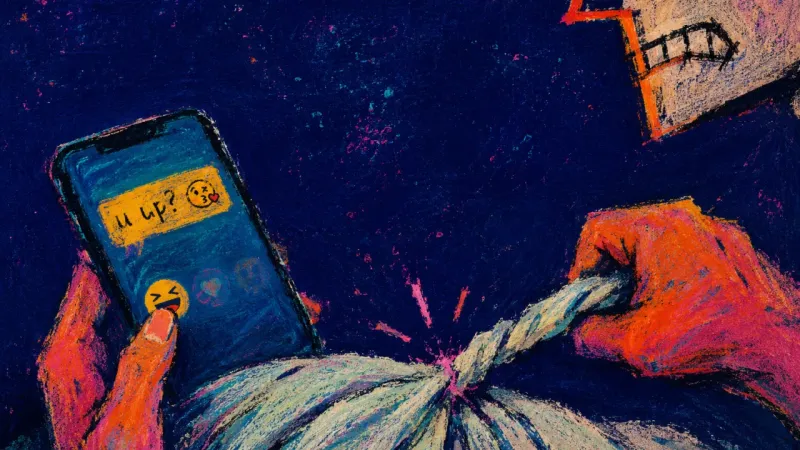
They told me the exact scene, and I could practically feel it in my own jaw: 11:38 PM in bed, condo near Liberty Village, the faint whir of a fan, the screen warming their palm. An Instagram tag notification lights up the dark. They open it. It’s a flirty meme—packaged as a joke, formatted for plausible deniability. Their thumb does the loop: check who liked it, check which mutuals can see it, close the app, reopen it, hover over reactions, then tap 😂 because it’s “safe.”
And then—like a reflex—Notes opens. Three drafts. “boundary 1,” “boundary 2,” “boundary 3.” The blue light stings. Their shoulders creep upward as if bracing for a snowfall.
What they were asking me was painfully simple, and emotionally complicated: “Flirty meme tags from my friend—what boundary do I set? How do I tell my friend to stop flirting without making it weird?”
I could hear the core contradiction humming underneath every detail: Protect the friendship and keep things easy vs risk being ‘the problem’ by setting a direct boundary.
The unease wasn’t abstract. It lived in their body—tight jaw, tight shoulders, and that little stomach-drop that happens when your brain realizes, Oh no, this is going to become a social performance in front of mutuals. It was like watching someone hold a door shut with their whole weight… while pretending it was barely cracked open.
I kept my voice gentle. “It’s already weird for you—naming it doesn’t create the weirdness, it just stops you from carrying it alone. Let’s try to give this fog a map. Our goal tonight is finding clarity you can actually use—one boundary you can live with tomorrow morning, not just a perfect paragraph you never send.”

Choosing the Compass: The Bridge · Context Edition Spread
I invited Alex to take one slow breath—not as a mystical ritual, just a nervous-system handrail. “Let your shoulders drop,” I said. “And let the question be plain: What boundary do I set around flirty meme tags?”
As I shuffled, I explained what I was doing in the most practical way I know. “Today we’ll use a spread I call The Bridge · Context Edition. It’s a tarot spread for relationship boundaries—especially useful when the dynamic is two-person, messy, and half-public.”
For readers who wonder how tarot works in situations like this: I don’t treat the cards as a verdict. I treat them as a structured conversation tool—like an archaeological grid that stops you from digging randomly. This spread is built to diagnose a two-person dynamic and identify what can connect both sides without you abandoning yourself.
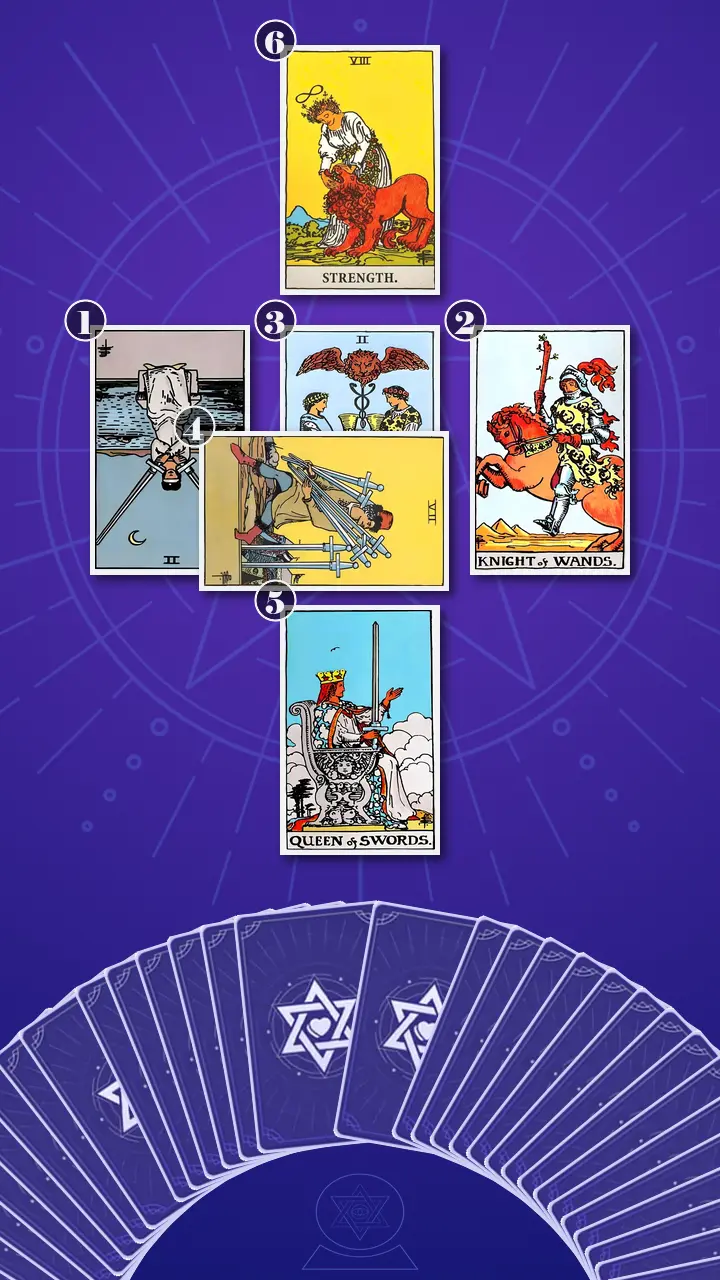
The layout is simple and precise: one card for your immediate freeze response, one for their presenting energy, one for what the connection actually creates, one for the core snag that keeps it ambiguous, one for the boundary itself, and one for how to deliver it in a way you can sustain. In other words: not just what’s happening, but what to do next.
“We’ll look closely at three positions,” I told Alex, and also—quietly—told the reader: “Card 1 shows your stalling behavior on your actual phone screen. Card 4 reveals the mechanism of mixed signals—often the part that makes you feel stuck. Card 5 is the boundary line: the shortest true sentence.”
Reading the Map for a Friendship at a Career Crossroads of Social Comfort
As I laid the cards down in the cross arrangement, I thought—briefly—of fieldwork. How a site looks calm until you realize the soil is layered with tiny choices, repeated over time. Relationships are like that, too. That’s my private framework—my Emotional Historiography: reading what people do repeatedly as the real document of the bond.
Position 1: Your immediate inner reaction and the way you’re getting stuck
“Now flipped over,” I said, “is the card representing your immediate inner reaction and the specific way you’re getting stuck.”
Two of Swords, reversed.
I nodded toward the image. “This is the stall. The blindfold. The crossed swords held so tightly it takes effort just to breathe.”
And then I used the translation that matters in real life. “This is like you on your couch after a long hybrid-work day, phone in hand, and a flirty tag pops up. You do the whole loop—open, check who saw it, close, reopen—then hit 😂 because it’s the least risky move. It buys you calm for 30 seconds, but it also quietly tells your nervous system: ‘We’re going to keep living with this.’”
Energetically, reversed Two of Swords is blockage leaking into motion. Not clarity—just pressure. You can’t hold neutrality forever, so it spills into rumination and reactive impulses: drafting essays at 1 a.m., deleting, redrafting, then sending nothing.
Alex let out a small laugh—sharp, not happy. Their shoulders lifted, then dropped like they’d been caught doing something embarrassing. “That’s… honestly kind of cruel,” they said. “Like, that’s literally my exact sequence of moves.”
I kept it kind. “It’s not a personality flaw. It’s a loop. Your brain is stuck in edit mode with no publish button.”
Position 2: The friend’s presenting energy in how they’re communicating
“Now flipped over,” I said, “is the card representing the friend’s presenting energy—what their approach feels like, not a guaranteed intention.”
Knight of Wands, upright.
“This is bold momentum,” I said. “It’s quick-fire. It’s ‘let’s see what happens if I do this.’”
In modern terms: “Your friend communicates like a rapid-fire vibe check—tags, jokes, flirty posts—where the whole point is momentum. They’re not sitting down to talk about intent; they’re throwing a spark and watching whether you catch it. If you don’t, they may throw another to see if you’ll change.”
Energetically, that’s Fire in excess: playful, charismatic, sometimes intrusive if consent isn’t explicit. It can feel like a streetcar that won’t stop at your station unless you pull the cord.
Alex’s eyes narrowed—not angry, more like tired. “They do double down,” they admitted. “If I ‘lol’ one, they tag me again. Like they’re testing the line.”
“Right,” I said. “The cards aren’t calling them a villain. They’re naming the pace. And pace matters.”
Position 3: What the connection is currently creating between you
“Now flipped over,” I said, “is the card representing the relational container—what the connection is actually creating, the part boundaries would protect.”
Two of Cups, upright.
This one softened the room. Even through a screen, I felt it—the way people loosen when they’re reminded there’s something real underneath the noise.
“Under the meme chaos,” I said, “there’s genuine connection: shared humor, trust, the kind of rapport that’s worth protecting. This card says a boundary isn’t a rejection—it’s how you keep the friendship feeling safe and mutual instead of confusing.”
I used the memory-montage technique, quick and human: “Think of the normal, good moments. Laughing over coffee on Bloor. A shared playlist you both actually listen to. Inside jokes that don’t cost anyone dignity.”
Alex’s face changed—micro, but visible. Their jaw unclenched a millimeter. “Yeah,” they said quietly. “That’s why I don’t want to make it weird.”
“That’s the point,” I replied. “You’re not trying to control their feelings. You’re trying to keep the container clean.”
Position 4: The main tension point that keeps the dynamic ambiguous
“Now flipped over,” I said, “is the card representing the obstacle—the mechanism that keeps this stuck in subtext.”
Seven of Swords, upright.
I didn’t dramatize it. I just named it. “This is strategic ambiguity. It’s communication that leaves room to deny intent.”
Then I gave it the exact modern translation: “The tag is formatted so they can retreat instantly: if you laugh, it’s flirting; if you don’t, it’s ‘just a meme.’ That ambiguity protects them from accountability and puts you in the position of either swallowing discomfort or ‘making it a thing.’”
In my mind, I saw a split-screen—because Seven of Swords is always a split-screen.
Left side: their meme, framed as humor, plausible deniability, ‘Relax, it’s just a joke.’
Right side: Alex’s internal labor: checking mutuals, rehearsing, bracing for backlash, doing courtroom-level evidence gathering to justify a preference.
Low accountability for them. High processing cost for you.
Alex made a sound that was half “ugh,” half surrender. Their eyes darted away from the camera for a beat, like they were replaying old threads. “It’s like… it’s designed so I look dramatic if I say anything.”
“Exactly,” I said. “And here’s the line I want you to remember: Emoji diplomacy isn’t consent. A 😂 reaction can keep the peace, but it doesn’t set a term.”
When the Queen of Swords Raised One Clean Blade
I paused before turning the next card. Not for theatrics—because sometimes the atmosphere shifts on its own. The room felt quieter, as if even the city outside the window had stopped refreshing the feed.
Position 5: The boundary to set—what to name clearly and what limit to hold
“Now flipped over,” I said, “is the card representing the boundary to set—what to name clearly and what limit to hold.”
Queen of Swords, upright.
“This,” I told Alex, “is clear, direct boundary-setting with self-respect and minimal over-explaining. One clean message. No apology tour.”
I anchored it in the real-life scenario: “You send one short, direct DM that names the behavior and the limit: ‘Hey, I’m not into flirty tags. Please don’t tag me in those.’ You don’t add a speech, you don’t apologize for having a preference, and you don’t chase reassurance afterward.”
Setup: I could see Alex right there in the familiar loop—meme open, thumb hovering over 😂, already scanning the likes like it’s a social audit. Their mind was trying to predict every outcome so they wouldn’t have to feel the moment of social risk.
Stop trying to be ‘chill’ through ambiguity—choose clarity, like the Queen of Swords raising one clean blade that doesn’t need a speech to be understood.
There was a small silence after I said it, the kind you get in a museum when people finally stop talking and actually look.
Alex’s reaction came in layers. First, a freeze: their breath caught; their eyes widened slightly; their hands went still. Then the thought landed: their gaze unfocused, like they were rewinding a week of notifications—counting the times they’d paid with discomfort to buy “smooth.” Then the release: their shoulders dropped, and with it a quiet exhale that sounded like they’d been holding their breath in tiny increments all month.
“But if I do that,” they said, and there was a flash of resistance—almost anger—“doesn’t it mean I’ve been doing it wrong? Like I basically encouraged it?”
I held that gently. “No. It means you’re editing history with new information. As an archaeologist, I can tell you: we don’t shame the past layer for being a past layer. We learn from it.”
“Here’s the practical reinforcement,” I continued, sliding from insight into action without making it a lecture. “Open Notes and write only two lines: (1) ‘I’m not into flirty tags.’ (2) ‘Please don’t tag me in those anymore.’ Set a five-minute timer. When it ends, you either send those two sentences or you stop for the night—no midnight essay. If your body feels flooded, pause and come back tomorrow; you’re allowed to choose pacing.”
Then I asked the question that turns tarot from a reading into a turning point: “Now, with this new lens—can you think of a moment last week when you saw a tag and your stomach dropped? A moment where, if you’d had these two sentences ready, you would’ve felt different?”
Alex blinked hard. Their voice went quieter. “Thursday. On the Queen West streetcar. I did the whole scroll-without-reading thing.” They gave a tiny, embarrassed smile. “I could’ve just… said it.”
“That,” I said, “is the shift. This isn’t about decoding what the meme means. It’s the move from uneasy mind-reading and emoji-only replies… to calm firmness and steady self-respect.”
And because I never want a boundary to become a weapon, I added one of my own tools—Covenant Evolution: “Commitments in relationships evolve over time. Even friendships. A boundary is simply an updated agreement. Not a betrayal.”
Position 6: How to communicate the boundary in a way you can sustain
“Now flipped over,” I said, “is the card representing how to communicate this in a way you can sustain—tone, pacing, and the next step.”
Strength, upright.
“Strength isn’t about winning,” I said. “It’s about holding your line with warmth.”
Modern translation: “After you set the boundary, you let the awkwardness exist without trying to fix it. If they joke, you calmly restate it once. If they get weird, you pause instead of people-pleasing. You keep your friendliness, but you don’t trade clarity for approval.”
Energetically, Strength is Fire guided into balance. It’s the difference between matching their momentum (Knight of Wands) and leading your own pace. Don’t chase the horse’s speed; guide the lion—your nervous system—with steady hands.
Alex nodded, slower this time. Their fingers stopped fidgeting with the edge of their sleeve. “So I don’t have to… debate.”
“Precisely,” I said. “Their reaction is information—not a verdict.”
Two Sentences, No Backstory: Actionable Next Steps
I brought the whole spread together like a short, coherent story—because clarity arrives when the pieces finally form one picture.
“Here’s what I see,” I said. “You start in Two of Swords reversed: you freeze, you manage, you edit yourself into ‘chill.’ Your friend arrives as Knight of Wands: bold, fast, testing chemistry through tags instead of conversation. Underneath, Two of Cups says the friendship is real—worth protecting. But Seven of Swords is the snag: deniable flirting keeps everything in subtext and shifts the cost onto you. The bridge is Queen of Swords: one clean boundary line. And Strength is the delivery: calm, kind, consistent.”
The cognitive blind spot was gentle but firm: “You’ve been treating your discomfort like a debate topic—something you must justify with proof—rather than a signal you’re allowed to respond to. The transformation direction is simple: Stop interpreting signals. Start stating terms.”
Then I offered Alex something I use often in conflict work—my Pictogram Dialogue strategy. “When a situation is messy, reduce it to the simplest symbols that still tell the truth,” I said. “In your case: two sentences. No backstory. That’s the boundary.”
- The One-Text Boundary (send within 24 hours)At a time you choose (not at 1 a.m.), send: “Hey—I’m not into flirty tags. Please don’t tag me in those anymore.” If you want a softer-but-clear version: “I like our friendship, but the flirty meme tags aren’t my vibe. Please stop tagging me in those.”Use a “two-sentence cap”: draft in Notes, delete everything beyond two sentences, then send that version.
- The 5-Minute Timer (no midnight essays)Set a 5-minute timer. You can draft during the timer, but when it ends you either send the two sentences or you stop for the night. If you stop, schedule a specific time tomorrow to send.Difficulty-lowering trick: when the timer ends, put your phone face down and stand up—change your body position so you don’t spiral-edit.
- The Calm Repeat + Mute WindowIf they reply, “Relax, it’s just a meme,” use one calm repeat once: “Yeah—I get it’s a joke. I’m still not into it, so please don’t tag me in those.” Then mute the chat for 2–6 hours so you’re not adrenaline-refreshing for their reaction.Before you hit send, do a 30-second body check: unclench your jaw, drop your shoulders, take one slow breath. You’re training steadiness, not perfection.
I added one more lens—Amphora Balance, my shorthand for equal partnership: “A friendship that’s truly mutual can hold an updated term. If the cost of ‘keeping it light’ is always paid by you, the amphora is tipped. Boundaries level it.”

A Week Later: The Quiet Proof
A week later, Alex sent me a message that was almost comically short: “Did it. Two sentences. No backstory.”
They told me they’d sent it at 10:12 AM on a Tuesday—daylight, coffee in hand, not in a midnight spiral. Then they muted the chat and took a walk around the block. “It was awkward,” they admitted. “But I didn’t die. And I didn’t have to keep checking who liked the tag.”
That’s what a Journey to Clarity often looks like in real life: not fireworks, but a quieter nervous system. Not certainty about the other person, but ownership of your own line.
When your stomach drops at a ‘joking’ tag but your thumb still hits 😂 to keep the peace, it’s not that you’re overreacting—it’s that you’re trying to belong without taking up any space.
If you didn’t have to earn the right to be comfortable, what’s the simplest sentence you’d let yourself send this week?
Every reading at AceTarot is a journey to connect with inner wisdom and empower your next step. The stories shared here are psychological mirrors, not private records—crafted to reflect universal emotional loops and help you find your own clarity. Learn more about our Journey to Clarity.