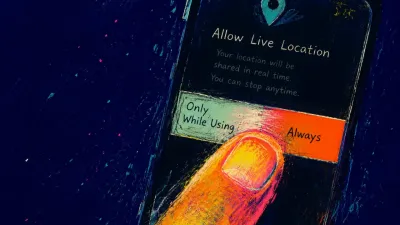
My Thumb Hovered Over 'Share My Location'—Then I Set a Clear Rule
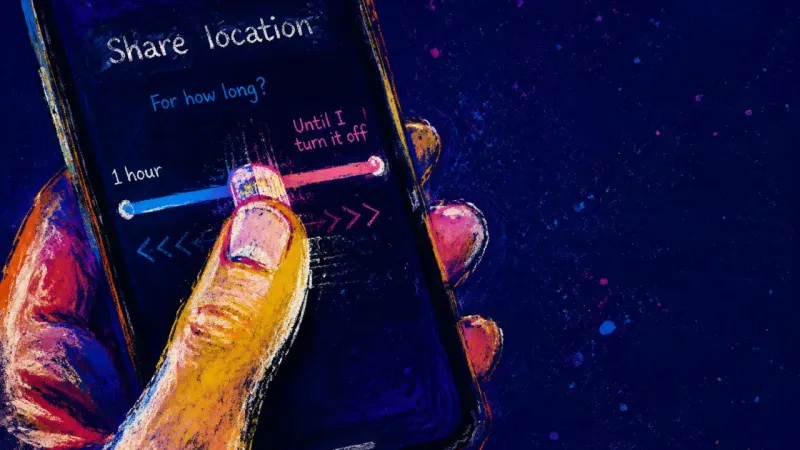
The 8:47 p.m. Find My Hover
If you’ve ever hovered over “Share My Location” like it’s a relationship exam—and then closed the app to buy time—this is for you.
Taylor showed up to our session still wearing her day like a heavy coat. She’d booked me from Toronto, earbuds in, the soft roar of Line 1 still living in her voice. “It happened on the TTC,” she said, like she was confessing to something small that didn’t feel small.
“8:47 on a Tuesday,” she went on. “Heading north. The train was squealing into the tunnel, those fluorescent lights were flickering, and my phone was warm in my palm. I reread it—‘Just share your location with me.’ I opened Find My, hovered over the button, backed out, reopened Messages, reread it again.”
Her shoulders lifted as she spoke, as if her body was bracing for impact. Her chest looked tight, not in a poetic way—in the way you can spot when someone hasn’t fully exhaled since the moment the text came in.
“I want closeness,” she said, fast, like she needed me to understand that part. Then she slowed. “But I don’t want to be monitored. And I hate that I’m either too open or totally shut down.”
The unease in her wasn’t abstract. It was like watching someone try to smile through a locked door—hand on the bolt, face turned toward the person knocking, hoping no one notices the fear in the muscles around the eyes.
I nodded, letting her have the whole shape of it without rushing to fix it. “We can find clarity without turning this into a courtroom drama,” I told her. “Today, let’s make a map. Not of where you are—but of where your ‘yes’ and ‘no’ live, so you can keep yourself safe and keep your connection honest.”

Choosing the Compass: A Celtic Cross for Digital Boundaries
I’m Esmeralda Glen. I grew up with the Scottish Highlands in my bones—seven generations of women in my family who listened for what couldn’t be said straight out. These days, I work with people whose lives are lived through screens and swipe-sized decisions, but the nervous system hasn’t changed. A boundary request still hits like weather.
I asked Taylor to take one slow breath with me—not as a ritual, not as a spell. Just a clean transition. In. Out. “Keep the question in your mind,” I said. “After they ask to share locations, what boundary keeps you safe?”
As I shuffled, I explained what I was choosing and why—for her, and for anyone reading this who’s wondered how tarot works in a real-life situation like Apple Find My location sharing anxiety.
“We’re using the Celtic Cross,” I said, “because this isn’t just a yes/no. It’s a chain: present tension, the pressure underneath it, the deeper fear, the past pattern, your values, your next best communication move, and then the boundary structure that actually holds.”
I tapped the table lightly. “Card 1 will show what happens in your body and mind in the first minute after the request lands. Card 2 will show what makes the request feel loaded—whether it’s safety logistics or a trust test. And the final card will point to the safest structure: the kind of boundary you can repeat on a tired Tuesday without negotiating yourself out of it.”
Reading the Cross: Where the Freeze Starts
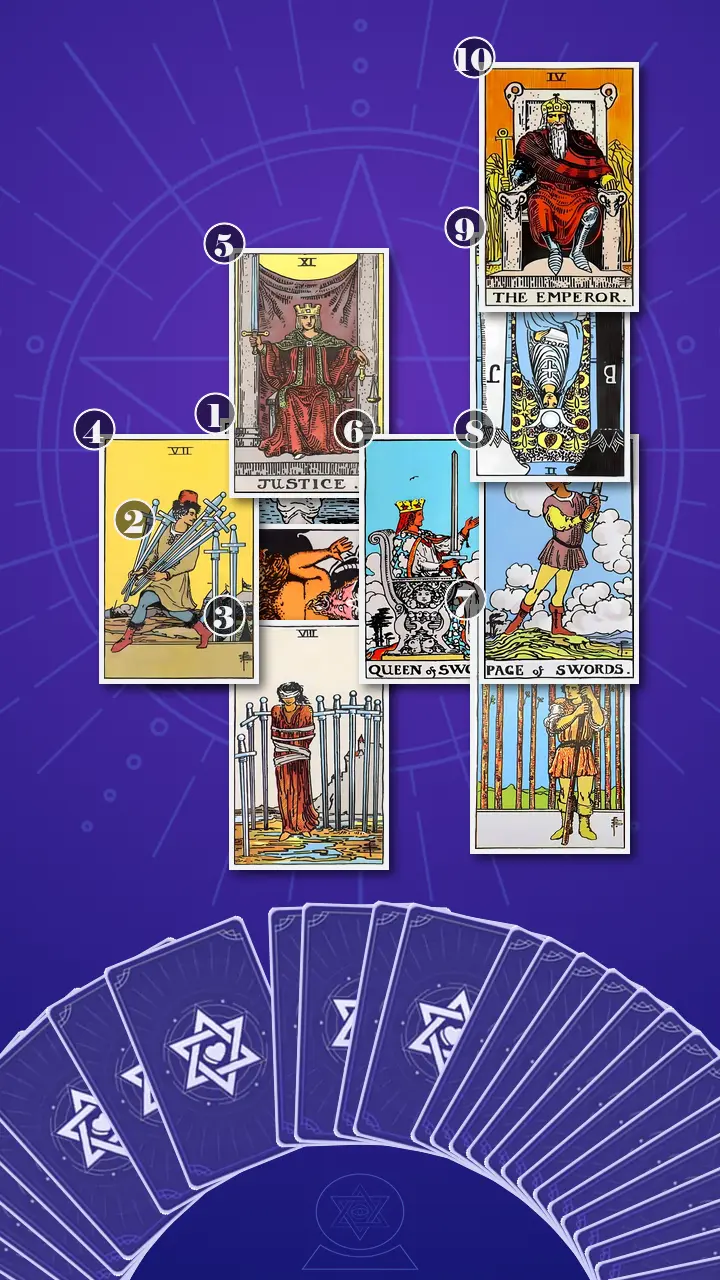
Position 1: The Immediate Boundary Freeze
“Now we flip the card that represents the immediate boundary freeze—what you do and feel right after the location-sharing request lands.”
Two of Swords, reversed.
Even before I spoke, Taylor gave a small, sharp laugh—bitter, like she’d just been called out by her own screen time. “That’s… kind of brutal,” she said. “Because yes. That’s literally me.”
This card, reversed, is decision paralysis cracking under pressure. The blindfold isn’t peaceful; it’s self-silencing. In modern life, it’s exactly what you described: keeping the conversation polite on the surface while privately opening and closing location settings, hoping discomfort will disappear without you having to choose.
The energy here is blocked Air—thought loops instead of truth. Not “balance,” but a stalemate that turns into a spike of stress. Reversed, the card warns of an overcorrection: to escape the tension, you might suddenly overshare—turning on indefinite location sharing to prove you’re “easygoing,” and then feeling exposed and resentful afterward.
I watched her fingers fidget with her hoodie string. “This is your nervous system trying to keep the vibe good,” I said gently, “while your body signals discomfort.”
Her eyes dropped. “I leave it on read,” she admitted. “And then I draft… like, an essay.”
Position 2: The Pressure Point
“Now we open the card that represents the pressure point—what makes this request feel loaded. Control, guilt, proving, leverage.”
The Devil, upright.
I didn’t dramatize it. I never do. “The Devil doesn’t automatically mean danger,” I told her. “It means noticing where choice quietly becomes compliance.”
The chains in this card are loose—which is exactly how modern social pressure works. It’s not a threat; it’s a vibe that makes refusal feel socially expensive. The text that comes back fast—‘lol why not?’—turns a boundary into a test. Consent versus compliance. Connection versus control.
Taylor’s jaw tightened, then unclenched. “It does feel like a test,” she said, irritation finally allowed to exist. “Like if I say no, I fail ‘girlfriend school’ or something.”
“And that,” I said, “is the chain. Not metal. Meaning.”
I let a sentence land that I’ve seen save people a lot of self-argument: “Closeness isn’t the same thing as access.”
She blinked—quickly, as if she’d almost teared up and didn’t want to give it attention.
Position 3: The Root Fear Underneath
“Now we open the card that represents the root fear and belief underneath the request—the internal trap that keeps the boundary hard to set.”
Eight of Swords, upright.
The image is so simple it’s almost cruel: blindfold, tied hands, swords in a loose ring. Physically safe. Psychologically cornered.
In modern life, it’s believing there’s no ‘good’ answer, so you negotiate with yourself instead of choosing a boundary that matches your actual comfort. It’s the thought: If I say no, I’m suspicious. If I say yes, I’m stupid.
I mirrored her TTC loop back to her, tight and cinematic: open app → hover → close → reopen. The warm phone screen. The fluorescent lighting. The braced shoulders that won’t drop.
Her reaction came in three beats—so human I could almost feel it in my own chest. First: a tiny freeze, breath held. Second: her gaze unfocused like a memory replaying. Third: a long exhale, the kind you don’t realize you’ve been withholding. “Yeah,” she whispered. “That’s exactly it.”
“This isn’t you being dramatic,” I told her. “This is your mind trying to predict rejection so you don’t have to feel it.”
Position 4: Your Learned Privacy Strategy
“Now we open the card that represents your learned privacy strategy—the past pattern that shaped how you handle access and disclosure.”
Seven of Swords, upright.
This card is quiet self-protection and selective disclosure: taking some swords, leaving some behind, looking over your shoulder. In modern life, it’s keeping certain apps, settings, or details private because experience taught you that access can be used carelessly—even by decent people who simply aren’t careful.
The energy here is strategic, not shameful. But when it goes unspoken, it can slide into secrecy. You end up acting like you have to “sneak” your own boundaries instead of stating them.
Taylor swallowed. “I’ve… had stuff happen,” she said. She didn’t give me the whole story. She didn’t have to. The card already held it: learned caution.
“This position doesn’t ask you to justify it,” I said. “It asks you to respect it.”
Position 5: Your Ideal Standard (The Catalyst)
“Now we open the card that represents your ideal standard—what fair and safe intimacy looks like when you’re not people-pleasing.”
Justice, upright.
The moment Justice appears, the air in a reading tends to change. The drama drains out. You can feel it go from ‘am I a good person?’ to ‘what are the terms?’
Justice isn’t about winning an argument. It’s about building an agreement that respects both safety and autonomy. Sword and scales: clear language plus balanced terms, rather than emotional bargaining.
“This is you wanting something very reasonable,” I said. “Not a TED Talk. Not an apology tour. A standard.”
I gave her the framing that makes boundaries feel less like a confession: “Terms, not trial.”
Taylor visibly dropped her shoulders a notch, like her body heard, Oh. This can be simple.
Position 6: The Next Best Communication Move
“Now we open the card that represents the next best communication move—the clean boundary language you can take soon.”
Queen of Swords, upright.
This is the card of minimal, respectful truth. Not icy. Not cruel. Just clean. The raised sword is precision: no over-explaining, no long emotional essays, no apologizing for your comfort level.
In modern life, it’s the two-sentence text you can copy/paste when your nervous system is lit up:
“I’m not comfortable sharing my live location. I can text you when I leave and when I get home.”
Send → put phone down → breathe.
Taylor pressed her tongue to the inside of her cheek. Then she let her jaw unclench, like she was physically making room for the sentence to exist. “That’s… so much shorter than what I write,” she said, half amazed.
“Short is kind,” I told her. “It doesn’t invite a debate.”
When The Emperor Took the Throne
Position 7: Your Stance and Nervous System
“Now we open the card that represents you—your stance, your resilience, what you need to feel safe as you respond.”
Nine of Wands, upright.
This card validates guardedness formed through lived experience. Bandaged head. Fence behind. Steady grip. It says: you’re protective for a reason, and you don’t need to shame yourself for it.
In modern life, it’s wanting a boundary that prevents you from checking your settings every hour like a security camera feed—because that kind of vigilance is exhausting.
“I don’t want to feel on edge afterward,” Taylor said. “Like I have to keep monitoring who can see me.”
“Then the ‘safe boundary’ is the one that lets your body relax later,” I said. “Not the one that buys five minutes of social peace.”
Position 8: The Environment and Their Vibe
“Now we open the card that represents the environment—how the other person or dating culture frames the request.”
Page of Swords, upright.
This is curiosity without attunement. Questions come faster than trust is built. In modern life, it’s the follow-up that feels like cross-examination: ‘Why not?’ ‘What are you afraid of?’—and it lands like TikTok discourse where everything is a green flag or a red flag and no one gets to be human.
“Sometimes it’s not even mean,” Taylor said. “It’s just… persistent.”
“Exactly,” I replied. “Which is why your boundary has to hold even if they debate it. Safety can’t depend on their mood.”
Position 9: Hopes and Fears (The Inner Tug-of-War)
“Now we open the card that represents your hopes and fears—the inner tug-of-war.”
The High Priestess, reversed.
This is intuition getting overridden by social noise. The part of you that senses ‘too soon’—and then argues with itself, Googles ‘is it normal to share location with someone you’re dating,’ scrolls Reddit threads, and tries to crowdsource permission to want privacy.
Reversed, she can become the voice that says, You’re paranoid. Don’t ruin it. Be chill.
Taylor’s eyes flashed with embarrassment. “I literally did that,” she said. “I looked up like five different threads.”
“That’s not a character flaw,” I told her. “That’s your belonging alarm trying to keep you from being rejected.”
Then I softened my voice. “But your gut is still giving you data. It just doesn’t speak in perfect sentences.”
Position 10: The Safest Boundary Structure (Key Card)
I held the last card for a beat longer than the others. Outside my window, rain tapped the glass like a patient knuckle—steady, insistent. In my family, we call moments like that ‘weather agreeing with the lesson.’
“This is the integration,” I said. “The boundary structure that restores self-trust and reduces vigilance.”
The Emperor, upright.
The Emperor is your territory made visible: stone throne, armor, mountains. He doesn’t ask permission to have limits. He simply has them.
In modern life, this is a personal policy for location sharing—decided ahead of time, specific enough to be enforceable. Not vibes. Not hoping. Structure.
And this is where I used my own diagnostic lens—what I call Relationship Pattern Recognition. I’ve watched this particular script repeat across generations, across cities, across apps that keep changing their icons but never change the human need beneath them.
“Taylor,” I said, “your pattern isn’t ‘I’m bad at boundaries.’ Your pattern is: when closeness is on the line, you treat access as proof. You try to earn trust by giving more, faster—because part of you believes belonging has to be bought.”
Her shoulders pulled back, like she’d been struck by the accuracy. Then her brows knitted. “But if I set a rule,” she said, and there was a flash of anger under the fear, “doesn’t that make me… rigid? Like I’m already assuming the worst?”
Her reaction came in that three-step chain again: breath caught (freeze), eyes narrowed (meaning-making), then a shaky exhale (release) that sounded almost like grief for all the times she’d abandoned her own comfort to keep things smooth.
I didn’t rush her past it. “Rules aren’t accusations,” I said. “They’re how adults protect what matters.”
Then I leaned in—because this was the heart of the reading, the point where the map becomes a path.
Stop trying to earn trust by handing over the map, and start leading with your rules like The Emperor on his throne.
I let silence do its work.
Setup (what you’ve been living in): I could almost see the loop in her mind: on the TTC after work, rereading “Share your location with me?” while her thumb hovers over Find My—opening Settings, backing out, drafting a long explanation, deleting it, shoulders still braced like she’s preparing for a fight that hasn’t happened yet.
Reinforcement (what it shifts in your body): Taylor stared at the card like it had said her name. Her lips parted slightly, then pressed together. The muscles around her eyes tightened, then softened. Her shoulders—those lifted, watchful shoulders—lowered a fraction, as if her body heard, Oh. I’m allowed to have a rule.
But clarity can feel dizzy, too. I saw it: that split-second of vulnerability after relief, when a person realizes they’ve been negotiating with themselves for years and no one ever asked them to. Her hands opened on her lap. Then she whispered, “I want closeness, not access.”
“Yes,” I said. “And the Emperor makes that livable.”
I asked her the question that turns insight into real-world change: “Now, with this new frame—can you think of a moment last week when this would’ve made you feel different? A moment where you could’ve said less, and meant it more?”
Taylor swallowed, looked up and to the side—memory search—and nodded once. “The exact second I started typing the paragraph,” she said. “If I’d had a rule, I wouldn’t have tried to… prove my character.”
“That’s your first step from unease to self-trust,” I told her. “Not certainty. Self-permission.”
From Insight to Action: The Emperor Policy Draft
I pulled the whole spread together like threading beads: Two of Swords reversed showed the freeze and the draft-delete spiral; The Devil showed the social-cost pressure that turns a request into leverage; Eight of Swords revealed the belief that there’s no safe way to say no without losing belonging. Seven of Swords explained why privacy became a quiet strategy. Justice named the real desire—fairness, consent, mutual terms. Queen of Swords gave the language. And The Emperor—steady as stone—turned everything into structure you can actually live inside.
The blind spot here, the one that keeps you stuck at a relationship crossroads, is this: you’ve been treating a boundary like a performance. You try to say it in the perfect way so no one can be mad. But that keeps you trapped in decision fatigue—because every request becomes a brand-new moral dilemma.
The transformation direction is simpler, and it’s strong: shift from “I must prove trust by giving access” to “Trust is built through consent, clarity, and reciprocity, not surveillance.”
Then I gave Taylor what she came for: actionable advice—next steps she could do without waiting to become a different person.
- The 24-hour pause experimentFor the next 24 hours, don’t change any location settings. Draft your response in Notes instead of in iMessage, so you’re not writing with adrenaline.If your brain starts screaming “This sounds cold,” label it: approval alarm. Not a fact. Keep the draft to two sentences.
- The Two-Sentence Clarity Text (Queen of Swords)Text: “I’m not comfortable sharing my live location. I can text you when I leave and when I get home.” Then stop. No paragraph. No backstory.After you hit send, put the phone down and do three slow breaths. If you want extra steadiness, sync your inhale/exhale to a calm count (in for 4, out for 6) before you read their reply.
- Time-boxed access (if you choose to share for safety)Only share location for a specific window (e.g., 60 minutes during a late-night commute), for a specific purpose (logistics/safety), and turn it off immediately after. Set a reminder on your phone the moment you turn it on.Reciprocity is optional—offer it only if you genuinely want it, not as a bribe. A good boundary doesn’t require you to trade comfort for approval.
Taylor frowned at the list, then said the most honest obstacle: “But I don’t even have five minutes some days. Work is chaos, and by the time I’m home I’m fried. That’s when I answer texts.”
I respected the reality. “Then we make it smaller,” I said. “A boundary that works is repeatable—even on a tired Tuesday. On your most fried day, you’re not drafting policy. You’re copy/pasting it.”
I offered her the Emperor’s final piece—the one that makes this whole thing feel safer in your body, not just smarter in your head: “If someone pushes after you say no, their reaction is information. You don’t have to argue your way into being respected.”

A Week Later: Ownership, Not Surveillance
A week after our reading, Taylor messaged me—not a long update, just a screenshot and one line beneath it.
The screenshot was her Notes app. At the top: “My policy.” Two lines. Clean. Under it, her text draft: “I don’t share live location. I can text you when I leave and when I get home.”
Her message to me said: “I sent it. My hands were shaking, but I didn’t add the paragraph.”
There was no Hollywood ending in the screenshot—no fireworks, no sudden transformation into someone who never feels guilt. Just something quieter and more convincing: she’d slept through the night without checking her settings. The next morning, her first thought was still, What if I messed it up?—but this time, she read her own policy and felt her shoulders drop.
That’s a real Journey to Clarity. Not perfect confidence. Ownership.
And if you’re reading this because you’re stuck in the same digital-intimacy boundary confusion—because someone asked for your location and your body tightened like it was guarding a door—please hear this: wanting closeness while bracing at the thought of being watched isn’t you being “too much.” It’s your system protecting your autonomy.
If you treated your location like optional access—not proof—what’s the simplest one-sentence rule you’d want to be able to repeat on your most tired day?