From Freeze-and-Please to Warm Boundaries: Stating Terms Mid-Date

Finding Clarity in the King West Pivot
If you’ve ever been halfway through a solid first date and they dropped “I’m into open relationships” like it was a fun fact—then you spent the ride home doing boundary math so you wouldn’t seem “not chill.”
Taylor told me the story the way people do when they’ve rehearsed it in their head a hundred times: like reading an incident report they wish they’d filed in real time. It was 8:16 p.m., Friday night, squeezed into a two-top at a King West bar—low music, the sticky sweetness of citrus drifting from a nearby cocktail, their phone face-down but still buzzing like a tiny anxious animal.
“They said it super casually,” Taylor said, staring at the foam on their cappuccino like it might rearrange itself into a better script. “Like… ‘Yeah, I’m into open relationships.’ And I felt my throat do that thing. Tight. Like it wanted to close.”
I watched them swallow, jaw working once, twice—like their body was trying to chew a sentence they never got to say.
“But I kept smiling,” they continued. “I kept asking questions like I was fine. I didn’t want to sound insecure. Or judgmental. Or like… not evolved.”
And then came the part that always lands with the dull ache of recognition: after the date, the spiral. The TTC ride home with flickering lights. The phone on 1% brightness. The drafts and deletes. The browser tab that reads how to respond when someone wants an open relationship—as if Google can hand you your own boundary in a clean little snippet.
Taylor’s unease wasn’t a dramatic panic. It was more like walking around with a collar buttoned one notch too high: breathable, technically, but the whole night you’re aware of the pressure.
“I’m not judging them,” Taylor said quickly, almost preemptively. “I just don’t want to sign up for something I’ll resent. I keep trying to be the easiest person to date, and it’s not working.”
I nodded, keeping my voice soft the way I do when I’m steaming milk—warm, steady, no sudden movements. “You can respect their structure and still choose yours,” I said. “And if your throat tightens mid-sentence, that’s not a flaw. That’s information.”
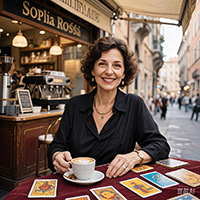
I set my deck on the small marble table between us, the café around us waking up—espresso machine sighing, spoons clinking, the street outside still damp from a Toronto drizzle. “Let’s try to give this moment a map,” I told them. “Not so you can win an argument. So you can leave your next date with your self-trust intact. This is a Journey to Clarity.”

Choosing the Compass: The Celtic Cross at a Café Table
I don’t do big mystical theatrics. My café has enough drama already—morning rush, oat milk shortages, someone always ordering an iced latte in February. What I do believe in is the power of a clean transition: breath, focus, and a question stated plainly.
“Take one slow breath,” I told Taylor. “Not to ‘manifest’ anything. Just to let your body know we’re looking at this on purpose.”
While they exhaled, I shuffled. The cards made that familiar papery whisper, like pages turning in a book you’ve been afraid to open. In the background, the espresso grinder kicked on, a low roar that felt oddly supportive—like the room itself agreed we were getting down to truth.
“Today, we’re using the Celtic Cross,” I said, laying the first card space in my mind like setting down saucers. “It’s the right spread when the question isn’t only what should I say? but also why was it hard to say it, what fear got activated, and what does ‘clear’ look like without becoming cold?”
For anyone reading this because you Googled they brought up open relationship mid date what do I say at 12:07 a.m.—this is how tarot works at its best: it doesn’t give you a single perfect line to guarantee an outcome. It shows you the pattern that keeps repeating, the emotional root beneath it, and the next clean move that creates real compatibility data.
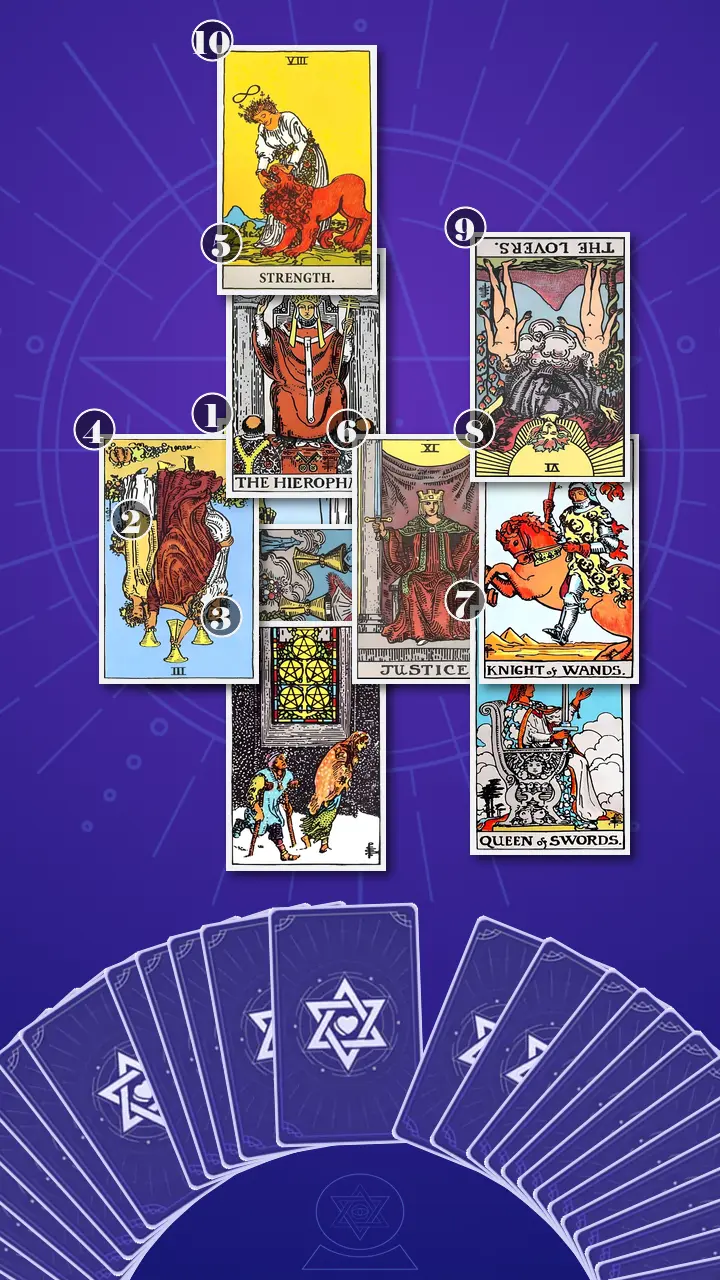
“In this spread,” I explained, “the center shows the present dynamic and the immediate challenge. Below that, we’ll see the root driver—the deeper fear that makes your boundary stick in your throat. Above is what you consciously want, to the side is what’s been shaping you, and then the right-hand column is the climb: you, the other person’s energy, your hopes and fears, and the most grounded way forward.”
Reading the Map: Card Meanings in Context (Not in Theory)
Position 1 — Present dynamic: the moment the vibe changed
“Now we turn the card representing the present dynamic: what is happening in the connection right now and what the mid-date open-relationship mention activated in you,” I said.
Two of Cups, reversed.
In a café, I can tell when two people are on the same wavelength by the way they order. One says, “Whatever you’re getting,” and means it. Two of Cups upright is like that—easy reciprocity. But reversed, it’s two cups that look like they’re meeting… and then don’t. Chemistry without agreement. Warmth without a shared container.
“This is like when you feel the spark and want to lean in,” I told Taylor, “but you realize you don’t actually know what you’re being invited into—so you keep the smile while internally renegotiating the whole premise.”
I watched their fingers curl around the cup tighter.
“It’s also exactly what you described,” I continued. “They say ‘open,’ and your body tenses. But your mouth keeps the vibe going.”
Taylor let out a small laugh, the kind that tastes a little bitter. “Okay,” they said. “That’s… too accurate. It’s almost rude.”
“I know,” I said gently. “The cards don’t do polite. They do precise.”
And because this pair—Two of Cups reversed with what’s about to cross it—creates boundary whiplash, I gave them the comparison that always makes people go still: “It’s like being handed a contract mid-dinner and feeling pressured to initial it before you’ve read the fine print.”
I saw the three-beat loop land in their eyes: (1) perform chill, (2) mind opens twenty tabs, (3) body already knew.
Position 2 — Primary challenge: the fog that blocks the sentence
“Now we turn the card representing the primary challenge: what makes it hard to name your boundary in real time—confusion, social narratives, overwhelm,” I said.
Seven of Cups, upright.
Seven of Cups is the mental browser with eighteen tabs open. It’s the Notion board with infinite columns when what you needed was a yes/no checkbox. In modern dating, it can look like: the second the word “open” enters the air, your brain tries to be ethical, informed, unproblematic, sexy, chill, smart, safe—all at once.
“This is like when you leave the date and open ten mental tabs—definitions, ethics, fear, hope, identity,” I said. “And you end up further from the simplest clarity: ‘Do I want this?’”
Energetically, this card isn’t ‘bad.’ It’s just excess. Too many narratives. Too little grounding.
“And the way it protects you,” I added, “is sneaky. If you’re busy analyzing relationship structures, you don’t have to do the vulnerable thing: name your preference.”
Taylor’s shoulders rose almost imperceptibly, like they were bracing for a critique. “I’m not trying to be difficult,” they said. “I just… I don’t want to say the wrong thing.”
“Of course,” I said. “You’re trying to stay connected. But you’re also allowed to stay connected to yourself.”
Position 3 — Root driver: the fear beneath the politeness
“Now we turn the card representing the root driver: the deeper fear or insecurity that keeps the boundary stuck in your throat,” I said.
Five of Pentacles, upright.
The café windows were fogged from the heat inside meeting the cold outside, and for a second the timing felt like a coincidence designed by a novelist. Five of Pentacles is snow and a lit window. It’s warmth visible—but not guaranteed.
“This card is the fear-image you described,” I told Taylor. “If you say what you want, you’ll be left out. Like you’ll be outside in the cold while everyone else is inside, chosen.”
I kept it body-first, because Five of Pentacles is always body-first: “Tight throat. Slightly clenched jaw. Heat behind the eyes. And then the thought: ‘If I say what I want, I’ll be out.’”
Taylor’s gaze dropped to the table. Their hand moved to the sleeve of their sweater, tugging it down over their knuckles.
“That’s the part I hate admitting,” they said, voice smaller. “Because it makes it sound like I’m… needy.”
“It makes you sound human,” I said. “Belonging matters. The question is: do you want belonging that requires performance?”
Position 4 — Recent past influence: the ‘keep it light’ training
“Now we turn the card representing the recent past influence: what you’ve been conditioned by in modern dating that impacts how you respond to ‘open’ conversations,” I said.
Three of Cups, reversed.
Reversed, Three of Cups isn’t about joy. It’s about the subtle pressure of the invisible audience: the group chat debrief, the TikTok discourse, the friend who says “everyone’s casual now” like it’s weather.
“This is like when you feel you have to be the fun, flexible person to stay included,” I said. “Even if that costs you the kind of intimacy that actually nourishes you.”
The energy here is blockage—your private truth gets drowned out by the vibe.
Taylor’s mouth twisted. “I’ve laughed along with that,” they admitted. “Like, ‘haha, dating is chaos.’ And then I go home and I’m… hollow.”
“That’s not because you can’t hang,” I said. “It’s because your nervous system is tired of improvising a container you never consented to.”
Position 5 — Conscious aim: what you actually want this built on
“Now we turn the card representing your conscious aim: what you want your dating life to be built on—values, agreements, consent-based structure,” I said.
The Hierophant, upright.
People hear “Hierophant” and think tradition, rules, something stiff. But in dating, Hierophant is the adult part of you that says: we don’t have to label everything tonight, but we do need terms. We need consent that’s spoken, not assumed.
“This is you wanting a clear container,” I said. “Not control. Not moral superiority. Just a structure that makes you feel respected and emotionally safe enough to show up fully.”
In coffee terms—because my brain is built out of espresso and metaphor—The Hierophant is the menu board. It’s not romance-killing. It’s what allows the barista to actually make what you want without guessing.
Taylor inhaled like something unclenched. “Yes,” they said. “That. I don’t need a perfect label on date two. I just need to know what I’m opting into.”
Position 6 — Near-term next step: scales and a clean question
“Now we turn the card representing the near-term next step: the clarifying conversation or decision point that wants to happen soon,” I said.
Justice, upright.
Justice is one of my favorite cards to see in modern dating questions because it’s not romantic fluff. It’s clean decision-making. Scales and sword: emotional fairness plus direct language.
“This is the pivot from vibes to clarity,” I told Taylor. “Not a courtroom argument. Not a TED Talk on relationship philosophy. Information.”
I gave them a tiny, real-world micro-scene—Toronto-real, not scriptwriter-perfect:
“Imagine you’re back at that two-top. They say, ‘I’m into open relationships.’ And instead of auditioning as chill, you say, ‘Got it. What are you looking for right now—casual dating, or a primary partnership?’”
Taylor blinked, then let out a slow breath. The relief wasn’t dramatic. It was steadiness—like the moment the TTC finally exits the tunnel and you get bars again.
“That’s… adult,” they said.
“Exactly,” I smiled. “Justice is adult. It doesn’t shame. It clarifies.”
Position 7 — Self-position (Key): the voice you need to embody
I let my hands hover over the next card for half a beat longer than usual. The espresso machine behind me released a sharp hiss, then went quiet. Even the café felt like it leaned in.
“Now we turn the card representing the part of you you need to embody to set a healthy boundary without self-betrayal,” I said. “This is the key.”
Queen of Swords, upright.
Taylor stared at the Queen’s raised blade and open hand. You could see the immediate internal negotiation start—the familiar one: Can I be that direct and still be liked?
Setup: In Taylor’s body, I could still see the King West moment: jaw tight, smile on autopilot, mind sprinting ahead to the aftermath—drafting texts, researching ENM norms, trying to find a response that avoids awkwardness and rejection. They were trapped in the “right answer” hunt, as if perfect phrasing could purchase safety.
Delivery:
Stop auditioning as the ‘cool, flexible’ option; choose clean truth and speak it like the Queen of Swords with her raised blade and open hand.
I let the sentence sit. No extra commentary. No cushioning. The way an espresso shot lands: small, concentrated, impossible to ignore.
Reinforcement: Taylor’s reaction came in a chain—three small movements that told me everything.
First, a brief physiological freeze: their breath paused mid-inhale, fingers hovering above the cup as if they forgot what to do with their hands.
Second, cognitive seep-in: their eyes unfocused, not on the card anymore but somewhere behind it, like they were replaying that moment at the bar and watching themselves smile through a tight throat.
Third, emotional release: their shoulders dropped with a soft exhale, and their voice came out quieter, edged with something like irritation turned inward. “But if I say it that clearly,” they said, “doesn’t that mean I was… wrong before? Like I messed up the whole date?”
This was the unexpected turn—not instant empowerment, but a flash of anger at the cost of clarity. I didn’t rush to fix it. I met it.
“No,” I said, steady. “It means you were doing what you learned to do: keep the vibe smooth so you don’t risk being left out in the cold. That’s not ‘wrong.’ It’s protective. The Queen of Swords just asks you to update the strategy.”
And here—right here—I brought in my own way of diagnosing, the one I’ve learned over twenty years of watching people fall in love over coffee, fight over coffee, and try to pretend they don’t care while stirring their coffee too hard.
“In my café brain,” I told Taylor, “this is a relationship-stage diagnosis. When you’re in the espresso stage, the truth needs to be concentrated. One clean shot. If you pour it into a giant sweet latte of explanations, it stops tasting like truth and starts tasting like fear.”
I tapped the table lightly—one, two, three—like counting breaths. “We’re not making a twelve-paragraph Americano with extra water and Reddit citations. We’re making one sentence you can actually say out loud.”
I slid my phone across the table—not for scrolling, for writing. “In the next ten minutes,” I said, “open Notes and write a two-line script. No definitions. No justifying.”
“1) ‘I’m dating for ______ right now.’”
“2) ‘So I’m only comfortable with ______.’”
“Then whisper it once like you’re testing a mic. If your throat tightens, shorten the sentence rather than making it more perfect.”
Taylor’s eyes went a little glossy—not crying, just that pre-tear brightness that means something has finally named them. They nodded once, slow. “Clarity now is worth more than being seen as ‘chill,’” they murmured, like they were trying the words in their mouth for size.
“Yes,” I said. “That’s the Queen.”
Then I asked the question that turns insight into lived evidence: “Now, with that new lens—can you think of a moment last week where this would’ve changed how you felt, even by five percent?”
Taylor swallowed, but this time it looked like they were swallowing air, not a sentence. “On the TTC,” they said. “Right after. I was literally drafting paragraphs. If I’d had one clean line… I think I would’ve gone home and slept.”
I nodded. “That’s the shift,” I said. “From freeze-and-please to honest naming.”
And I named it plainly, so the map had a label: “This is you moving from post-date replay and self-doubt toward calm self-respect in real-time conversation.”
Position 8 — External dynamics: the other person’s tempo
“Now we turn the card representing external dynamics: what the other person’s energy/style suggests about pacing and expectations,” I said.
Knight of Wands, upright.
“This card doesn’t mean they’re ‘bad’,” I said quickly, because Taylor’s face twitched with the old fear of becoming judgmental. “It means their style is fire-forward: charismatic, fast-moving, maybe a little impulsive with big topics. Like bringing up openness mid-date as if it’s a drink order.”
In coffee terms, the Knight of Wands is the customer who walks in, says, “Surprise me,” and actually means it. Exciting. Unpredictable. Not always compatible with someone who needs a little steadier pacing to feel safe.
“Your boundary isn’t about changing them,” I told Taylor. “It’s about matching pace and intent before you invest.”
Position 9 — Hopes and fears: the values crossroads
“Now we turn the card representing hopes and fears: what you’re secretly hoping will be true, and what you’re afraid the open-relationship mention implies about your desirability and safety,” I said.
The Lovers, reversed.
“This is the card that asks the question you keep trying to answer with research,” I said. “Not ‘Is open relationships morally okay?’ but ‘Is this aligned with me?’”
Reversed, The Lovers is the fear of becoming one option among many without consent-based clarity. It’s also the hope that someone will choose you cleanly—not because you were the chillest, but because you were the match.
Taylor’s voice dropped. “I hate that I start comparing myself to hypothetical other partners I haven’t even met.”
“That’s normal,” I said. “It’s your nervous system trying to predict pain. But here’s the Lovers reversed truth: if you have to argue yourself into being okay, is that really consent—or just pressure with nicer words?”
Position 10 — Integration: warm firmness you can sustain
“Now we turn the card representing integration: the boundary stance that best protects your self-respect and how to hold it with steadiness,” I said.
Strength, upright.
Strength isn’t yelling. It isn’t a manifesto text. It’s tone control. It’s staying warm without getting vague. It’s repeating yourself once and not negotiating against yourself.
“This is the outcome I love,” I told Taylor. “Not because it promises a specific relationship. Because it promises you walk away proud either way.”
I gave them a mini-script with the lion energy translated into modern dating language:
“Warm voice, firm line—no negotiating against yourself. ‘Totally respect that. I’m dating monogamously right now.’ Then stop talking. Let the silence do its job.”
Taylor’s shoulders lowered again, like their body recognized a pace it could actually maintain.
The One-Page Boundary: From Insight to Actionable Advice
I leaned back and let the whole spread breathe for a moment. In my head, the symbols lined up like a clear progression: The Hierophant’s keys (access through agreement) to Justice’s scales and sword (fairness plus direct truth) to the Queen of Swords’ raised blade (owning the truth personally) to Strength’s steady hands (holding it kindly, consistently).
“Here’s the story I see,” I told Taylor. “You start in a moment of real chemistry where the terms don’t match (Two of Cups reversed). Your mind tries to compensate by generating endless scenarios (Seven of Cups), because the deeper fear is that being specific will make you replaceable (Five of Pentacles). Modern dating scripts taught you to stay fun and flexible to stay included (Three of Cups reversed). But what you actually want is values-led agreement—consent-based structure, not improv (Hierophant).”
“The next step is a clean conversation move (Justice). The key is embodying the Queen of Swords—direct but not mean. And the way you hold it is Strength: steady, warm, and firm.”
I named the cognitive blind spot gently, because it’s one I see all the time: “You’ve been treating your preference like a demand. But a boundary is compatibility data, not a courtroom argument.”
“And the transformation direction is simple,” I added. “Shift from performing as the ‘chill date’ to stating your terms early and letting their response inform your next step.”
Then I made it practical—small, doable, repeatable. Like a good house blend.
- Write your “Justice line” (one preference + one limit)Open Notes and write: “I’m dating for monogamy right now, so I’m not available for an open setup.” Keep it to one sentence you can say without taking a second breath.If you feel the urge to over-explain, downgrade to the one-sentence version. Shorter is usually calmer.
- Add one clarifying question (Justice method)Pick one clean question for the next conversation: “What are you looking for right now—casual dating, or a primary partnership?” Ask it once, then listen for the actual answer (not the vibe).If you start drafting paragraphs, stop and send “one sentence + one question” instead. This is data-gathering, not debate.
- Practice the Queen of Swords sentence (one rep, not a performance)Say out loud, in a mirror or while the kettle boils: “I respect that. I’m dating monogamously right now.” Then stop talking. Let your body learn it can survive the silence.If your throat tightens, shorten your sentence rather than softening your boundary. Warmth doesn’t require vagueness.
And because I’m me—and because my café has taught me that clarity often shows itself after things settle—I offered one more optional practice from my own toolkit, the one I call conflict sedimentation.
“When you get home from a date,” I told Taylor, “imagine your thoughts are coffee grounds in water. If you shake the jar, everything stays murky. If you let it sit, the grounds drop. Before you text, give yourself sixty seconds of stillness. Then write three lines only: (1) the facts, (2) what your body did, (3) what you want. That’s it.”

A Week Later: The Quiet Proof of Self-Respect
A week later, Taylor messaged me on a Tuesday morning—9:05 a.m., the exact time they’d told me they could present design constraints crisply in a glass-walled meeting room, but couldn’t say one emotional constraint on a date.
“I did it,” their text read. “They brought up ‘open’ again. I said, ‘Totally respect that. I’m dating monogamously right now.’ And I stopped talking.”
Then: “My voice shook. But I didn’t die.”
Their follow-up came a minute later, a little bittersweet but bright in its honesty: “They said they weren’t looking for that. I walked home and got a pastry alone. It was weirdly peaceful. I slept.”
I stared at the message for a moment, feeling that familiar warmth behind my ribs—the kind I get when someone chooses themselves without turning it into a tragedy. Strength doesn’t always end with a partner. Sometimes it ends with a full breath.
“This is what finding clarity looks like,” I typed back. “Not certainty. Ownership.”
And if I could leave you with the anchor I wish every person carried into modern dating, it’s this: When you can feel your throat tighten mid-date but you keep smiling anyway, it’s not because you’re “bad at dating”—it’s because part of you thinks being chosen requires being easy to handle.
So I’ll ask you what I asked Taylor in my little Italian café, over the sound of the espresso machine and the city waking up: If you trusted that the right match won’t punish you for being legible, what’s the one calm sentence you’d want to say the next time “open” comes up?
Every reading at AceTarot is a Journey to connect with inner wisdom and empower next step.
Learn more about our Journey to Clarity.