Exhausted but Still Scrolling at Midnight: Learning a Softer Off-Ramp
Finding Clarity in the 12:07 a.m. Scroll
Maya (name changed for privacy) came to me with the kind of question people usually type into Google at 1 a.m.: why do I keep scrolling at midnight when I'm exhausted?
She sat across from me with both hands around a coffee cup, and I said gently what I have learned after twenty years of hearing city-life stories unfold over coffee: if you're the reliable late-20s office person in a small apartment who can survive a full day of Slack, decks, and quick-turn edits, then still end up under the covers whispering 'one more reel,' this is probably revenge bedtime procrastination, not some secret proof that you're broken.
Then she gave me the scene exactly. It was 12:07 a.m. in her Toronto condo bedroom. The phone was plugged in beside the bed, the water glass on the nightstand was still full, the radiator hummed under the window, and the room smelled faintly of face wash. Her eyes felt gritty. Her body was heavy. But the screen stayed warm in her palm as her thumb kept moving from TikTok to Instagram to Reddit.
'I know I'm tired,' she told me. 'I just don't want the day to be over yet.'
I nodded. Your body can be in bed while your brain is still on shift. What she was describing felt less like simple bad habits and more like trying to lower the blinds while a bright neon sign inside her own chest kept flickering back on. Rest on one side. One last stolen minute on the other. Sleep had started to feel like surrender because the day had not felt chosen.
I kept my voice warm and clean. 'I'm not here to make your phone the villain or sell you a stricter personality,' I said. 'I'm here to help you see the logic of the loop so you can get your control back. Let's make a map of the hour between still on and actually done.'
Choosing the Compass: The Transformation Path Grid · Context Edition
I asked her to take one slow breath, hold the question in plain language, and let her hands rest on the deck for a moment before I shuffled. For me, that pause is not theater. It is simply the nervous system's way of stepping out of the feed and into attention.
I told her I was using my six-card Transformation Path Grid · Context Edition. I use this spread when a problem is not one decision but a repeating loop. In a case like midnight doomscrolling in bed, a classic linear spread can describe the feeling, but it often misses the exact leverage point between compulsion and restoration.
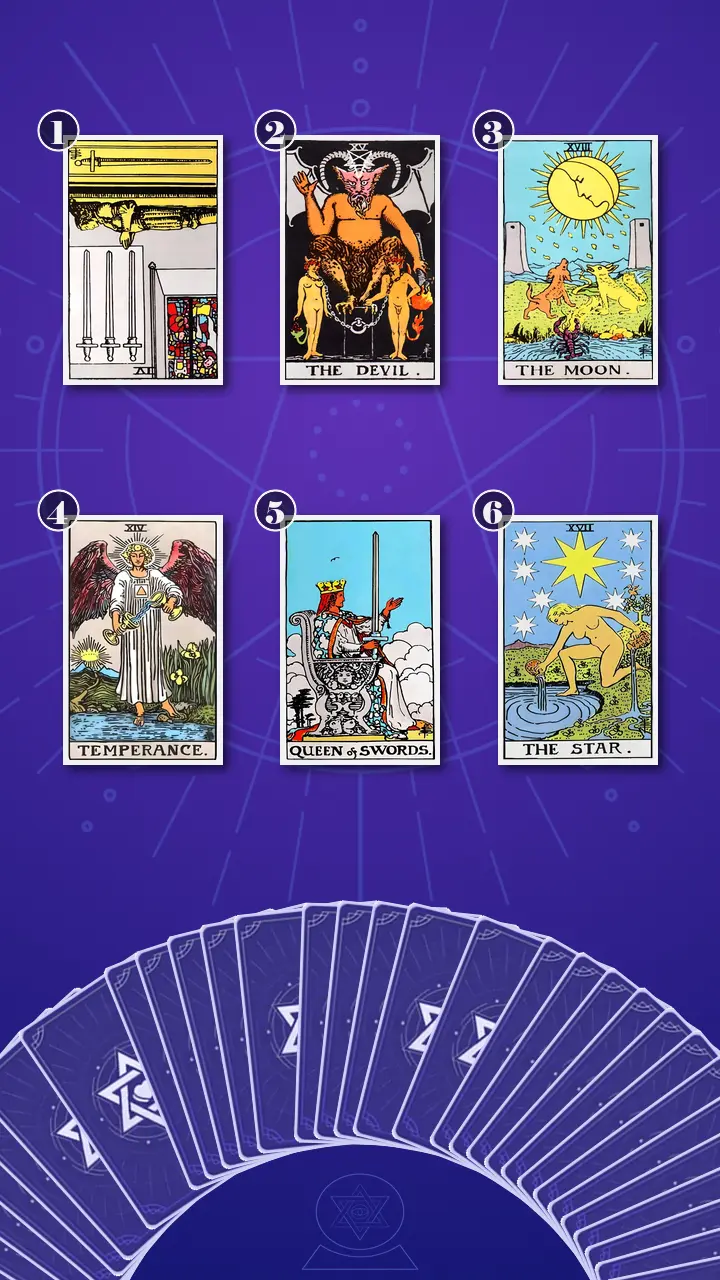
This grid stays minimal on purpose. The top row shows the diagnosis: the visible pattern, the main blockage, and the deeper emotional driver. The bottom row shows the interruption: the turning point, the most workable action, and the integrated outcome. In other words, it answers not only how tarot works here, but why this specific spread is useful for revenge bedtime procrastination after work: it separates symptom from mechanism, then gives the next steps.
I pointed to the places as I laid them down. 'This first card will show the habit exactly as it appears in real life. The middle card will show what keeps stealing the choice once you've already decided to sleep. And this fourth card here'—I tapped the hinge between the rows—'will show the gentlest shift that can actually interrupt the loop.'
The Dashboard of a Night That Won't End
Position 1: Four of Swords Reversed — Body in Bed, Brain on Shift
I turned the first card and named its job clearly. 'This is the position that shows the observable midnight scrolling behavior and the exhausted-yet-still-continuing state.'
The card was the Four of Swords, reversed.
I told Maya this was almost painfully literal. In modern life, it is the moment when the 6:45 alarm is already set, the room is already dark, and yet the thumb keeps reopening TikTok, then Instagram, then Messages as if lying down should count as rest while the mind is still clocked in. It has a Severance-like feeling to it: officially off work, but the work brain never really got the memo.
Energetically, this is blocked rest. Not a lack of tiredness—an inability to arrive inside it. It is like closing your laptop without quitting the tabs. The body is horizontal; the system is still running hot. That is why being exhausted does not automatically lead to sleep.
I asked her, 'What are you usually trying not to feel in the ten seconds before you pick the phone back up?'
She gave one short laugh that tasted more bitter than amused. 'Wow,' she said. 'That's accurate in a rude way.'
I smiled. 'Good. Accuracy is kinder than shame. If we can name the pattern without moral drama, we can work with it.'
Position 2: The Devil — The Algorithmic Slot Machine
I turned to the second card. 'This position reveals the main maintaining force in the psychological mechanics—the loop that overrides the intention to sleep.'
The card was The Devil, upright.
I felt Maya tense before I even spoke. People hear that card name and brace for judgment. I never read it that way. I read structure first.
'This,' I said, 'is the app becoming a private rebellion that quietly turns into compulsion.' I described the moment at 12:21 a.m. when the feed stops feeling like a choice and starts acting like a slot machine. Each clip, each comment thread, each refresh gives a tiny hit of relief—this minute is mine, this one too—while the algorithm quietly decides the next thirty minutes for you.
Energetically, The Devil is excess and attachment. The loose chains matter here. The habit feels binding, but it is not destiny. Some agency is still available, even in the middle of the loop. Midnight scrolling is often stolen autonomy, not failed character. The phone is not actually giving rest; it is offering intermittent novelty just often enough to delay the moment you notice you did not get any.
I have a private lens I use in readings like this called an Energy Extraction Audit. I look for the tiny habits that claim to soothe while quietly over-extracting a person's baseline energy. Her midnight app-switching was doing exactly that—taking the last clean three percent of her battery and sending the invoice to the next morning.
Maya stared at the card, then at her own hands. 'That's exactly it,' she said softly. 'I don't even want the clip half the time. I just don't want nothing either.'
Her mouth tightened on the last word, and then she went still. Recognition had arrived before relief did.
Position 3: The Moon — What the Quiet Tries to Say
I touched the third card. 'This position uncovers the underlying fear and emotional fog that the scrolling is protecting you from feeling.'
The card was The Moon, upright.
I slowed down here. 'This is the part people miss when they ask why they can't stop doomscrolling even when tired,' I told her. 'Once the apartment finally goes quiet, vague feelings get louder than the feed.' I described the fridge hum, the blue light catching the ceiling, the eight seconds of stillness before the phone gets picked back up. A Slack message that felt off. A text left unanswered. The odd loneliness of eating dinner alone. Nothing dramatic enough to headline the night—just enough discomfort to make the screen feel easier than the dark.
Energetically, The Moon is fog, not failure. It is uncertainty, projection, and all the unfinished feeling that daytime noise helps us outrun. Like city noise finally dropping and every open browser tab in your head becoming audible. If sleep feels like the end of your only free time, the phone becomes a shield against the moment you would have to hear yourself think.
I asked, 'If you locked your phone and stared at the ceiling for thirty seconds, what would get loud first?'
Her reaction came in three small waves. First, her breath paused halfway in. Then her eyes lost focus, as if some unglamorous little memory had started replaying behind them. Finally, she let out a thin exhale and said, 'Honestly? Not even panic. Sometimes it's just flatness. Or resentment. Like... if I put the phone down, I have to feel how little of the day was mine.'
'Exactly,' I said. 'That's the root. Not weakness. A quiet emotional bill arriving all at once.'
When Temperance Poured Between Two Cups
Position 4: Temperance — The Softer Off-Ramp
When I turned the fourth card, the room changed a little. The coffee between us had gone lukewarm. Outside my window, a streetcar bell sounded once and then faded. Even the radiator seemed to lower its voice.
I named the role first. 'This position pinpoints the key shift—the quality that can interrupt overdrive without using self-punishment.'
The card was Temperance, upright.
I felt my own whole reading posture settle. This was the antidote.
'Temperance doesn't ask you to slam on the brakes,' I told her. 'It asks you to change gears.' In real life, this looks like putting the phone on the dresser, turning on a lamp, drinking the full glass of water that's been waiting there, and giving yourself one intentionally boring, soothing bridge—two pages of a paperback, a calf stretch against the wall, one mellow playlist. A dimmer switch, not a light switch. A runway between work mode and sleep mode.
Energetically, this is balance and self-regulation. Not dramatic discipline. Not collapse. Just a gentler handoff between doing and resting. That matters because the problem is not simply that she stayed on her phone when exhausted. The problem is that she had been asking stimulation to perform the job of transition.
The Tiny Habit That Keeps Billing the Morning
This was where my Energy Extraction Audit became even clearer. Her nightly loop was over-extracting energy in the name of freedom. Temperance said the answer was not harsher discipline, but a small ritual that stopped the system from revving in place.
I gave her the setup plainly. 'It is 12:07 a.m., the condo is finally quiet, your eyes sting, the water glass is still full, and you're bargaining with your own thumb as if one more reel might give you the slice of the day nobody else got to take. You're trapped between forcing yourself to shut down and letting the algorithm decide for you.'
Rest is not what takes your freedom away; blending one clear boundary with one soothing ritual, like Temperance pouring between the cups, is what turns the night from a drain into a place of recovery.
I let the sentence sit there for a beat.
Her inhale stopped first. Then her fingers tightened around the mug, loosened, and tightened again. Then she looked past me—not away from me, but through the card and into some Tuesday night she suddenly understood differently. When she spoke, there was a flicker of resistance in it. 'But if that's true,' she said, 'does that mean I've been trying to fix this in exactly the wrong way?'
'No,' I said. 'It means you've been using the tool that felt available. That is not the same thing as being wrong. You do not need a stricter personality. You need a softer off-ramp.'
That was the moment her shoulders dropped. Not in a movie way. In a real way—the small unclenching that happens when somebody realizes they are not about to be scolded. Her eyes watered just enough to brighten, and she gave one shaky little laugh like relief had arrived with a tiny aftertaste of grief. I know that reaction well. Clarity can make the room feel steadier and the self feel briefly more exposed.
I asked her, 'Now, with this new frame, think back to last week. Was there a moment when a bridge would have changed the night?'
She nodded slowly. 'After my shower on Thursday. If my phone had been on the dresser and I'd just had... I don't know, one song and the water by the bed? I probably wouldn't have gone back under the covers with Reddit.'
'That's it,' I told her. 'That is the first step from wired depletion and stolen-time scrolling toward calmer nighttime agency and self-respecting rest.'
Position 5: Queen of Swords — The Line That Does Not Negotiate
I turned the fifth card. 'This position translates the shift into one concrete next-step boundary or practice you can test this week.'
The card was the Queen of Swords, upright.
I love this card when someone is tired, self-critical, and done with bedtime theater. In modern life, it is simple: the phone sleeps across the room. If there is one last check, it happens standing up with the room light on—not back under the blanket where bargaining wins.
Energetically, this is clear Air restored after the murk of the top row. It is not harshness. It is clean discernment. Like setting your phone up as if future-you is a roommate you actually respect. Make the line clear enough that tired-you does not have to debate it.
Maya sat up straighter at that. 'So not five rules,' she said. 'Just one line.'
'Exactly,' I said. 'No dramatic punishment. Just less negotiation.'
Position 6: The Star — Morning with Fewer Tabs Open
I turned the final card. 'This position shows the integrated target state—what nighttime feels like when rest is chosen instead of delayed.'
The card was The Star, upright.
I smiled the second I saw it. 'This is restoration without performance,' I said. 'Not a perfect wellness routine. Not a glamorous main-character midnight. Just a cleaner night and a kinder morning.' In real life, it looks like waking up with fewer tabs open in your body. Coffee feels enjoyable instead of medically necessary. The same skyline looks less hostile because you are no longer arriving in the morning already annoyed with yourself.
Energetically, this is restorative flow after constriction. The same night that felt like a maze under The Moon becomes orienting here. Rest starts feeling possible when the night stops being a battleground.
Maya's face softened. She did not look magically fixed. She looked like somebody who could finally picture a version of tomorrow that did not begin in self-disgust. That, to me, is real hope.
From Insight to Action: Your Next 48 Hours
When I looked at the full spread, the story was clean. The top row explained why this pattern keeps repeating. Four of Swords reversed said her body reached bed before her mind reached safety. The Devil showed how the phone became an algorithmic slot machine for stolen autonomy. The Moon revealed the quieter driver underneath: if the room went still, she would have to feel the flatness, resentment, and unchosen quality of the day.
The blind spot was not that she lacked discipline. It was that she kept treating stimulation as downtime and sleep as surrender. The bottom row corrected that. Temperance offered a gentler transition, the Queen of Swords turned that transition into one clean boundary, and The Star showed the outcome: not perfection, just repair. The transformation direction was simple and powerful—shift from using scrolling to steal back time to choosing one intentional form of decompression before exhaustion turns into autopilot.
Maya frowned at the practical part, which I appreciated. 'But I use my phone as my alarm,' she said. 'And my condo is tiny. Across the room is still... across my room.'
'Good,' I said. 'Two steps is still more than arm's reach. We're not trying to win a purity contest. We're trying to make autopilot slightly less convenient and real rest slightly easier to choose.'
I also brought in a second tool I use a lot: what I call Daily Clutter Deconstruction. A tiny physical corner can hold a surprising amount of psychological noise. If the nightstand is a jumble of charger, phone, empty lip balm, unread notifications, and a full water glass that never gets touched, the mind often stays just as cluttered. So I gave her three small, concrete next steps.
- 15-Minute Physical Anchor ExperimentWithin the next 48 hours, reset one minimal bedtime zone—your nightstand or dresser only. Move the charger there so the phone sleeps out of arm's reach, leave one full glass of water ready, and place one low-stimulation option there too: a paperback, a journal, or headphones with one mellow playlist.Do not organize the whole bedroom. One square foot is enough. The goal is to reclaim mental bandwidth, not build an aesthetic sleep shrine.
- Build a 5- to 10-Minute Landing StripTonight, when the workday is actually over, dim one light and choose exactly one boring transition ritual before bed: drink the water, read two pages, stretch your calves against the wall, or listen to one song while standing by the lamp.If your brain says this is too small to matter, treat that as information. The ritual is supposed to change gears, not entertain you. If ten minutes feels impossible, do two.
- Name the Night in One WordBefore opening an app after 11:30 p.m., type one word into Notes: lonely, wired, resentful, flat, avoidant—whatever fits. If you really need a final check, do it standing up with the room light on, then stop once you're back under the covers.One word is enough. An emoji counts. This is not midnight therapy; it is a way to give the feeling a label so the screen is not the only thing speaking.

A Week Later: The Quiet Proof
Six days later, I got a message from her just after 7 a.m. It said: 'Phone on dresser. Lamp on. Two pages of a novel. Still got irrationally annoyed for about ninety seconds, which was... revealing. But I slept before 12:40. This morning coffee tastes like coffee, not medical equipment.'
That was the proof I cared about. Not a flawless bedtime routine. Not a whole new identity. Just one clear piece of evidence that the night could stop feeling like a tug-of-war between rebellion and collapse.
That is what this journey to clarity was really about for me. The cards did not take control of her life. They showed her where her control had been leaking out—and where it could return, one gentle boundary at a time.
When the room finally goes quiet and your thumb keeps moving even though your eyes sting, a lot of what hurts is not just the lost sleep. It is the fear that if you stop now, the whole day belonged to everyone but you.
If that is the hour you know too, and if tonight you were to give yourself one tiny, non-performative bridge between still on and actually done—your own version of water moving between the cups—what would you want it to be?
Every reading at AceTarot is a Journey to connect with inner wisdom and empower next step.
Learn more about our Journey to Clarity.