From Group-Chat Pressure to Steady Self-Respect: Two-Line Terms
The 10:47 p.m. WhatsApp Tetris
If you’re a 20-something/early-30s project coordinator in Toronto and you get tagged in Slack with “Jordan can take this, right?”, you can literally feel your chest tighten before you even decide what you think.
Jordan (name changed for privacy) told me that line like it was a weather report—like this pressure system simply moved through her week on schedule.
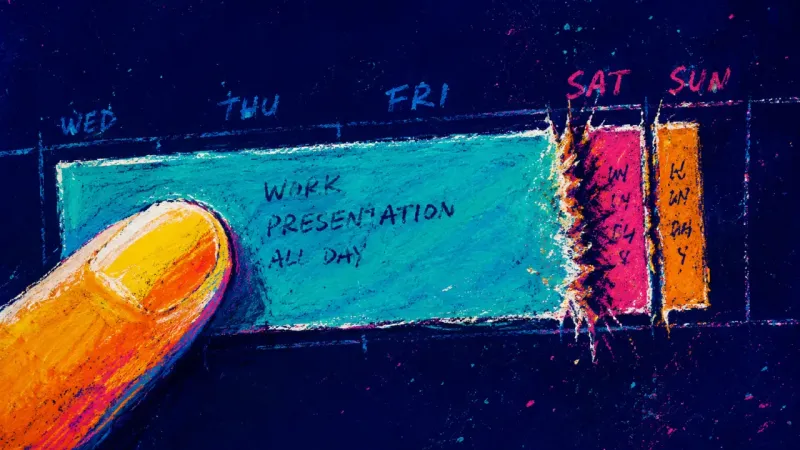
She described 10:47 p.m. on a Wednesday in her condo living room: one sock half-off, radiator clicking like it had opinions, the city hum threading under the window. WhatsApp lit her face blue while her thumb did that awful loop—tap her own name, re-read the thread, tap again. Then: Google Calendar. Dragging blocks around like she was playing Tetris with her weekend, trying to make space for a job she’d never agreed to take.
“It’s stupid,” she said, but her hand stayed wrapped around her phone as if it was hot. “My chest goes tight. My jaw locks. And I’m already drafting the apology before I’ve even answered.”
I’d seen that exact posture so many times across my café counter: the body leaning in, the eyes scanning for danger that isn’t a bear in the room—it’s a public thread.
“Getting volunteered in public can make a simple boundary feel like a character assessment,” I said gently. “And you’re not here because you don’t know English. You’re here because the group chat makes consent feel… optional.”
She nodded once, sharp. “They volunteered me in the group chat—what boundary do I set? I don’t mind helping. I just hate being decided for.”
“Okay,” I told her. “Let’s make today a Journey to Clarity. Not a performance, not a courtroom drama—just a clean map from pressure to next steps.”

Choosing the Compass: The Transformation Path Grid for a Group Chat Boundary
In my café, the morning espresso rush is loud and forgiving; tarot is quieter, but it’s still practical work. I slid a small wooden tray between us—cards on one side, two demitasses on the other. The smell of coffee is grounding that way. It says: you’re here, in a body, with a real life.
“Before we read anything,” I said, “let’s do the least-mystical ritual in the world: one slow breath, and one clear question.” I watched her shoulders drop a millimeter as she exhaled. I shuffled slowly, not to summon the universe, but to give her nervous system a bridge from reaction into choice.
“Today, we’ll use something I call the Transformation Path Grid (6) · Context Edition,” I explained. “A lot of classic spreads can describe what’s happening, but they don’t always separate the exact chain you’re stuck in: boundary breach in public → guilt hook → deeper imbalance → turning point → the message to send → how to live after you hit send.”
And I told you—the reader—why that matters: when someone gets voluntold in a public Slack thread or a WhatsApp group, the suffering isn’t just the task. It’s the optics. It’s the fear that saying no publicly will cost belonging. This grid is built to map that specific arc and land in actionable advice, not predictions.
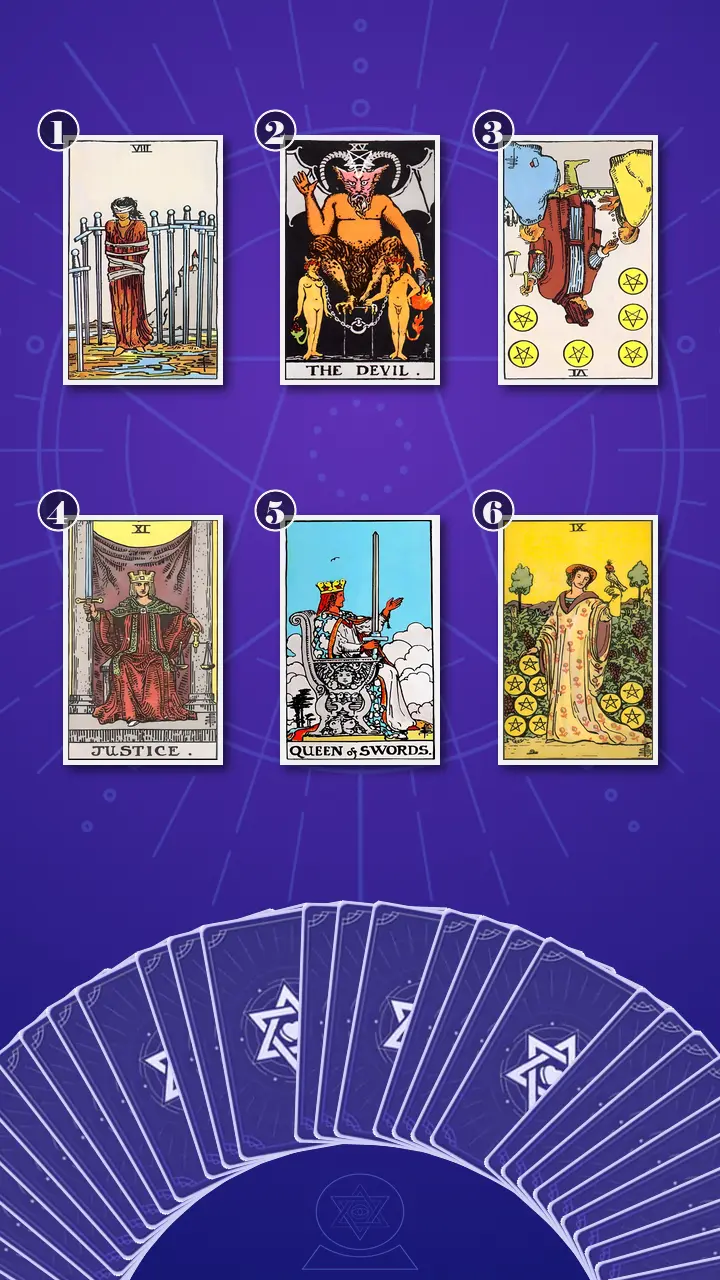
“Here’s how we’ll read it,” I said, laying six cards into a 2x3 grid. “The first card captures the exact moment you got tagged and froze. The second shows what complicates action—what tightens the trap. The fourth card is the pivot: the reframe that restores agency. Then we’ll get very concrete about what you actually say in the thread, and how you keep yourself from spiral-checking reactions after.”
Reading the Grid: How Tarot Makes the Pressure Speak Plainly
Position 1: The Surface Moment You Can’t Unsee
“Now we turn over the card representing the concrete moment of being volunteered and the immediate felt pressure,” I said.
Eight of Swords, upright.
“This card is exactly what you described,” I told her. “You see your name tagged in a Slack/WhatsApp thread and immediately feel like you’re on a stage—everyone can see whether you comply. You start ‘reading minds’ from message reactions and timestamps, then trap yourself in a loop of drafting the perfect reply that keeps you looking helpful—while your calendar is quietly screaming.”
In the Eight of Swords, the energy isn’t a real prison—it’s a blockage. A mental cage built out of visibility. The blindfold says, I can’t see what’s true, so I’ll guess what’s dangerous. The loose bindings say, I could move, but my body doesn’t trust that yet.
Jordan let out a small laugh—dry, almost impressed. “That’s… rude,” she said, then softer: “Like, yes. It’s accurate, but it’s rude.”
“I know,” I said, and I kept my voice warm. “But it’s also kind. Because it means the cage isn’t welded shut. Visibility isn’t captivity. It just feels like it when the thread turns into a stage light.”
Position 2: The Hook That Turns a Request Into a Moral Test
“Now we turn over the card representing the internal hook that makes a simple boundary feel risky,” I said.
The Devil, upright.
“Here’s the hard truth, said without blame,” I told her. “The real hook isn’t the task—it’s the guilt/approval deal you feel pressured to sign. You catch yourself offering your time like a peace offering: ‘I can do it, sorry, unless someone else…’ because being liked feels like safety. The moment you imagine being seen as ‘difficult,’ you feel chained into yes.”
With The Devil, the energy is excess—too much importance assigned to approval, until it behaves like a chain. I glanced at her phone on the table. “It’s like you’re subscribed to something you never signed up for: Unlimited Availability. And the free trial ended years ago.”
Jordan’s eyes flicked down to her hands, then back up—split-screen honesty.
“Because this is what happens,” I continued, letting the echo land. “What you type: ‘Happy to help!’ What your body says: tight throat, heat in your cheeks. What you mean: ‘I don’t actually consent to being assigned.’”
She swallowed, jaw working like she was testing whether it could unclench. “Over-explaining is… my thing,” she admitted. “I’ll write a whole essay so nobody can be mad.”
“Over-explaining is how guilt disguises itself as politeness,” I said. “It works short-term. The tension drops. Your helpful image survives. But long-term? You pay in resentment and burnout.”
Position 3: The Deeper Economy Under the Thread
“Now we turn over the card representing the deeper reciprocity and power dynamic that keeps repeating,” I said.
Six of Pentacles, reversed.
“In your groups—work or friends—there’s an unspoken economy,” I told her. “Some people assign, some people absorb. You end up as the default giver—rides, proofreading, organizing, covering—then later you replay the thread and quietly tally how rarely the giving flows back. It’s not that you never want to help; it’s that the terms keep getting set without you.”
Reversed, this card is an imbalance. The energy is off-kilter: giving becomes assumed instead of chosen. Consent gets replaced by expectation. And the longer that’s true, the more your nervous system treats every tag like a small theft.
I tapped the little scale motif in the card art. “Who is ‘weighing’ what’s fair in that chat?” I asked. “And why have you been letting other people hold the scale?”
Jordan exhaled through her nose, frustrated in a way that sounded like relief. “Because if I hold it, I have to admit it’s uneven.”
“Exactly,” I said. “And admitting it doesn’t make you cruel. It makes you accurate.”
Position 4: When Justice Walks Into the Group Chat
The café went quiet in that specific mid-afternoon way—espresso machine resting, a spoon clinking once at the far table. I turned the next card slowly.
“Now we turn over the card representing the single most important reframe that restores agency,” I said. “This is the pivot.”
Justice, upright.
“This is the moment you reframe the whole situation,” I told her. “Not as a test of niceness—but as a consent issue. You respond like you’re clarifying scope in a project thread: calm, factual, brief. You don’t defend your limit; you name it. You don’t negotiate in public unless you choose to.”
Jordan’s brows pulled together. I could see her still stuck in the old script: If I don’t make them comfortable, I’ll lose my place. It was the same 10:47 p.m. loop—toggling between the group chat and the calendar, rewriting the same reply like it was a negotiation she never agreed to enter.
Stop treating their assumption as a contract—pick up Justice’s scales, name what’s fair, and draw the line with one clean sentence.
There was a pause so small it could’ve been missed. But her body didn’t miss it.
First, a micro-freeze: her breath stopped halfway in, and her fingers went still on the mug. Then cognition seeped in: her eyes unfocused for a beat like she was replaying a message thread in her head, watching herself type and delete. Then the emotion hit: her shoulders dropped, and she let out a breath that sounded like anger and relief sharing the same exit.
“But—” she started, and the ‘but’ had heat. “If I do that, doesn’t it mean I’ve been… wrong? Like I trained them?”
“It means you’ve been adapting,” I said, steady. “You were trying to buy safety with approval. That’s not stupidity; it’s a strategy. But Justice is saying: you don’t have to keep paying.”
Then I brought in my own lens—the one I’ve learned from twenty years of espresso and a thousand conversations over the counter. “This is where I use what I call Social Espresso Extraction,” I told her. “In coffee, if you extract too long, the shot turns bitter. Not because the bean is bad—but because the timing is wrong. In social situations, over-explaining is over-extraction. You keep pulling and pulling—apologies, context, alternatives—until the message tastes like resentment.”
I leaned forward a little. “Justice is your optimal extraction time. Short enough to stay clean. Long enough to be true.”
“Open your draft reply,” I said, and I kept my tone practical. “Run a three-minute ‘Justice edit’: delete every apology, keep one clear limit, add at most one concrete option you genuinely can do with a deadline. Then stop. If your body spikes with anxiety, you can pause and send later—clarity works better than urgency.”
Her eyes were glossy—not tears exactly, more like the pressure finally had somewhere to go besides her jaw. “Okay,” she whispered. “That feels… legitimate.”
“That’s the shift,” I said. “From embarrassed pressure and resentful compliance to steady self-respect. And—this matters—calmer belonging that isn’t purchased with over-giving.”
“Now,” I asked, “with this new lens, can you think of a moment last week where this would’ve changed how you felt?”
Jordan nodded slowly. “Monday morning. Slack. Same thing. I wrote a paragraph like a mini press release.”
“Justice would’ve let you write a receipt instead,” I said. “Not dramatic. Just accurate.”
Position 5: The Message That Doesn’t Beg to Be Understood
“Now we turn over the card representing the boundary to set and the communication style to use,” I said.
Queen of Swords, upright.
“This is the speakable version of Justice,” I told her. “You send the message you keep avoiding: short, clear, respectful. Something like: ‘I can’t take this on. If it helps, I can do X by Friday—otherwise someone else will need to lead.’ No apology paragraph, no life story, no softening that turns your boundary into a debate.”
The Queen’s energy is balance: clarity without cruelty. She’s kind without being porous, and clear without being cruel.
Jordan pulled up her Notes draft. It was long. I mean long. A scroll of justification like she was presenting evidence.
“Watch what happens when we cut it,” I said.
We deleted an entire paragraph—like closing extra browser tabs until the laptop stops wheezing. Then another sentence that was basically her fear-management in disguise.
“Clarity is not cruelty,” I said, “It’s consent with punctuation.”
She read the two-line version out loud, quietly. The first time sounded like she was borrowing someone else’s voice. The second time sounded like her own.
Position 6: After You Hit Send, Where Do You Put Your Attention?
“Now we turn over the card representing your new baseline to embody so you don’t relapse into over-giving,” I said.
Nine of Pentacles, upright.
“This card is the part people skip,” I told her. “After you set the boundary, you stop hovering over the chat to see who reacts. You close the app, return to your own plans, and let your time feel like something you steward. Belonging stops being something you purchase with over-giving—and becomes something you participate in with choice.”
The Nine of Pentacles is stability. A walled garden. A falcon on a glove—disciplined attention. This is the card that says: The boundary worked when you stop monitoring the thread and return to your life.
I watched Jordan’s face soften at that line, like her body understood it before her brain did. “That’s the hardest part,” she admitted. “I check for reactions like I’m waiting for a verdict.”
“I know,” I said. “But we can build a new reflex: send, then shift context. Let your nervous system learn that nothing explodes when you choose yourself.”
The Justice Edit, with a Splash of Latte Art: Actionable Next Steps
I leaned back and let the six cards read as one story.
“Here’s the chain,” I said. “The Eight of Swords shows the surface: public visibility makes you feel trapped, so you freeze and draft. The Devil explains why it feels so dangerous: you’ve been taught—by experience, not stupidity—that approval equals safety, so you bargain with your time to keep belonging. The reversed Six of Pentacles shows the deeper issue: reciprocity is uneven, and the terms keep getting set without you. Justice is the turning point: this is not a niceness test; it’s fairness and consent. And the Queen of Swords turns that principle into an actual message you can send. The Nine of Pentacles makes it real by pulling your attention back into your own life.”
“Your cognitive blind spot,” I added carefully, “is thinking you need a bulletproof explanation in order to have a valid boundary. That’s why the drafts get long. But the transformation direction is different: move from defending your ‘no’ to stating your terms clearly and briefly—because consent isn’t optional just because it happened in a group chat.”
Then I made it concrete, the way I would for anyone who’s Googled how to say no in a group chat without sounding rude at midnight.
- Save “Two-Line Terms” in NotesCreate two templates: one for work Slack/Teams and one for friends/WhatsApp. Format: “I can’t take X. I can do Y by Z.” Keep it to two lines so you’re not composing from panic when someone voluntolds you in a thread.If your hands start drafting an essay anyway, copy/paste the template first, then only swap in the specifics (X, Y, Z). No extra paragraphs.
- Do a 3-minute “Justice Edit” before you sendOpen your draft and delete every apology and backstory line. Keep one clear limit. Add at most one constrained offer only if it’s genuinely true (with a deadline). Then stop.Expect your nervous system to call this “rude.” That sensation is not a moral verdict—it’s just your body learning a new boundary.
- Add warmth like latte art, not like extra laborIf you want the tone to feel kind, add one friendly line at the top (“Thanks for thinking of me”) and leave the terms untouched. Think of it as my “3-Second Latte Art”: a small swirl that softens the sip without changing the coffee.Warmth is optional. Justification is not required. If you feel tempted to add reasons, you’re probably trying to manage someone’s reaction.
- Mute-after-send + change contextAfter you send your boundary, mute the chat for 30 minutes. Stand up. Refill water. Step outside. Do something physical to interrupt reaction-monitoring.If 30 minutes feels impossible, start with 10. Phone face down for 2 minutes still counts. A boundary doesn’t require immediate approval to be valid.
Jordan stared at the grid again, then at her phone, like the device had changed shape. “So I’m not refusing the task,” she said slowly. “I’m refusing the role they assigned me without asking.”
“Exactly,” I said. “Justice doesn’t ask you to help less. It asks you to make the terms visible.”

A Week Later: The Quiet Proof of Finding Clarity
A week later, between the morning cappuccino orders and the lunchtime rush, my phone buzzed with a message from Jordan.
“I did it,” it said. “Someone tagged me in the community chat like ‘Jordan can coordinate this.’ I sent: ‘I can’t lead this. I can review the copy by Friday if that helps.’ Then I muted the chat and walked around the block. My heart was still racing, but… nobody died. Someone else stepped up.”
I could picture it—clear but a little tender. A boundary set, then a quiet moment of staring at the muted thread like it might bite. Then choosing life anyway.
That’s what this kind of tarot reading is for. Not to predict whether a group will behave perfectly, but to help you move from a pressure-spike and resentful compliance into steadier self-respect—so belonging stops being something you buy with over-giving.
And if you’re curious how tarot works here: the Transformation Path Grid (6) is simply a structured way to map the chain—surface trigger, internal hook, deeper imbalance, pivot reframe, message, integration—so you leave with language you can actually send and next steps you can actually do.
When your name pops up in the group chat and your chest goes tight, it’s not just a request—it’s that split-second choice between buying belonging with compliance or keeping your consent intact.
If you didn’t have to defend your “no,” what would one calm, two-line message of your terms sound like—just enough to be true, not enough to be bulletproof?