Parentified Peacemaker Burnout and a Fairer Way to Stay Close

The 9:40 p.m. Couch and the Third-Parent Spiral
If one worried call from your mom can hijack a perfectly normal evening faster than any work email, and you start rehearsing what to say before you even call back, that is parentification showing up in adult life. That was the exact energy Maya (name changed for privacy) brought into my space.
She was twenty-seven, living on her own in Toronto, working a full-time communications job, and still getting pulled into a family role that felt older than her lease. She described a Tuesday at 9:40 p.m.: laptop still glowing on the coffee table, leftover noodles cooling in the carton, radiator humming, her mom’s anxious voice note in one ear and her brother’s flat one-line text on the screen. The blue light hit her face; her jaw locked; her shoulders were halfway to her ears before she had even decided whether to answer.
“I’m tired of being the calm one all the time,” she told me. “I know they’re adults, but it still feels like my mess to clean.” She had every boundary Reel saved, the Nedra-style scripts, the posts about adult daughter boundaries and how to stop mediating family conflict, and still the second the family chat turned tense, her whole body reacted faster than her thoughts. Fully grown woman on the outside. Instant third parent on the inside. Very Severance, except the split happened through a notification banner.
What she was living was the contradiction at the center of so many family mediator burnout readings: keeping Mom calm and managing her brother’s blowups on one side, wanting to stop playing third parent on the other. The guilt in her wasn’t abstract. It sat in her chest like a smoke alarm wired directly into her ribs—loud, urgent, impossible to ignore, and not always telling the truth about what was actually on fire.
I nodded and said the sentence I most wanted her nervous system to hear before her mind argued with it: You are not the family’s emotional middle manager. “We’re not here to judge how you learned this role,” I told her. “We’re here to make a map of it, so you can stop confusing over-functioning with love and start finding clarity.”
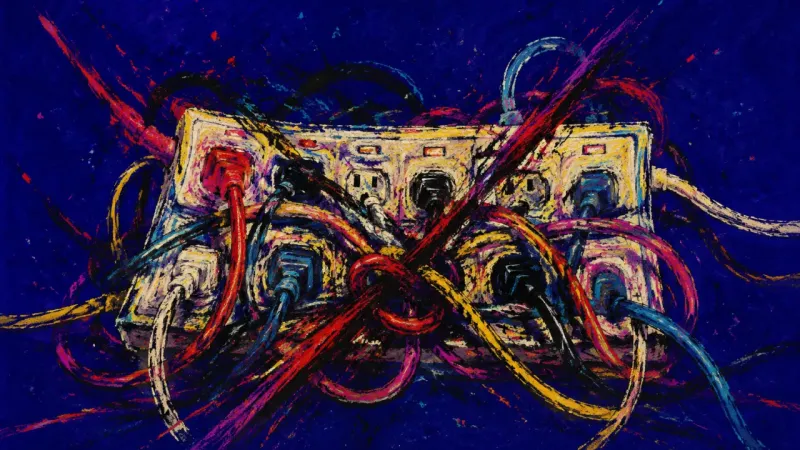
Choosing the Map for Family Mediator Burnout
I asked Maya to take one slow breath and focus not on the whole history, but on one specific moment: the instant her phone lights up and her chest jolts before she has even read the message. Then I shuffled. For me, that part is never about theatre. It is a way of helping the mind stop free-scanning long enough for the pattern to come into focus.
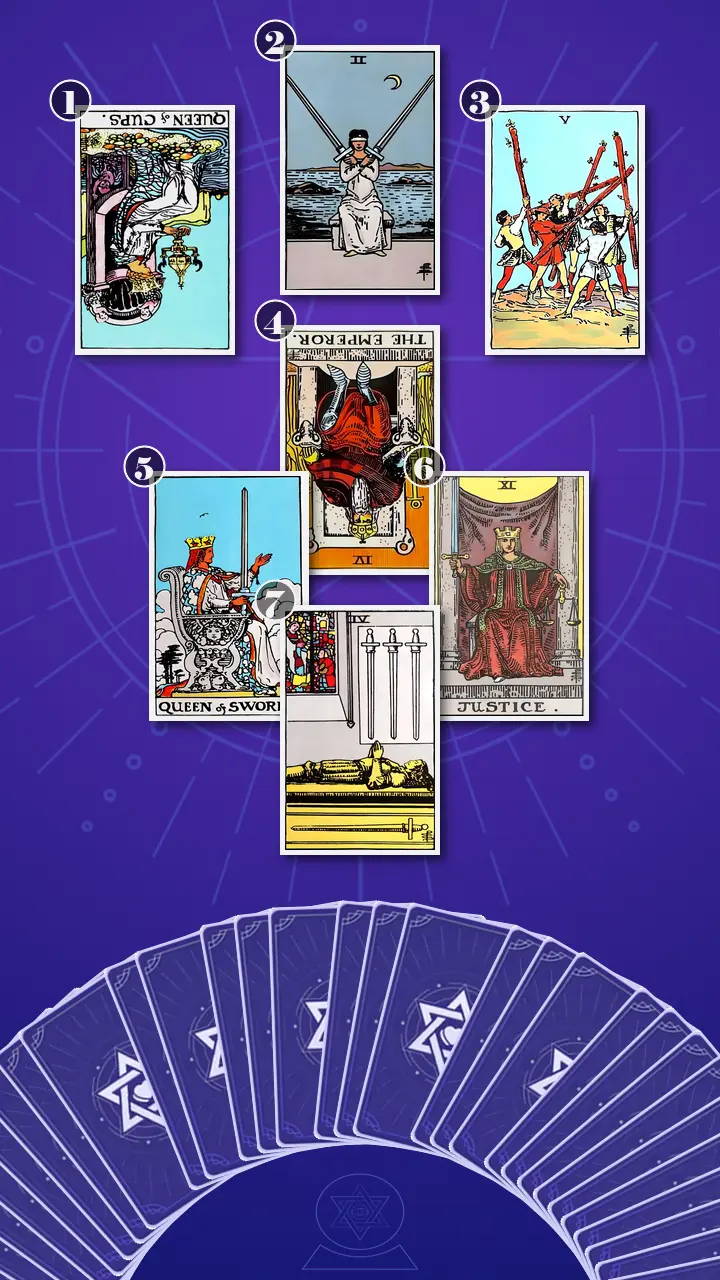
For her reading, I chose my Energy Diagnostic Map · Context Edition. I use it when the real issue is not a simple one-to-one conflict, but a triangulated family role—when someone is stuck between an anxious parent, a reactive sibling, and the version of themselves that keeps stepping in to regulate everyone else.
A standard relationship spread would have flattened this into “her versus them.” That would have missed the point. Her real question was closer to: Why do I keep acting like the third parent in my family, and how do I stop mediating between my mom and brother without feeling like a bad daughter? This spread works because it tracks the whole chain logically: the surface pattern, the inner split, the family atmosphere, the deeper fear underneath, the resource already available, the turning point, and the next grounded step. Tarot, at its best, does not hand down a verdict. It gives us a clean pattern language for what is already happening.
I told her what I most wanted us to watch for. The first position would show the visible role she performs automatically. The center card would uncover the core blockage—the fear that if she stepped back, everything would spin out and somehow become her fault. And the sixth card, the turning point, would show what care looks like when it stops borrowing the shape of over-responsibility.
Reading the Weather of Overfunctioning
Position 1: The Role That Looks So Normal It Starts to Feel Like Personality
I turned over the first card. “Now the card for the surface role you’re performing,” I said. “The Queen of Cups, reversed.”
This was the version of Maya who could be halfway through dinner, halfway through finally relaxing, and still abandon her own evening because her mom’s voice sounded slightly more anxious than usual. The Queen of Cups reversed is empathy with the walls thinned out too far. Not balance. Not softness. Overflow. The kind where every notification setting seems to be turned on inside the nervous system.
I pointed to the image in the traditional card: the lidded cup, the throne at the edge of the sea, water pressing close. “You keep things polished on the outside,” I told her, “but you sit so close to everyone else’s emotional tide that you get pulled in by reflex. You don’t just read the message. You start tracking the whole weather system.”
She let out a short laugh that had more ache than humor in it. “That is way too accurate,” she said. Her fingers tightened around her tea cup, then loosened. That was the first soft crack in the defensive story of “I’m just helping.”
Position 2: The Draft You Keep Deleting
I turned the second card. “This position reveals the inner tug between keeping the peace and wanting to stop acting like a parent. The Two of Swords, upright.”
The image is almost painfully literal here: the blindfold, the crossed swords over the chest, the still water under the moon. This is boundary paralysis. Maya had already thought of the limit she needed. She had probably typed some version of it. But saying it out loud felt riskier than holding the tension inside her own body, so the old loop stayed running.
In modern life, this is the note in your phone that begins, ‘I care about both of you, but I’m not mediating this,’ and then gets deleted before you send it. It is telling yourself you’ll deal with it tomorrow, then taking the whole unresolved argument to bed like an unpaid invoice. The energy here was blocked Air: clarity present, action postponed.
Maya stared at the card for a long second. Then she nodded without looking at me, the way people do when a truth lands in the sternum before it reaches the face.
Position 3: The Family Atmosphere That Keeps Auto-Assigning the Ticket to You
I turned the third card. “This one maps the family atmosphere and the triggers that pull you back into mediator mode. The Five of Wands, upright.”
Here was the noise: crossed agendas, sharp tone, everybody activated at once. The problem was not that Maya was failing to explain well enough. The problem was that she had been trying to create order inside a conversation where nobody was sharing the same rhythm. This is the card of the family thread turning into three emotional agendas at once—Mom worrying, brother snapping, somebody reacting to the reaction, and Maya opening side chats just to lower the volume.
I told her, “This is why your body treats it like a live incident ticket that somehow auto-assigns to you. You start separate conversations not because you love drama, but because the chaos feels intolerable.” The energy was excess Fire in the environment: lots of motion, very little listening.
She pressed her lips together and gave a tiny, exhausted shrug. It said: yes, and I’m good at it, and I hate that I’m good at it.
The Stone Throne Beneath the Family Group Chat
Position 4: The Fear That Makes Control Feel Like Love
I turned the center card slowly. “This card uncovers the core blockage: the fear that stepping back will create chaos and cost you your worth. The Emperor, reversed.”
That one made the whole spread click into structure. The Emperor reversed is distorted authority: control used as a substitute for safety. In Maya’s daily life, it looked like becoming the unpaid crisis coordinator—deciding who should call whom, what tone counts as okay, how fast things need to calm down, and what repair should happen next. The second a conversation unfolded without her supervision, panic spiked.
I could feel the resonance deepen, so I named it plainly. “At work, you’re a communications coordinator. At home, one tense family thread turns you into family operations manager without title, pay, or consent.” In my head, the comparison flashed with total studio clarity: one feedback squeal on air, and the rookie instinct is to grab every knob at once. But a good engineer isolates the source. Maya had been turning the entire board because one channel clipped.
“A quieter room is not always proof that you did the right thing,” I said. “Sometimes it just means you over-functioned first.”
Then I went deeper, because this card asked for the truth under the behavior. “Care gets distorted when usefulness becomes the price of belonging.” The Emperor’s stone throne and hidden armor showed me that her helpfulness had a defended core. If she did not manage the tension, then maybe the family would spin out. If the family spun out, maybe she would be blamed. And if she was not useful, maybe she would not feel solid at all.
Her reaction came in a full three-beat sequence. First, a physical freeze: her breath caught and her shoulders went hard. Then cognition moved in: her eyes drifted slightly past the table, as if replaying a dozen old family scenes at once. Finally, the release: one heavy exhale, low and tired, the kind that seems to leave the body from behind the ribs. “I always call it being helpful,” she said quietly. “But it feels more like if I don’t do it, I’m the one who failed.”
The Clean Sentence Waiting Underneath
Position 5: The Part of You That Already Knows How to Be Clear
I turned the fifth card. “This position identifies the capacity already available to you for boundaries, discernment, and self-trust. The Queen of Swords, upright.”
This is one of my favorite resource cards for family overfunctioning because it does not ask someone to become cold. It asks them to become clean. The upright sword is the clean sentence. The open hand is the warmth that stays when the rescuing stops. In real life, this is the text that says, ‘I’m not available to mediate this,’ and survives without three paragraphs of cushioning after it.
I said the line I knew she needed before she tried to talk herself back out of it: Clarity is not cruelty.
Then I gave her the concrete translation. “Your healthy care is not the flooded Queen. It’s this Queen. One direct sentence. No tone-polishing. No translating one adult for another. Just truth with decent edges.” That is the shift so many people miss when they are asking why they feel responsible for their mom’s emotions: the answer is not to care less. It is to stop proving care by over-explaining.
Maya gave a nervous little laugh. “The cursor blinking after a short text is honestly the scariest part,” she said. Her shoulders unclenched by maybe ten percent—nothing dramatic, but enough to make room for possibility.
When Justice Put Every Burden Back in Its Hands
Position 6: The Turning Point From Cleanup Mode to Fair Limits
By the time I reached the sixth card, even the radiator seemed quieter. “This,” I told her, “is the key transformation card in the whole reading.” I turned it over. “Justice, upright.”
Justice here was not punishment. It was accurate distribution. In family responsibility readings, this card asks the simplest and hardest question of all: what is actually yours to carry, and what has guilt talked you into carrying anyway? In Maya’s specific pattern, it looked like this: her mom’s worry is her mom’s feeling. Her brother’s sharp text is his responsibility to repair. Maya’s role is not to absorb the emotional fine for choices she did not make.
This is where I brought in my own diagnostic lens, the one I call Family Playlist. In a household system, everyone is broadcasting on a different emotional frequency. Maya had been acting like the mixing board—turning her mother’s panic down, softening her brother’s harshness, mastering everybody else’s track until her own channel disappeared completely. Justice does not ask her to stop loving the song. It asks her to stop producing an album she did not record. On the page, the metaphor got even plainer: split the check correctly; sort the inbox into ‘mine to answer’ and ‘not mine to action.’
I gave her the setup in the most real-life terms possible. “You know that exact moment,” I said, “laptop still open, dinner going cold, your mom’s anxious voice note in one ear and your brother’s blunt text in the other, while your body is already acting like the building is on fire.”
You are not here to keep the scales level by carrying everyone else’s weight; let Justice place each burden back in the hands it belongs to.
I let the sentence sit there for a breath.
Maya’s reaction moved in layers. First her inhale stopped halfway, and her fingers froze around the cup she had been rotating since the start of the reading. Then her gaze went slightly unfocused, not blank, but replaying last Tuesday frame by frame: the voice note, the blunt text, the drafts she never sent. When she finally spoke, there was a flash of anger in it, which I respected immediately because insight often arrives wearing that face first. “But if I stop doing that,” she said, “doesn’t that mean I’ve basically been doing it wrong the whole time?”
I kept my voice steady. “No. It means you learned to survive by becoming useful. Justice isn’t here to shame that version of you. It’s here to give you a fairer job description.” Then I asked her the question that seals a turning point into memory. “Think about last week. When you translated your brother for your mom, whose feeling was that? Whose repair was that? And what part was actually yours?”
Her shoulders dropped a fraction at a time, like a song fading out instead of cutting off. “Her feeling was hers,” she said. “His apology was his. My choice was whether I picked up the whole mess.” There it was—the real shift, and the heart of this whole Journey to Clarity: from guilt-driven crisis management to steadier compassion with boundaries. Not less love. More honest responsibility. Let each adult carry the weight of their own words.
Position 7: The Phone Face Down Is a Spiritual Practice in Sneakers
I turned the final card. “This one translates the shift into a grounded next step you can practice this week. Four of Swords, upright.”
I loved this as her landing point because it is gloriously unglamorous. No dramatic family speech. No perfect system. Just pause. The resting figure in the card told me the new behavior begins before the reply, not inside it. In real life, it is the phone face down on the table for twenty minutes, the meal finished before reopening the thread, the walk around the block, the sleep before the answer. It is not hitting send while your whole body is still typing in all caps.
I told her, “Silence is not abandonment here. It’s pacing. Freeze, flare, pause—that last beat is the one your family system never taught you.”
She looked at that card and gave the smallest visible nod of the evening. Not dramatic relief. Something better: recognition that the first step might be less heroic, less impossible, and therefore much more real.
From Cleanup Mode to Adult-to-Adult Boundaries
When I drew the whole spread together, the story was clean. Maya’s pattern started in flooded empathy: the Queen of Cups reversed, where she absorbed the room before checking herself. It froze into divided loyalty with the Two of Swords, where the honest boundary kept getting drafted and deleted. Then the Five of Wands showed the family atmosphere that kept pulling her back in—too many agendas, too much activation, no shared rhythm. At the center, The Emperor reversed revealed the real engine: she had linked control with safety for so long that stepping in felt moral, not optional. But the lower half of the spread repaired the structure. Queen of Swords gave her clean language. Justice gave her fair responsibility. Four of Swords gave her a body-level way to practice it.
The blind spot was this: she had been measuring love by how much conflict she could absorb. That is why the quiet after she over-functioned felt like proof. The transformation direction was sharper and kinder than that. She was not being asked to become distant. She was being asked to care without absorbing—to move from emotional cleanup mode into adult-to-adult accountability.
- One-Sentence Mediation ExitTonight, save this in your Notes app: ‘I care about you, and I’m not available to mediate this. Please talk to each other directly.’ Use it the next time your mom calls to vent about your brother, or when either of them tries to recruit you as translator.It will feel shorter than your usual style. That does not make it wrong. Add warmth if you want, but do not add a rescue paragraph.
- The Justice ‘Mine / Not Mine’ CheckAfter the next family flare-up, open a note with two headings: ‘Mine’ and ‘Not Mine.’ Spend three minutes sorting before you reply. Under ‘Mine,’ list only what you actually said, promised, or need. Under ‘Not Mine,’ put their tone, their choices, their repair, and whether they reconcile.If shame spikes, that does not mean you are failing love; it means you are interrupting an old loop. If three minutes feels hard, ask only one question: ‘Is this mine?’
- Soundproof Barrier: Two Songs Before You ReplyFor one non-urgent family message this week, turn on Do Not Disturb, place your phone face down, and play two instrumental tracks while you finish your meal, stand by the window, or step outside. This is my sound-based version of the 15-minute reply buffer: a boundary your nervous system can actually feel.Start with one song if two feels impossible. You are not ignoring anyone. You are giving your body enough quiet to decide whether the message needs care, cleanup, or simply less of your evening.
Those were her next steps. Small. Specific. No magical thinking. Just actionable advice that gave the power back where it belonged: in her choices, her pace, and her language.

A Week Later: The Quiet Proof
A week later, Maya sent me a screenshot of the exact text she had used: ‘I care about you, and I’m not available to mediate this. Please talk to each other directly.’ Under it she added, ‘I hated pressing send. Then I put my phone face down and ate dinner hot for once.’
The next morning, she told me, her first thought was still, ‘What if they’re upset?’ Then she laughed, made coffee, and went to work anyway. Clearer, but still human. That was the proof.
I sat with that for a moment because this is what tarot is for when it is used well. Not to make someone dependent on a deck. Not to turn family pain into destiny talk. The cards gave us a pattern. She made the move. That is the real journey from feeling stuck in a third parent role to finding clarity: from crisis coordination to self-respect, from absorbing tension to caring with boundaries.
If your phone lights up tonight and your chest jolts before you have even read the message, remember this: that jolt can make love feel like stepping into the fire first, even while some quieter part of you is begging to have your own life back.
So if care looked a little more like pause and a little less like cleanup this week, what is one message you might answer later, shorter, or not at all?
Every reading at AceTarot is a Journey to connect with inner wisdom and empower next step.
Learn more about our Journey to Clarity.