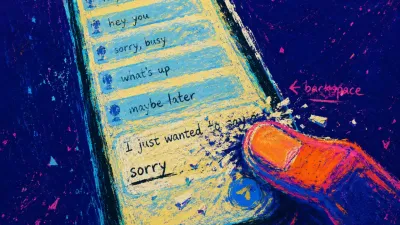
After a Good Date, the Breakup Draft: Learning to Stay One Beat Longer
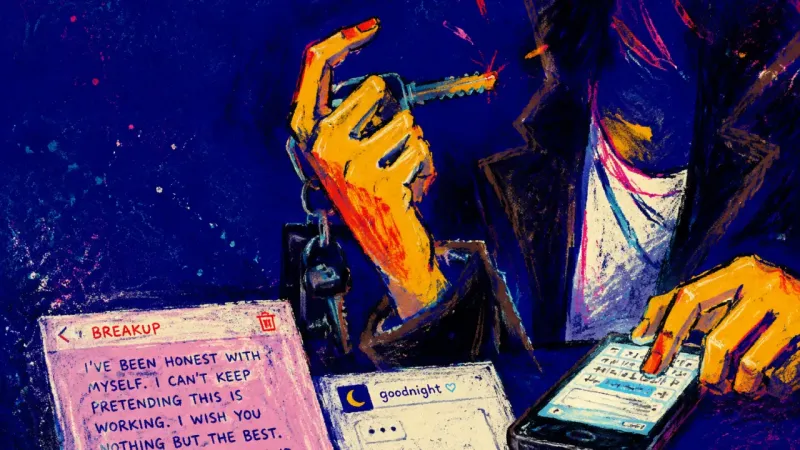
The 11:18 p.m. Line 1 Spiral
If you are a late-20s city person who can run a product critique at 10 a.m. and still start drafting the breakup text on the TTC right after a date that actually felt good, I know how quickly that can masquerade as clarity. When Alex (name changed for privacy) appeared on my screen from their downtown Toronto apartment, that was the first thing they said to me: “Why do I draft the breakup text the second I start to care?”
They described 11:18 p.m. on Line 1 after drinks near Ossington: tote digging into one shoulder, fluorescent lights buzzing, brakes screaming, phone warm in their palm. Before the train had fully left the platform, they had unlocked their screen, skipped the sweet goodnight text waiting in the thread, opened Notes, and typed a clean, polished paragraph about not being the right fit. They were still replaying the softness in this person’s voice when they said they wanted to see Alex again. They wanted the warmth, and then they wanted the exit even faster.
At work, Alex designs products, spots friction fast, and can read a room in half a second. In dating, that same brilliant mind becomes a red-flag search engine. Tenderness gets audited like a Slack thread. A future plan becomes a hidden clause. Fear moved through their body like someone pulling the fire alarm the second the room finally got warm: chest locked, breath clipped short, hand already reaching for the nearest exit tab.
I let that sit for a beat, then I told them gently, “The panic is real. The exit plan is not always the truth.” Their shoulders dropped a fraction. “So no,” I said, “we’re not here to judge the pattern or force a big romantic answer tonight. We’re here to make a map of it — and find the first piece of real clarity inside it.”

Choosing the Map: A Five-Card Cross for Intimacy Panic
I asked Alex to place both feet on the floor and follow me through my pre-meeting three-minute cosmic breathing: longer exhales than inhales, eyes soft, attention on the body before the story. Then I shuffled slowly and asked them to hold one question in mind: not whether this person was secretly wrong for them, but what happened inside them when care started to feel real.
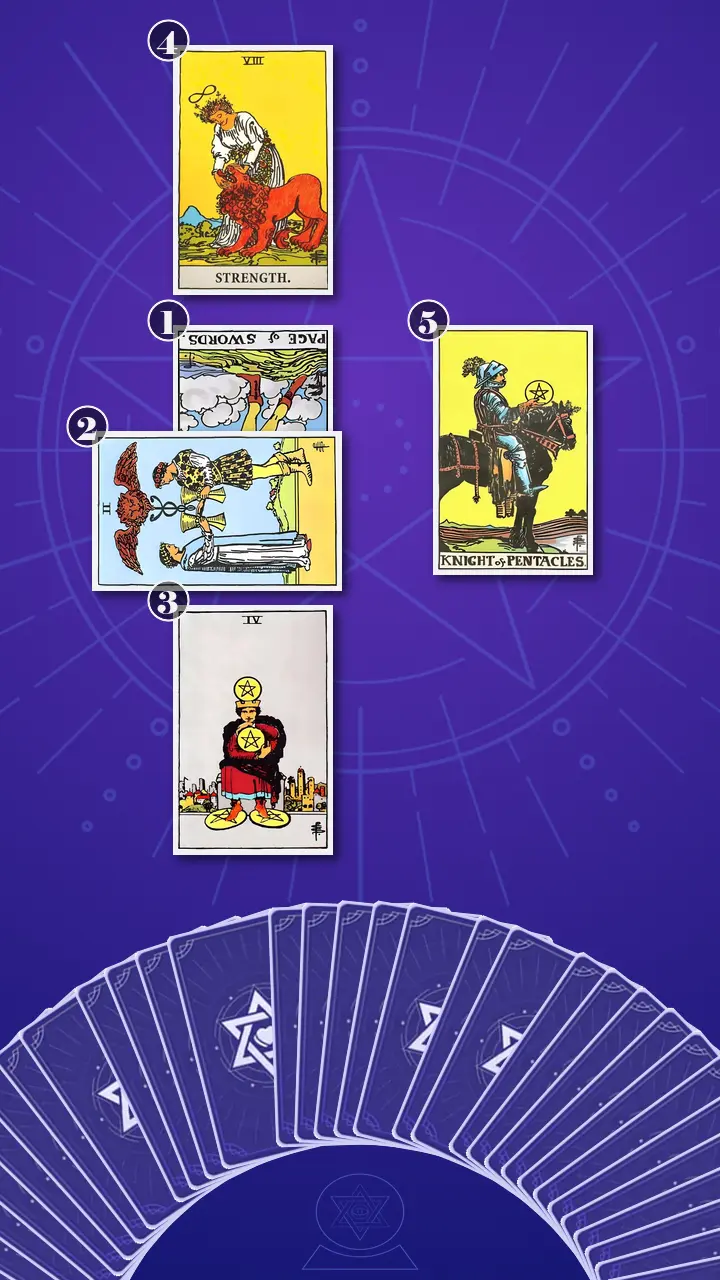
For that kind of question, I use a Five-Card Cross. It is one of the clearest ways I know to show how tarot works when the issue is not prediction but pattern recognition. This spread is small enough to stay honest and practical, but strong enough to hold the whole chain: the visible symptom, the crossing tension, the hidden root, the key reframe, and the grounded next step.
I told Alex — and I would tell any reader asking why they want to end it after a good date — that card meanings only become useful in context. In this Five-Card Cross, the center card would show the breakup-text reflex itself. The crossing card would reveal why mutual interest starts to feel like pressure. The lower card would uncover the deeper safety-and-control story under the behavior. The upper card would give us the bridge out of the loop. The final card would show what slower, steadier dating could look like in actual life, not in fantasy.
Reading the Crossroads
Position 1: The Armed Mind in the Notes App
I turned the first card and placed it at the center. “This position shows the present symptom,” I said, “the mental and communicative reflex to plan an ending as soon as real care appears.” The card was the Page of Swords, reversed.
It was almost painfully literal. Right after a date that felt unusually open, Alex was on the subway home re-reading the chat thread, mentally highlighting phrases, and opening Notes to draft a polished breakup text they had no real intention of sending. This is Page of Swords reversed in modern life: the mind acting like a private investigator because tenderness has been translated into possible future damage. For a product designer, it can feel like using your best review brain against your own feelings — turning a date recap into a bug report.
In energy terms, this was overactive air: thought outrunning reality, scanning, forecasting, bracing. The raised sword was not clarity. It was a nervous system grabbing language as armor. I told Alex, “What your mind calls being smart may actually be fear trying to get to the ending before life does.”
They gave a short laugh that caught on the way out. “Okay,” they said, rubbing a thumb over the edge of their mug, “that’s accurate enough to feel a little rude.” The bitterness in it told me their defenses had already started to loosen.
Position 2: When Mutuality Feels Like Pressure
I crossed the first card with the second. “This position reveals the immediate tension,” I said, “between wanting reciprocity and fearing what reciprocity will demand or expose.” The card was the Two of Cups, reversed.
This one told me the problem was not lack of feeling. It was difficulty receiving closeness without bracing against it. In real life, it looks like someone Alex genuinely likes texting in a steady, warm way and suggesting dinner next week — and instead of relief, Alex feels their jaw set, their shoulders lift, and their reply go flatter than their actual feeling. The cups are meant to meet. Here, they tip apart right when the exchange gets real. A little like the emotional logic of Normal People, the connection is there, but receiving it cleanly is the hard part.
Energetically, this was blocked water. Mutuality was landing as pressure instead of comfort. I said, “Some people do not lose interest. They lose a sense of control.” Alex went still. Their eyes dropped to the card, then back to me, as if that sentence had quietly renamed half their dating history.
Position 3: The Heart Behind the Vault Door
I turned the third card beneath the center. “This position uncovers the deeper root,” I said, “the safety-and-control fear that makes emotional holding back feel necessary.” The card was the Four of Pentacles, upright.
This was the part that made the whole spread click into place. At the root, Alex was not mainly avoiding this particular person. They were protecting the part of themselves that feels most exposed when someone becomes important. I could see the scene as they had described it: keys dropped by the door, shoes still on, city light through the blinds, body still activated from the date. Nothing had actually gone wrong. But the first internal question was not Is there a problem? It was How fast can I regain control?
Whenever I read a spread like this, I use what I privately call Dark Matter Detection. In astrophysics, invisible mass can shape the whole orbit. Here, the invisible mass was not hidden evidence about the other person. It was the old equation sitting under everything: control equals safety. The Four of Pentacles presses the coin to the chest the way someone white-knuckles a subway pole so hard they forget the train is already moving. Withholding feels like peace, but often it is just self-protection wearing a nicer coat.
I told Alex, “What looks like mixed signals on the outside can feel like self-defense on the inside.” First came the freeze — their breath paused, fingers curled around the mug and stayed there. Then came the cognitive drop — their gaze unfocused toward the dark apartment window, as if replaying a dozen nights alone after good dates. Then the release: a wince, a long exhale, and a quiet “Yeah. The silence never actually feels peaceful.”
When Strength Put a Hand on the Lion
Position 4: The Bridge Between Panic and Truth
When I reached for the fourth card, the room seemed to narrow around the table. On Alex’s side of the screen, a streetcar bell rang faintly outside and then everything went quiet. “This,” I said, “is the card that names the key reframe — the inner resource that can interrupt the shutdown cycle when vulnerability rises.” It was Strength, upright.
The setup was painfully familiar: you get home from a date still carrying the warmth of their laugh, toss your keys on the counter, open Notes, and start drafting a mature breakup text while your chest is still tight from how much you liked them. You are caught in the oldest misunderstanding of this pattern — that feeling exposed means something is wrong, and that leaving first is the only way to stay safe.
You do not need to text the ending to prove you are safe; let Strength place a calm hand on the lion of panic and stay long enough to learn what is actually true.
The sentence hung there between us. Then I added, more plainly, “The fear in your body deserves care. It does not automatically deserve control of the conversation.”
Looking at Strength, I had one of those private flashes that comes to me from years under a planetarium dome. When I explain spacecraft attitude adjustment to visitors, I tell them a craft does not fire itself off course every time a sensor spikes. First it stabilizes orientation. Then it decides what the signal actually means. That was Alex’s card. Not forced vulnerability. Not blind optimism. Spacecraft Attitude Adjustment: steady the spin before you change the trajectory.
Alex’s reaction came in layers. First, their whole body went still; even their thumb stopped tapping the mug. Then their eyes lost focus for a second, as if they were back in that condo kitchen at 8:06 a.m., Slack pinging, shoulders up near their ears, staring at a text that simply said last night was lovely. When they finally looked at me again, their jaw tightened before it softened. “But if that’s true,” they said, and now there was a flash of anger under the embarrassment, “doesn’t that mean I’ve been letting panic write the script?”
“It means panic has been trying to protect you,” I said. “That is not the same thing as panic telling the truth.” I watched their face change by degrees — eyes brightening, shoulders easing downward, one long breath finally reaching the bottom of their lungs. Relief showed up first. Then something more fragile: the slight dizziness that comes when a burden lifts and leaves you standing in new responsibility. This was the real bridge in the reading, the shift from control-driven intimacy panic to slower, steadier closeness with self-trust.
I asked them, “Now, with this lens, think back to last week. Was there a moment when saying ‘I am activated, not necessarily in danger’ would have changed the tone?” Alex nodded immediately. “Yeah,” they said. “I wouldn’t have gone cold. I think I would’ve just said I liked them and wanted to take it slow.”
Position 5: The Boring Magic of the Knight
I placed the final card to the right. “This position shows the grounded way forward,” I said, “how to embody slower, steadier relating instead of dramatic pre-emptive retreat.” The card was the Knight of Pentacles, upright.
I loved the honesty of this card for Alex. It did not promise fireworks or instant certainty. It offered something better: repeatable behavior. Reply when you say you will. Make one simple plan. Evaluate the connection by patterns over two weeks, not by one midnight panic spiral. The motionless horse and carefully held pentacle are the opposite of a breakup text typed on an adrenaline spike.
Energetically, this was balanced earth. The same need for stability that had turned defensive in the Four of Pentacles could become supportive here. I told Alex, “Slow is not avoidance when the honesty stays in the room.” They nodded — not inspired, exactly, but grounded. It was the kind of nod I trust more than excitement.
From Panic Text to Paced Honesty
Once all five cards were on the table, the story was remarkably clean. The visible symptom was an armed mind: Page of Swords reversed turning tenderness into surveillance and drafting the breakup text before anything had actually happened. The crossing tension was real mutuality: Two of Cups reversed showing that being liked back could feel more exposing than being unsure. The root was Four of Pentacles — the deeper belief that control protects the heart better than openness does. Then Strength stepped in as the bridge, asking Alex to regulate the fear response before texting, separate facts from fear, and replace distancing with paced honesty. Knight of Pentacles translated that insight into adult intimacy in its least glamorous and most useful form: consistency.
The cognitive blind spot was this: Alex had been mistaking fear for discernment. They were asking, Am I losing interest? when the more accurate question was, Am I losing a sense of control? The transformation direction was not to become fearless or instantly available. It was to stop treating vulnerability as a cue to exit, and start treating it as a cue to slow down, name the fear, and stay curious for one more honest interaction. In my own navigation language, this is not abandoning the mission. It is choosing not to let one alarm rewrite your whole route.
So I gave Alex three small practices — actionable advice, not grand promises. Regulate first. Decide second.
- The 3-Minute Cosmic Pause When the urge to draft a breakup text hits, put both feet on the floor, set a three-minute timer, and breathe with longer exhales than inhales before touching the keyboard again. Use it right after a good date, after a tender text, or any time your chest goes tight and your jaw locks. If three minutes feels impossible, start with one. Cold water on your hands counts if breathing makes you roll your eyes.
- Facts vs Fear Story Open Notes and make two headers: Facts and Fear Story. List three bullets under each before you write anything else. Facts are what actually happened. Fear Story is the prediction spiral. No sending, no big decisions, for at least 30 minutes. The goal is not to talk yourself out of fear. It is to stop letting the first alarm write the whole script.
- One Honest Pace Text After the next good date, send one measured sentence instead of disappearing: I like spending time with you, and I tend to move a little slowly when I start to care. Or: I’d like to see you again — could we do Thursday for a drink? Keep it plain. Honest pacing is not overexplaining, and it is not a breakup speech.
Those steps may sound almost boring, but that is exactly the point. Trust is usually built the way constellations are recognized — not by one dramatic flash, but by learning to see a pattern clearly over time.

A Week Later: The Quiet Proof
A week later, Alex sent me a message just before dusk. They had felt the urge again after a lovely second date — chest tight, Notes app glowing, the old clean goodbye paragraph practically auto-completing itself. This time they did the pause. They made the Facts vs Fear Story list. Then they sent one honest text instead: that they liked this, and wanted to move slowly. The reply that came back was simple, warm, and not a crisis.
The bittersweet part mattered too. Alex told me they slept a full night, then woke with the old thought — What if I’m wrong? — and laughed before putting the phone down. Clear, but still human. Steadier, not magically healed.
That is what I trust most about a Journey to Clarity like this one. This Five-Card Cross tarot spread for intimacy panic and pre-emptive breakup-text urges did not tell Alex whether the relationship would become forever. It showed them how to stop abandoning themselves in the first wave of fear, which is often the real beginning of finding clarity.
Sometimes the loneliest part is not being hurt yet. It is feeling your chest tighten the second someone starts to matter, and watching your hand reach for the exit before your heart has even had a chance to be known.
If tonight you can feel that old fire-alarm urge in your own body, what would it look like to leave the door cracked instead of slamming it shut — one steadier breath, one truer sentence, one next step that is honest without being a goodbye?