The Report Card in the Moving Box—and Naming My Inner Grading System

The Report Card Spiral: Conditional Self-Worth in a Manila Folder
If you’ve ever found an old report card while cleaning your apartment and instantly felt your chest tighten—like your life is about to get graded again—welcome to conditional self-worth.
Jordan (name changed for privacy) sat across from me with a manila folder on their lap like it was evidence. They’re 27, a junior product manager in New York, the kind of person who can talk clearly about roadmaps and stakeholder alignment—then go quiet the second the conversation gets anywhere near need.
They told me the report card showed up during a Sunday clean. “It smelled dusty and sweet,” they said, like old school supplies. “And my brain did that thing where it goes from ‘A-minus’ to ‘what am I even doing now’ in one breath.”
I watched their fingers worry the folder’s corner. Their jaw looked locked, not in a dramatic way—more like a lifelong habit. The radiator in my little office space clicked once, then hissed, and it felt like the room was joining the tension.
“I can’t tell if I’m chasing success,” Jordan said, “or if I’m still trying to get my dad to… respect me. And it’s embarrassing because I’m grown. I pay my rent. I’m fine.”
But their body didn’t look fine. It looked like someone bracing for a performance review: tight chest, shoulders lifted just a little too high, like they were preparing for impact. That particular kind of anxious longing—the kind that reaches for warmth and keeps finding a scoreboard—sat between us like a third chair.
“We can hold the embarrassment gently,” I told them. “It’s usually a sign you’re close to something true.” I placed the folder aside without opening it. “Let’s try to draw a map through the fog—not to decide whether your dad is ‘right’ or ‘wrong,’ but to find clarity about what’s actually driving the chase, and what would feel like enough on your terms.”

Choosing the Compass: The Four-Layer Insight Ladder Spread
I’m Giulia Canale—Jungian psychologist by training, tarot reader by practice, and for years I worked on international cruises teaching intuition to travelers who felt unmoored somewhere between ports. I learned that the most useful readings don’t predict your life; they show you what’s already steering it.
I asked Jordan to take one slow breath in through the nose, out through the mouth—nothing mystical, just a nervous-system gear shift. While I shuffled, I invited them to hold a single sentence in mind: “Am I chasing success, or my dad’s approval?”
Today I used a spread I designed for questions exactly like this: the Four-Layer Insight Ladder · Context Edition. It’s a 2x3 grid that reads like stepping down from a stage—moving from the loud surface of validation into the quieter mechanics underneath, and then back into a grounded next step.
If you’re someone who’s googled things like “why does my brain feel like it’s grading my life” or “how to stop needing validation from parents,” this structure works because it holds six specific realities at once: what’s visible on the surface, what repeats day-to-day, the root authority script, the core fear underneath, the key shift that reframes it, and a practical way to embody the new story without abandoning ambition.
I told Jordan, “The first card will show how the approval chase is showing up this week. The third will name the father/authority imprint—the rules you didn’t consciously agree to, but still live under. And the fifth is our turning point: the insight that separates your values from inherited standards.”
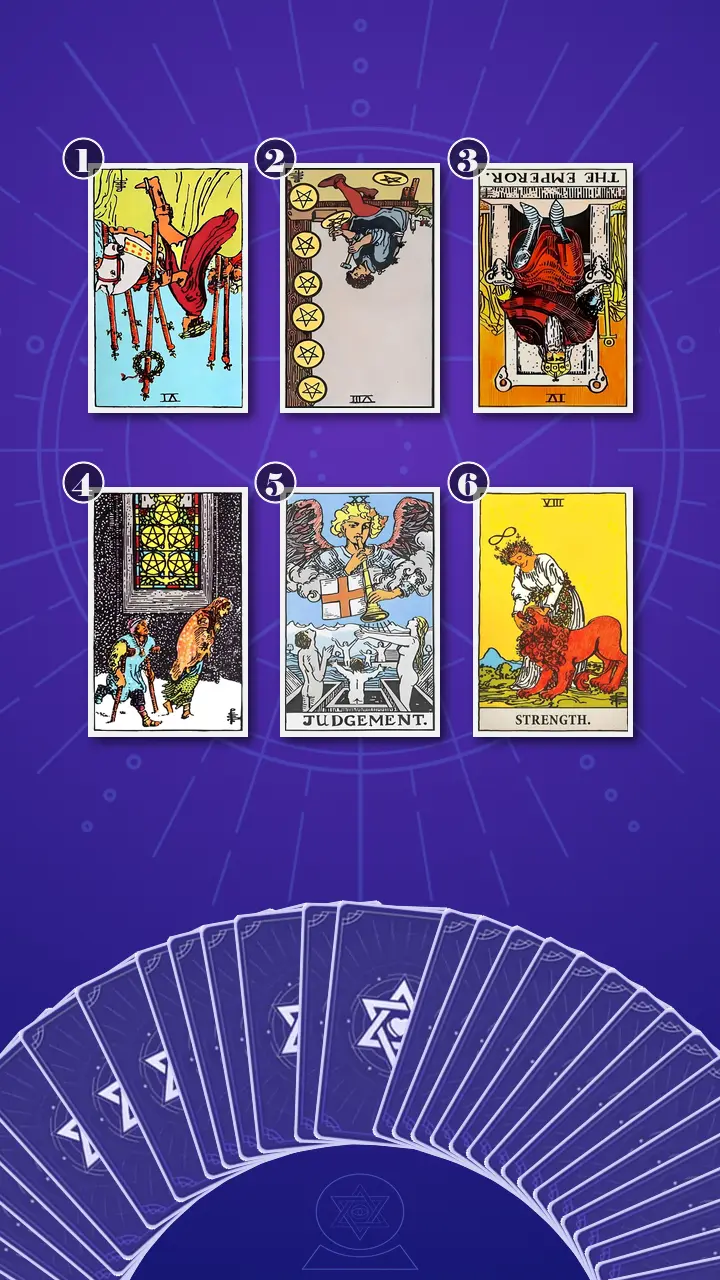
Reading the Map: From the Crowd to the Quiet Room
Position 1 — The Applause That Doesn’t Land
“Now flipped open,” I said, “is the card representing your surface symptom: how the approval chase shows up right now after finding the report card.”
Six of Wands, reversed.
I didn’t have to reach far to translate it. “This is the moment you finish a solid deliverable, hit send, and instead of feeling proud, you immediately start watching for signs of approval—refreshing Slack, rereading ‘great job’ messages, checking if the right person saw it.”
I leaned in a little, because the reversal matters here. “Reversed, the energy isn’t ‘victory.’ It’s validation hunger. Fire that should warm you is blocked, so it goes looking for a crowd to light it. Praise might hit for an hour, and then the brain builds the next test—because the audience you’re really performing for is dad-shaped.”
Jordan’s mouth twitched into a half-smile that was more bruise than humor. They let out a sharp exhale, then actually laughed once—small and bitter. “That’s… yeah. That’s me. And it’s kind of mean that it’s that accurate.”
I nodded. “Accurate doesn’t have to be cruel. It can be a relief.”
And then I named it in the most modern language I know: “This looks like an approval refresh loop. You hit send… and your thumb becomes a slot machine lever. Refresh. Refresh. Refresh. Like: If they don’t react fast, it means it wasn’t good. Applause versus relief. Productivity versus peace.”
Position 2 — Compulsive Refinement as a Safety Ritual
“Now we’re looking at the card representing your current pattern: the day-to-day behavior loop that keeps the feeling active.”
Eight of Pentacles, reversed.
“This,” I told them, “is a normal task turning into a perfection loop. Rewriting the same slide. Tweaking the same subject line. Polishing details nobody asked for.”
I tapped the table near the card, not the card itself—like pointing to the pattern without blaming the person. “Reversed Earth energy is effort that stops nourishing you. It’s blocked craft. The work becomes a way to self-soothe—except it doesn’t soothe, it scrapes.”
Jordan looked away, like their eyes were trying to find an exit route on the wall. “I literally rewrote a slide title four times last week,” they said. “And then people were like, ‘looks good.’ And I felt… nothing. Like I was still waiting to get in trouble.”
“Exactly,” I said. “You finish tired and irritated, then weirdly empty, because the work wasn’t about the work—it was about trying to earn enoughness.”
Position 3 — The Inner Supervisor in a Stone Throne
“Now flipped open,” I said, “is the card representing your root imprint: the internal authority/father-script that set the rules for ‘success’.”
The Emperor, reversed.
There are cards that change the temperature of a reading. This was one of them. I’d seen this archetype on ships with people who looked unstoppable at cocktail hour, then fell apart quietly in their cabins. Not because they were fragile—because they were carrying an authority voice that never clocked out.
“The Emperor is the father archetype,” I said plainly. “Not ‘your dad’ as a person—this is the installed system. And reversed, that system becomes rigid. Armor under the robes. Rules that don’t adapt.”
I used the echo I know Jordan would recognize best: a quick script.
Inner Supervisor: “Rest has to be earned.”
You: “But I’m exhausted.”
Inner Supervisor: “Be impressive anyway.”
Jordan paused and swallowed. Not dramatic—just a small physical reset, like something inside them had been named that had been running in the background for years. Their hand floated up toward their neck without fully touching it.
“So,” they said carefully, “it’s like… even when my dad isn’t around, I still act like he is.”
“Yes,” I said. “And it’s why ‘discipline’ gets confused with self-respect. Structure becomes control. You brace—jaw, shoulders—because some part of you is expecting evaluation.”
Position 4 — The Cold Side of the Window
“Now we’re looking at the card representing your core fear: what it would mean about you if you weren’t ‘successful enough’.”
Five of Pentacles, upright.
“Under the grind,” I said, “is a quieter fear: if you’re not impressive, you’ll be overlooked. At work, in relationships, even in your own friend group. One small mistake can feel like being quietly removed from the roster of ‘respected people.’”
The stained-glass window in the card always hits me—the warmth is visible, close, but it’s not touching the figures outside. “This isn’t just a motivation problem,” I added, letting the words land with care. “If praise doesn’t land, it’s not a motivation problem—it’s a belonging problem.”
Jordan’s eyes went unfocused for a beat, like their mind rewound footage. Their breathing held, then released. “That’s the thing,” they said. “Even when I do well, I still feel… outside.”
“And that,” I told them, “is why achievements can start to feel like a key you keep trying to pay for. Belonging as a subscription you have to keep renewing.”
Position 5 — When the Trumpet Calls, the Old OS Glitches (Key Card)
Before I turned this card, the room got unusually quiet—no dramatic thunder, just the kind of hush you notice when you stop performing even for yourself. The radiator paused its hiss like it was listening.
“We’re flipping the card that represents your key shift: the insight that separates your values from inherited approval standards,” I said. “This is the bridge.”
Judgement, upright.
“This is the wake-up notification,” I said. “The moment you catch yourself mid-spiral and name it: ‘I’m still trying to pass a childhood test.’ Judgement isn’t about being condemned. It’s about choosing a new chapter—where evaluation becomes clarity, not punishment.”
As a psychologist, I think of it like this: your mind isn’t broken; it’s just running outdated software. The old Dad Approval OS is still running in the background, burning battery. You can keep living on low-power mode, or you can update the system.
And this is where I used my Choice X-Ray—my way of revealing hidden costs and benefits in a situation that feels emotionally “obvious.” I laid it out for Jordan in two columns:
Chasing the verdict: short-term relief when someone reacts; long-term cost of never arriving.
Answering the call: short-term discomfort (no applause, no instant safety); long-term benefit of self-authored “enough.”
Jordan’s eyes narrowed slightly—not in anger, in concentration. Like someone who’s read a lot of TherapyTok about “inner critic vs inner authority” and is suddenly realizing it isn’t just content—it’s their operating system.
Setup (the trap as it shows up in real life): You know that moment: it’s late, you said you’d send one email, and suddenly you’re on your third rewrite—tight jaw, Slack open, waiting for the tiny sign that you ‘did it right.’ Your body is doing performance review season even when nobody asked.
Delivery (the sentence that changes the angle):
Stop chasing a verdict from the past; answer your own call when the trumpet sounds.
Reinforcement (what I watched happen in Jordan’s body): Their reaction didn’t come as a clean, inspirational inhale. It came in layers. First: a freeze—breath caught, fingers hovering over the folder like they forgot what it weighed. Second: a soft cognitive seep—their gaze slid off the card and into the middle distance, like they were replaying every “How’s work?” text that turned into a private press release. Third: emotion moved through—Jordan’s shoulders dropped a fraction, and their jaw loosened the tiniest amount, like a belt notch unfastening.
They blinked fast once, then frowned—not because they disagreed, but because the relief was almost irritating. “But if I stop chasing it,” they said, voice tight, “doesn’t that mean I’ve been doing all of this for nothing? Like I wasted years?”
I kept my tone steady. “No. It means you were trying to survive inside a system that told you survival required being exceptional. Updating the OS doesn’t erase your work—it changes what your work is for. Your achievements are data, not a verdict.”
I pulled the insight down into something livable. “Let’s do a 7-minute Self-Authored Rubric check, just as an experiment. Set a timer. Write one current goal. Then write three criteria that make it ‘enough’ for you—like: ‘I communicated clearly.’ ‘I protected my sleep.’ ‘I stayed honest about scope.’ If your chest tightens or your mind starts arguing, put a hand on your jaw or neck, take two slow breaths, and stop early. The point is noticing the grading voice, not forcing a perfect new system.”
Then I asked the question that turns insight into memory: “Now, with this new perspective, think back to last week—was there a moment when you were waiting for a reaction, and this could have made you feel different?”
Jordan exhaled—long, shaky, real. “After I sent the deck,” they said. “I sat there refreshing Slack like… if my manager didn’t thumbs-up fast enough, it meant I was disposable.”
“That,” I said gently, “is the exact bridge we’re building: from anxious, performance-based self-worth and approval-chasing to self-authored ‘enough’ and values-led ambition that feels chosen.”
Position 6 — Strength Isn’t Loud
“Now flipped open,” I said, “is the card representing your next step: a grounded way to practice self-trust without abandoning ambition.”
Strength, upright.
Strength is one of my favorite antidotes to the Emperor reversed, because it’s authority without fear. “This is tender leadership,” I told them. “Closing the laptop at a set time. Letting discomfort exist without negotiating with it. Not using panic as fuel.”
I used the most concrete version of the echo: “You can feel the panic and still stop. Force versus steadiness. Proving versus leading yourself.”
Jordan’s posture shifted almost imperceptibly—shoulders down, chin unclenched. “I could actually try that,” they said, like it surprised them. “Like… I don’t have to argue with the inner supervisor for an hour first.”
“Exactly,” I said. “The ‘inner supervisor’ doesn’t get to grade your whole life.”
From Verdict-Chasing to Values: Actionable Advice That Fits in Real Life
Here’s the story the full spread told me, in one connected line: the report card didn’t create a new problem—it reactivated an old approval economy. Six of Wands reversed showed the craving for a witness. Eight of Pentacles reversed showed the compulsive refinement that tries to manufacture safety. The Emperor reversed revealed the borrowed rulebook—the inner supervisor installed long ago. Five of Pentacles named the emotional stake: belonging scarcity, the fear of being average and dismissed. Judgement cracked the system open with a new kind of evaluation—self-authored, forgiving, awake. Strength offered the way to live it: calm authority inside your own body.
The cognitive blind spot wasn’t that Jordan lacked ambition. It was that they were treating ambition like a court case—collecting approval receipts, building arguments, trying to win a verdict—when what they actually needed was a personal rubric for “enough” and a relationship with themselves that didn’t require constant proof.
The transformation direction was clear: shift from collecting approval receipts to practicing self-authored criteria for “enough,” so your work serves your values, not a verdict.
To make that real, I gave Jordan three small experiments. I framed them using one of my cruise-born tools: the Port Decision Model. On a ship, you don’t wait for perfect certainty—you choose what you’ll do before the ship leaves the dock, because time is real. Your nervous system needs the same clarity: a decision window, a simple plan, and a safe exit.
- Start a Private Wins Folder (7 days)In your Notes app or a Google Doc, add one screenshot or sentence per day of something you did well that nobody applauded. Keep it private—no posting, no mentioning it later for praise.Expect the inner supervisor to call it “cringe.” Do the 60-second version first. If you catch yourself doing it for a future audience, reset with zero shame—just data.
- Two-Revision Cap (pick one low-stakes task)Choose one deliverable this week. Limit yourself to two revision passes, then submit. Before you start, write a one-sentence definition of “done” (what was asked + what matters to you) and keep it visible while you work.You’ll want to bargain: “Just one more tweak.” Make the cap physical—set a timer or a hard stop 15 minutes before a meeting. Remember: good enough is a practice, not a personality trait.
- Reality Testing: A 48-Hour “No Verdict” TrialFor the next 48 hours, after you hit “send,” take a 10-minute buffer where you do anything except check responses (dishwasher, short walk, shower). When the urge hits, label it: “Looking for a verdict.” Then choose intentionally whether to check.If it feels impossible, shrink it to 2 minutes and pair it with two slow breaths—hand on jaw or neck. The point is interrupting the loop, not winning against it.

A Week Later: The Quiet Proof
Eight days later, Jordan texted me a photo: their laptop closed on a Thursday night, a mug of tea on the counter, the city outside their window doing its usual loud, indifferent thing. The message said, “I did the two-revision cap. I sent it. I didn’t refresh Slack for ten minutes. My body hated it. And then… nothing collapsed.”
They added, “Also I started the wins folder. It’s private. It feels weirdly sad and good?”
That’s how clarity usually arrives: not as a trumpet-blast of certainty, but as a small, repeatable proof that you can lead yourself kindly. The journey wasn’t Jordan choosing between success and their dad—it was Jordan stepping out of an old grading system and into a self-authored one, where ambition could finally feel like theirs.
When your body stays braced even after you ‘win,’ it’s usually because you’re not chasing the goal—you’re chasing the moment someone finally says you’re not disposable.
If you didn’t have to earn a verdict this week, what’s one small way you’d let your work serve your values instead of your fear?
Every reading at AceTarot is a Journey to connect with inner wisdom and empower next step.
Learn more about our Journey to Clarity.