Credit Limit Increase Anxiety—From App-Checking Loops to Written Guardrails
The TTC Offer Banner That Feels Like a Trapdoor
You’ve opened your banking app three times today, not because anything changed—because the credit limit increase banner is sitting there like a dare, and your chest does that tight little “figure it out now” thing.
Jordan (name changed for privacy) showed up to my studio call from Toronto with the kind of careful posture you see on a packed TTC streetcar—shoulders slightly lifted, phone held close, thumb hovering like it’s about to touch something hot.
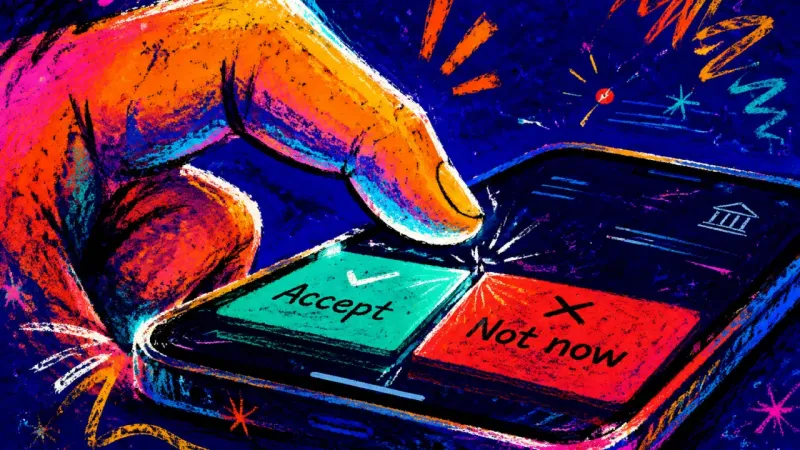
They told me the scene that kept looping: 8:47 a.m., standing shoulder-to-shoulder on the streetcar, coffee fogging the lid, the screen brightness a little too sharp. The streetcar squealed on a turn, and there it was again: “You’re pre-approved for a credit limit increase.” Their thumb floated between “Accept” and “Not now,” like either button might open a trapdoor.
“I can’t tell if this is growth or a trap,” they said. “I want the flexibility. And improving my credit profile would be… objectively good. But I’m scared saying yes will wake up that old version of me that spends like I’m about to lose everything.”
The unease wasn’t an abstract feeling. It was a physical clamp—like a seatbelt locking one notch too tight—paired with a restless urge to solve the whole thing right now, even if it was a Tuesday morning and nothing was due until next week.
I nodded, keeping my voice plain on purpose. “I believe you. And I’m going to name something gently: This isn’t a credit decision. It’s a trust decision wearing a credit costume. We’re not here to shame you into ‘being responsible.’ We’re here to build clarity you can actually live with. A map. Guardrails. Something your nervous system can lean on.”

Choosing the Compass: The Transformation Path Grid (6)
I asked Jordan to put both feet on the floor for one slow breath—not as a mystical thing, just a clean transition. The kind of “pause” I used to take on a trading floor before I hit a button that mattered: inhale, exhale longer than the inhale, then decide what problem I’m actually solving.
“Today,” I said, “we’ll use an original spread called the Transformation Path Grid (6) · Context Edition.”
For readers who’ve ever wondered how tarot works in real life: this isn’t about predicting the bank’s next move. It’s about mapping the psychological loop that keeps you stuck—especially in modern money stress where apps, notifications, and credit scores turn your attention into a pinball machine.
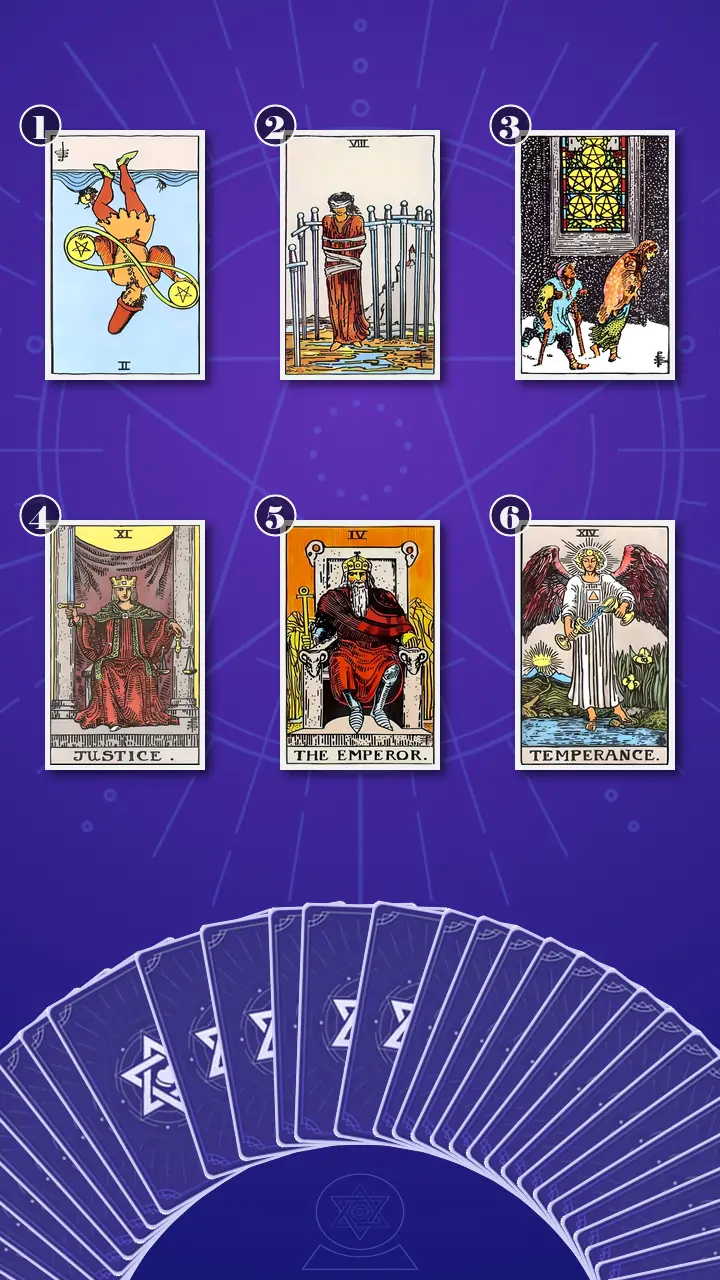
This specific spread works because Jordan’s situation isn’t a clean binary. It’s a spiral: a financial offer triggers an identity-level scarcity script, which then creates analysis paralysis and decision fatigue. Six positions is the smallest structure that can hold the whole arc: (1) what’s happening in your day-to-day behavior, (2) the main internal block, (3) the deeper root belief, then (4) the clarity lever, (5) the guardrails you can implement, and (6) what integration looks like after the system is in place.
I also like the grid format: top row is the cluttered desktop (overwhelm → mental trap → root scarcity), bottom row is the clean operating system (principle → structure → steady flow). We read across the top to diagnose, then drop down to watch the decision turn into a system.
Reading the Map: Credit Limit Increase Anxiety, One Card at a Time
Position 1 — What the offer is triggering in your day-to-day nervous system
“Now we turn over the card that represents what the offer is triggering in your day-to-day behavior and nervous system right now,” I said.
Two of Pentacles, reversed.
In real life, this is the micro-break autopilot: streetcar ride, coffee line, between Zoom meetings—opening the bank app, screenshotting the offer, checking utilization, then closing the app feeling oddly unfinished. It looks like “staying on top of things,” but it’s really an infinity-loop of switching that keeps the body in a constant low-grade scramble.
Reversed, the Two of Pentacles reads like an energy of imbalance and overload. Not “you’re bad with money.” More like: you’re trying to keep two coins moving inside an infinity loop, and the motion itself becomes the coping mechanism. The choppy waves in the card are those tiny expenses and subscriptions that suddenly feel like they could tip the whole boat—even if the math says you’re okay.
Jordan let out a small laugh that was more bitter than amused. “That’s… too accurate,” they said. “Like, it’s almost rude.”
“Yeah,” I said softly. “The card isn’t judging you. It’s just reporting the nervous system churn. You’re switching between apps the way some people switch between TikTok ‘romanticize your life’ spending content and ‘no-buy month’ content—two extremes—hoping the right vibe will finally make the decision feel safe.”
Their fingers tightened around their mug, then loosened. That tiny release told me: they recognized the pattern.
Position 2 — The main internal block that keeps you stuck
“Now we turn over the card that represents the main internal block that keeps you from making a clean, empowering decision,” I said.
Eight of Swords, upright.
Jordan’s modern-life scenario showed up immediately: treating the credit offer like there’s one perfect, safe move—and until they find it, they can’t act. So they stay trapped in late-night research, utilization calculators, and rehearsed self-judgment. The bindings are self-made: the rule that they must feel 100% certain before deciding.
I described it the way it looks on a Sunday at 11:47 p.m.: five tabs open—APR explanation, utilization calculator, “will this hurt my score,” subscriptions list, half-finished Google Sheet budget. Blue light stinging your eyes. The phone warm in your palm. Jaw clenched so hard you can feel it in your molars.
And the inner monologue loops like bad UX:
“One more check, then I’ll decide.”
“I still don’t feel safe.”
“So I need one more check.”
This card is the energy of blockage—not because you lack information, but because you’re missing permission to stop chasing certainty. It’s like A/B testing a decision forever and never shipping the product. Uncertainty gets treated as danger, so the mind builds a cage out of “responsible research.”
Jordan winced—quietly, like someone hearing a recording of their own voice. Then they nodded once. “Oh,” they said. “That’s exactly what I do.”
I kept it practical. “Here’s the question: are you researching because you need information… or because you need relief?”
Position 3 — The deeper root: the scarcity script underneath
“Now we turn over the card that represents the deeper root—the scarcity script or identity-level belief this offer is poking,” I said.
Five of Pentacles, upright.
This one always feels like weather. In Toronto terms, it’s the moment you step out into sharp air that makes your eyes water, while you can see the condo lobby warmth through glass—light, heat, safety—yet your body still braces like it’s going to be a long winter.
Jordan’s scenario clicked into place: even with a decent income now, their nervous system still remembers the season when money felt brittle. “More credit” doesn’t register as flexibility. It registers as standing too close to an edge, where one slip proves you’re back in scarcity.
The Five of Pentacles is not just “lack.” It’s the belief: “If I slip once, I’m out.” Out of safety. Out of being a “real adult.” Out of the warm window of stability.
I watched Jordan’s eyes flick down for a second, then back up. Their shoulders dropped a fraction. That’s the softening this card asks for—not an instant fix, just recognition.
“If you’re willing,” I said, “finish this sentence without arguing with it: If I accept and overspend, it would mean I am ____.”
They swallowed. “Irresponsible,” they said. “Like I didn’t learn anything.”
“Okay,” I replied. “That’s the script. Not a fact—just the old winter story. Now we’ll look for the lever that turns story into structure.”
Position 4 — The clarity lever: the truth that unlocks movement
“Now we turn over the card that represents the clarity lever—the principle or reality-check that helps the energy start to move,” I said.
Justice, upright.
Justice is the moment the reading stops sounding like emotions and starts sounding like a contract. Scales. Sword. Forward-facing posture. No flinching.
In Jordan’s life, Justice looks like this: they stop trying to predict how they’ll feel and start writing decision criteria in Notes—two columns, simple labels: Helpful and Unsafe. Utilization flexibility? Helpful. Emergency buffer? Helpful. Carrying a balance month-to-month? Unsafe. Autopay not set? Unsafe.
I said the sentence that always shifts the frame: The offer isn’t asking if you’re “good.” It’s asking what rules you’ll run.
This card brings the energy of balance and accountability. Not moralizing. Not punishment. Just clean cause and effect. It cuts through the Eight of Swords by replacing “certainty of feelings” with “clarity of criteria.”
Jordan exhaled—long, audible. “Okay,” they said. “I can evaluate this without hating myself.”
I let the quiet sit for a beat. In the pause, I had a flash of my old life: sitting under harsh Bloomberg-terminal light, watching traders argue opinions like they were truths. The only thing that held was structure—terms, covenants, and the willingness to write down what mattered before the adrenaline arrived.
Position 5 — The guardrails: structure you can follow on a stressful week (Key Card)
“Now we turn over the card that represents the guardrails—a concrete boundary-and-structure approach you can implement so this decision isn’t based on willpower alone,” I said. “This is the core of the reading.”
The room felt quieter—not in a spooky way. More like when you finally close all the extra tabs and you can hear your own breathing again.
The Emperor, upright.
Before I even explained it, I saw Jordan’s posture change: a small stiffening, like their body expected a lecture about discipline. I met that expectation directly.
“The Emperor isn’t here to scold you,” I said. “He’s here to hand you a steering wheel.”
Setup: Jordan had been hovering over “Accept” like it was a moral trap. Refreshing Borrowell/Credit Karma scores that won’t change tonight. Reading terms they already read. Trying to earn a feeling of certainty that never arrives—because the fear isn’t about APR, it’s about identity.
Delivery:
Stop treating the offer like a temptation you must resist, and start treating it like a territory you can govern—set the rules, take the seat, and let your structure be the armor.
I let it hang in the air for a second.
Reinforcement: Jordan’s breath caught first—like their lungs paused to check whether that sentence was allowed. Their eyes went a little unfocused, as if their brain rewound the last month: the TTC thumb-hover, the late-night r/PersonalFinanceCanada threads, the jaw-clenching in the office kitchen, the “one more check” loop. Their fingers had been curled tight around the phone; I watched them uncurl one by one, slow and unwilling at first, then softer. Their shoulders dropped, then dropped again—like gravity was finally permitted.
And then the “unexpected” emotion came up: a flash of irritation.
“But if I need rules,” they said, voice sharper, “doesn’t that mean I don’t trust myself? Like… I’m proving I’m still not safe.”
I didn’t rush to soothe it. “That’s a fair reaction,” I said. “And it’s also the scarcity script trying to keep you in self-surveillance. On Wall Street, we didn’t call covenants ‘lack of trust.’ We called them adult structure. Guardrails aren’t a punishment. They’re architecture. Like rails on a balcony: they don’t limit your life. They stop the fall.”
I leaned into my signature way of working—business clarity without the bravado. “Let’s run a 10-minute rapid assessment—my SWOT-TAROT hybrid—so we stop arguing with your feelings and start designing your system.”
“Strengths,” I said, “are what you already do well—like paying on time, caring enough to look, wanting to avoid lifestyle inflation. Weaknesses are predictable triggers—like Apple Pay being too frictionless at 10 p.m. when you’re tired. Opportunities: better utilization ratio, more buffer. Threats: carrying a balance, using the extra limit as permission.”
Then I added the tool that people like Jordan usually love once it’s explained in human language: “We’ll treat this like a three-scenario forecast,” I said. “Not to overcomplicate it—to contain it. Scenario A: accept with guardrails. Scenario B: accept without guardrails. Scenario C: decline for now but still install guardrails and set a review date. We’re not trying to be 100% sure. We’re trying to pick the scenario with the best risk-reward profile for your nervous system.”
Jordan blinked, then gave a small, almost embarrassed smile. “I… weirdly want to open Notes right now,” they said.
“That’s the point,” I replied. “The Emperor moves you from vigilance to governance. And that shift—right there—is a step on your emotional journey from unease and self-judgment toward grounded, values-based clarity.”
I asked them, gently but directly: “Now, with this new frame—territory you can govern—think back to last week. Was there a moment where this would’ve changed how you felt? Like the TTC hover, or the Sunday-night tab spiral?”
Jordan nodded immediately. “Sunday night,” they said. “If I’d had rules written down, I wouldn’t have been… auditioning for permission.”
Position 6 — Integration: when credit becomes boring (in the best way)
“Now we turn over the card that represents integration—what a healthier relationship with credit looks like after the guardrails are in place,” I said.
Temperance, upright.
Temperance is the opposite of the money fire alarm. It’s the thermostat. Water pouring between two cups—small adjustments, steady flow, no drama.
In Jordan’s modern scenario, this is weeks later: the offer isn’t a trigger anymore. They can have more available credit without feeling high or panicked because their routines are steady: one weekly review, autopay running, spending choices made with moderation. No swinging between restriction and rebellion.
I smiled when I said it, because people always look relieved: Credit works best when it’s boring.
Jordan’s face softened into something like longing. “I want that,” they said. “I want it to be… neutral.”
The One-Page Ledger: From Insight to Actionable Next Steps
I gathered the whole grid into one story, the way I’d summarize a deal memo—clean, connected, no moral fog.
“Here’s what your spread says,” I told Jordan. “Right now, the offer triggers a juggling loop—checking, screenshotting, calculating—so your nervous system stays in motion (Two of Pentacles reversed). That motion flips into a mental cage where you believe you need perfect certainty before you click anything (Eight of Swords). Underneath it, there’s an old winter belief: one slip means you’re back outside, so ‘more’ feels dangerous (Five of Pentacles).”
“The way out isn’t a new feeling,” I continued. “It’s a new relationship to truth. Justice says: treat this like a contract, not a confession. And The Emperor says: install guardrails that work on your worst week, not just your best week. Temperance is the outcome: steady flow, not extremes.”
The cognitive blind spot was clear: Jordan was treating the credit limit increase offer as a referendum on their character—and trying to win the referendum through more research. The transformation direction is the opposite: from moral test to designed contract. From self-surveillance to self-governance.
I gave them the line I always give high-competence overthinkers who build Notion dashboards they’ll never maintain: A draft system you follow beats a perfect system you abandon.
Then I offered a few small, doable moves—actionable advice designed to break analysis paralysis without pretending money is “just mindset.”
- Draft your 3-line “Credit Guardrails” note (10 minutes)Open your phone Notes app. Write three rules max: (1) Autopay statement balance (set it today if you can). (2) Pick a personal utilization ceiling you can live with (10–30% is a common range, but choose what feels doable). (3) Define the purpose: “The extra limit is for buffer, not lifestyle”—and write what “buffer” means (e.g., true emergencies, timing mismatch before paycheque, travel booked only if cash is already set aside).Set a timer and aim for “draft.” If anxiety spikes, stop at one sentence and come back later. This only works if it feels chosen, not forced.
- Run a 7-day “one check a day” experimentChoose one single dashboard—one bank app screen or one Credit Karma/Borrowell screen. Check it once per day at the same time (e.g., after lunch). If the urge hits outside that window, put the thought in a Notes line called “Later,” then close the app.Treat it like a product experiment: you’re gathering data on your nervous system, not trying to become a different person overnight.
- Use a boardroom-style decision ledger (weighted scoring)Make a tiny decision matrix with 4 criteria: (a) flexibility in a surprise expense, (b) risk of carrying a balance, (c) impact on utilization/credit profile, (d) emotional cost (how much it spikes checking/rumination). Score “Accept with guardrails” vs “Decline for now with review date.” Choose the option that wins on total score—not the one that promises instant calm.If you get stuck, cap your research: one article, one calculator, then stop. Save any extra links to a folder called “Not Tonight.”
Before we closed, I taught Jordan a pre-commitment move I used to use when stakes were high: “When you’re about to open the app,” I said, “do one slow exhale longer than your inhale. Then say, out loud if you can: This is a tool choice, not a worth test. My next step is criteria + rules, not more research. That’s not ‘breathing to fix money.’ It’s interrupting the urgency that hijacks your decision-making.”

A Week Later: Ownership, Not Certainty
A week later, Jordan sent me a message that was almost comically short: “I wrote the guardrails. Autopay is on. I did the one-check-a-day thing six days out of seven. And I clicked ‘Accept’ without reading the same APR page for the 12th time.”
They added one more line: “I woke up the next morning and my first thought was still, ‘What if I mess it up?’—but then I remembered the rules. I didn’t open the app. I made coffee. It felt… boring. In a good way.”
That’s what I mean by a Journey to Clarity. Not a dramatic personality rewrite. Just a quiet transfer of authority: from the scarcity script to the system you designed. From “prove you’re safe” to “lead yourself with guardrails.”
When “more” shows up, it’s brutal how fast your body can treat a simple button as a character trial—like one imperfect month would erase everything you’ve worked so hard to stabilize.
If you let this offer be a contract you design (not a verdict you survive), what’s one guardrail you’d want in place before you touch “Accept” or “Not now”?