From Comparison Paralysis to Calmer Self-Trust: Two Neighbourhoods

The 11:43 PM Maps Spiral
Jordan (name changed for privacy) sat cross-legged on the sofa in a downtown Toronto one-bedroom, laptop on her knees, with Google Maps, Street View, and a comparison spreadsheet all open at once. The screen light made her eyes sting, the kettle had gone cold behind her, and she kept rubbing her jaw like she could massage certainty into place. It was 11:43 PM, and the room had that brittle quiet I know from apartment searches: the kind where every tiny noise feels louder because your mind is doing the humming for you.
She gave me a tired smile and said, 'I just need one more comparison and then it will become obvious.' A second later she added, 'If I sign too fast, I will be stuck with the consequences every single day.' Then she laughed once, a little brittle around the edges, and said, 'This is literally my 11 PM lease spiral.'
I could see the pattern immediately: comparison fatigue turning into decision fatigue, with a little FOMO riding shotgun. It felt like twenty browser tabs and none of them loading cleanly.
I told her, 'I am not trying to find the perfect neighbourhood. I am trying to help you build a map for the fog and find the week your life can actually hold.'

Choosing the Compass: The Decision Cross
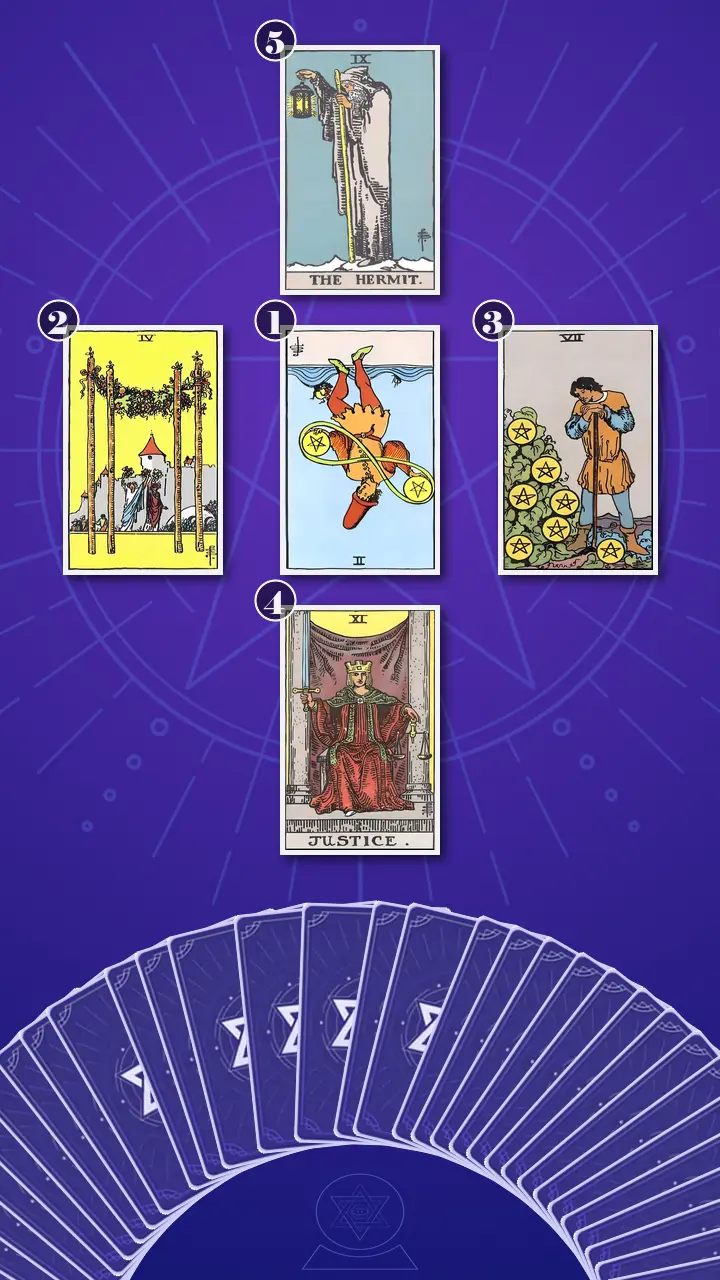
I asked her to close the extra tabs, take one slow breath, and keep both neighbourhood names in front of us while I shuffled. My years on Venetian canals and on cruise decks taught me the same thing: when a choice has a clock on it, the question is not whether the water will become perfectly still. The question is what can hold you safely once you arrive. Today I used the Decision Cross tarot spread for comparing two neighborhoods before signing a lease, because it is built for exactly this kind of decision. It gives the pressure a center, the two options a side-by-side seat, the deeper trade-offs a root, and the final self-check a place of its own.
In other words, it answers not just 'Which neighbourhood is prettier?' but 'What should I compare before signing a lease, and what is just anxiety wearing a spreadsheet costume?'
The Tabs Start Talking Back
Position 1 — The Loop That Felt Like Research
Now the card representing the immediate pressure and comparison overload is Two of Pentacles reversed. In modern life, it looks like keeping Google Maps, rental listings, and a colour-coded Notion comparison open at once while each refresh makes the decision feel less, not more, obvious. Her jaw was tight, her legs restless, and the screen light had that buzzing edge that makes your eyes feel over-sanded. My Procrastination Decoding lens sees the hidden rule underneath the delay: 'If I compare one more time, I will finally know.' But reversed, the card says the juggling act has already tipped into excess. The coins are still moving, but the rhythm is gone. The comparison sheet has turned into a loop that keeps asking for one more tab, one more friend opinion, one more re-rank, and somehow leaves you heavier every time. I could almost hear the fragments in Jordan's head: just one more check. Maybe this will make it obvious. Why is this heavier every time?
She let out a short laugh that was more recognition than amusement, then rubbed her jaw and said, 'Yeah. That is brutally accurate.' The room felt a little smaller after that, like the spiral had finally been named.
Position 2 — The Block That Felt Like Home
Now the card representing Neighbourhood A and the daily life it offers is Four of Wands upright. In modern life, it is the block where you can picture carrying groceries home, hearing the same neighbour's hello, and feeling your shoulders drop because the street already feels repeatable. This card is not asking whether the place is cute on viewing day; it is asking whether it can become a small ritual base. The energy is balance through belonging: weekday takeout, familiar corners, a real exhale at the end of work. Jordan looked toward the window and said one option gave her that 'I can see my life happening here' feeling, which is lovely—but also the kind of feeling that can make a rent sign glow brighter than it should.
I nodded, because that is exactly why I never let Four of Wands decide alone. Comfort matters, but it needs to survive the second pass. If it only works in the golden hour of a viewing, it is not yet a home; it is a mood.
Position 3 — The Tuesday That Told the Truth
Now the card representing Neighbourhood B and what it asks of you is Seven of Pentacles upright. In modern life, it is the tired-Tuesday question: will the commute, noise, and grocery run still feel worth it when the novelty is gone and your laptop bag is heavy? This is the slower, practical test. It asks about the version of the week that actually repeats, not the version that looks best in a listing. The energy is patient earth: pause, evaluate, measure the harvest six months from now. Jordan looked at the comparison sheet like it had been trying to pass as a science experiment.
'That one is cheaper,' she said, 'but the train plus the walk is basically my whole mood by 8 p.m.'
Exactly. That is the cost showing up where it actually lives: in your body, in your attention, in the energy you have left after work. A better question than 'Which place is best?' is 'Which week is livable?'
When Justice Put the Scales on the Table
Position 4 — The Card That Cut Through the Fog
When I turned to the fourth card, the room went still in the way a design review goes still when everyone realises the success metric was wrong. Jordan had been trying to make the lease answer behave like a referendum on her judgment. My Choice X-Ray went straight for the hidden costs: one neighbourhood might save money but spend her evenings; the other might ask for a little more rent but return quieter mornings, lighter shoulders, and fewer recovery hours.
Then I said it plainly: This is not a personality test; it is a trade-off problem. Don't let the prettier block win by default; let Justice's scales weigh the practical costs—rent, commute, noise, light, and mental load—before you sign.
The sentence landed like a click. Jordan froze first, the way people do when a sentence has reached the exact nerve they were trying not to touch. Her breath held for a second; then her eyes widened a fraction and slid back to the card as if she were seeing the comparison sheet for the first time. Next came the tiny physical release: her shoulders lowered by a notch, her fingers uncurling from the edge of her phone, her jaw loosening from that clenched line I had seen all night. She gave a short, shaky laugh that sounded halfway between relief and grief, because the old fantasy of a perfect, consequence-free choice had just dissolved. 'Oh,' she said softly. 'So I am not failing a test.' That was the real turn: from comparison-fueled anxiety and FOMO to a calmer, steadier self-trust. Not certainty—just a fairer way to weigh reality. Now, use this new lens to think back: was there a moment last week when this could have made you feel different?
That is the key shift I was after: stop trying to eliminate uncertainty and start weighting only the daily-life factors that will actually shape your week. That is how decision pressure becomes a clear set of trade-offs instead of a verdict on your worth.
Position 5 — The Quiet Verification Walk
Now the card representing the quiet verification step is The Hermit upright. In modern life, it is the solo evening walk after the viewing, when you are not performing for friends or trying to make the right choice in a group chat. You notice the crosswalk timer, the late-night grocery store, the sound of traffic, and whether your breathing gets slower or tighter as you keep walking. The lantern here is not mystical; it is lived evidence. It tells you to trust the first-hand read, not the group chat heat map. I told Jordan, 'Walk each neighbourhood alone at the hour you would actually come home. Turn off the podcasts for ten minutes. Let your body vote before your mind starts negotiating.'
She nodded, and this time the nod looked less like agreement than permission. That is what The Hermit does when it is healthy: it narrows the noise until your own signal can come through.
From Scorecards to Sidewalks
By the time the cards were back on the table, the story was no longer mysterious. The blockage was not a lack of information; it was too much unweighted information. The comparison loop had been disguising itself as diligence. The neighbourhoods were not a verdict on her worth. They were a trade-off problem under a deadline. Trade-offs are not failure; they are how a livable week gets built. My Port Decision Model kicked in here: when the docking window is closing, you do not keep circling the harbour for perfect weather. You choose the berth that can actually hold your week. If you were searching for a lease comparison checklist, this is the one I would trust more than a dozen open tabs. Fewer tabs, clearer weights.
I would call the next part Reality Testing: a 48-hour trial where the body gets a vote. We only need three small, concrete checks, not an entire new personality.
- The One-Pass ScorecardChoose five criteria that shape your week—commute, rent, noise, light, and late-night convenience—score each neighbourhood once on paper or in Notion, and then put the comparison sheet away for 24 hours.If your brain wants a sixth column, ask whether it changes your week or only your anxiety. Keep the version you can finish.
- The Quiet Block WalkWalk each neighbourhood alone at the hour you would normally get home, with podcasts off for ten minutes. Notice your breathing, your pace, and where your shoulders drop or rise.Treat it as observation, not a performance. Keep it short if you feel overstimulated; the goal is data, not forcing a feeling.
- The Tired-Tuesday TestDo one grocery run or transit transfer in each area on a tired weekday, carrying your laptop bag or shopping bag so you can feel the real friction.Do not test on a perfect sunny afternoon. If it only works on a perfect day, it does not count.

A Quiet Proof on a Tuesday Night
A few days later, Jordan texted me a photo of the quieter block at dusk. She had done the one-pass scorecard, walked both neighbourhoods after work with her headphones off, and stopped asking the group chat to outvote her body. The spreadsheet was closed. The choice still had a little pulse of nerves around it, but it no longer read like a verdict. The quieter street made her shoulders drop first, and that was enough. She sent me one line: 'I think I know which week I can hold.' She did not solve her whole life. She just made the next step honest.
That is the whole journey to clarity: not certainty, but a steadier footing and a choice your week can actually hold.
If a lease choice starts to feel like a verdict on whether you can trust yourself, the body usually gives it away first—a tight jaw, restless legs, and that buzzing feeling that says one more tab will not actually make you feel safer.
If you let the internet go quiet for one evening, what would you want to notice in person before you decide?