An 89%, a Tight Jaw, and the Shift from Verdict to Feedback

Finding Clarity in the 12:07 a.m. Quercus Spiral
If you're the kind of Toronto undergrad who sees an 89% post after midnight and immediately starts doing lost-points math instead of feeling proud, this is probably about more than the grade.
That was exactly how Emma (name changed for privacy) arrived on my screen: dorm room dim except for the hard blue wash of Quercus, phone calculator open beside her laptop, TTC-home tiredness still sitting in her shoulders. The room looked dry and overheated the way student rooms do in winter. I could hear the laptop fan under her voice, and every few seconds her fingers pinched at the corner of the computer as if she could squeeze a cleaner number out of it.
'I know 89 is objectively good,' she told me, staring just past the camera, 'but it still feels like I missed something important.'
A second later she added, with a small grimace, 'And then someone says they got a 93, or I open Instagram and everyone looks weirdly chill about exams, and suddenly my mark feels embarrassing.'
I have spent ten years guiding people through artificial night at a Tokyo planetarium, and one thing the sky teaches me fast is this: we do not suffer only from facts. We suffer from the story we draw between the points. Emma's shame was not abstract. It sat in her chest like a seatbelt locked one click too tight, with that hollow elevator-drop in the stomach and a jaw held so firm it made every sentence sound pre-braced.
I nodded. 'You're not being dramatic. You're in that brutal place where wanting to feel proud of strong performance collides with the fear that anything short of an A proves you're not good enough. A good grade still feels like failure because the number becomes a self-worth audit. So tonight, let's make the fog visible. We'll draw a map and find the part where the grade stops being information and starts feeling personal.'
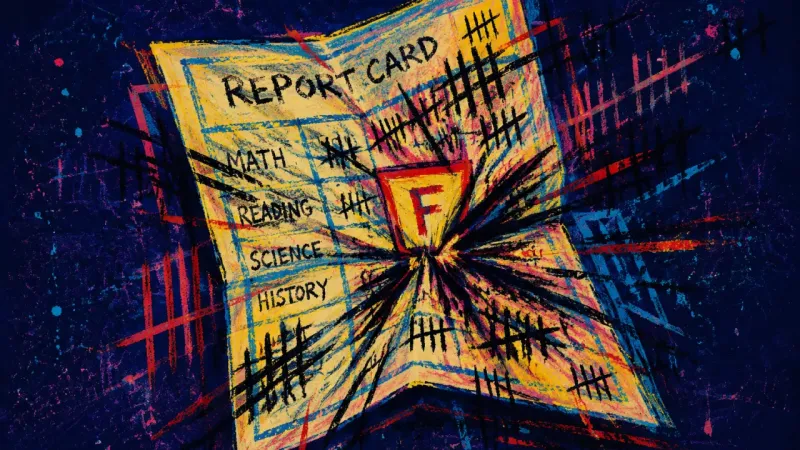
Choosing the Compass: Why I Used the Shadow Spread
I asked Emma to close the portal for one breath—not as a mystical ritual, just as a nervous-system intermission. While she rested one hand on her sternum and the other on the edge of her desk, I shuffled slowly, keeping her question in view: why does anything less than an A feel personal?
For this kind of reading, I used a four-card layout I call The Shadow Spread. This is the tarot spread I reach for when a good grade still feels like failure, because the real issue is not the mark alone. The issue is the hidden mechanism underneath the reaction: why evaluation lands like identity injury.
That is how tarot works best for me. The cards do not invent a feeling. They organize it. The Shadow Spread gives me the cleanest architecture for card meanings in context: the visible symptom at the top, the shadow driver beneath it, the corrective truth below that, and the grounded next step at the bottom. Laid out in a vertical line, the cards feel like a narrow staircase down into the pattern and back out again.
I told Emma what we were looking for. 'The first card will show what your brain does in the first five minutes after the mark posts. The second will show the hidden verdict underneath that reaction. The third is the truth that interrupts the pattern. The fourth shows the next steps—small, practical, usable, no personality overhaul required.'

The Missing 11% and the Private Courtroom
Position 1: The Part of the Screen She Couldn't Emotionally See
'Now we're looking at the card that represents the observable symptom from the diagnosis,' I said as I turned over the first card. 'Five of Cups, upright.'
I angled it toward the camera. 'This is your late-night portal moment almost frame for frame. In the card, the figure is locked onto what spilled. In your life, that is the missing 11%—the rubric, the comment bubbles, the exact question that cost marks. You see 89% post, skip straight past the fact that it is a strong mark, and reopen the feedback until the whole experience gets defined by what went missing rather than what went right.'
'The energy here is excess attention on loss, and a real deficiency in letting success land,' I told her. 'It's like zooming to 400% on one typo in a polished deck and calling the entire presentation a mess. Pride and deficiency are in the room together, but only one of them gets a chair.'
Emma gave a quick, almost offended laugh. 'Wow. Okay. That's accurate in a rude way.'
I smiled. 'Yes. Because the two cups still standing are the strong result you cannot emotionally count yet.' Her breath snagged, then she looked down at the calculator by her keyboard and nudged it away with one finger. That tiny motion told me the card had landed.
Position 2: When a Canvas Notification Becomes a Court Summons
I turned the next card. 'This position reveals the hidden root beneath the issue. Judgement, reversed.'
'This is the private courtroom,' I said. 'The grade is no longer just a grade. The page loads, and suddenly every mistake becomes evidence. It starts as fact: I lost marks on this question. Then it escalates: I should have known better. Then the verdict arrives: maybe I'm slipping. That's the reversed energy here—not balanced accountability, but blocked self-forgiveness and an inner judge turned into a sentencing machine.'
'This is why taking grades personally can feel so intense,' I continued. 'You're not only reviewing performance. You're moralizing it. Feedback becomes character. A normal academic result turns into a quiet trial about whether you're still smart, still exceptional, still allowed to feel secure in yourself.'
Her jaw visibly set before it loosened. First her shoulders froze, then her eyes slipped slightly out of focus as if she were replaying old portal checks, and then a quieter sentence came out. 'This is exactly what my brain does. I don't even notice when it goes from review to... trial.'
'Exactly,' I said. 'And that matters because perfection panic is not the same thing as motivation. When self-criticism dresses up as discipline, it can look productive for five minutes and still leave you more afraid of the next evaluation.'
When Justice Cut the Story Away
Position 3: The Fair Evaluator
When I reached the third card, the mood changed in the way it sometimes does when a chart finally calibrates. Even through a laptop screen, the room felt stiller. The laptop fan was suddenly loud. Outside her window, a streetcar bell rang and faded. I turned the card over. 'This position identifies the key corrective truth that interrupts the shadow pattern. Justice, upright.'
You know that late-night moment when the portal is still open, your calculator is out, and your brain keeps circling the missing 11% like it contains the real truth about you? That is the exact moment this card steps into.
'Justice asks a brutally clean question,' I said. 'What does this grade actually assess?' I named the sort of evidence this card cares about. 'Thesis clarity. One thinner example. A missed concept on one section. That's the paper. Then your fear adds the rest: you're slipping, you're not exceptional, don't relax, don't celebrate, don't be ordinary. The paper says X. Your fear says Y.'
My mind went, as it often does, to telescope calibration nights at the planetarium: the stars do not change because the lens fogs. Only the reading does. This is where I use my Orbital Resonance lens. Up to now, the grade notification and the old fear of being ordinary have been moving in lockstep, like two bodies hitting the same gravity pocket again and again. Justice breaks that resonance. It does not lower standards; it changes what the number is allowed to pull with it.
An 89% can measure a paper without measuring a person.
Stop turning every scale into a sentence against yourself; let Justice weigh the paper fairly so the score can become clarity instead of a verdict.
That is Justice in plain language: a grade can describe the paper without defining the person.
Emma didn't nod right away. Her fingers stopped above the edge of her laptop. Her breathing paused for one strange suspended beat. Then her gaze unfixed, like she was watching half a dozen late-night grade checks replay at once. When she finally spoke, there was heat in it. 'But if that's true, then I've been doing this to myself. Like... every single time.'
'Not on purpose,' I said gently. 'On pattern. There's a difference. Justice isn't here to shame you for having a pattern. It's here to separate the app's actual notification from the story your nervous system writes under it. You are not a report card in human form.'
I watched the reaction move through her in layers: the tight line of her mouth broke first, then her shoulders dropped a fraction, and then she let out the kind of exhale that sounds half like relief and half like grief. That mix matters. Clarity can feel kind, and it can still sting. When we step out of a punishing system inside ourselves, there is often a small dizzy space after the exit.
'So let's use the card immediately,' I said. 'Open one note on your phone. Two columns. 'What the grade says' and 'What I am adding.' Three bullets max. No identity words. If your chest tightens or you feel the urge to spiral, you stop there, close the tab, and come back later or not at all. That boundary is part of the medicine, not a failure of discipline.'
She typed. Slowly. 'What the grade says: I lost marks on thesis clarity. Needed one more example. Did well overall.' Her mouth twitched. 'What I am adding: I'm slipping. I'm less capable than I thought. If I accept this, I'll get lazy.'
'Exactly,' I said. 'Before the spiral finishes the story, Justice gives you one interruption. Reaction is fast. Review can be slower. This is the move from shame-driven score fixation to objective self-respect. The goal is not to care less. It's to punish yourself less while learning clearly.'
'Wait,' she said, softer now. 'That actually changes it.'
'Now use that lens on last week,' I told her. 'Was there a moment when this would've helped you feel different?'
She laughed once, but this time there was no edge on it. 'Literally 12:14 a.m. on Tuesday. If I'd done this then, I probably would've closed Quercus instead of rereading the same feedback four times.'
Position 4: The Learner Who Does Not Need a Verdict
I turned the final card. 'This position translates the insight into a grounded way forward. Page of Pentacles, upright.'
'I love this card for students,' I told her, showing the page holding one pentacle at eye level. 'Look at the visual difference from the Five of Cups. That figure stared at loss. This one studies what can be held. In modern life, this is you highlighting one professor comment, adding one line to Notion, maybe making five flashcards for the exact concept you missed, and then logging off. Not who am I because of this, but what can I learn from this?'
'The energy here is balanced Earth,' I said. 'Grounded, slow, usable. It doesn't want a dramatic identity fix. It wants one practical rep. When grades stop functioning as a self-worth audit, feedback becomes skill-building instead of punishment.'
Emma's face changed in the most important way possible: not dazzled, not tearful, just practical. 'Okay,' she said. 'That I could actually do this week.'
'Good,' I said. 'Because the healthier identity here is not flawless achiever. It's engaged student. That's sturdier. That's someone who can improve without needing every result to certify her value.'
The Specific-Not-Personal Review
By the time the four cards were on the table, this Shadow Spread tarot reading for perfectionistic grade anxiety and self-worth had made the mechanism visible. First came the symptom: lost-points obsession, where a good grade still feels like failure because attention collapses around what is missing. Under that sat the real engine: Judgement reversed, the hidden rule that says any non-A must explain your worth. Justice introduced the Fair Evaluator Shift and restored proportion. Then the Page of Pentacles carried that truth back into daily life as one grounded adjustment.
I told Emma the blind spot was not that she cared too much. It was that she had mistaken self-attack for accuracy. She kept using analysis to feel safe, but the extra scrutiny only kept the grade emotionally radioactive. The transformation direction was simple and hard at once: stop treating grades as evidence of worth and start treating them as information about one moment of performance. That is how we stop turning grades into self-worth evidence and start reviewing exam feedback without spiraling.
When I suggested a two-column review after future grades, she made a face. 'But I genuinely can't always give this ten minutes. If I open the portal, I can lose an hour.'
'Then we make the container smaller,' I said. 'Small is not weak. Small is what keeps the spiral from eating the whole night.'
- The Two-Column Grade Reality CheckAfter the next grade posts, open the feedback once and write two headers in your Notes app: 'What this grade says' and 'What this grade does not say.' Put three bullets under each using only evidence from the rubric or professor comments. Do it right there at your desk, and stop after ten minutes or sooner.If the review happens late at night, use my Earth-rotation perspective: wait until morning class, take one slow breath by a window, and remind yourself the planet turned without asking the grade to become your identity.
- The One-Comment Study TweakChoose one professor comment from this midterm and turn it into one tiny study experiment during your next library block—five flashcards, fifteen minutes on that question type, or one line in Notion that says 'Next time, I will test myself on thesis clarity before submitting.'If your brain says this is too small to matter, that is perfection panic talking. The goal is one grounded rep, not a full life reboot.
- Specific, Not Personal Self-TalkFor one assignment this week, write three observations using performance language only: what worked, what didn't, and what to try next. No words like smart, lazy, gifted, or failure.If identity language slips in, cross it out and restart once. Specific feedback helps. Character verdicts don't.
That was my actionable advice, but it was also the deeper promise of the reading: you do not have to lower your standards to stop taking grades personally. You only have to let the paper stay the paper.
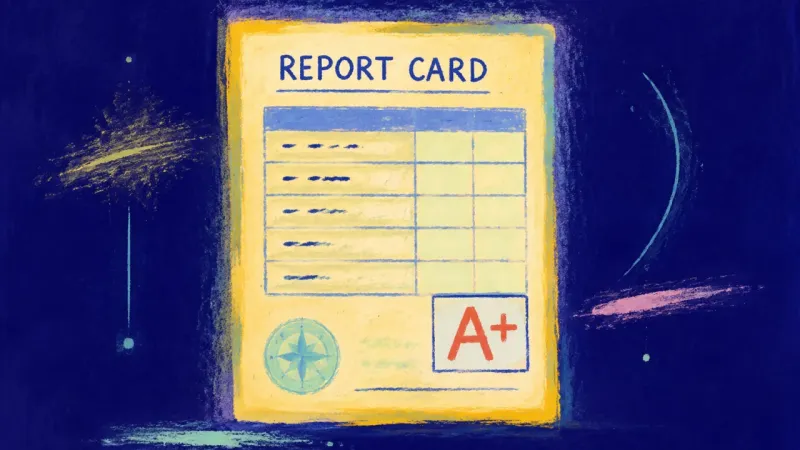
A Week Later, the Scale Rested
A week later, Emma sent me a screenshot from Robarts Library. Not the portal—her Notes app. Two neat columns. One highlighted professor comment. One Notion line for the next paper. She told me she still felt the first chest-drop when she saw new feedback, but this time she did not turn it into a full self-worth audit.
Her proof was small and real: she slept a full night after reviewing a quiz, then woke with the old thought—what if I'm getting soft?—and laughed before it could run the room.
That is the Journey to Clarity I trust most. Not instant confidence. Not pretending a grade never hurts. Just the clean shift from inner verdict to fair evaluation, and from fair evaluation to grounded learning.
If one number has ever made your chest drop and your mind start building a whole case about who you are, the pain is probably not only about the grade. It is also about how fast a moment of performance gets mistaken for proof of your value.
If this result did not get to decide who you are, what is one small thing it might quietly teach you before you close the tab and let the scale rest?