When a Slack Ping Feels Like a Grade, Learning to Read the Ask

The 3:17 p.m. Red Badge: when workplace notification panic turns a neutral Slack ping into report-card mode
If you live inside Slack, Jira, and Google Calendar but still draft a two-line response in Notes first, this may be less about time management and more about performance-based self-worth. That was the energy in the room when Maya (name changed for privacy) sat across from me and asked, almost embarrassed by how ordinary the trigger sounded, why a simple Slack ping could knock her sideways.
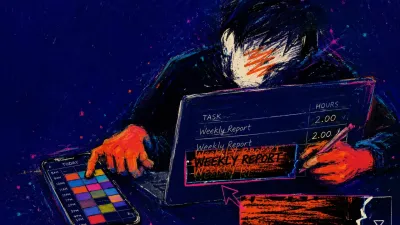
She told me about 3:17 p.m. on a Wednesday in a glass-walled King West office in Toronto: fluorescent lights buzzing overhead, AC drying the air, a spreadsheet half-built on her screen when the red badge lit up. Her cursor froze over one cell. Before she opened the message, she had already clicked into three old threads, checked a file title twice, and opened Apple Notes to draft a safer reply. She wanted it to feel like normal collaboration. Her body had already cast it as a summons.
I hear this particular workplace notification panic that turns a neutral Slack ping into report-card mode more often than people think, and it always has the same strange split-screen quality: outwardly competent, inwardly braced. Maya said, “I know it is probably nothing, but my body does not believe that.” For her, anticipatory dread felt like an elevator drop that never reached the lobby—stomach falling, jaw locking, shoulders climbing, the rest of her suspended there waiting for impact.
I nodded. A ping can be small and still feel huge in your body. I told her I was not interested in making the moment more dramatic than it was, and I was definitely not going to sell her the idea that Slack had mystical power over her life. What I wanted to do was simpler: sit beside the scene with her, look at it from a cleaner angle, and help her find the cut between the message itself and the grading script it woke up. “Let’s make a map,” I said. “Not so the ping controls the story, but so you can direct the next scene with more clarity.”

Choosing the Bridge: a Situation-Obstacle-Advice-Outcome spread for Slack anxiety at work
I asked her to plant both feet on the floor, take one full breath, and hold one recent Slack moment in mind while I shuffled. I use tarot this way a lot: not as a spooky verdict machine, but the way a filmmaker uses scene cards on a wall. It helps me see where the tension actually turns.
For this reading, I chose the Situation-Obstacle-Advice-Outcome spread. It is the smallest structure that can still hold this whole loop without adding noise: the visible symptom, the deeper blocker, the corrective perspective, and the grounded habit that makes the insight usable. A timeline spread would have missed the truth of this problem, which is that the whole pattern can happen in ten seconds between a red badge and a reply box.
I laid the cards left to right in a clean line, like a short bridge across a stress spike. The first card would show me the observable report-card reaction. The second would reveal the older judgment script under it. The third—the hinge of the spread—would show the inner stance that separates facts from self-judgment. The fourth would translate that shift into a habit steady enough to survive a random Thursday at 11:12 a.m.
Reading the Message Under the Message
The Wind Before the Words
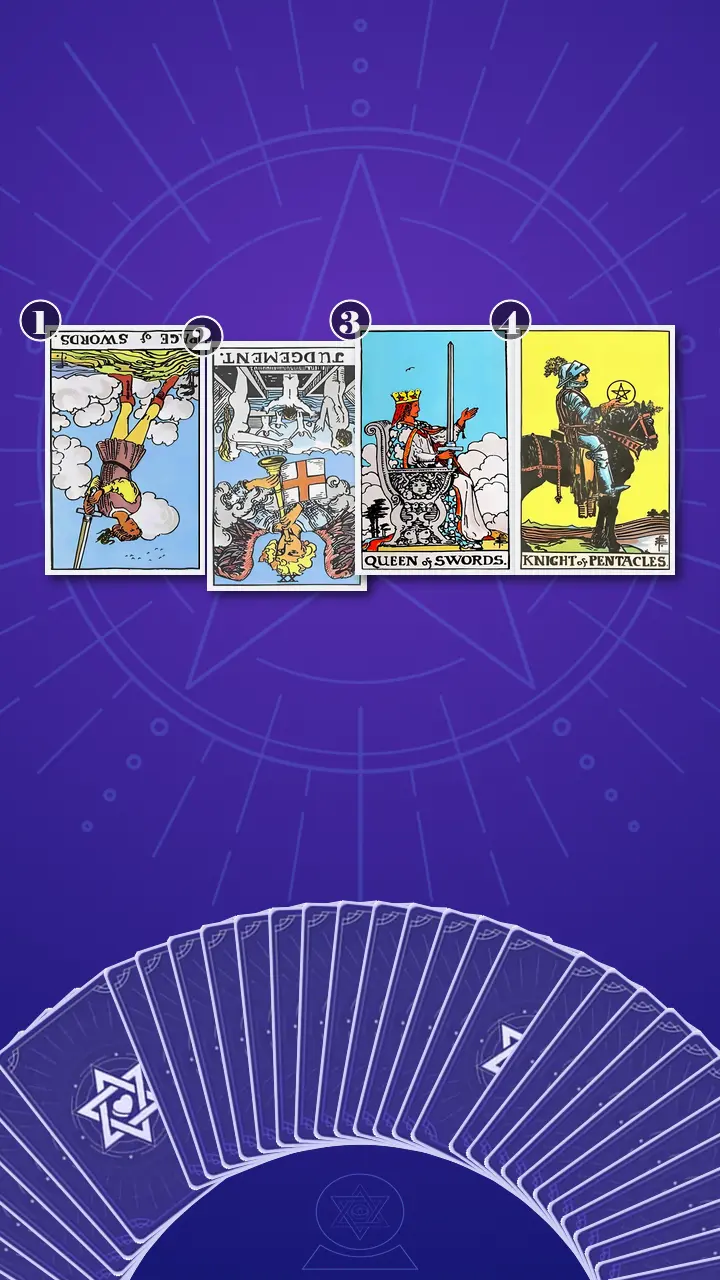
I turned over the first card and told her, “This is the position that presents the observable report-card reaction: freezing, scanning for what was missed, and overediting the reply when a ping appears.”
The card was the Page of Swords, reversed.
I could feel the accuracy of it immediately. This card is all watchfulness and mental weather, and reversed it becomes jumpy, overinterpretive, defensively smart. I described the exact modern scene it echoed: a red Slack badge lands while she is mid-spreadsheet, and instead of opening the chat, she switches tabs, rereads yesterday’s thread, checks the latest file version, and drafts a reply in Notes so she can sound calm and prepared—before she even knows whether the message is just “Can you resend the link?” It was The Bear ticket-printer energy, except the kitchen was a Slack workspace.
In energy terms, this was excess Air in a contracted body. Thought outrunning evidence. The sideways stance of the Page showed me her nervous system looking everywhere except the message itself. The wind-whipped sky was the tab storm in her head: Wait—what did I miss? What am I about to have to explain? Collaboration had turned into threat before the facts even arrived.
Maya gave a quick, almost pained laugh and shook her head. “That is annoyingly specific,” she said, thumb rubbing the paper sleeve on her cup. “I literally do the Notes thing.” I smiled, because that tight laugh is often the sound of instant self-recognition.
The Office Bell That Isn’t There
I turned to the second card. “This is the position that reveals the deeper blocker beneath the visible reaction: the old judgment script and underlying fear that make a neutral message feel like a grade.”
The card was Judgement, reversed.
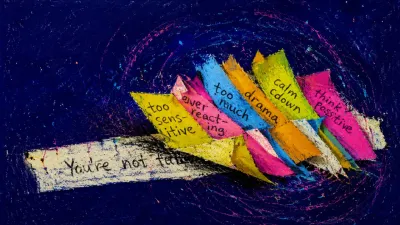
This one always changes the room. I told her that when a manager types “got a sec?” and her mind instantly reviews the last seventy-two hours of work, that is this card in plain clothes. Which deadline? Which deck? Which detail did I miss? In a modern office, Judgement reversed is like hearing the school bell inside Slack. Or like Google Docs suggestion mode permanently turned on in your head, even when nobody has opened comments.
Just as I said that, a phone on my windowsill buzzed once, and I watched her chin lift toward the sound before she caught herself. That tiny reflex told the whole story. You’re not reacting to Slack alone; you’re reacting to what Slack has learned to mean. In this card, the energy is blocked by an inner tribunal. A neutral ping becomes a summons. A simple workflow question becomes evidence review. No wonder clarifying questions feel risky; by the time she thinks of asking one, she already feels as if she is on trial.
As an artist, I have learned that the body enters a scene before the dialogue does. When I sketch tension, it almost always lands first in the jaw, the neck, the shoulders. Maya’s dropped stomach, hot neck, and jaw clench were not random overreactions to me; they were subtitles for an older story. She exhaled slowly and looked down at the table. “That explains why praise never sticks,” she said. “The next ping resets me right back into proving mode.”
When the Queen of Swords Lifted the Blade
When I turned the third card, the room went very still. Winter light had thinned across the table, and for a second the pale edge of the card looked sharper than the rest of the deck. I told her, “This is the position that shows the key shift that interrupts the pattern: the inner stance needed to separate facts from self-judgment and restore adult-to-adult perspective.”
The card was the Queen of Swords, upright.
If anyone ever asks me what the Queen of Swords means for work communication anxiety, this is it: she is the adult part of you that reads for facts before she reads for shame. I described Maya opening the ping, reading it once, naming the factual ask in a short phrase—Need updated timeline—and answering that ask directly. No pre-apology. No tone padding. No secret attempt to prove she is permanently on top of everything. The Queen’s upright sword is the clean cut between what was said and what was feared; her open hand is responsiveness without submission.
This was where I used the lens I call a Somatic Narrative Audit. I told Maya that I start with the body’s opening credits: the stomach drop, the jaw lock, the shoulders rising toward the ears. Those signals are not proof that danger is present; they are proof that an old script has started rolling. Then I move into what I call Sense-making Reconstruction: same ping, different plot. We are not deleting the reaction. We are changing the meaning the reaction gets to write. Read the ask, not the imagined grade.
When it is 3:17 p.m., the red badge pops, you leave the spreadsheet half-finished, open three old threads, and feel your jaw lock before you even know what the message says. Not every ping deserves a courtroom. Some deserve a sentence, a link, or a simple “I’ll check and get back to you.”
Stop treating every ping like a verdict; let the Queen of Swords lift her blade between story and signal so you can answer from clarity, not compliance.
For a second Maya did not move. First came the freeze: her breath stalled halfway in, and her fingers hovered above the rim of her mug as if the room had buffered. Then came the cognitive seep, the look I know so well—eyes losing focus just enough to replay a half-dozen office moments at once, like clips laid over each other in an edit timeline. When she looked back at me, there was resistance before relief. “But if I do that,” she said, voice suddenly sharper, “doesn’t that mean I’ve been putting myself through all this for way too long?”
I shook my head. “It means your system built a protection habit around being caught off guard. That makes sense. It just doesn’t fit this scene anymore.” Her jaw worked once. Then I saw the release happen in layers: shoulders lowering a notch, the held breath leaving, the strange almost-dizzy softness that comes when a burden turns out to have handles. There was vulnerability in it too, because clarity has its own kind of exposure. I asked her, “Now, with this new lens, think back to last week. Was there a moment this could have changed the feeling?” She let out a disbelieving laugh. “Yes. Someone asked if the latest deck was final. I could have written, ‘Uploaded in Drive.’ I turned it into a paragraph.”
That was the hinge of the whole reading: not from feeling nothing, but from anticipatory dread and instant self-auditing to adult-to-adult clarity and steadier calm. The Queen was not asking her to become colder. She was asking her to become more exact.
The Boring Rhythm That Gives the Day Back
I turned the final card and said, “This is the position that translates insight into practice by showing the grounded habit that can make work communication feel ordinary again.”
The card was the Knight of Pentacles, upright.
I loved seeing him here. After all that jumpy Air, this was Earth arriving with both feet on the ground. I translated it into a workday image immediately: read once, answer or name the next step, return to the original task. The still horse and cultivated field told me the cure was not more analysis. It was method. Safety through repetition, not through perfect anticipation.
I told her this is where my strategy of Rhythm Renarration becomes useful. We do not recover from a Slack spiral by demanding that the body feel chill on command. We recover by giving the body a boring beat to land in. A pinned SOP for the nervous system. A saved response template instead of reinventing your competence every time. Not every message needs a dissertation. A clear reply is allowed to be shorter than your fear wants.
Maya leaned back for the first time that session. “So the goal isn’t to become the kind of person who never flinches,” she said. “It’s to have a route when I do.” Exactly. That is the Knight. He does not perform calm. He practices enough steadiness that the day stops being ruled by mini-adrenaline spikes.
From Verdict Thinking to Workflow Thinking
When I stepped back from the cards, the story was clean. The Page of Swords reversed showed the visible flare-up: the frozen cursor, the Notes draft, the ten-minute detour before a two-line reply. Judgement reversed showed why it feels so loaded: an old evaluator voice turns a coworker message into a private performance review. The Queen of Swords offered the antidote by separating signal from story. And the Knight of Pentacles grounded that insight into behavior, because clarity only changes a workday when it has a rhythm.
The blind spot was subtle but important: Maya had been mistaking bracing for professionalism. On the surface, overpreparing looked responsible. Underneath, it was a way of trying to prevent criticism before it existed. The transformation direction was simple and hard at the same time: stop treating every notification as an evaluation of worth, and start treating it as a request that deserves a clear, proportionate response. In film terms, the scene was never really about Slack. It was about an old classroom soundtrack bleeding into a modern office.
Before I gave her next steps, she made the most real objection possible. “But I don’t always have five calm minutes for a routine,” she said. “Sometimes it’s just ping after ping.” I laughed softly. “Good,” I said. “Then we are not building a wellness ritual. We are building something that can survive 11:12 on a Thursday. One breath. One note. One return to the task. That’s enough.”
So I gave her a simple routine for workplace notification anxiety—small enough to use, practical enough to trust:
- The Message-Not-Verdict Pause On the next unexpected Slack ping during work hours, quietly say, This is a message, not a verdict, take one full breath, and open the message before you open old threads, files, or Notes. Start with a peer message or another low-stakes chat. If your stomach still drops, that does not mean the practice failed. The win is catching the old script before it writes the whole scene.
- The Fact-First Reply Keep a sticky note beside your laptop for one workweek that says Fact / Ask / Reply. Once a day, on one low-stakes message, write the ask in five words or fewer, then answer only that ask or name the next step. If the resistance says you sound too blunt, remember: read the ask, not the imagined grade. You can always say, I’ll check and get back to you, instead of forcing instant perfection.
- The Return-to-Task Bookmark Use a two-step Slack rule for the week: read once, answer or say when you will reply, then place your cursor back on the exact spreadsheet cell, doc line, or browser tab you were in before the ping. Do not turn this into a gorgeous Notion system. A tiny repeatable ritual beats an impressive one you abandon by Tuesday.

A Week Later, the Cursor Returned to the Same Cell
A week later, Maya sent me a message from her desk. “Manager pinged me for an updated timeline,” she wrote. “My shoulders still went up for a second. I used the sticky note, answered in one line, and put my cursor back in the same cell. It felt weirdly exposed for about three seconds. Then... normal.”
I loved that message because it was modest. No grand personality transplant. No fake certainty. Just the first believable proof. That is what a real Journey to Clarity usually looks like: not becoming fearless, but becoming less available for an old script to direct the whole day. In her case, it was the movement from anticipatory dread and instant self-auditing to adult-to-adult clarity and steadier calm, one proportionate reply at a time.
When a tiny notification can make your stomach drop before you have even read the words, the hardest part is not the message itself—it is how fast your whole sense of competence goes on trial.
If you gave the next ping one clean breath and let the Queen of Swords stand between the red badge and the old school bell, what might your most proportionate reply sound like?
Every reading at AceTarot is a Journey to connect with inner wisdom and empower next step.
Learn more about our Journey to Clarity.