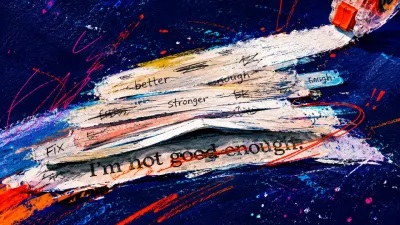
From Brightspace Freeze to a Fairer Choice: Standards Over Guilt
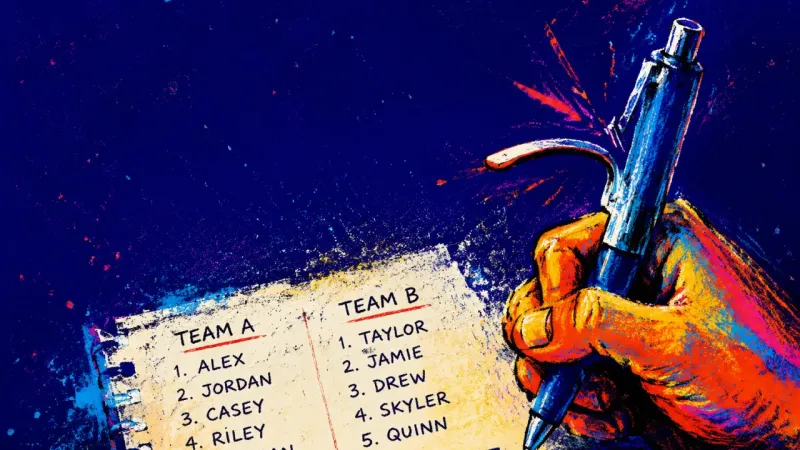
The 4:18 PM Brightspace Freeze
If you're a third-year uni student in Toronto staring at the Brightspace group sign-up after lecture while everyone else somehow acts normal, and the second a friend says, 'we should all be in the same group,' your chest tightens with people-pleasing choice paralysis, this was Jordan's problem when she sat across from me.
Jordan (name changed for privacy) was twenty-one, sharp, funny, visibly tired, and by the time she described Tuesday at 4:18 PM I could hear the lecture hall in the room with us: the projector fan still humming, a water bottle clanging into someone's backpack, her cursor hovering between two group columns while the roster kept changing. She told me she had stood near the back row with Brightspace open, typed half a message into the class chat, deleted it, and walked out unsigned.
'I know this is just a sign-up,' she said, 'but it feels weirdly loaded.'
It wasn't just a sign-up. It was group project sign-up anxiety in its most familiar form: staying with friends and feeling included, or joining classmates more likely to do their part and protecting the project outcome. Her anxiety had that specific texture I see so often in campus decisions, like standing in a subway doorway with people behind you, unable to step left or right because either move feels too public. She wanted social ease, and she wanted not to become the unpaid project manager at 11:38 p.m. three weeks later. Her chest was tight, her jaw was hard, and the whole choice sat in her stomach like a knot pulled one turn too far.
I nodded. 'It is not just a sign-up when the click also feels social,' I told her. 'So let's not shame the freeze. Let's make a map of the fog and find the clarity that's already trying to get your attention.'

Choosing the Compass: A Decision Cross for the Click That Feels Like a Loyalty Test
I asked her to put both feet on the floor, take one slow breath, and hold the real question in mind: not Which group will keep every vibe intact?, but Which group is fair to my time and effort? Then I shuffled slowly. I never use ritual as theatre. I use it the way I once used a clean spreadsheet on a noisy trading floor: to separate signal from adrenaline.
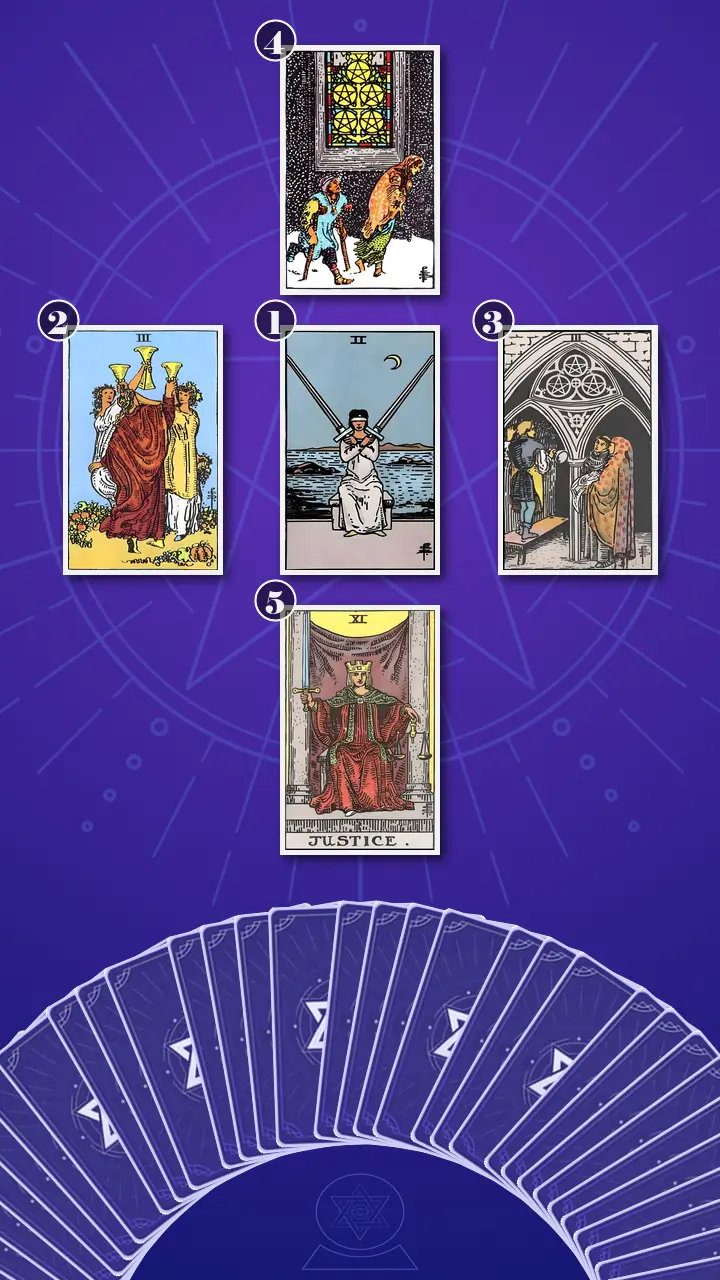
For this reading I chose the Decision Cross · Context Edition, a five-card decision tarot spread for choosing between two live options without turning a campus problem into an oversized prophecy. This is how tarot works at its best for me: not by removing your agency, but by organizing the pressure. One card names the present stalemate. Two cards compare the social pull and the practical pull. One card shows the hidden fear making the choice feel heavier than it is. The last card gives the principle that can turn indecision into a next step.
Jordan's question needed exactly that structure because the split was so specific: friends versus reliable classmates. I told her I would read the center card as the live knot, the left and right cards as the two different models of collaboration, the card above as the emotional weather hanging over everything, and the card below as the floor she could finally stand on.
Reading the Balance Beam: Card Meanings in Context
Position 1: The Doorway You Keep Standing In
I turned over the card representing the live stalemate between belonging and reliable collaboration. It was the Two of Swords, upright.
I didn't have to reach far to translate it. This was Jordan in that Toronto lecture hall after class with Brightspace open, comparing two team lists, refreshing the page, checking who had signed up where, and telling herself she still needed more information. But the card's blindfold told the real story: she wasn't missing data. She was acting like the problem was missing data because feeling the social consequence of choosing felt worse than waiting. The crossed swords pressed over the chest mirrored exactly what her body was already doing—bracing against conflict before any actual conflict had even happened.
In energy terms, this was blocked Air. Too much comparison, not enough permission to decide. It had that Severance hallway-between-two-doors feeling: not true confusion, just the eerie pause before one door closes. I told her, 'Delay feels neutral, but it still lets the deadline choose for you.'
Jordan gave a short laugh that landed bitter. 'Wow. That's accurate enough to be rude.'
'Good,' I said, and smiled. 'Then we're naming the pattern without shaming it. You're not failing at decision-making. You're using overthinking as a shield from a socially loud moment.'
Position 2: The Group Chat Where the Jokes Already Land
Next I turned over the card examining the emotional and relational pull of staying with friends and feeling included. It was the Three of Cups, upright.
This card was warm for a reason. I could feel the easy version of the project as she described it: familiar chat energy, fewer awkward explanations, inside jokes after class, the comfort of being with people who already know your rhythm. The raised cups in the card's circle said, very plainly, 'You want belonging, and that want is real.' There was nothing fake or shallow about that.
But I also told her where the energy tipped from balance into excess. Three of Cups becomes misleading when relief gets mistaken for compatibility. Like choosing the group chat where the jokes already land even though nobody has opened the shared doc yet, this option promised emotional ease first. Social ease and reliable teamwork are not the same thing.
Her thumb moved slowly around the edge of her water glass. 'Yeah,' she said. 'That's the part that keeps getting me. I know I'd feel instantly better.'
'Exactly,' I said. 'So the question isn't whether this option feels good. It does. The question is whether it stays good once deadlines arrive.'
Position 3: The Google Doc With Real Owners
Then I turned over the card examining the practical and performance pull of joining classmates who actually do their part. It was the Three of Pentacles, upright.
This card changed the air in the room. Here was the stonemason, the blueprint, the visible work scene—the modern version is simple: a Google Doc with named owners, clear sections, respectful reply speed, and people who don't vanish until the night before the deadline. The attraction here wasn't glamour. It was the quiet luxury of not becoming the default project manager.
In energy terms, this was grounded Earth in balance, and more importantly, evidence Jordan had been underusing. Three of Pentacles asks for observable teamwork signals: who shows up prepared, who follows through, who respects deadlines without being chased. For a second my mind flashed back to the trading floor years ago. The best teams were never the smoothest talkers; they were the ones whose names next to a task actually meant the task would be done by close. Reliable collaboration has a texture. You can see it.
I asked her, 'When you stop asking who feels safest and ask who actually builds well with you, whose names come up first?' She answered immediately. No long pause, no spiral, just names. That speed told me plenty. The data was already there; guilt had simply been talking over it.
Position 4: The Cold Story Hanging Over Everything
I turned over the card revealing the hidden fear and scarcity story making the choice heavier than it was. It was the Five of Pentacles, upright.
The contrast in the card hit hard: cold figures outside, warmth glowing through the window behind them. In modern life, this is belonging scarcity. Jordan's mind had been taking one practical decision and inflating it into a whole social exile storyline: the group chat goes quiet, someone looks at her differently before lecture, she suddenly feels outside the easy circle. It was the old lunch-table fear showing up in a university hoodie.
I watched her shoulders climb a fraction just hearing it. 'This is why the sign-up sheet feels huge,' I said. 'Your brain is forecasting not just a project outcome, but a loss of belonging. Throat dry, stomach drop, shoulders up around your ears. That's not proof the practical choice is wrong. That's fear making the emotional weather look like the whole climate.'
She winced, looked down at the card, then let out one long breath. 'So this isn't really about the sign-up sheet.'
'Not only about the sign-up sheet,' I said. 'It's also about what your mind thinks awkwardness means. And not every awkward feeling means you're being unfair.'
Finding Clarity When Justice Took Off the Blindfold
Position 5: The Rubric That Ends the Spiral
When I reached for the final card, the late-afternoon light from my window fell across the table in a clean vertical stripe, almost sword-like. I turned over the card showing the deciding principle that could turn the whole dilemma into a clear next move. It was Justice, upright.
Before I said anything else, I pictured her again: half-turned near the back row after class, Brightspace open, class chat lighting up, cursor hovering between two teams while her jaw locked as if the page itself could betray someone. That is the exact moment the Two of Swords feeds on—the hope that one more minute of delay will save you from being seen choosing.
Do not keep the blindfold on just to avoid disappointing someone; weigh real reciprocity on Justice's scales and choose from clarity instead of guilt.
I let the sentence stay in the air.
Jordan went through the reaction in three clear beats. First, she froze—breath held high in her chest, fingers suspended around her glass. Then her gaze drifted past me, slightly unfocused, as if she were replaying half a dozen scenes at once: the friend who said 'we should all be in the same group,' the reliable classmate who always answered, the night-before scramble she already knew by heart. Then the feeling broke open. Her shoulders dropped. Her jaw loosened. The exhale that left her was shaky and quiet, the kind that carries relief and a little grief together. I could see the strange lightness that comes after putting down a weight you've been carrying so long it started to feel like part of your posture.
'But if I choose that way,' she said, and there was a quick flash of anger under the vulnerability, 'does that mean I've been calling guilt loyalty?'
'No,' I told her. 'It means you're getting more precise. The fair choice is not the one that keeps every vibe intact; it is the one that matches the reciprocity you can actually live with.'
Justice is where I naturally bring in one of my own tools: the 5-Minute Decision Tool I built back when every high-stakes choice came wrapped in social noise. Advantage. Risk. Breakthrough. Justice loves a clean tri-axis. Advantage: which group makes the work sustainable? Risk: where is the real chance of unequal labor, not the imaginary chance of two awkward minutes? Breakthrough: what part of you grows if you choose by standards instead of guilt management? That framework acts like a set of scales. It separates human worth from project fit, and suddenly the question becomes readable.
I asked her, 'Now, using that lens, think about last week. Was there already a moment when you knew who respected deadlines without being chased?' She nodded instantly. That mattered. This was the crossing point—from guilt-driven overthinking and belonging anxiety to self-respecting clarity and steadier self-trust. Not perfect certainty. Just honest sight.
From Insight to a One-Clean-Click Method
By the end of the spread, the story was clean. Two of Swords showed the freeze: trying to stay so neutral that nobody felt rejected. Three of Cups showed why the friends option felt magnetic: warmth, familiarity, and relief from social friction. Three of Pentacles showed the practical truth Jordan already knew from real behavior: some people communicate, contribute, and respect deadlines in ways that make a project sustainable. Five of Pentacles exposed the blind spot: she was treating possible awkwardness like proof of social exile. Justice turned the whole reading from guilt management to discernment.
I told her the key shift was simple but not easy. She did not need to preserve every possible relationship outcome. She needed to choose the group that best matched her standards for effort, communication, and accountability. That is a fair decision. It is also a more adult one.
- Build the Justice Rubric Open your Notes app today and write only three standards: effort, communication, accountability. For each possible team, score those standards from 1 to 5 using only what you've actually observed in class, labs, past chats, or earlier projects. Do it wherever you are—lecture hall, library, TTC—and keep it under 5 minutes. If the list starts turning into a thesis, stop after one pass. You do not need more vibes; you need criteria.
- Run the 5-Minute Tri-Axis Check For your top two options, write one line each for Advantage, Risk, and Breakthrough. Advantage is workload sustainability. Risk is the most likely real cost. Breakthrough is the boundary or self-trust muscle this choice asks you to use. Then decide before the timer ends. Keep the answers brutally short. You are choosing a project structure, not ranking anyone's value as a person.
- Use a Boundary-Without-Backstory Script If friends ask why, say one clean sentence: 'I picked based on work style for this project, but I'm still around after class if you want to compare notes later.' Practice it once out loud on a walk so your body doesn't hear it for the first time in the actual moment. If nobody asks, let the choice stand. Notice the urge to over-explain. A respectful sentence is enough.

A Week Later: The Quiet Proof
Five days later, Jordan sent me a screenshot from the TTC. At the top of her Notes app were three words—effort, communication, accountability—and beneath them, a tiny checkmark beside the reliable team. 'I signed up before Bloor-Yonge,' she wrote. 'One friend asked. I used the sentence. It was awkward for maybe two minutes, and then we started assigning sections like actual adults.'
That, to me, was the whole journey to clarity in miniature. Not a magical rescue. Not every feeling solved. Just one clean choice, made by her, with better evidence, clearer standards, and a nervous system no longer trying to outsource the decision to the hallway. When tarot is useful, this is why: it gives language and structure back to the person living the choice.
The next morning still brought a flicker of doubt—what if they think I'm fake?—but this time she told me she smiled, got dressed, and went to class anyway. Clear does not mean fearless. It means fear no longer gets the final vote.
Sometimes what makes your chest lock up is not the project itself, but the feeling that one ordinary choice might cost you either belonging or your peace.
If effort, communication, and reciprocity got one honest vote in this decision, what would your next clean click look like?
Every reading at AceTarot is a Journey to connect with inner wisdom and empower next step.
Learn more about our Journey to Clarity.