Two Draft Emails at Midnight—Choosing Receipts Over Prestige, Then Sending

Finding Clarity in the Two-Draft A/B Test
You have two rec request drafts ready to go, but you keep toggling between them and the professors’ profiles like you’re doing prestige math instead of sending the email.
Jordan (name changed for privacy) said it like a confession, shoulders tucked in as if their own words might overhear them.
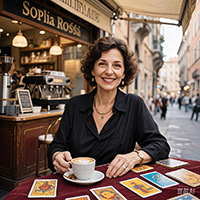
We were at my café—my little Italian corner on a Toronto street where the espresso smell seems to get into the bricks. Outside, winter light was already thinning; inside, the grinder’s burrs whirred and stopped, whirred and stopped, like a nervous thought pattern you can’t quite interrupt.
Jordan described their Wednesday night in detail: 9:43 PM on the couch, CN Tower faint in the window, laptop fan humming, screen too bright. Two Gmail tabs open—“Request – Prof. Big Name” and “Request – Prof. Knows Me.” Faculty bio page open in another tab, a GradCafe thread in another, LinkedIn in another. Their thumb kept twitching on the trackpad, hovering toward Send and retreating.
“It’s so stupid,” they said, voice tight. “I’ve rewritten the opener like… five times. ‘Confident but not weird.’ And I just want the safest choice. If I choose wrong, I’m exposing myself.”
Self-doubt, in Jordan’s body, wasn’t abstract. It was a throat that felt cinched like a drawstring bag. A chest holding air hostage right before the click. Hands that couldn’t rest—switching tabs the way you’d worry a loose thread on a sweater until it frays.
I set a small demitasse down between us, the crema still settling. “Nothing about this is stupid,” I said. “Your nervous system is treating ‘send’ like a public test of whether you belong. Let’s make this smaller and clearer. We’re going to map the decision, name what’s inflating it, and leave with next steps you can actually do.”

Choosing the Compass: The Decision Cross Spread
I asked Jordan to take one slow exhale—no mysticism, just a reset that tells the body, we are here. While I shuffled, I watched their shoulders: up near their ears on the inhale, dropping a millimeter on the exhale. That millimeter matters.
“For this,” I told them, “I want to use a Decision Cross spread.”
And for you reading this: the reason I like the Decision Cross for grad school recommendation letter anxiety is simple. When you’re stuck between two concrete options—ask the big-name professor vs ask the professor who knows your work—you don’t need a sprawling layout that creates more complexity. You need a clean comparison, plus one position that exposes the hidden driver (the fear-story) that makes a normal email feel like a courtroom.
Here’s the map we used:
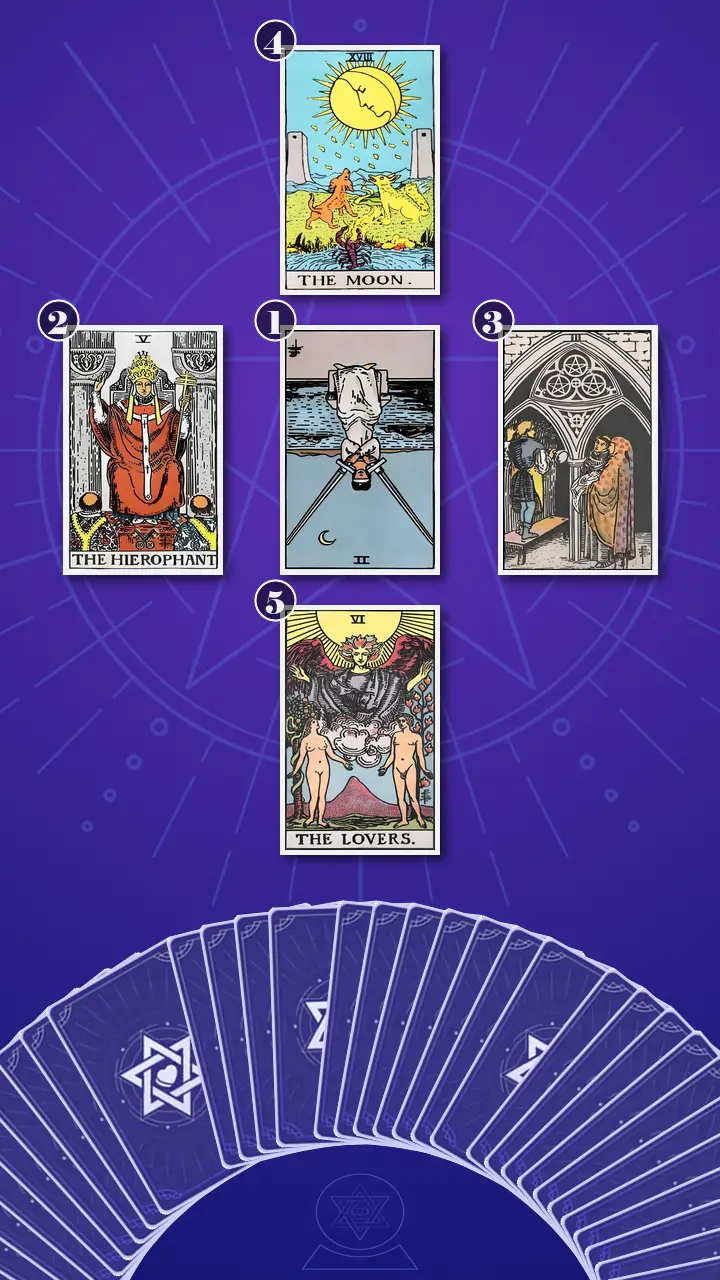
Card 1 sits in the center: your current stuck pattern—what you’re doing instead of sending. Card 2 is Path A: the big-name professor option and what it’s really offering. Card 3 is Path B: the professor who knows you and what that support actually looks like. Card 4 hangs above as the hidden influence—the assumption or fear that’s steering the whole thing. Card 5 anchors below as advice: the healthiest way to decide and the next communication step.
Reading the Map: Card Meanings in Context
Position 1 — The Loop That Pretends to Be “Preparation”
“Now flipping over is the card that represents Your current state in the decision: the specific way the hesitation shows up in communication and behavior.”
Two of Swords, reversed.
I didn’t even have to reach for metaphor—Jordan had already been living inside this card. I said, “This is 10:58 PM in your Toronto apartment, two Gmail tabs open, rewriting the first line to sound ‘confident but not presumptuous,’ bouncing to the faculty page, then back, then to GradCafe, hands restless, throat tight. Forty-five minutes polishing a message you’re too scared to send—because pressing ‘send’ turns a draft into something that can talk back.”
In the reversed position, the Two of Swords isn’t calm neutrality. It’s blocked Air: thinking as self-protection that has started to drain you. The blindfold energy here isn’t “I don’t know what to do”—it’s “If I keep adjusting the wording, I don’t have to feel what a reply might mean.”
“You’re not stuck on two professors—you’re stuck between prestige-as-safety and specifics-as-trust,” I said, gently but plainly. “And I want to name something else too: you’re trying to write a guarantee. An email can’t do that.”
Jordan gave a small laugh that landed bitterly, like it surprised them. “That’s… yeah. That’s exactly it. It’s kind of brutal to hear out loud.” Their fingers pinched the napkin edge, then released it, then pinched again—micro-movements of a mind trying to regain control.
I nodded. “Brutal, but not blaming. This is your system trying to keep you safe by not choosing. The posture protects you—but it also freezes you.”
Position 2 — Path A, The Passport Stamp Fantasy
“Now flipping over is the card that represents Path A: the big-name professor option and what that choice is really offering you.”
The Hierophant, upright.
I said, “This is you picturing the big-name professor’s letter like a passport stamp—letterhead, reputation, a signature that an admissions committee recognizes instantly. Relief, before you even hit send.”
The Hierophant upright is structure and institutional legitimacy in balance—Earth energy that can be stabilizing. But it also has a shadow when you’re already feeling not-enough: it can turn into approval-chasing, performing ‘the perfect applicant’ to deserve access.
“And when you try to write that email,” I continued, “you start overcompensating: extra formal tone, too many qualifiers, too much context, attaching things they didn’t ask for. Because you’re not just requesting a letter—you’re trying to earn legitimacy from someone who might mostly remember you as a face in a lecture hall.”
Jordan’s mouth tightened. They didn’t deny it; they looked at the card like it had read their browser history.
“This path can work,” I added. “But the question is: do they have enough real material about you to speak in specifics? Or are you choosing it because it quiets your fear for a minute?”
Position 3 — Path B, The Person With Receipts
“Now flipping over is the card that represents Path B: the professor who knows you option and what that choice is really offering you.”
Three of Pentacles, upright.
I said, “This is the email to the professor who’s seen your drafts, your questions, your follow-through. You can name the project you supported as an RA, the feedback you implemented, the moment you got sharper at methods or writing. Sending this feels less like auditioning and more like collaborating.”
Three of Pentacles is balanced Earth: witnessed competence, credibility built in community. This is the letter that gets written in verbs and details, not just adjectives.
“Think of it like work,” I told Jordan. “Who could write a performance review with actual examples of what you did under pressure? Who has seen how you think, not just that you showed up?”
The difference showed up in Jordan’s body before it showed up in their words. Their shoulders dropped a fraction—the kind of tiny release you see when someone stops trying to sell themselves from scratch. “It’s weird,” they said quietly. “When I imagine emailing them, it’s still vulnerable, but it’s… cleaner.”
“Exactly,” I said. “When it’s grounded in witnessed work, the email gets shorter. Clarity comes easier.”
Position 4 — The Moon-Fog That Inflates the Stakes
“Now flipping over is the card that represents Key factor to consider: the hidden fear, assumption, or missing information that most shapes this choice.”
The Moon, upright.
I said, “After you draft the emails, your brain runs a private film festival of worst-case outcomes. ‘What if they ignore me?’ ‘What if they reply with a polite no?’ ‘What if they say yes but it’s lukewarm?’ You read silence like judgement, and every unknown becomes a threat.”
Then I spoke it like a script—because The Moon always sounds like a script when it’s active:
“You hit refresh. No new mail. Your chest tightens. Your brain goes, ‘They saw it and hated it.’ Then you reread your CV, open Google Scholar, scroll LinkedIn, and suddenly you’re trying to replace ambiguity with certainty. But the uncertainty isn’t proof of danger; it’s just incomplete information.”
I paused, letting the café sounds fill the gap—milk steaming, a spoon clinking once against ceramic.
“A reply is information, not a verdict,” I said. “That’s the Moon reset.”
Jordan blinked hard. A three-beat chain moved across their face and body: (1) a brief freeze—breath held; (2) eyes unfocusing like they were replaying last night’s inbox refresh loop; (3) a long exhale through the nose, almost annoyed at how accurate it was. “I hate that I do that,” they murmured.
“You’re not bad for doing it,” I said. “You’re human under pressure. The card just asks you to separate facts from stories before you choose.”
When The Lovers Turned the Prestige Test Into Alignment
Position 5 — Advice That Builds Self-Trust
I touched the final card before turning it over. “This is the anchor,” I said. “The one that tells us how to decide without turning the outcome into a judgment of your worth.”
“Now flipping over is the card that represents Advice and integration: the healthiest way to decide and the next communication step you can take.”
The Lovers, upright.
The air in our little corner of the café seemed to go still. Even the grinder stayed quiet for a moment, as if the room understood we were at the hinge.
Setup: It’s late, you’ve got two drafts open, and your body is doing that tight-throat “don’t hit send” thing while you try to calculate the safest possible choice. You’re treating the ask like a prestige lottery where one wrong move exposes you, instead of like a professional communication you’re allowed to make.
Delivery:
Stop treating this as a prestige lottery and start making a values-based commitment to the person who can speak your name and your work out loud, like The Lovers choosing alignment over image.
I let that hang for a heartbeat, like espresso blooming after the first pour.
Reinforcement: Jordan’s reaction wasn’t immediate relief. First came a flicker of heat—eyes narrowing, jaw setting, the kind of small, defensive anger that shows up when a truth threatens a coping strategy. “But…,” they started, voice sharper, “if I don’t use the big-name prof, isn’t that like… wasting a chance? Like I’m being naive?”
I kept my voice calm. “That’s the part of you that equates ‘prestige’ with ‘safety’ speaking up. It did a job for you: it tried to protect you from rejection. But The Lovers is asking for something more grown-up than protection. It’s asking for alignment.”
Then I added the line the spread had been building toward—clean and unromantic, like a standard you can actually use: “The strongest letter comes from the person who can truthfully and specifically advocate for your work—not the one who only looks impressive at a distance.”
Jordan’s face changed in layers: pupils widening slightly; a swallow; their shoulders dropping as if they’d been holding a backpack they forgot was on. Then a strange, brief wobble—like dizziness—because clarity can feel like stepping out of a dark movie theater into daylight.
They pressed their palm to their chest without thinking, as if checking whether the tightness was still there. “So… it’s not that I’m ‘choosing wrong,’” they said, slower now. “It’s that I’m choosing what’s real.”
“Yes,” I said. “That’s the emotional shift: from contracted self-doubt and prestige-driven paralysis to values-led clarity. You build self-trust by committing to a choice you can stand behind—then following through.”
I leaned in slightly. “Now, with this new lens—alignment over image—think back to last week. Was there a moment, even a small one, where this would’ve changed how you felt? Maybe the second you opened GradCafe, or the moment your cursor hovered over Send?”
Jordan’s gaze went distant. “Monday night,” they said. “I had it ready. I was literally hovering. And I thought, ‘If they say no, it means I’m not built for this.’ If I’d thought ‘reply is data,’ I… I could’ve just sent it.”
“Exactly,” I said. “We’re not trying to erase vulnerability. We’re trying to stop turning vulnerability into a verdict.”
From Insight to Action: A Clear Recommendation Email You Can Send
I pulled the whole cross together in one story, the way I would describe a blend to someone deciding between beans.
“Here’s what the cards are saying,” I told Jordan. “Right now, your mind is using over-optimizing as self-protection (Two of Swords reversed). You’re torn between two kinds of ‘solid’: institutional credibility and name recognition (The Hierophant) versus witnessed competence and concrete advocacy (Three of Pentacles). The hidden ingredient making it taste so high-stakes is Moon-fog—uncertainty turning into self-doubt stories and inbox-refresh catastrophizing (The Moon). The way through is The Lovers: a values-based commitment that prioritizes honest specifics, then a clear, timely message that you send without reopening.”
“Your cognitive blind spot,” I added, “is believing there’s one optimal choice that can remove risk. That’s why you keep trying to calculate safety. The transformation direction is simpler: choose the recommender who can be specific, then communicate clearly and on time.”
Then I gave them a plan that didn’t require a personality transplant—just a cleaner process.
- Name the recommender in writing (tonight)Open your Notes app and type one sentence: “I’m asking [Prof. Name] for my rec letter.” Choose the person who can cite specific examples of your work—who has receipts, not just a reputation.Once it’s typed, no debating in the same sitting. If your brain asks for more tabs, that’s the spiral trying to renegotiate.
- Use the “three essentials” emailDraft (or edit) one clean request with only: (1) the ask, (2) the deadline, (3) why you’re asking them (one sentence with specifics—project, class, growth).Read it once out loud. If it’s clear, respectful, and on time—you’re allowed to stop optimizing.
- Set a 10-minute send timer (with a “no reopening” boundary)Set a timer for 10 minutes. When it ends, either press send or schedule-send for tomorrow morning at a specific time (e.g., 9:12 AM) so you can close the laptop tonight.After it’s sent/scheduled, physically close the laptop lid and do one slow exhale. Anxiety is allowed. Spiraling is optional.
Because I’m Sophia, and because my brain is wired through coffee, I layered in one more tool—my own way of making focus practical rather than aspirational.
“One more thing,” I said. “You do this loop late at night—your brain plus screen glare plus deadline pressure. That’s not your best decision-making window.”
I used my Focus Period Diagnosis—a simple check I’ve refined from years of watching caffeine and cognition dance together. “Tomorrow morning,” I told them, “when your body is less raw, do the final send from a calmer baseline. If you’re caffeine-sensitive, don’t do it after a late coffee. Do it after water and something small to eat. We want your nervous system steady, not spiked.”
Jordan nodded, not dramatically—just with the kind of small, practical agreement that signals a real shift from performance to process.

A Week Later: The Quiet Proof
Six days later, I got a message from Jordan while I was wiping down the espresso machine at closing. It was short—the kind of text you send when you don’t want to over-celebrate and jinx it.
“Sent it,” they wrote. “To the prof who knows my work. Three essentials. Scheduled for 9:12 AM like we said. Didn’t reopen. I still felt shaky after, but I walked to the corner, got air, and it passed.”
That’s what I look for after a reading: not a magical outcome, but a micro-proof of self-trust. Not certainty—ownership.
And if you’re staring at two drafted emails like they’re two versions of your future, the tightness in your chest isn’t about wording—it’s about the fear that one reply could confirm you were never “enough” to belong here.
If you let this be an alignment choice instead of a prestige test, what’s the smallest honest step you’d be willing to take in the next 24 hours—one sentence you could send without apologizing for wanting the opportunity?
Every reading at AceTarot is a Journey to connect with inner wisdom and empower next step.
Learn more about our Journey to Clarity.