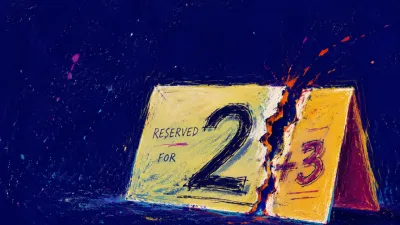
From Wrong-Order Shame to Steadier Self-Advocacy at the Counter
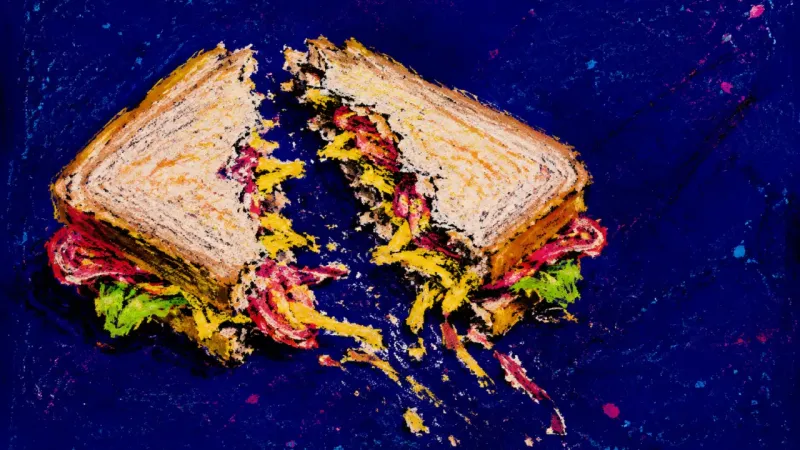
The 12:18 Lunch Break and the Polite Voice That Swallowed Itself
When Maya (name changed for privacy) sat across from me, I recognized the pattern immediately: the early-career city-worker kind of people pleasing that can handle client requests, Slack threads, and last-minute deck edits before noon, yet still goes completely soft at the exact moment a cashier asks whether the wrong lunch order is okay.
Her first sentence to me was almost embarrassingly direct. “Why do I eat the wrong order instead of sending it back?”
Then she gave me the scene. Tuesday, 12:18 p.m., down in the PATH under the office towers in downtown Toronto. She stepped aside with the receipt still in her hand, opened the warm paper bag, and saw chicken instead of the veggie sandwich she had ordered. The fluorescent lights buzzed overhead. The smell of toasted bread and mayo hit first. The wrapper felt greasy against her fingers. The cashier glanced over and asked, “Is that okay?”
She smiled too quickly, heard herself say, “Yeah, no worries,” and walked back to the office eating around what she could. By the time she got to her desk, her throat was tight, her stomach had turned into a small clenched fist, and embarrassment was moving through her like hot steam trapped under a takeaway lid—pressure building in a container designed to look perfectly sealed.
I nodded. “The wrong order isn’t the whole story,” I told her. “The swallowed sentence is. And a lot of self-abandonment happens in very polite voices.”
I could see the relief in her face at being met there instead of being given some thin internet advice about confidence. “Let’s not force this into a personality flaw,” I said. “Let’s make a map of what happens in those few seconds, and see whether we can get you to clarity instead of replay.”

Choosing the Shadow Spread for the Moment Before “It’s Fine”
I asked her to take one slow breath and hold the question in mind exactly as it lived in her body—not as a big theory about boundaries, but as that hot, throat-tight second at the counter. Then I shuffled slowly. For me, that small pause matters. It is less about ritual in the mystical sense than about helping the nervous system stop sprinting long enough to tell the truth.
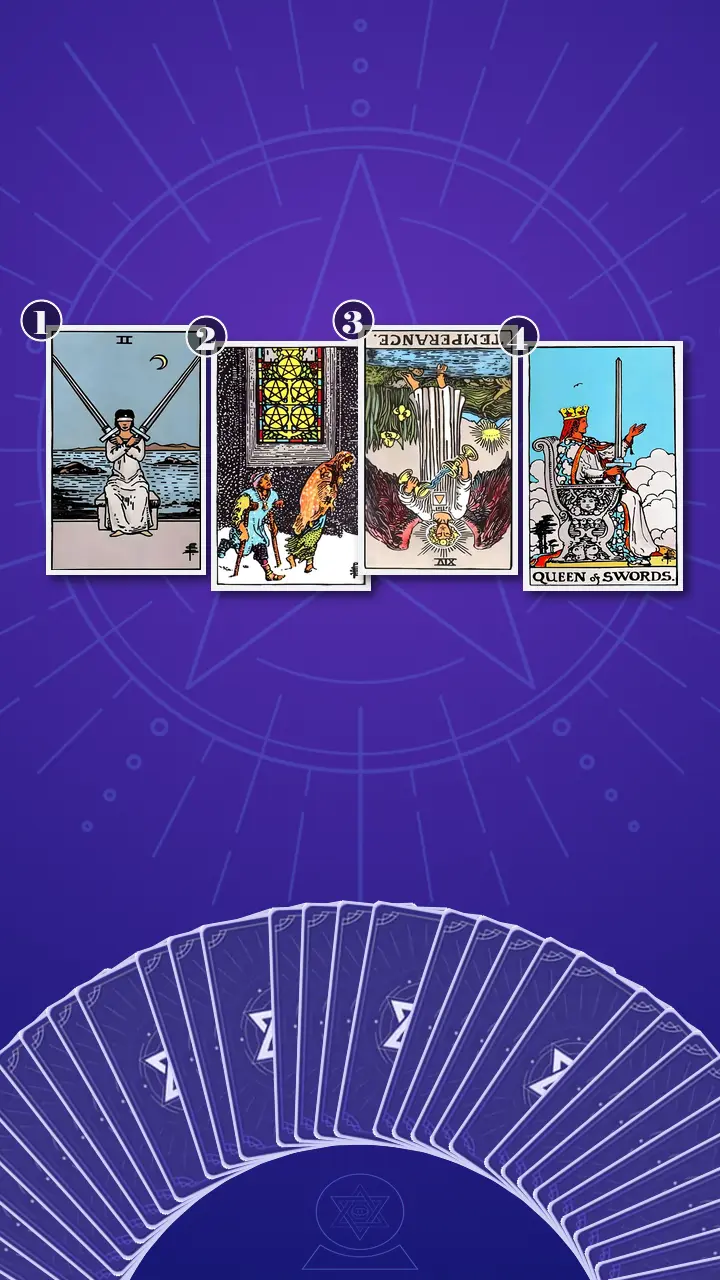
For this reading, I chose a four-card layout called The Shadow Spread.
When I want to understand why someone says “it’s fine” when it very much is not, I rarely reach for a sprawling spread. My archaeological training still shapes me here: when the site is precise, I dig a narrow trench, not a grand excavation. This issue is not really about food. It is about a visible freeze response, the hidden fear under it, the coping habit that keeps it going, and the one reclaiming quality that can restore agency. That is exactly what The Shadow Spread is built to show, and it is one of the clearest ways tarot helps with conflict avoidance in everyday situations.
I told her what I would be watching for. The first card would show the conscious pattern—the freeze itself. The second would reveal the shadow fear underneath, the reason a simple correction starts to feel like a threat to belonging. The third would show the harmony-preserving coping style that keeps her over-accommodating. And the fourth, the most important in this reading, would point to the boundary skill that turns self-silencing into clear, respectful self-advocacy.
Reading the Inner Corridor Between Silence and Speech
Position 1: The Freeze That Looks Like Being Easy
I turned over the first card. “This position shows the observable freeze response in low-stakes interactions,” I said. “And the card here is the Two of Swords, upright.”
I have always loved how brutally honest this card is. In modern life, it is the exact moment Maya described: standing at a busy lunch counter with the receipt in her hand, seeing immediately that the order is wrong, and then opening a split-screen simulation in her mind. One version has her speaking. Another has the cashier looking annoyed. A third has the whole line silently judging her. By the time she has edited the sentence three times, silence has already made the decision.
The energy here is blocked Air—thought trapped inside the body instead of becoming language. The blindfold is social tunnel vision under stress. The crossed swords are the two competing scripts locked across her chest: I want what I actually ordered versus I should be easy to deal with. The sea behind the figure is still, which is exactly the absurdity of this card: the room looks calm, but inside, everything has stalled.
“This,” I told her, “is like a typing cursor blinking in the message box while the moment to reply expires. Say something. No, wait. It’s too small. Just let it go. Want the correct order, but should be chill about it. That’s the whole three-second freeze.”
She let out a short, bitter laugh and looked down at the table. “That’s almost rude,” she said. “Because yes. That’s literally it.” Her fingers went straight to the cardboard sleeve on her coffee cup and started turning it back and forth.
“Good,” I said gently. “Not because it feels good, but because now we are looking at the real thing. This is micro people-pleasing around basic needs, and the card catches it exactly.”
Position 2: The Cold You Feel in a Warm Room
I turned the second card. “This position reveals the underlying fear that a basic correction will turn you into the difficult person and threaten worth or belonging. Here we have the Five of Pentacles, upright.”
This is one of those cards that looks harsher than the outer situation and truer than it at the same time. In practical life, the mix-up is minor. A restaurant can correct an order. A barista can remake a drink. A roommate can split an expense properly. Structurally, help is available. But the Five of Pentacles shows what the body believes before reason gets a vote: asking for the correct thing feels weirdly like stepping out into the cold and risking the other person’s warmth.
I pointed to the traditional image in the card: the cold street, the figures outside, the lit window behind them. “That glowing window is important,” I said. “It shows that correction may already be available. But your system still reads the moment as exile. It’s not about the sandwich anymore. It’s about whether you’re allowed to need anything.”
The energy here is scarcity in the realm of belonging. Not literal scarcity—social scarcity. A basic request becomes loaded with imagined consequences: Will I seem high-maintenance? Will I get that look? Will I stop being the easy one? It is like standing in a heated lobby while your nervous system insists you are out in the cold.
When I said that, her shoulders lifted slightly toward her ears and then fell again. She went very quiet. Her eyes shifted away from the cards, and I could almost see her replaying other scenes—coffee orders, delayed replies, little moments at work when she had over-softened a perfectly normal correction.
“You weren’t asking for too much,” I said. “You were turning a fact into guilt.”
Position 3: When Harmony Costs You Your Lunch
I turned the third card. “This position maps the harmony-preserving coping strategy that keeps you over-accommodating and reinforces the pattern. And here is Temperance, reversed.”
Of all the cards in the spread, this one made her inhale. Reversed Temperance is not about chaos in the loud dramatic sense. It is about overblending, overadjusting, and watering yourself down so thoroughly that the original need is technically present but barely detectable. In Maya’s real life, this is the moment after the mistake, when she smooths everything over before anyone else can react: “No worries, it’s fine.” The interaction stays pleasant on the surface. Then she spends the walk back to work composing the sentence she should have said.
I told her that this card always reminds me of editing an email for tone until the actual ask disappears. That is reversed Temperance in modern city life. You add three softeners, two apologies, and a self-deprecating joke, and by the end, everyone is comfortable except the person who had the need.
The energy here is distorted harmony—an excess of accommodation and a blockage of proportion. The card’s imagery says it beautifully: one foot on land, one in water, cups pouring back and forth. Reversed, that balancing act becomes strain. You are half in your own experience and half in managing everyone else’s comfort, and the result is self-dilution.
“The room stays calm,” I said, “but your stomach pays the bill.”
She closed her eyes for a second, gave a long exhale, and actually winced. “That line is awful,” she murmured, then looked at me with a tiny, helpless smile. “Because I do that everywhere. Restaurants, yes. But also in Slack. I rewrite a correction so much it barely exists.”
I nodded. “Exactly. This is why the issue is not really a sandwich. This is the shadow Harmonizer trying to keep everyone comfortable by mixing herself out of the picture.”
Then I gave her the first crack in the old pattern. “The antidote does not begin with becoming a different person,” I said. “It begins with one small experiment. Same counter. Same line. But this time the sentence is under ten words. Less essay, more signal.”
When the Queen of Swords Cut Through the Guilt
By the time I reached for the fourth card, the room had gone very still. Rain tapped lightly against the window beside us, and for a moment the city noise outside thinned into a low hush. Those tiny environmental pauses matter in readings. Sometimes the world seems to lean in exactly when a truth is ready to be heard.
Position 4: The Boundary Skill That Restores Agency
I turned the last card and felt the spread resolve at once. “This position points to the boundary skill and practical communication energy that turns self-silencing into clear, respectful advocacy,” I said. “And it is the Queen of Swords, upright.”
This was the antidote card, and it answered the whole reading in one image. Same busy line. Same wrong order. But now the fact stays a fact: “I ordered the vegetarian pasta—could you switch it, please?” No apology spiral. No cool-girl performance. No long explanation. The upright sword is the clean sentence. The open hand is courtesy without self-erasure. The windswept sky reminds me that mild discomfort can exist in the room without meaning anyone has done anything wrong.
“This,” I told her, “is not a conflict. This is information. Clear is not cruel.”
Ancient Reflection: Reading the Artifact, Not the Panic
At this point I used one of my oldest lenses, something I call Ancient Reflection. In archaeology, the first task is not to dramatize a site but to separate layers faithfully. The original event sits in one stratum; later debris settles on top. For a brief second, as I looked at the Queen’s raised sword, I had a flash of an old field season in Cyprus—my brush lifting dust from a boundary stone, the inscription becoming legible not because I forced it, but because I stopped confusing the line itself with everything that had collected over it. That is what this Queen does. She separates the event from the sediment of guilt.
I asked Maya to picture the lunch break again: fluorescent lights, receipt damp in her hand, the cashier already half-turned away, her body acting as if one simple sentence could change the whole social weather of the room.
You do not have to blur yourself to be liked; state the facts clearly and let the Queen's raised sword separate guilt from truth.
I let the sentence hang there for a beat.
First she went completely still. Her hand stopped halfway around the mug, her breath paused, and her eyes unfocused in that precise way people do when they are no longer with me in the room but back inside a fluorescent memory. Then came the cognitive break—not relief at first, but resistance. Her brows pulled together. “But if I do that,” she said quietly, “doesn’t that sound kind of cold?” The question sharpened, then softened as it left her. “And if it doesn’t… then what exactly have I been so scared of?” I watched the flush rise in her face and fade again. Her fingers slowly unclenched. One shoulder dropped, then the other. When she looked back at the card, her eyes were bright with that complicated expression I know well: part grief, part recognition, part relief. Real breakthroughs rarely feel tidy. There is often a strange, airy dizziness after them, because clarity does not only soothe; it also hands responsibility back. I asked her, “With this new lens, can you think of one moment last week that would have felt different if you had treated it as information instead of as a moral test?”
She nodded almost immediately. “Lunch, obviously,” she said. “But also a Slack thread yesterday. I started typing a correction and deleted it because I didn’t want to sound annoying. It’s the same thing, isn’t it?”
“Yes,” I said. “And that is the real shift here—from shame-driven self-silencing to calm, proportionate self-advocacy. Not from nice to mean. Not from soft to harsh. From self-erasure to self-location.”
From Insight to the Ten-Word Ask
Once all four cards were on the table, the story they told was remarkably clean. First, the Two of Swords: the visible freeze, where thought locks in the throat and silence chooses for you. Beneath that, the Five of Pentacles: the hidden belief that a simple correction could cost you warmth, approval, or your place in the interaction. Then Temperance reversed: the coping style of overmixing, overexplaining, and preserving harmony by making yourself smaller. Finally, the Queen of Swords: the reclaiming energy that restores agency through concise truth-telling. The wrong order was never the true engine of the suffering. The engine was the fear that speaking accurately would somehow make her the problem.
The blind spot, I told her, was proportion. She had been reading body activation as moral evidence. Tight throat, hot face, clenched stomach—her system treated those signals as proof that the request itself was wrong. But discomfort is not a verdict. Often it is just the sensation of an old social algorithm getting updated. The transformation direction was equally clear: stop treating a practical mismatch like a character test. Start treating it like a simple information exchange. Fact first. Guilt second, if it still insists on showing up—but not in the driver’s seat.
“Sometimes self-trust starts as a ten-word sentence,” I said, and then I gave her the smallest usable version of change.
- Inscription AffirmationTonight, in your Notes app, write one clean correction sentence: “I ordered the veggie sandwich—could you switch it, please?” Then read it out loud once at home while holding a mug, receipt, or takeaway cup. I call this my Inscription Affirmations practice because the line should feel carved, not negotiated.If your body spikes, do not add disclaimers to make yourself feel nicer. One clean read-through is enough for the first round.
- Celestial TrackingAt the next low-stakes mix-up—coffee, lunch pickup, app support, or a simple order error—hold the cup, plate, or receipt for one full breath and begin with one bridge phrase: “Actually…” When emotion starts spinning, orient by one fixed star: the fact that needs saying.You do not need to become ultra-confident in two seconds. You only need to interrupt autopilot before “it’s fine” escapes on its own.
- Prediction vs. Reality NoteAfter one small correction this week, open your phone within ten minutes and make two columns: “What I predicted would happen” and “What actually happened.” Do it on the TTC ride home, at your desk, or while waiting for the elevator—before the replay loop rewrites the scene.If someone is mildly off, record that too. Data is not defeat. It helps your nervous system learn proportion instead of fantasy.
She looked at the list and gave me the most honest response possible. “I can do that,” she said, then added, “I’ll probably still feel ridiculous.”
“Of course,” I said. “The first few times may feel far more dramatic in your body than they sound out loud. That does not mean the sentence is rude. It means your system is learning that belonging isn’t actually on trial every time you need something basic.”

A Week Later, the Quiet Proof
Four days later, I got a message from her sent from a coffee shop near Queen Station: “They gave me regular milk instead of oat. I said, ‘Actually, could you remake it with oat?’ They just said yes. I still stood there shaky for a minute—but I wasn’t mad at myself on the platform after.”
That, to me, is what a real Journey to Clarity looks like. Not a personality transplant. Not suddenly loving confrontation. Just one ordinary moment handled with a little more truth and a little less self-abandonment. The Shadow Spread had done exactly what it was meant to do: move her from replaying the moment to building self-trust inside it.
Sometimes the hardest part is not the wrong order itself. It is that hot, throat-tight second when a basic preference suddenly feels like it might cost you your place in the room.
If a simple correction did not have to mean you were difficult, what tiny, everyday, ten-word Queen-of-Swords sentence would you want to give back to yourself first?