From Tax Portal Dread to Steady Filing: Treating Income as Data
Finding Clarity in the 8:57 p.m. Tax Portal Hover
If you’re a freelance/contract worker in a high-cost city and “tax portal” makes your stomach clench harder than any client deadline, this is for you.
Jordan (name changed for privacy) sat across from me in my office with their laptop half-open, as if even the hinge had opinions. They’re 27, Toronto-based, a freelance creative with that familiar mix of contract gigs and part-time work—enough motion to be constantly busy, enough volatility to make every “official-looking portal” feel like a spotlight.
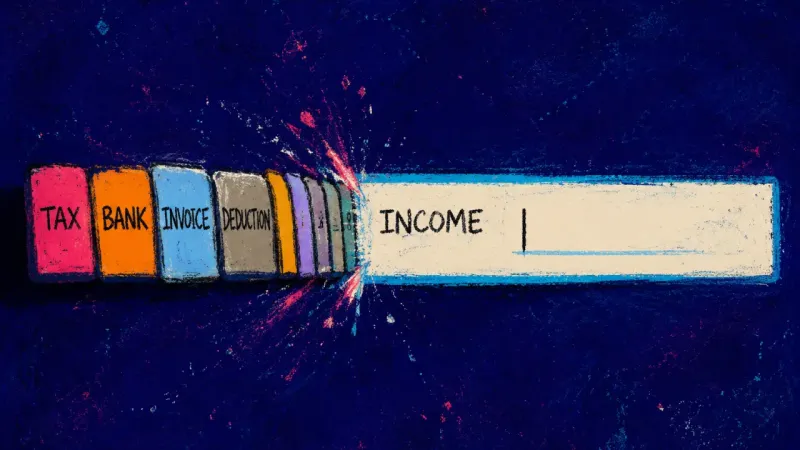
They described Thursday night—8:57 p.m., heat clicking on in a small apartment, the laptop fan whirring like a tiny engine that never gets to take off. “I open Wealthsimple Tax,” they said, “and I hover over the income field. The screen feels too bright. Like it’s… interrogating me.”
I watched their jaw tighten as they spoke, a physical lock that made the words sound slightly trapped behind their teeth. “My stomach goes tight,” they added, pressing a palm just under their ribs. “And my brain immediately goes, ‘If the number is low, it means I’m not safe.’ So I click away to my bank app. It looks responsible. But it’s really… control.”
Their core question landed with a sting of precision: “Tax-filing portal asks my income—what scarcity mindset is this? Why does typing a number feel like confessing something?”
In that moment, I could hear the contradiction humming under the whole story: Jordan wanted to enter their income and move on—clean, done, adult—yet they feared what the number would say about their safety and worth.
Shame rarely announces itself as shame. It arrives as a clenched jaw and a tight stomach in front of a blinking cursor—like your body is bracing for impact from a single empty box.
“You’re not bad with money,” I told them, gently, because I could see how ready they were to put themselves on trial. “You’re having a shame reaction to a number. Let’s not argue with that reaction tonight. Let’s map it. We’re here for one thing: finding clarity—enough to make the next step feel possible.”

Choosing the Compass: The Four-Layer Insight Ladder · Context Edition
I asked Jordan to take one slow breath—not as a ritual for the universe, but as a transition for the nervous system. “Just enough to mark a before and an after,” I said, as I shuffled. “Before: the portal feels like a verdict. After: we turn it back into information.”
For this session I chose an original spread I use often for paperwork-triggered scarcity spirals: the Four-Layer Insight Ladder · Context Edition.
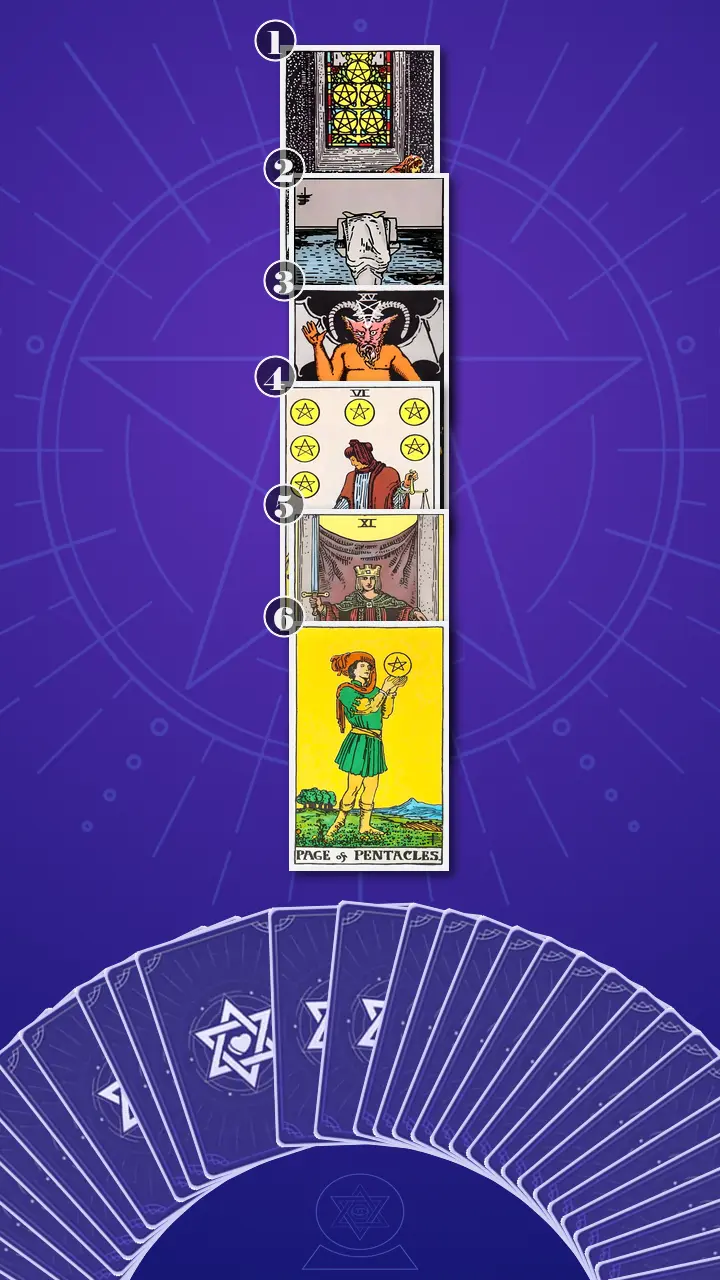
Here’s why it works—especially for tax portal anxiety and money shame when doing taxes. The portal prompt is real, but it’s not the whole problem. The real problem is the meaning your mind assigns to that prompt. This six-card ladder is the smallest structure that cleanly shows: (1) the immediate trigger in your body, (2) the coping loop that looks like “being responsible,” (3) the root belief underneath, (4) a resource available right now, (5) the key reframe that breaks the shame-logic, and (6) a low-drama next step you can do in the next week.
I pointed to the empty space where the cards would fall, like rungs. “Card one is the portal moment—what gets activated in your body and thoughts. Card three is the root story underneath the admin moment. And card five is our turning point—your key reframe. That’s where we move from ‘income-as-verdict’ to ‘income-as-information.’”
Reading the Ladder: From Cold Street to Loose Chains
Position 1 — Surface trigger: what the income question is activating right now in thoughts and body
“Now flipped,” I said, “is the card that represents your surface trigger: what the income question is activating right now in your thoughts and body.”
Five of Pentacles, upright.
In the Rider–Waite image, two figures limp through snow while a stained-glass window glows nearby—warmth and structure visible, but untouched. “This,” I told Jordan, “is that moment when the portal asks for income and it hits like a cold gust. Not because you’re doing anything wrong—because your nervous system interprets it as exclusion.”
I grounded it in their real life: Toronto rent, grocery prices, transit adding up. “You’re not just seeing a blank field,” I said. “You’re feeling ‘outside the warmth’ while the system looks official and indifferent. It’s like the form is the ‘people who have it together’ club, and you’re standing on the sidewalk in wet shoes.”
Energetically, the Five of Pentacles is deficiency—a moment where scarcity becomes weather. Not a forecast. Weather. You feel it in the stomach first, and only then does the brain start writing scripts about what that sensation ‘means.’
Jordan let out a small laugh—too quick to be amusement, too sharp to be casual. “That’s… so accurate it’s kind of mean,” they said, rubbing their jaw with two fingers. “Like, I’m literally staring at a box and feeling like I got kicked out of adulthood.”
“It’s not mean,” I replied, keeping my tone steady. “It’s honest. And honesty is where we start. The question here isn’t ‘Why am I like this?’ It’s: what story about belonging or safety does that blank box trigger in five seconds?”
Position 2 — Current coping pattern: the specific way you stall, control, or protect yourself in the moment
“Now flipped is the card that represents your current coping pattern: the specific way you stall, control, or protect yourself in the moment.”
Two of Swords, reversed.
“This one is almost painfully modern,” I said, and Jordan’s mouth twitched like they already knew what was coming.
I used the exact life-scene the card demands: “The portal stays open in a tab for days. You switch between CRA pages, banking apps, invoice spreadsheets, and r/PersonalFinanceCanada threads. It feels like you’re being thorough. But really, you’re keeping the blindfold on—because the one moment that would make it real is typing the number.”
In the image, crossed swords guard the heart. Reversed, that guarding becomes a posture that costs you: blockage. Air (thinking) isn’t giving clarity—it’s creating a stalemate that keeps the task emotionally charged.
I narrated the loop in the clipped inner monologue this card carries: “Just one more check. Then I’ll do it. Just one more video—tax tips on 1.5x speed. Then I’ll submit.”
Jordan exhaled and shook their head. “Oh my god,” they said. “The tab thing. I do the tab thing.”
“And it makes sense,” I said. “It’s your mind trying to stay safe by keeping things ambiguous. If nothing is entered, nothing is final. If nothing is final, nothing can be judged.”
I leaned in slightly. “But the relief you want doesn’t come from a seventh tab. It comes from removing the blindfold in one small, imperfect motion.”
Position 3 — Root belief/fear: the deeper scarcity story underneath the admin moment
“Now flipped is the card that represents your root belief: the deeper scarcity story underneath the admin moment.”
The Devil, upright.
The air in the room always changes a little with this card—not because it’s spooky, but because it’s blunt. The Devil is the part of us that takes a metric and promotes it into a master.
“Under the admin moment,” I told Jordan, “is a private belief: if the income number is low, it proves you’re not safe—and if you’re not safe, you’re not a ‘real adult.’ So the portal becomes an authority figure. The number becomes a chain.”
I pointed to the detail people miss: the chains are loose. “That’s the uncomfortable hope here,” I said. “The system can request data. It can’t define your worth. Only the internal judge can do that.”
Energetically this is excess—too much power given to an external measure. It’s like an app that turned on push notifications for your self-worth. Every time you see a number, it buzzes: verdict incoming.
Jordan swallowed—small, audible in the quiet—then looked down at their hands as if checking whether they were actually holding those chains. “It’s like…” they started, then stopped. Their fingers curled, then loosened again.
I let a beat pass and asked the question that opens this card without shaming it: “What promise do you think a higher number would finally make true about you?”
Jordan’s voice dropped. “That I could relax,” they said. “That I’m not… behind. That I’m allowed to stop proving I’m okay.”
That was the root. Not laziness. Not incompetence. A survival-mode attachment: if I can’t prove safety with numbers, I don’t get to feel safe.
Position 4 — Usable resource: a support you can access without needing your income to change first
“Now flipped is the card that represents your usable resource: support you can access without needing your income to change first.”
Six of Pentacles, upright.
“This is the card of fair exchange,” I said. In the image, a figure holds scales and distributes coins. “The energy here is balance—not ‘pull yourself up,’ not ‘figure it out alone.’ It’s: let the process be held by structure.”
I translated it into something Jordan could do in a real apartment, on a real Tuesday night: “A community tax clinic link. A friend sitting beside you while you file. A checklist. Even a template that tells you what counts as ‘enough.’ You access support without turning it into a confession.”
Jordan’s shoulders dropped a fraction—so slight you’d miss it if you weren’t watching for it. “I hate needing help,” they admitted, almost defensively. “It makes me feel like I’m failing.”
“I hear that,” I said. “But notice what this card is actually showing: receiving isn’t weakness. It’s a balanced exchange. In archaeology, we don’t call it ‘failure’ when we consult the site records. We call it good method.”
It was a small inner flashback for me—standing on a dig in Turkey years ago, cataloging fragments by lamplight. Each shard got a number. Not as a judgment. As a way to tell the truth about what we found, so we could build from it. The record didn’t humiliate the artifact; it protected it.
“Let’s treat your numbers like that,” I said softly. “As protective record-keeping. Not a moral scorecard.”
When Justice Looked Back: The Reframe That Ends the Trial
Position 5 — Key reframe: the mindset shift that turns income-from-verdict into income-as-information
I let my hand rest on the deck for a moment before turning the next card. “We’re flipping the hinge point,” I said. “The card that acts as an antidote.”
“Now flipped is the card that represents your key reframe: the mindset shift that turns income-from-verdict into income-as-information.”
Justice, upright.
It’s almost comically on-the-nose for taxes, and yet it never feels shallow. Justice is what the Two of Swords couldn’t do: look directly. Decide cleanly. Hold measurement without moralizing.
I described the modern-life scene exactly as it needs to be lived: “You treat the income line like a record of a year—not a trial about your character. You choose one clean source, enter the number, save, and move forward with directness. You don’t negotiate your self-respect with a form field.”
Then I brought in my signature way of seeing this card—what I call Ancient Reflection, a historical self-review that turns panic into perspective. “On digs,” I said, “we used weights and measures that go back thousands of years. Not because ancient people were obsessed with judging each other. Because they needed fair records: grain, wages, trade. A scale doesn’t hate you. It doesn’t flatter you. It simply tells the truth so the next decision can be made.”
Justice is impartial clarity—not coldness. It’s a kind of adult tenderness: “I will face what is true without turning it into a weapon.”
Jordan blinked slowly, like someone waking up from a loud dream. The buzzing overhead light in my office suddenly seemed louder, as if the room itself was waiting to see whether we’d keep bargaining with the number.
Setup: You’re back at that moment: the portal is open, the income field is blinking, and your jaw tightens like you’re about to be evaluated. The old alarm system says: Don’t. Not until you’ve found the perfect way. Not until you can make it mean something better.
Delivery:
Stop treating the number like a judge’s sentence, and treat it like Justice’s scales—clear, balanced information you can use.
I let the sentence sit there, unhelpfully quiet, the way a truth is quiet when it doesn’t need to argue.
Reinforcement: Jordan’s reaction didn’t come as a single “aha.” It came as a chain of micro-movements. First: a brief freeze—breath held, eyes fixed on the card, fingers hovering above the trackpad as if any motion might trigger a siren. Second: the mind recalibrating—their gaze unfocused for a second, like replaying a dozen late-night scenes of tab-hopping, pay-stub scrolling, and YouTube “tax tips” watched at midnight instead of hitting submit. Third: the release—an exhale from deep in the chest, shoulders sinking by a measurable inch, jaw unclenching as if the muscles finally got the memo that no one was actually about to sentence them.
And then, unexpectedly, a flash of irritation crossed their face—hot and human. “But if I do that,” they said, voice sharper for a moment, “doesn’t that mean I’ve been… making it worse this whole time? Like I’ve been ridiculous?”
“No,” I said immediately, because this is where people either spiral into self-attack or learn self-respect. “It means your system has been trying to protect you with the tools it had. The stall isn’t stupidity—it’s a strategy. We’re just updating it.”
I offered them a script that matched Justice’s direct gaze: “This is what happened this year. I can respond to it.”
Then I asked the question that turns insight into lived memory: “Now—with this new perspective—can you think of one moment last week, maybe hovering over that income field, where you could have spoken to yourself like this? Where you could have let the number be a fact, not a verdict?”
Jordan nodded slowly. “Tuesday,” they said. “9:40-ish. I had everything open. I felt that heat in my face like I was caught.” They paused, then added, quieter: “If I had treated it like… scales, I could have just saved the draft. I didn’t need to punish myself for being a person in Toronto.”
“Exactly,” I said. “This is the shift from shame-driven avoidance and scarcity panic to impartial clarity, completion, and grounded self-respect. Not because the number changed—because your relationship to truth changed.”
And I gave them the line I wanted in their pocket for the next time the portal tried to become a courtroom: “Income is a record, not a referendum on your worth.”
Save Draft Counts: A One-Pentacle Plan for the Next Week
Position 6 — Next-week action: one practical, low-drama step that proves you can relate to money with steadiness
“Now flipped,” I said, “is the card that represents your next-week action: one practical, low-drama step that proves you can relate to money with steadiness.”
Page of Pentacles, upright.
“This Page is the Student of Stability,” I told Jordan. “Not the master. Not the person who has it all figured out. The person who holds one pentacle with full attention.”
Energetically, it’s balance through practice. Earth that isn’t punishment—Earth as a skill you’re allowed to learn.
Jordan made a face that was half-laugh, half-wince. “I don’t have time for some huge system,” they said. “I keep seeing Notion templates and YNAB discourse and it just… makes me feel worse.”
“Good,” I said, a little firmer—coach voice, but still kind. “We’re not doing a personality transplant. We’re doing one clean step.”
Then I integrated the ladder into a coherent story, so it didn’t feel like six disconnected symbols:
The Five of Pentacles showed the moment the portal turns into a cold street—scarcity as weather. The Two of Swords reversed showed the stall ritual—tab-hopping as a blindfold, crossed arms as ‘control.’ The Devil named the hidden engine—numbers fused with identity, so the form becomes a chain. The Six of Pentacles offered the counterweight—support and structure, fair exchange, not solitary shame. Justice delivered the antidote—truth without bullying. And the Page of Pentacles grounded it—one small action, repeated, so your body learns: “numbers happened” doesn’t equal “danger happened.”
I named the cognitive blind spot plainly: “You’ve been treating more information as the cure—more tabs, more checks, more perfect deductions—when the real pain is what you’re asking the number to mean.”
“So what do I do tonight?” Jordan asked, and there it was—the desire for a clean next step.
I offered them a set of actions small enough to actually happen, and specific enough to cut through decision fatigue:
- The 20-Minute Single-Pass Save DraftSet a timer for 20 minutes. Open the tax portal. Choose one source document (invoice totals or pay stubs or bank deposits). Enter the income number once, then click Save Draft. No extra tabs.Expect the first 3 minutes to feel exposed—like you’re being judged. That’s the shame reflex, not a prophecy. Lower the bar: your goal is Save Draft, not Perfect Submission.
- The “Next Smallest Question” NoteRight after you save the draft, open Notes and write a one-line list titled Next Smallest Question (example: “Do I need to report that one Etsy payout?”). Keep it to questions that can be answered without reopening the whole case.If your brain demands a seventh tab, ask: “What exact question am I hoping this tab will answer—one sentence only?” Then put that sentence in the note instead.
- Inscription Affirmation (Carved, Not Chanted)Write one literal sentence where you’ll see it—on a sticky note near your laptop or at the top of your tax folder: “Income is a record, not a referendum on my worth.” Treat it like an inscription: plain, factual, protective.If you roll your eyes at affirmations, good. This isn’t inspiration. It’s signage—like an exit sign in a building you’ve been panicking inside.
Jordan hesitated. “But I honestly don’t know if I can even get twenty minutes,” they said, and it wasn’t an excuse—it was fatigue. “By night, I’m cooked. My brain’s already spent from trying to be a person.”
“Then we make it smaller,” I said immediately. “Page of Pentacles doesn’t demand a heroic act. It asks for a single pentacle.”
“Do the five-minute version,” I continued. “Timer for five. Enter the number. Save draft. Stop. Save draft counts. One clean step counts.”
Before we ended, I gave them one more body-level anchor—my Clay Disc Meditation, stripped of mysticism and reduced to something a Tuesday night can hold. “Pick up a coin,” I said. “Or a poker chip, anything small and round. Hold it in your palm for thirty seconds after you save the draft. Feel its weight. Let your jaw unclench. Teach your body: ‘I handled a number, and nothing attacked me.’”
A Week Later: The Quiet Proof
Six days later, I got a message from Jordan. No dramatic transformation, no “my whole life is fixed.” Just a screenshot—confirmation screen saved to a folder they’d named, exactly as I’d hoped they would: Taxes — Proof I Did It.
“I did the single-pass,” they wrote. “My stomach did the thing. I felt the heat in my face. I saved the draft anyway. Then I stood up, drank water, opened a window. It was weirdly… clean.”
They added one more line that made me smile at my desk: “I made the note: Next Smallest Question. It stopped the tab spiral. Also I hate that this worked.”
That’s the journey to clarity in its real form—not a grand revelation, but a small, steady shift: from shame-driven avoidance to impartial truth, completion, and self-respect that isn’t negotiated with numbers.
When a single blank income field makes your stomach tighten like you’re about to be judged as “not safe” or “not enough,” it’s not the form that hurts—it’s the story that turns a fact into a verdict.
If you treated the income number as neutral data for just one evening, what’s the smallest next step you’d let yourself take—save the draft, ask for a body double, or write down the one real question you still need answered?