A Rain Check Text Triggered a Rejection Spiral—Reschedule With Respect

Finding Clarity in the 10:22 p.m. Screen Glow
You’re the kind of person who can run a clean project plan at work, but one “Can we rain check?” text makes you reread the entire thread like it’s evidence in a trial.
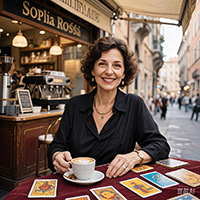
Jordan said it like she was confessing to a crime she didn’t even believe in. She was twenty-eight, a marketing coordinator downtown, the kind of person who could keep a campaign timeline on track and still remember someone’s oat-milk order. But she sat across from me in my café with her phone face-up like it might vibrate again and finish the thought for her.
“It’s always the same moment,” she told me. “10-ish p.m. The TV is on but I’m not watching. The radiator clicks. The only real light is my phone screen. And then: ‘Something came up, can we reschedule?’”
I watched her swallow. Her shoulders climbed a fraction, like her body was bracing for a hit she’d already taken. “My stomach drops,” she said, one hand hovering over her midsection. “My throat gets tight. And then my brain… it’s like it opens a tab called Proof I’m Not a Priority.”
She laughed once—small, sharp, embarrassed. “I scroll up three weeks. I compare ‘lol’ versus ‘haha.’ I notice they didn’t use an emoji this time. I hate that I care this much.”
Underneath the disappointment was the real engine: Jordan wanted closeness and reliability, but she was terrified that any wobble meant she was unwanted—replaceable—an easy cut from someone else’s calendar.
The hurt sat in her like cold syrup: heavy, slow, and sticky. Not dramatic. Just relentlessly there.
I set down two cappuccinos—the kind with a warm cinnamon smell that makes your chest loosen before your mind catches up. “Okay,” I said gently. “Let’s not shame the part of you that reacts. Let’s understand it. We’re going to do a Journey to Clarity—one where we separate what happened from what your nervous system concludes happened.”
Choosing the Compass: The Celtic Cross · Context Edition
I didn’t light candles or speak in riddles. I asked Jordan to take one slow breath in, then out, and to hold one question in her mind: “Why do canceled plans trigger rejection—what old story is this?”
I shuffled while the espresso machine hissed behind me, a familiar sound like ocean foam. “This part,” I told her, “isn’t magic. It’s focus. Your attention is the fuel. The cards just give it a structure.”
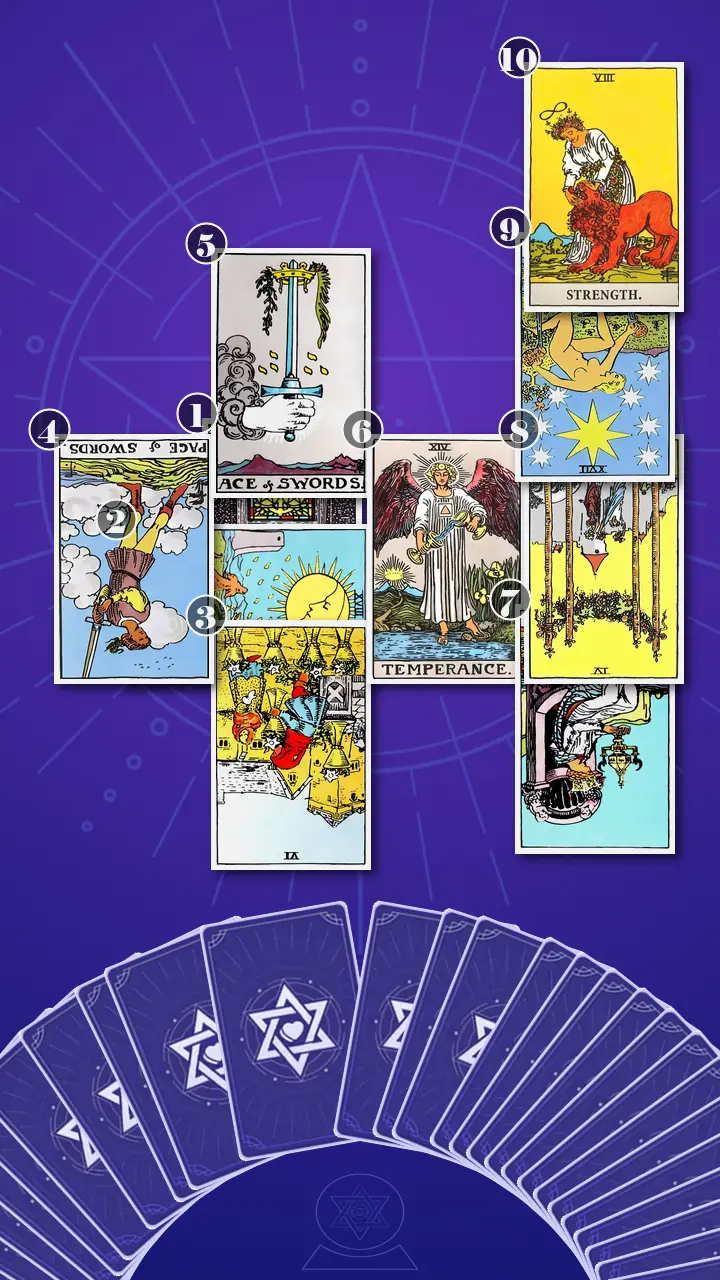
“Today we’ll use the Celtic Cross · Context Edition,” I said, laying out the cloth on our table near the front window.
For you reading this: I use this version when someone’s stuck in a trigger-loop and needs a clean chain from the present moment to the deeper root, and then into practical next steps. The classic Celtic Cross can sound like fortune-telling if it’s handled lazily. So I don’t read position 6 as “what will happen,” but as the next integrative step. And position 10 isn’t “the result,” but the integration path—how you carry the lesson forward with agency.
I tapped three spots on the spread. “We’ll start with the moment of impact—what you do right after the cancellation. Then we’ll name the main tension that keeps it charged. And we’ll end with the stabilizing path—the practice that turns this from a spiral into a skill.”
Reading the Map: From Trigger to Old Story
Position 1: The Moment of Impact
“Now the card we turn over represents the moment of impact: what you’re experiencing and doing right after a cancellation,” I said.
Five of Pentacles, upright.
“This is like when the cancellation text hits while you’re in motion—coat on, Uber open, calendar blocked—and your body reacts like you’ve been quietly uninvited from warmth,” I told her, keeping my voice steady. “Not just disappointed. Excluded. Like everyone else has a place and you’re the person left outside scrolling for proof you belong.”
In tarot terms, the Five of Pentacles is an energy of scarcity and exile. In real life, it’s that instant nervous-system math: Plan changed → I’m outside. It’s not a thought you choose. It’s a body memory that arrives first.
Jordan gave a tight, bitter little laugh. “That’s so on the nose it’s rude.”
I nodded. “I know. And it’s not calling you dramatic. It’s naming the sensation. This card is the cold tile under your bare feet, the phone glow, and the sudden social winter.”
Position 2: The Main Tension That Crosses the Moment
“Now the card we turn over represents the main tension: what complicates the moment and keeps it charged,” I said, sliding the crossing card over the first.
The Moon, upright.
“Ambiguity turns into a spiral,” I said. “You read ‘something came up’ and your brain writes the missing details for them. You analyze response time, punctuation, emojis, and then cross-check their social media activity like it’s going to deliver closure—except it just makes the fog thicker.”
The Moon is not “intuition” in the cute TherapyTok sense. It’s projection under low light—when the facts are thin and fear is loud. Energetically, it’s a blockage: uncertainty becomes a trigger, and your mind tries to solve emotional discomfort by inventing a story.
I leaned in a little. “This is the detective montage,” I told her. “Refreshing the thread. Zooming in on punctuation. Opening Instagram Stories like it’s Exhibit A.”
Then I mirrored the pattern in short lines, the way it actually hits at night:
If they didn’t suggest a new time, then it means I’m not a priority.
If they’re active ‘5m ago,’ then it means they’re choosing something else over me.
If I reply too fast, I look needy. If I reply too slow, I look cold. Either way I lose.
Jordan’s mouth pressed into a line. She nodded once, like she didn’t want to, like agreement cost pride. “This is exactly what my brain does at 2 a.m.”
“You’re not ‘too much,’” I said, letting the sentence land without theatrics. “You’re trying to get certainty from a foggy situation.”
Position 3: The Old Story Underneath
“Now the card we turn over represents the old story: the deeper root and learned association that gets activated by cancellations,” I said.
Six of Cups, reversed.
“The hurt feels older than the situation,” I told her. “A simple reschedule lights up a whole internal scrapbook of being the one who cared more, being left out, being the backup plan. You’re reacting to a pattern you once survived—not necessarily to what’s actually happening right now.”
Reversed, this card isn’t nostalgia; it’s a pull backwards. Energetically, it’s a blockage of time: the present gets hijacked by an old file labeled Not Chosen.
Jordan’s eyes unfocused for a second. Her fingers tightened around the warm cup, then loosened. “It’s embarrassing,” she whispered. “Because it’s not even this person. It’s like… everyone.”
“Not embarrassing,” I corrected softly. “Specific. There’s a difference.”
I asked, “When you feel that stomach-drop, what age does it feel like?”
She exhaled through her nose, almost a laugh, almost a sigh. “High school. Or like… early twenties. Being the extra invite.”
“Good,” I said. “That’s the old story showing itself. We don’t argue with it. We locate it.”
Position 4: What Trained the Pattern
“Now the card we turn over represents what trained the pattern: the context that made this reaction feel necessary,” I said.
Page of Swords, reversed.
“You learned to protect yourself by staying on high alert,” I told her. “Checking timestamps, rereading tone, preparing a ‘perfect’ response so you can’t be blamed for being too needy. It’s less communication and more defense—like you’re bracing for impact before anything has actually hit.”
In terms of energy, this is excess in the mind: too much scanning, too much editing, too much crisis-comms energy aimed at one tiny text.
For a second I had an inner flashback—not mystical, just human. Twenty years of running my café means I can tell, from the way someone grips a cup, whether their day has already taken too much from them. Some people stir and stir and stir, trying to get the sweetness to dissolve faster. But it just makes the liquid cloudy.
Jordan swallowed. “I literally live in my drafts folder,” she said. “Like, twelve unsent messages and none of them feel safe enough to be real.”
“Exactly,” I said. “Your brain treats tone like receipts. It’s trying to prove something you’re already afraid is true.”
Position 5: The Conscious Script You’re Trying to Live By
“Now the card we turn over represents the conscious script: the mental rule you reach for,” I said.
Ace of Swords, upright.
“This is the part of you that wants self-respect,” I said. “It chooses one clean sentence over ten anxious drafts. Instead of decoding hints, you name reality: you were looking forward to it, you’re open to rescheduling, and you want clarity about whether it’s happening.”
Energetically, the Ace of Swords is balance in the mind—sharp, but not cruel. It’s clarity as relief, not confrontation.
I watched Jordan’s shoulders drop about five percent—like someone finally lowered the volume on a buzzing fluorescent light.
“One clear sentence beats ten anxious drafts,” I said, because I wanted it to become a reflex for her.
She gave me a look like she was about to screenshot the air. “Okay. Yeah. I’d save that as a template.”
Position 6: The Next Integrative Step
“Now the card we turn over represents the next integrative step: what becomes possible when the trigger is met differently,” I said.
Temperance, upright.
“You practice holding two truths at once,” I told her. “This disappoints me, and this doesn’t decide my worth. You don’t swing between cold withdrawal and reassurance-chasing. You blend honesty with steadiness and respond in a way you won’t regret tomorrow morning.”
Temperance is balance—emotional alchemy. It’s the skill of letting feelings move without letting them flood.
In café terms? It’s learning to pour milk into espresso slowly, not dumping it in and ruining the texture. There’s an art to mixing. There’s an art to staying warm without spilling.
Jordan nodded, slower this time. “So I don’t have to be… unbothered.”
“No,” I said. “You get to be honest and steady.”
Position 7: How You Show Up Internally
“Now the card we turn over represents your self-position: how you show up internally in this dynamic,” I said.
Queen of Cups, reversed.
“You’re deeply attuned—maybe too attuned,” I told her. “A shift in tone feels like a shift in your value. You absorb their availability like it’s a scoreboard, and when you can’t get certainty, your feelings get loud and your boundaries get blurry.”
Energetically, this is a deficiency of containment—not a lack of feelings, but a lack of a sturdy inner cup to hold them when uncertainty hits.
Jordan stared at the card like it was too accurate to be polite. “I tell myself I’m ‘intuitive,’” she said, then her voice turned smaller. “But it’s not intuition. It’s… panic with good vocabulary.”
“That’s a brave distinction,” I said. “And it’s the doorway back to your own center.”
Position 8: The External Field
“Now the card we turn over represents the external field: what your environment actually provides,” I said.
Four of Wands, reversed.
“Your social world is schedule-dependent,” I said. “Work runs late, transit is chaos, people are tired—so the container of plans is wobblier than you want. Each cancellation feels like the doorway to belonging moved again, and your nervous system hates unstable thresholds.”
Energetically, this is instability around the outside structures—nothing personal, but still real. This card matters because it tells us: part of your trigger is contextual. Modern life really does make consistency harder. That doesn’t mean you’re unchosen. It means you need a different kind of safety than “perfect plans.”
Jordan gave a small, resigned nod. “It does feel like making a social calendar is a second job.”
“Exactly,” I said. “So the skill isn’t ‘never feel disappointed.’ The skill is building a home base inside you.”
Position 9: Hopes and Fears
“Now the card we turn over represents your hopes and fears: what you long for, and what you dread being confirmed,” I said.
The Star, reversed.
“You want to hope and relax into connection,” I told her, “but part of you believes hope is how you get hurt. After a cancellation, you feel tempted to stop investing early—either by giving up or by demanding more proof—because both feel safer than being softly optimistic.”
Energetically, this is deficiency in renewal: hope dims fast, not because you’re cynical, but because you’re trying to protect the part of you that has been disappointed before.
Jordan’s eyes flicked away toward the streetcar passing outside. “I think, ‘Why bother rescheduling?’ and I hate that I think that,” she said. “Because I do want people.”
“You want people,” I repeated, letting it sound like it was allowed. “And you want dignity. We can build both.”
Position 10: The Integration Path
I let my hands rest on the deck for a moment. The café had that late-afternoon lull—murmured conversations, the soft clink of a spoon, steam fading into quiet. “We’re turning over the most important card in this reading,” I told Jordan. “Not because it predicts someone’s behavior, but because it shows you what to do with your power.”
Strength, upright.
“The cancellation triggers the lion—heat, tight throat, urgency to fix it—but you meet it with gentleness,” I said. “You ground first, then choose a response that protects your dignity and keeps the door open for real connection: clear, warm, and not begging for reassurance.”
Jordan’s face tightened like she was about to argue. The first reaction came fast: her breath caught. Then her eyes went distant, as if replaying a dozen unsent drafts. Then her jaw unclenched with a shaky exhale that sounded like surrender and relief at the same time.
“But if I have to soothe myself first,” she said, a flash of frustration rising, “doesn’t that mean I’m… too needy? Like I’m the problem?”
I shook my head. “No. It means you’re human. And it means you’re refusing to outsource your worth to somebody else’s schedule.”
Then I used my signature lens—the one I’ve learned from a lifetime of coffee grounds and human patterns.
“In Venice, my grandmother taught me to read coffee sediment,” I said. “If you keep swirling the cup, you can’t see anything. The grounds stay suspended. But if you stop—if you let the cup rest—the pattern settles into something readable. Your nervous system is like that. The cancellation hits, and your mind starts stirring: scroll, refresh, analyze, compare. Strength is the moment you stop stirring.”
Jordan blinked hard, like her eyes were hot.
In the space that followed, I delivered the line that matters—because it changes the story, not just the mood.
Stop treating every cancellation like proof you’re unchosen, and practice calm, courageous self-soothing—the way Strength holds the lion without force.
I let the quiet do its job.
Her hands—still wrapped around the cup—softened. Her shoulders dropped, not dramatically, but enough that her neck looked longer. Her mouth opened like she might say something sharp, then closed. Her eyes went shiny, and she laughed once under her breath, disbelieving. “Wow,” she said. “That is… not how I’ve been doing it.”
I watched the full wave move through her: 1) the freeze (breath held, shoulders up), 2) the seep (eyes unfocusing, memory replaying), 3) the release (an exhale that finally reached her belly).
“Here’s the setup you know too well,” I said softly. “You’re half-ready to leave, the text lands, your stomach drops—before you’ve even decided what you think, your body already thinks it’s being left outside the warmth.”
Jordan nodded, slower, more present. The anger in her face softened into something like grief—then into steadiness.
“This is the shift,” I added, making it explicit: “This isn’t about becoming someone who doesn’t feel. It’s moving from ‘a single notification becomes a courtroom verdict’ to ‘I can feel the sting without turning it into a sentence about my worth.’ That’s the first step from self-doubt into grounded confidence.”
I asked her, “Now, with this new lens—can you think of one moment last week when this could have helped?”
She didn’t answer right away. She stared at the Strength card, then at her own hands. “Friday,” she said finally. “I saw ‘active 5m ago’ and I spiraled. If I’d put the phone down for even five minutes… I think I would’ve stayed warmer. I wouldn’t have sent the icy ‘k.’”
The One-Page Plan: Actionable Advice You Can Actually Use
I gathered the whole spread into a single thread, the way I would explain it to a friend who wants the truth but also wants hope.
“Here’s the story the cards told,” I said. “When plans change, your body gets hit with exclusion (Five of Pentacles). The uncertainty lights up your imagination like a smoke machine (The Moon), and it pulls in older memories of being ‘extra’ or forgotten (Six of Cups reversed). You learned vigilance as protection—editing, scanning, bracing (Page of Swords reversed). But the part of you that wants to live with self-respect is already here (Ace of Swords). The next step is integration, not suppression (Temperance). And the long path—the integration path—is Strength: feel it, soothe it, then speak from self-respect.”
“Your blind spot,” I continued, “is treating ambiguity as proof. The text is a fact. Your interpretation is a story. Your nervous system is trying to keep you safe, but it’s doing it by shrinking your world.”
Then I gave her what she actually came for: next steps that would still make sense on the TTC, in a condo hallway, or under that 10:22 p.m. phone glow.
- The 20-Minute “Moon Pause”When you get a cancellation text, set a 20-minute timer. Put your phone face-down. Do one body reset: wash your hands slowly with warm water, make tea, or step outside for 2 minutes and feel the air.If 20 feels impossible, do the 5-minute version. The point is to let the “grounds settle” before you reply.
- Two Columns in Notes (Queen of Cups Check)Open your Notes app and write: Column A = “What I know (facts).” Column B = “What I feel / the story.” Don’t debate it—just separate it.Treat this like sorting laundry: whites and colors. You’re not solving the whole relationship—just stopping emotional cross-contamination.
- One Ace of Swords Text (Clarity Isn’t Begging)Send one clean sentence: “Thanks for letting me know—do you want to pick another time? I’m free Tue after 7 or Thu lunch.”Pre-write two “Strength Replies” in Notes (one for friends, one for dating). Copy/paste when activated so you’re not inventing language mid-spiral.
- My Morning Espresso Ritual (Strength Training, Not Performance)The next morning—before you check messages—make your first coffee or tea and take three sips slowly. With each sip, silently label: “Feel it.” “Soothe it.” “Speak from self-respect.”This isn’t about “good vibes.” It’s about building an internal seatbelt before the day’s notifications try to throw you out of your body.
Jordan looked at the list like it was permission. “This feels… doable,” she said, and the word held surprise, like she hadn’t expected doable to exist here.

A Week Later: The Quiet Proof
A week later, Jordan messaged me a screenshot—cropped, like she didn’t want to make a big deal out of it.
At the top was a text: “Hey, something came up—can we reschedule?”
Below it was her reply: “Thanks for telling me. I was looking forward to it—want to pick another time? I’m free Wed after 7 or Sat afternoon.”
Her caption to me was just: “I did the phone face-down thing. My shoulders dropped. I didn’t send five drafts. I’m still a little shaky, but I didn’t go icy.”
Later she told me something even smaller, and somehow more important: she slept a full night. In the morning her first thought was still, “What if I’m wrong?”—but this time she made coffee, took one slow sip, and didn’t punish herself for being human.
That’s what I call a Journey to Clarity. Not certainty. Ownership. The moment you stop treating a reschedule like a verdict, and start treating it like information you can respond to with steadiness.
When a plan gets canceled and your stomach drops, it can feel like you’re standing outside the warmth of belonging—trying to look “chill” while your body is begging to know you still matter.
If you didn’t have to treat ambiguity like a verdict, what’s one small, self-respecting sentence you’d want to send the next time plans change?
Every reading at AceTarot is a Journey to connect with inner wisdom and empower next step.
Learn more about our Journey to Clarity.