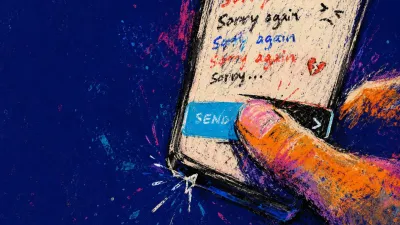
When 'Best Friend' Feels Like Pressure: From Freeze to Honest Reply
Finding Clarity in the 8:47 p.m. Streetcar Spiral
If you're a late-20s city creative who can present a Figma deck just fine but goes blank when a friend texts 'you're my best friend,' I usually know the shape of the knot before I even lay down a card. Jordan (name changed for privacy), a 27-year-old junior product designer in Toronto, joined my evening session from a tiny condo kitchen lit by one unforgiving overhead bulb. The fridge hummed behind them. Their hands still looked damp from dish soap. Their phone sat face-down on the table like it had said something too intimate to look at directly.
'It happened on the 504 King,' they told me. 'Tuesday. 8:47. I was heading east, the brakes were doing that awful screech, and my friend texted, "you're my best friend." I read it, typed something warm, deleted it, opened Instagram Stories for like twenty minutes, and told myself I'd answer when I could sound normal.'
I watched them give a short laugh that didn't make it all the way into a smile. Jordan wanted the closeness. That part was never the mystery. The mystery was why the second the closeness got spoken aloud, their chest tightened, their face went hot, and some private exit sign lit up inside them. They described it as feeling like being handed a fragile glass object on a moving streetcar: flattering for half a second, then instantly terrifying. By the time they booked with me, they had already searched some version of best friend anxiety, fear of intimacy in friendship, and why do I pull away when people get close.
I nodded and said what I needed them to hear first: the panic isn't proof you don't care; it's proof the moment feels high-stakes in your body. The sweetest text can still hit like an alarm. I told Jordan I wasn't interested in shaming the silence or forcing a perfect emotional script. I wanted to help them map the exact moment where affection turned into pressure, and then find one honest path through it. 'Let's draw a map through the fog,' I said. 'Not a grand solution. Just real clarity, and a next step you can actually use.'
Choosing the Map: A Four-Card Tarot Spread for Friendship Anxiety
I asked Jordan to put both feet on the floor and rest one hand on the mug beside them. I shuffled slowly at my desk while they took one long breath in and a longer breath out. I treat the opening of a reading the way I treat the opening of a fragrance formula: not as theater, but as a way to bring scattered material into focus.
For this session, I chose a spread called the Situation-Obstacle-Advice-Outcome · Context Edition. If you've ever wondered how tarot works with something as specific as freeze response texting, this is one of the clearest ways I know to use it. I wasn't trying to predict whether Jordan's friend was sincere, or whether the friendship would survive. The real knot lived inside Jordan's response the moment closeness became explicit. So I needed a compact, diagnostic arc: what happens on the surface, what hidden fear locks it in place, what energy interrupts the reflex, and what the next grounded expression of connection can look like.
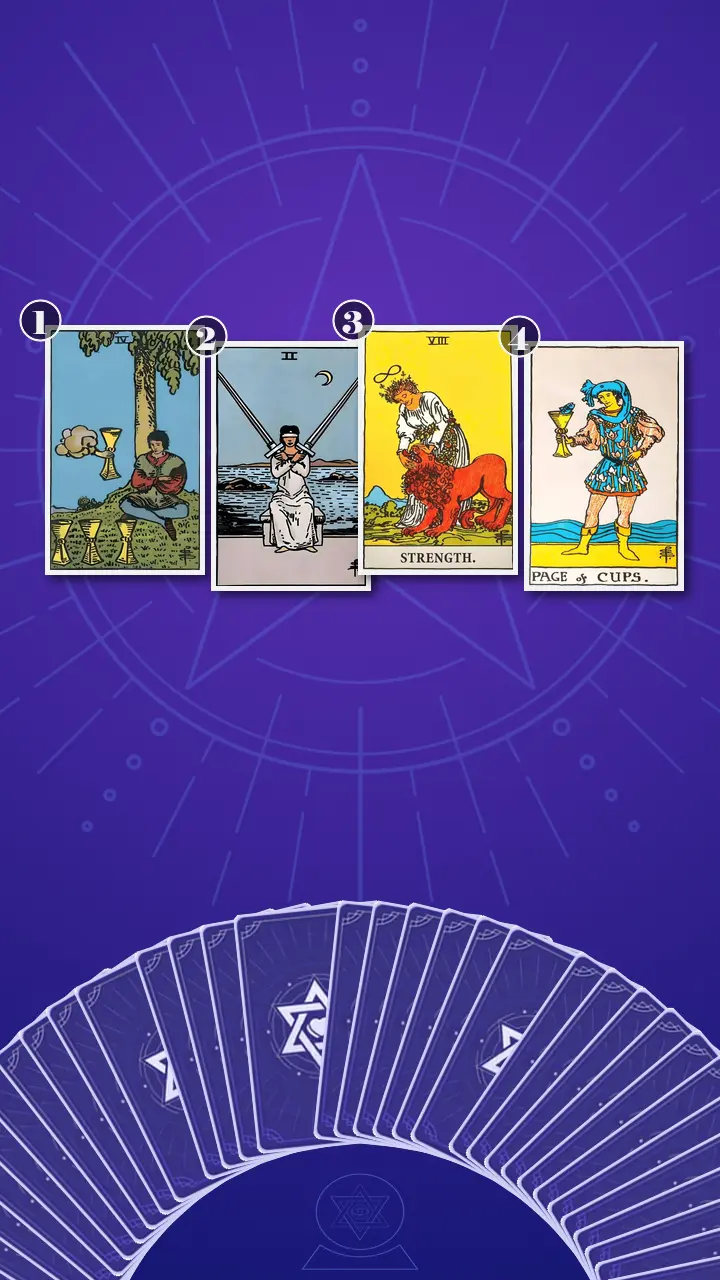
I laid the four cards in a straight line from left to right, like stepping-stones across a threshold. The first would show the visible shutdown reflex. The second would reveal the fear underneath it—what makes being called important feel so emotionally high-stakes. The third, which I already suspected would be the bridge, would show the corrective stance Jordan needed in the exact moment their system wanted to vanish. And the fourth would show me what friendship could look like if it stopped feeling like a spotlight and started feeling like a shared space again.
The Cup Left on Read
The Message That Felt Heavier Than It Looked
I turned the first card. 'This one sits in the position of the visible symptom,' I said, 'the immediate shutdown or withdrawal that appears when closeness is named.' The card was the Four of Cups, upright.
I smiled softly, because the image was almost too precise. In modern life, this is the commute-home message you absolutely wanted to receive until it actually arrives: the glowing iMessage bubble, the phone going face-down in your palm, the reflexive switch to Instagram Stories because receiving the closeness in real time suddenly feels heavier than wanting it from a distance. The Four of Cups is stagnant Water. Feeling is present, but reception is blocked. The offered cup is there. The care is real. But your system folds its arms and turns away before your heart has even had time to say yes.
'This is not indifference,' I told Jordan. 'It's overwhelm.' Wanting to disappear doesn't cancel the fact that you care. The problem is not a cold heart. It's that the body closes before the mind can explain why.' Jordan let out one short, bitter laugh and rubbed a thumb across the side of the mug. 'Wow,' they said. 'That's so accurate it's kind of rude.' Their shoulders, which had been pitched up almost to their ears, stayed high—but something in their face softened. Recognition had landed.
The Drafts Folder Armor
I turned the second card. 'This one shows the hidden fear and defensive logic underneath the shutdown,' I said. 'Why does being called “best friend” suddenly feel like a role you could fail?' The card was the Two of Swords, upright.
This was Jordan with three drafts open between Notes and iMessage: one too intense, one too casual, one too fake. Send none. Stay unreadable. Freeze both options—lean in or back away—so nobody can judge you in real time. The Two of Swords is Air turned rigid. Too much mental calibration, not enough permission to feel. The blindfold is tone uncertainty. The crossed swords over the chest are the exact inner guard you raise where tenderness is trying to move.
This is where I used the lens I call Social Pattern Analysis. I always listen for the moment a relationship stops feeling mutual and starts feeling like an invisible role assignment. Jordan didn't hear 'you're my best friend' as affection alone. They heard a job description: always available, always emotionally fluent, always certain. Closeness became a spotlight the second it was named. And because I spent years training my nose in perfume labs, I had a flash of a lesson I learned there too: if I kept stripping a formula of every risky note, I could make it technically safe—and completely lifeless. Looking at those crossed swords over the heart, I felt the same problem. Jordan had been editing themselves for safety until the connection could barely breathe.
Jordan went still, then looked away from the camera toward the dark window over the sink. First came the physical tell: a tiny pause in their breathing. Then the cognitive hit: their eyes unfocused, clearly replaying old message threads. Then the feeling surfaced. 'Ouch,' they said quietly. 'I'm not actually trying to avoid people. I'm trying not to fail them.' I nodded. That sentence, more than any search phrase, was the lock clicking open.
When Strength Put a Hand on the Lion
The Bridge Between Panic and Presence
When I turned the third card, the air changed. Even the fridge hum on Jordan's end seemed louder, as if the room itself knew we had arrived at the hinge of the reading. 'This card sits in the position of guidance,' I said, 'the quality that can interrupt the reflex to disappear.' The card was Strength, upright.
I loved seeing it there. In real life, Strength is not dramatic vulnerability. It's the moment the exposure spike hits and you do one grounding action before obeying it: both feet on the floor, one breath, one hand on your chest or around a mug, and then one honest sentence goes out while you're still a little shaky. This is balanced Fire—regulated courage, not force. I told Jordan, 'You do not have to become calm before you become honest. And you do not need a perfect reply to give a real one.'
Presence Has Sillage
Because fragrance is one of my native languages, I explained the card the way I understand presence. In perfumery, sillage is the trail a scent leaves behind it. People often think presence has to work in extremes: either project hard enough to fill the room, or disappear completely. But the most trustworthy formulas don't do that. A good woody base gives the whole composition structure without shouting. Strength felt exactly like that to me—first impression calibration through sillage control. Jordan did not need to spray the whole bottle of their feelings to prove they cared. They only needed enough honest presence for the other person to feel them there. Breathable, skin-close, real.
Then I slowed down and gave the card its full weight. 'Picture that streetcar again,' I said. 'The screen lights up with something genuinely sweet, and within seconds you're toggling between drafts and Instagram because your chest got tight before your brain had time to say, “I actually wanted this.” You're caught in the idea that being important means you now have to answer perfectly.'
You do not have to bolt the moment affection feels intense; place a steady hand on the lion of your nervous system and answer from presence instead of panic.
Jordan froze so completely I could hear the silence between us. First came the body: their inhale stopped halfway, their thumb hovered over the dark screen beside them, and the muscles around their mouth pulled tight as if bracing for impact. Then came the mind catching up. Their gaze went soft and far away, replaying a Tuesday streetcar, a Monday dinner text, three unsent drafts, the whole relief-now-guilt-later loop. When the emotion finally surfaced, it wasn't neat relief first. It was resistance. 'But doesn't that mean I've been making this way harder than it had to be?' they asked, voice suddenly sharper. 'Like... people think I'm distant when I'm actually panicking because they matter?' I let that sting stay in the room for a beat. Then I said, 'Yes. And it also means the pattern was protection, not proof that you're incapable of closeness. It made sense to your nervous system. It just costs more now than it gives.' Their shoulders dropped a full inch. One hand moved to the center of their chest. A shaky laugh escaped them, and right behind it came the wet shine in their eyes—the strange dizziness that comes when the burden shifts and you're left standing in new responsibility. I asked gently, 'Now, with this new view, think about last week. Was there a moment when this would have changed the feeling?' Jordan swallowed and nodded. 'The dinner text,' they said. 'I could've just said I got weird after our vulnerable hang and still wanted to see them.' That was the bridge: from intimacy panic and performance pressure to steady, imperfect closeness.
The Honest Beta Version
A Reply That Sounded Like a Person
I turned the final card. 'This one sits in the position of the integrated next step,' I said. 'Not a fixed prediction—more like the shape connection can take when the old defense loosens.' The card was the Page of Cups, upright.
I almost laughed with relief. The Page of Cups is small sincerity. A slightly awkward but warm text. A 20-second voice note. A reschedule paired with genuine care. Not a polished speech, not a lifetime promise, not customer-support language disguised as intimacy. Fresh Water, not stagnant Water. Feeling that can move again. For Jordan, who designs prototypes for a living, I translated the card in terms they could feel immediately: this is shipping the honest v1 instead of waiting for an impossible final release.
'So I don't need a perfect statement,' Jordan said, finally smiling for real. 'I need a human one.' Exactly. The fish rising unexpectedly from the cup is that surprising line that slips out when you stop editing yourself to death: 'That means a lot to me.' 'I get shy with sweet texts.' 'I care about you too.' Small, sincere, unfinished—and enough to keep the friendship breathing. Jordan's whole posture looked different by then. Not loose, exactly. But less armored. Less like they were auditioning for the role of ideal best friend, and more like they were allowed to simply participate.
From Spotlight to Shared Space
Once all four cards were down, the story was clean. First, the Four of Cups showed me the visible reflex: care arrives, and the body shuts the door before the heart can receive it. Then the Two of Swords showed me the hidden lock: affection becomes a calibration exercise, and silence starts masquerading as carefulness. Strength broke that closed architecture not by demanding fearless openness, but by teaching Jordan how to stay in the room with their own nervous system. And the Page of Cups gave the new relational style: no grand performance, just one modest honest reply that lets connection remain human.
I told Jordan their biggest blind spot was this: they had been treating closeness as a role they needed to perform perfectly, rather than a bond they could co-create imperfectly. That is why friendship had started feeling like pressure instead of comfort. The transformation direction was simple, but not shallow—move from spotlight to shared space; from performance to participation; from disappearing urges to steadier closeness. Friendship can be co-created, not flawlessly performed.
- The Hand-on-Phone Citrus ResetThe next time a heartfelt text lands—on the TTC, at your desk after Slack goes quiet, or alone in your kitchen—keep the chat open, put both feet on the floor, and take one slow exhale before deciding what the message means. If scent helps you regulate, use one light citrus spray or even the smell of orange peel as a reset for 30 seconds.If your brain says this is dramatic, assume the freeze cycle is talking. The goal is not full calm; it's slightly more presence.
- The Two-Sentence Beta ReplyPin this in Notes and use it within 15 minutes when possible: 'That means a lot to me.' Plus one true qualifier: 'I get a little awkward with sweet texts, but I care about you too.' If typing feels too exposed, record a 20- to 30-second voice note draft first.Lower the bar on purpose. Honest beta version beats elegant silence every time.
- The Same-Message RepairIf you need to reschedule or clarify with this friend this week, pair it with one concrete repair move in the same message: a new day, a check-in time, or one expectation reset such as 'I'm not always the fastest texter, but I do come back.' Keep it to one topic only.Clarity creates less pressure than silence. You do not have to explain your whole personality—just one useful truth.
Because Jordan responds strongly to atmosphere, I added one more sensory note from my own toolkit: before an in-person hang that feels emotionally loaded, wear something skin-close and woody—cedar, vetiver, or a quiet sandalwood. Not as armor. As structure. In my world, a grounded base note helps the heart notes behave. In human terms, it can remind the body that presence does not have to be loud to be steady.
A Week Later, the Quiet Proof
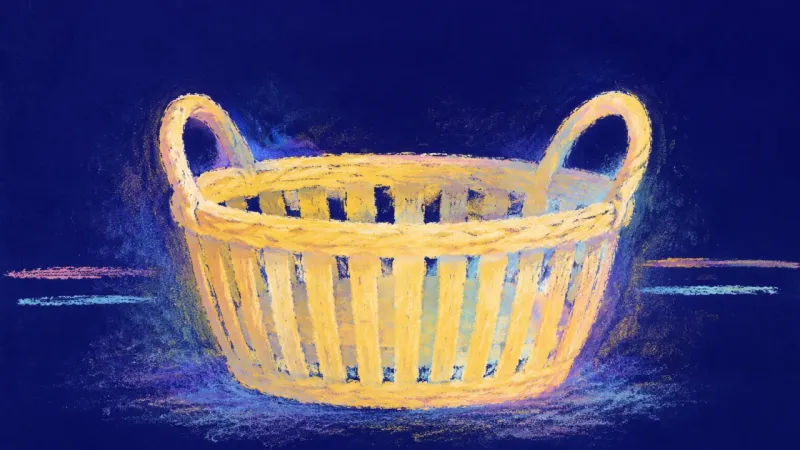
Five days later, Jordan messaged me from a coffee shop in the west end. They had used the two-sentence reply after their friend sent another sweet check-in: 'That means a lot to me. I get weirdly shy with sweet texts, but I care about you too.' Later, when they had to move dinner, they added, 'I'm still in—can we do Thursday instead?' They told me they stared at the sent message for three full minutes afterward, half relieved and half nauseous. The next morning, their first thought was still, 'What if that was cringe?'—but this time they laughed, made coffee, and didn't delete themselves from the friendship in their head.
That is what a real Journey to Clarity looks like to me. Not becoming instantly fearless. Not transforming into the world's most emotionally fluent texter overnight. Just moving, one card at a time, from intimacy panic and performance pressure toward steady, imperfect closeness. This little Situation-Obstacle-Advice-Outcome spread did exactly what good tarot should do: it turned a shame spiral into a pattern, and a pattern into actionable next steps.
Sometimes the sweetest words can make your chest lock up, because being loved out loud feels less like comfort and more like being handed a role you're scared you won't be able to hold.
If closeness did not require a perfect version of you, what small, breathable line of truth could you let into the room tonight—no full performance, just enough honest sillage to say, 'I'm here'?