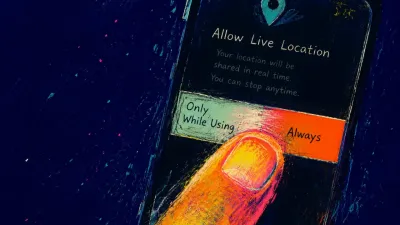
From 'Share Live Location?' Unease to Consent-Based Boundaries by Text

The 8:47 p.m. Pop-Up at Bloor–Yonge
If you’ve ever stared at “Share Live Location?” at 11 PM and felt your jaw clamp like you’re about to take a test you didn’t study for—this is digital boundary pressure.
Jordan came into my café right after work, still half-wearing the day. A marketing coordinator kind of tired: mascara that’s doing its best, tote bag digging into one shoulder, phone already in her hand like it might buzz again if she blinked.
“It’s not even that I’m doing anything,” she said, sliding onto the stool by the window. Outside, Toronto was doing its usual weekday choreography—streetcars humming, people moving fast like they had somewhere to be and no time to feel weird about it. “They just… keep asking for my live location. And I keep… doing it. Or stalling.”
When she said “live location,” her face did the tiniest wince—like her mouth wanted to argue but her body already knew the answer. Her jaw tightened. She pressed her tongue to the back of her teeth. “My stomach drops every time the request pops up,” she admitted, and I could almost hear the iPhone notification in the silence between us.
I watched her thumb hover over an invisible button in midair, like muscle memory. The conflict wasn’t complicated—but it was brutal in how fast it hit: wanting to stay connected and keep things smooth vs fearing loss of privacy and control if you comply.
“Privacy isn’t suspicious. It’s a normal need,” I told her gently. “And the fact that your body reacts first—that tight jaw, that drop—means this isn’t just a settings question. It’s a consent question. Let’s make a map of the loop you’re stuck in, and find a way back to clarity.”

Choosing the Compass: The Celtic Cross · Context Edition
I set two demitasse cups on the table—one for her, one for me—because I’ve learned something after twenty years of waking up a street with espresso: the smallest rituals are not about mysticism. They’re about switching gears. Your nervous system needs a doorway.
“Before we talk scripts,” I said, “let’s give your mind something sturdier than improvising in the chat window.” I asked her to take one breath in—slow—and one breath out—longer. Then I shuffled, not like a magician, but like someone mixing ingredients until the texture changes.
“Today we’ll use the Celtic Cross · Context Edition,” I explained. “It’s a deep-dive spread, which matters here because the issue isn’t just how to respond—it’s a repeating loop: pressure, doubt, compliance, then resentment. This layout maps the present tension, the underlying fear, your values around fairness, the communication shift, and the relational context.”
If you’re reading this wondering how tarot works in a situation like live location requests: I don’t use the cards as a verdict. I use them like a pattern scanner. They show where the energy is getting stuck, what story your mind keeps telling, and what “next step” is actually doable when you’re tired and don’t want a fight.
“The first card,” I told Jordan, “will show the immediate situation—what you do in the first 30 seconds after the request pops up. The crossing card will name what makes ‘no’ feel hard. Then we’ll go down to the root driver, up to your conscious aim, and forward into the communication move that changes the game.”
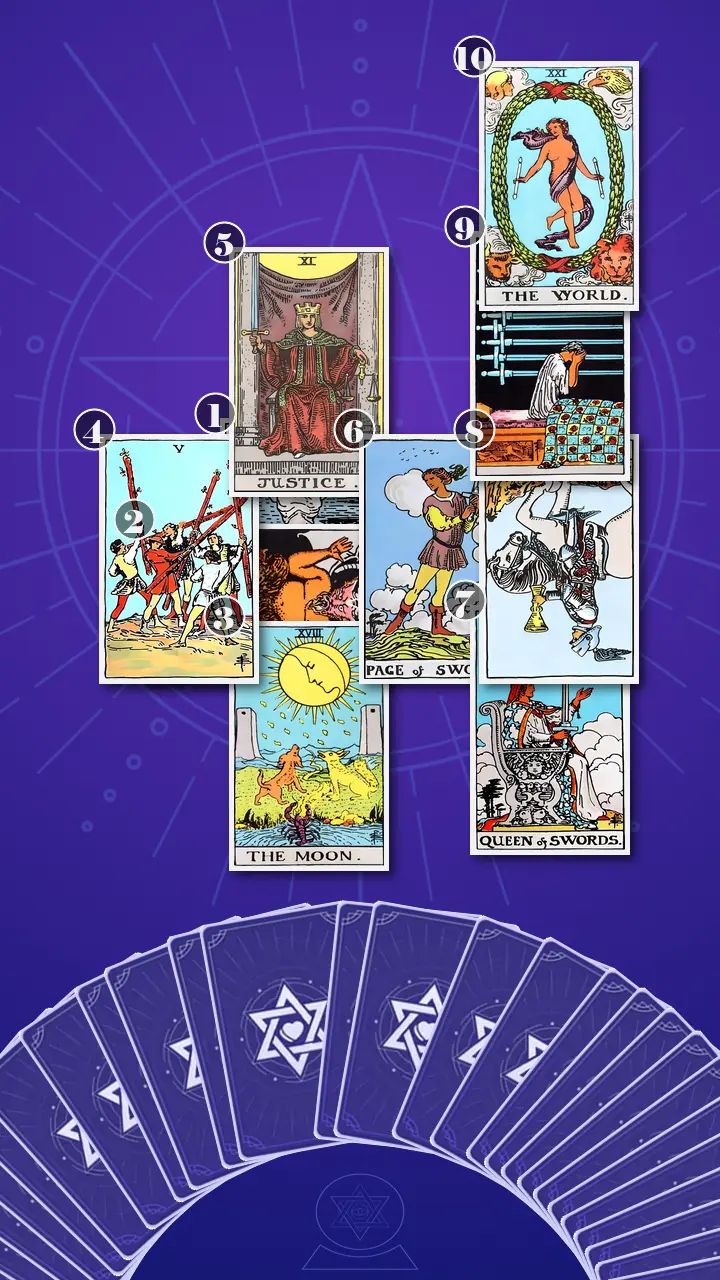
Reading the Map: Swords, Fog, and a Leash
Position 1 — The immediate situation: what happens in the first 30 seconds
“Now flipping over,” I said, “is the card representing the immediate situation: how the live location request is showing up day-to-day and how you are responding in the moment.”
Two of Swords, reversed.
This one always makes me think of a phone screen held too close to your face in harsh light—trying to solve something by not looking straight at it. In Jordan’s real life, it’s exactly that modern scene: you’re standing on a TTC platform with the “Share Live Location?” prompt open, thumbs hovering, drafting three different replies because you’re trying to avoid choosing. You either cave (“share for 1 hour”) or send a long, careful explanation that still doesn’t actually say yes or no.
Reversed, the Two of Swords isn’t balance. It’s a blockage—protection held internally, but silence outwardly. You’re guarding yourself with crossed swords over your heart, but the blindfold means you’re also hoping the moment passes so you don’t have to name the conflict.
I asked her, “What do you usually do first—stall, comply, or over-explain?”
She let out a small laugh that didn’t sound like humor. “I type. Delete. Type. Delete. And then I share it ‘for one hour’ like I’m paying a toll.” Her eyes flicked down to her phone, like the card had just caught her in 4K. “That’s… honestly kind of brutal.”
Position 2 — The core challenge: what makes the boundary hard
“Now,” I said, “we’re looking at the core challenge: what makes this boundary hard to set.”
The Devil, upright.
Jordan’s shoulders rose a millimeter, like she hated that it fit. The Devil doesn’t mean someone is evil. It means the dynamic has a pressure hook—where closeness gets framed as access, and ‘trust’ gets framed as compliance.
In modern terms, this is the moment your phone starts feeling like a leash: comply and the tension stops; refuse and you risk suspicion. That’s not a neutral request anymore. That’s “prove it.”
Here’s what matters about the Devil symbol: the chains are loose enough to remove. This is a power-and-consent issue, not a fate issue. The pattern only stays “mandatory” if you keep treating it that way.
I watched Jordan’s throat move as she swallowed. She didn’t nod yet. She just stared at the card like it was calling something out she’d been trying to keep polite.
Position 3 — The root driver: the fear underneath the loop
“Now we go lower,” I said, “to the root driver: the deeper fear or assumption underneath why this keeps looping.”
The Moon, upright.
The Moon is what happens before you even touch the keyboard: your mind runs worst-case simulations. They’ll accuse you. They’ll get cold. You’ll be labeled secretive. The fear story gets so loud that a simple boundary starts to feel dangerous.
This is the energy of deficiency of certainty—and our brains hate that. So we try to fill the blank with control. We rehearse. We script. We over-explain. The Moon’s winding path between towers says: you don’t need full certainty about the relationship’s future to take one honest step today.
“When you imagine saying no,” I asked, “what’s the first worst-case story your mind jumps to?”
Jordan’s eyes unfocused for a beat, like she was watching a memory replay. Then: “That they’ll think I’m hiding something. That I’m… suspicious. That I don’t deserve trust.”
Position 4 — Recent past pattern: what precedent has been trained
“Now,” I said, “we look at the recent past pattern: what’s already been established that set the tone for today’s requests.”
Five of Wands, upright.
This card is chaotic energy without agreement. Five people all pushing their own agenda, no shared rules. In Jordan’s life: the same argument in different outfits—texts, late-night talks, “just this once” exceptions. Nothing gets defined, so the request keeps resurfacing and you’re already braced for friction.
The Five of Wands is excess energy with no container. And without a container, every request becomes a new negotiation. That’s exhausting. That’s how you end up giving more access than you meant to, just to end the round.
I saw her shoulders tense, then drop. Like she was finally naming what had been happening, instead of treating it like a one-off annoyance.
Position 5 — Your conscious aim: what “fair” means to you
“Now,” I said, “this is your conscious aim: what boundary you actually want and what fairness means to you here.”
Justice, upright.
The room felt different with Justice on the table—like opening the blinds. Not because everything becomes easy, but because everything becomes structured.
This is the shift from fog to terms. Justice says: treat location sharing like a calendar invite—clear purpose, clear duration, clear opt-out. Not a vibe check. Not a loyalty test.
I asked her the fairness flip that Justice always demands: “If a friend told you this story, would you call her dramatic—or would you call it a consent issue?”
Jordan’s face softened. She nodded once, slow. “I’d tell her it’s… her phone. Her life.”
“Exactly,” I said. “You don’t have to prove trust with GPS—you get to give consent with words.”
Position 6 — Near-term direction: the communication move that becomes available
“Now we’re looking at the near-term direction: what shifts when you choose a clearer communication move,” I said.
Page of Swords, upright.
The Page of Swords is the truth-teller in training. This is the energy of sending one direct text and tolerating the awkward silence that follows—without backtracking into a paragraph.
It’s a balance of courage and learning. The wind on this card matters: reactions may blow around you. Your job is to keep your grip on your words.
Jordan exhaled through her nose, half-nervous. “So… not the perfect wording. Just… the wording.”
“Yes,” I said. “Clarity is a skill you practice, not a vibe you wait for.”
Position 7 — You in the dynamic: your boundary voice
I let my hands rest on the table for a moment before I turned the next card. Even the espresso machine behind the counter seemed to quiet—like the café was cooperating.
“Now flipping over,” I said, “is the card representing you in the dynamic: how you can embody your boundary voice and self-respect without escalating.”
Queen of Swords, upright.
Setup: You know that moment—your chat opens, “Share Live Location?” is right there, and your body reacts before your brain can even decide. Tight jaw. Small drop in your stomach. Instant drafting-and-deleting. Your mind is trying to find a sentence that will keep the peace and keep your autonomy, so you don’t get accused of being dramatic.
Stop trying to sound “acceptable” enough to earn privacy—name your boundary cleanly, like the Queen of Swords who speaks with a steady gaze and no unnecessary apology.
I let that land. In my head, I flashed to my earliest years running this café—customers who’d smile sweetly while trying to push past a “no.” How I learned the hard way that you can hand out extra sugar packets forever and still feel resentful if what they wanted was control, not coffee.
“Here’s how I see this through my own lens,” I continued, and I brought in my Milk Foam Layer Analysis—my way of reading what’s on the surface versus what’s underneath. “Sometimes the request comes with foam: ‘I’m worried about you.’ ‘It’s for safety.’ ‘Everyone shares.’ Foam can be real feelings. But the espresso underneath is the actual ask: access to you in real time. The Queen of Swords doesn’t argue with foam. She answers the espresso.”
Reinforcement: Jordan’s body did a three-step reaction chain right in front of me. First, a tiny freeze—her breathing paused, her fingers went still on her phone. Then, the cognitive seep—her eyes lost focus, like she was replaying every time she’d typed a novel to prove she was “good.” Then, the emotional release—her shoulders lowered, and she let out a shaky little breath that sounded like relief and fear at the same time.
“But if I say it that clean,” she said, and her voice got tight, “won’t I sound… cold?”
“Not cold,” I said. “Clear. There’s a difference.” I tapped the Queen’s upright sword with one finger—not aggressively, just definitively. “And remember: Their reaction is information, not a verdict on your worth. The Queen isn’t trying to be ‘acceptable.’ She’s trying to be honest.”
Then I invited her back into her own memory: “Now, with this new perspective—when was the last time you shared your location just to stop the tension? Last week, was there a moment where this one clean boundary could’ve made you feel different?”
Jordan swallowed. Her eyes got glassy, not dramatic—just honest. “Tuesday. Line 1 southbound. I shared ‘for one hour’ and then I watched the blue arrow the whole ride like I’d handed someone a remote control to my body.”
“That,” I said softly, “is the step from contraction to self-respect. Not a grand gesture—just one sentence that puts the phone back in your hands.”
Position 8 — Them and the environment: their pressure style
“Now,” I said, “we’re looking at them and the environment: how the other person’s approach influences this situation.”
Knight of Cups, reversed.
This is the emotional persuasion card—especially reversed. It doesn’t say their feelings are fake. It says feelings can become leverage.
In modern life: they wrap the request in emotion—sweet concern that flips into guilt or accusation when you hesitate. “I’m worried” becomes “So why won’t you share?” And suddenly you feel responsible for managing their emotional weather.
Here’s the pattern that changes everything: respond to the feeling without giving the access. One line. Consistent. Calm.
I offered Jordan an example exactly as she could send it: “I hear you’re worried. And my answer is still no on live location.”
Her eyebrows lifted in that specific “wow, that’s the script” way—like she wanted to screenshot the sentence straight off the air.
Position 9 — Hopes and fears: the anxiety tax after you set the boundary
“Now,” I said, “this card speaks to your hopes and fears: what you’re afraid will happen if you say no, and what you secretly hope becomes true if you hold the line.”
Nine of Swords, upright.
This is the after-hours part. The part nobody sees. The phone glow in bed, rereading messages like evidence. The hollow stomach at 3:07 AM. The internal courtroom where you prosecute yourself for having a boundary.
Nine of Swords is excess mind—thoughts multiplying after the conversation ends. It’s not telling you you’re “too sensitive.” It’s showing you the cost of trying to manage someone else’s feelings around your autonomy.
Jordan’s voice went small. “I watch for the typing bubble like it’s… a safety signal.”
“Of course you do,” I said. “Your system is trying to predict the weather. But you don’t need a perfect forecast to choose a fair policy.”
Position 10 — Integration path: what becomes possible with consent-based boundaries
“And finally,” I said, “this is the integration path: what becomes possible if you keep choosing consent-based boundaries.”
The World, upright.
The World is the opposite of feeling watched. It’s wholeness—privacy becoming normal again. Not something you earn. Something you live inside.
The wreath on this card is my favorite detail: it’s a boundary as a container that creates freedom inside it, not a cage. When you choose consent consistently, you stop living in constant negotiation. And the relationship either adapts into something healthier—or it reveals it can’t exist without access. Either way, you get yourself back.
From Insight to Action: One Sentence Boundary, One Alternative
I leaned back and stitched the whole spread into one story Jordan could actually use.
“Here’s the pattern,” I said. “You get the request (Two of Swords reversed), you feel the pressure of ‘prove it’ (The Devil), your mind fills the blank with worst-case fear (The Moon), and because this has been debated without agreement (Five of Wands), you try to keep it smooth by giving access or over-explaining. But what you want is fair terms (Justice), and what’s approaching is a cleaner message (Page of Swords). The key is you embodying the Queen of Swords—steady, direct—so you stop negotiating your autonomy in real time. And if you do that consistently, you get The World: a relationship container where privacy is normal.”
The cognitive blind spot was clear: Jordan kept trying to justify her privacy instead of treating it as a baseline consent decision. She was trying to manage their emotional weather—so she wouldn’t lose belonging—rather than stating a boundary with one clear alternative.
“So our transformation direction is simple,” I told her. “Shift from trying to justify your privacy to stating a consent-based boundary with one clear alternative.”
Then I gave her steps that were small enough to do on a Tuesday night when you’re depleted.
- Save your Queen of Swords sentenceOpen Notes and save this as-is: “I’m not comfortable sharing my live location. I can text you when I get there.” (No extra context.)If your guilt spikes, don’t rewrite it—copy/paste only. One sentence boundary. One alternative. No apology tour.
- Pick a default alternative (Justice terms)Choose one fallback you genuinely agree to: (a) “I’ll text when I arrive,” (b) “I’ll share for 30 minutes while I’m in transit only,” or (c) “I’ll send an ETA screenshot once.”Think of it like a calendar invite: who gets access, for how long, for what reason, and what’s the off-switch.
- Use my Social Thermometer before you hit sendAsk: “Is this relationship asking for ‘warm coffee’ closeness—or ‘scalding’ access?” If it’s scalding, lower the temperature with calm firmness: send the saved sentence, then put your phone face down for 5 minutes.Do something physical for those 5 minutes (wash one dish, brush teeth, step onto the balcony). Your body needs proof you’re safe after saying no.
“And if they come back with emotion,” I added, “use the Milk Foam rule: respond to the feeling, not the access. One reply max: ‘I hear you’re worried. And my answer is still no on live location.’”

Ownership, Not Certainty
A week later, Jordan DM’d me while I was opening the café—rolling up the patio umbrellas, the morning air still sharp. Her message was short. That alone felt like a miracle.
“They asked again,” she wrote. “I sent the Notes sentence. No paragraph. I put my phone face down and cleaned my kitchen for five minutes like you said. I didn’t die.”
Then, after a pause: “They didn’t love it. But they stopped asking for the rest of the night.”
Clear but still a little tender—like this: she slept a full night, but in the morning her first thought was still “What if they think I’m hiding something?” This time, though, she noticed the thought, took a breath, and didn’t chase it.
That’s the quiet proof tarot is good for: not a dramatic transformation montage—just a new internal posture. A phone becomes a tool you own again, not a tracking device you manage.
When someone asks for your live location and your stomach drops, it’s not just about a setting—it’s the split-second panic of wanting to stay close while feeling your autonomy shrink.
If you didn’t have to justify your privacy at all, what would your clean one-sentence boundary sound like—and what’s one alternative you’d actually feel okay offering?