Streetcar Breakup Draft, Then the Queen of Swords Cut Through Static
The 8:47 p.m. Streetcar and the Draft That Wouldn’t Send
If their name lighting up your phone makes your throat tighten and turns one simple boundary into a full Notes-app revision cycle, I already know I’m looking at boundary guilt, not a lack of words.
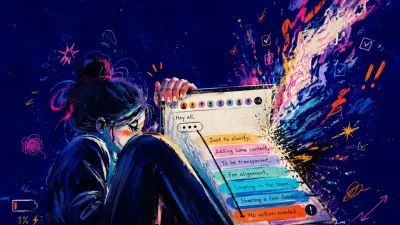
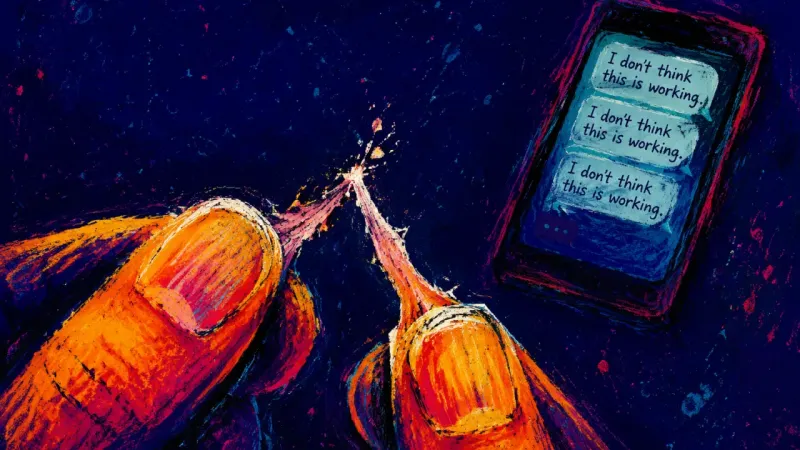
That was the energy Casey (name changed for privacy) brought into my studio in Toronto: late-20s, smart, funny, a content designer who could ship polished copy all day and still freeze over a three-line breakup draft on the ride home. Before she told me anything about the relationship, she gave me the scene. Tuesday, 8:47 p.m., westbound on the 504 King streetcar. Fluorescent lights buzzing overhead. Brakes squealing at each stop. Her phone warm in her palm while she mouthed the same three lines under her breath, changing ‘I can’t keep doing this’ to ‘I don’t think this is working,’ then locking the screen because a final version felt too final.
A few minutes later, instead of sending the honest text, she sent something soft and ordinary — a little check-in that kept the bond half-open for one more night. She looked at me and said, ‘I know what I need to do, so why am I still editing the same three lines?’ It had the exact ache of someone who has already Googled how to break up over text without being cruel at midnight and still can’t hit send.
What she was feeling wasn’t vague. It lived in her body. The second the goodbye became concrete, her throat tightened, her jaw locked, and her chest dropped as if an elevator had suddenly given way under her ribs. Her dread felt like trying to close a browser tab while her own body kept throwing up an are-you-sure-you-want-to-leave-this-page pop-up.
I told her, as gently as I could, ‘We’re not here to make you colder than you are. We’re here to see why one honest text has started feeling like a moral referendum. Let’s make a map through the fog and find the clearest next step.’

Choosing the Compass: A Shadow Spread for Breakup Clarity
I asked her to put both feet on the floor and listen to the room for a moment — the rain tapping the studio window, the radiator clicking once, the low hum from the speaker near my bookshelf. Then I shuffled. I never treat that pause like mysticism for its own sake. It’s simply a way to move from panic into attention, the way a producer asks for room tone before the real recording starts.
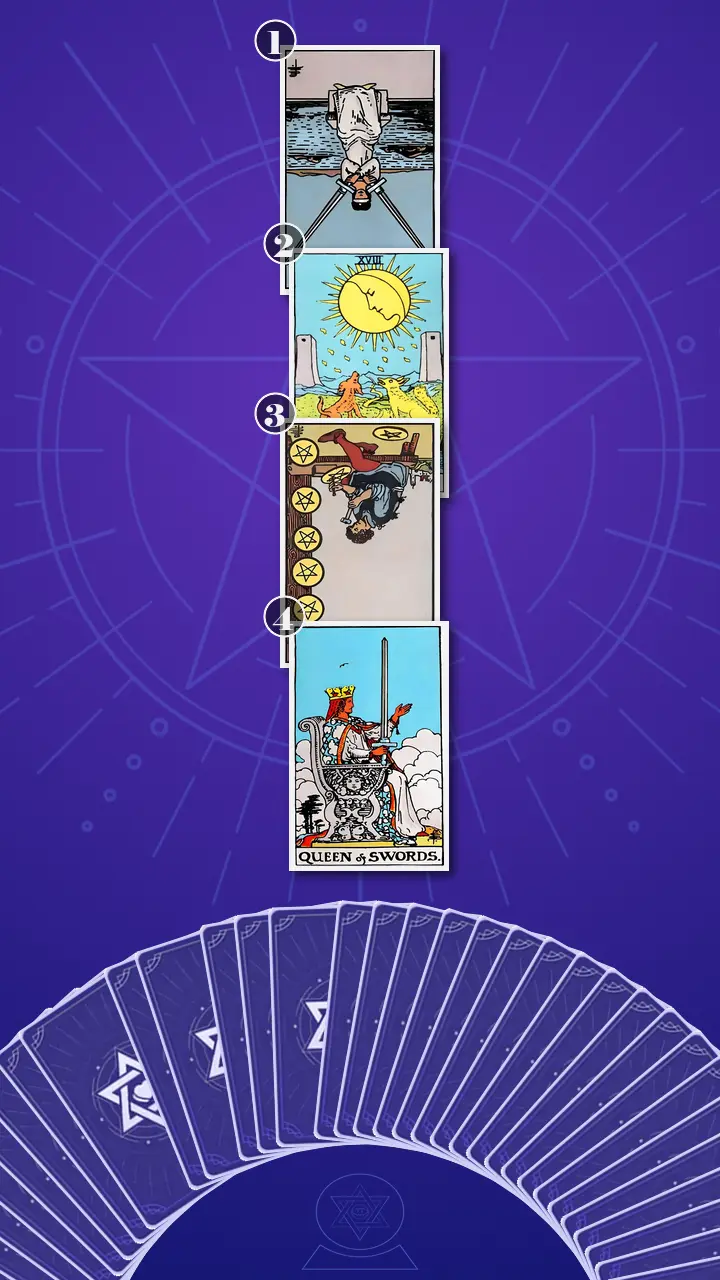
For this session, I chose The Shadow Spread, a four-card shadow reading I use when the question isn’t really ‘What are my options?’ but ‘Why can’t I do the thing I already know I need to do?’ This is why the spread works so well for breakup text paralysis: card one names the visible symptom, card two reveals the fear under it, card three shows the protective habit that keeps the loop going, and card four points to the integrated expression — the healthier voice that can finally act.
So I told her exactly what we were tracking. The first card would show the concrete stuck behavior: the repeated drafting, editing, and delaying. The second would go underneath that into the shadow fear — especially the fear of becoming the hurtful one. The third would show how that fear tries to protect itself, and the fourth would show the antidote: the clearer, more self-respecting tone that could help her send a brief, honest boundary without waiting to feel perfectly innocent.
Tarot doesn’t make the decision for someone in a case like this. What it does is expose the chain more cleanly than another night in the Notes app ever will.
Reading the Static Between Drafts and Truth
Position 1: The Loop That Calls Itself Care
Now I turned over the card for the surface symptom: Two of Swords, reversed.
It matched her real life almost too perfectly. On the ride home from a screen-heavy job, she kept toggling between Notes and the text thread, changing small words like ‘can’t’ to ‘don’t think,’ reading the message once under her breath, then locking the phone because seeing a final version felt too final. A few minutes later, the ordinary text went out instead, and the relationship stayed half-open for one more night.
Reversed, this card shows blocked air energy under pressure — not absent clarity, but clarity that has become unbearable to act on. The blindfold here isn’t confusion. It’s editing without any new information. The crossed swords over the chest read like self-bracing so intense that action gets mistaken for danger. She wasn’t actually missing the truth. She was trying to protect herself from the feeling of delivering it.
I said, ‘You didn’t turn a boundary into a wording problem because you’re dramatic; you turned it into a wording problem because wording feels safer than grief.’
She gave one short laugh, the kind with a bruise in it. Then her breath stalled, her eyes dropped to the card, and her thumb started rubbing the edge of her water glass. ‘Okay,’ she said. ‘That’s almost rude. I do exactly that.’
Position 2: The Moon and the Aftermath She Already Lived
Then I turned over the card for the shadow fear beneath the loop: The Moon, upright.
This is the late-night card. Not because something has already gone wrong, but because the nervous system has started living in imagined fallout before reality has even arrived. As soon as I saw it, I could feel the scene she’d described without needing her to repeat it: 11:36 p.m., condo window cracked open, blue phone light on her face, a siren fading somewhere below while she rehearsed hurt replies, cold silence, screenshots, anger, and the possibility of being remembered as the villain before a single text had been sent.
That is The Moon’s energy in excess. Not intuition, but projection. The winding path between the towers is the stretch between known attachment and unknown freedom. The dog and wolf are instinct and fear both making noise at once. In real life, it looks like this: nothing has happened yet, but your nervous system is already living inside the aftermath.
Years in radio taught me that midnight changes scale. When the studio goes quiet, the faintest hiss can sound enormous if I mistake it for signal. Emotional static behaves the same way. Casey wasn’t only afraid of hurting him. She was afraid that his hurt would become proof that she was careless, unkind, or secretly not who she believed herself to be.
I asked her, ‘If you sent the message tonight and he replied with hurt, anger, or cold distance, what would you instantly make that mean about you?’
Her shoulders froze first. Then her gaze went unfocused, as if memory had opened a tab behind her eyes. When she finally answered, her voice came out smaller. ‘That I handled it badly. That maybe I’m not as considerate as I think I am.’
Position 3: When the Draft Became a Deliverable
Next I turned over the card for the protective pattern — the habit that tries to save her from that fear: Eight of Pentacles, reversed.
I know this card well. It’s what I see when somebody turns a feeling into a work task. It landed exactly in the life she’d already shown me: Sunday afternoon at a café on Queen Street, oat latte gone lukewarm, breakup draft in Notes, a second version texted to herself, one trusted friend replying, ‘Honestly, this is fine,’ and still more punctuation tweaks, sentence shuffling, tone-softening, and paragraph rearranging — like a Figma file with infinite rounds of feedback.
Reversed, the Eight is misapplied earth. The effort is real, but it isn’t building the right thing. She’s productive, yes — but productively avoiding. The workbench becomes a place where she tries to earn emotional safety through labor, as if enough version history could manufacture a painless ending. It can’t. More editing only keeps the relationship lingering, the mixed signals multiplying, and the resentment quietly growing.
I told her, ‘The draft keeps growing when the real wish is innocence.’ Then I added, ‘This is why the problem feels bigger now than it did at the start. The first split became a routine. Now the routine feels responsible, but it’s still delay.’
She pressed her lips together, then let out a full-body ‘ugh’ that ended in a nod. ‘I’ve been treating this like copy,’ she said. ‘Like if I just find the right version, nobody gets hurt.’ Her spine softened an inch. That was the moment I felt the defense start to loosen.
When the Queen of Swords Spoke
Position 4: The Boundary That Didn’t Need Permission
When I turned over the final card, even the room seemed to change shape around it. The rain had eased. The speaker in the corner went so quiet I could hear the soft slide of cardstock against the table. This was the card I’d been waiting for — the integrated expression, the antidote. Queen of Swords, upright.
People sometimes ask me what the Queen of Swords means in a breakup reading. In real life, it means sent mail instead of draft folder. It means a clean unsubscribe rather than a long apology newsletter. It means choosing a send time instead of a perfect mood, writing one honest message, and refusing to add the extra paragraph designed to control how you’ll be perceived.
The energy here is balanced air. Not coldness. Not emotional shutdown. Discernment. The uncovered face answers the blindfold from the first card. The upright sword answers the crossed swords over the chest. The open hand matters too, because this Queen is not cruel — she is humane without surrendering the boundary. The ending can be sad and still be clean.
This was the moment I brought in one of the sound frameworks I use in my work, something I call Conflict Mediation. In the studio, when two frequencies are fighting, I don’t beg one of them to disappear. I lower the distortion so the real signal can come through cleanly. That’s what this Queen does. She does not erase guilt, grief, or tenderness. She cuts the static of over-explaining, forecasting, and tone-policing so the truth can finally be heard.
I leaned toward Casey and said, ‘When you’re on the streetcar mouthing the same three lines for the fifth time, it really can seem like the problem is wording. But the body tells on the deeper truth before the draft ever does. You’re not stuck because the message needs better phrasing. You’re stuck because part of you still wants honesty to come without guilt — and that deal doesn’t exist.’
Stop treating discomfort as proof the message is wrong; raise the Queen’s sword, cut away the extra cushioning, and let clear truth be the kindest thing you send.
She didn’t melt into relief right away. First her breath stopped. Then her jaw shifted, like she was holding back an argument with me or with herself. ‘But if I stop cushioning it,’ she said, sharper now, ‘doesn’t that mean I’ve been making it worse?’
I let the question sit for a beat. Outside, a car passed over wet pavement, and the sound moved along the window like a brushstroke. ‘It means you’ve been trying to keep both your kindness and your innocence,’ I said. ‘Most people do. But kindness and cushioning are not the same thing. Your job is clarity, not emotional air traffic control.’
That was when it landed. Her eyes widened first, then glossed. The muscles in her shoulders dropped so suddenly it looked unfamiliar on her body. One hand came to her mouth; the other opened over her lap. Then came the sound I wait for in readings like this — not a dramatic sob, just a shaky exhale from deep in the chest, the sound of someone setting down a weight they didn’t realize they’d been rehearsing around. There was relief in it, but also that odd dizziness that comes after putting down a heavy box: a little emptiness, a little responsibility, a little grief.
I asked her, ‘Now, with this new angle, think about last week. Was there a moment when this would have changed the feeling?’
She nodded immediately. ‘Friday. In the hallway after we hung out. I was holding groceries and I knew.’ She looked back at the Queen. ‘I thought if I couldn’t make it painless, I had to wait.’
‘That’s the shift,’ I told her. ‘Not from confusion to certainty — you already had the certainty. It’s from dread-driven tone-policing and self-doubt to shaky clarity, honest grief, and steadier self-respect. Clear is kinder than endlessly almost-leaving.’
From Insight to Action: Send Time Over Perfect Mood
Once all four cards were on the table, the story was clean. The Two of Swords reversed showed the visible loop: the breakup privately decided, the phone repeatedly reopened, the message endlessly softened. The Moon showed the shadow under it: imagined backlash treated like fact, and a deep fear that someone else’s hurt would rewrite her identity. The Eight of Pentacles reversed showed the defense: turning a boundary into a work task, mistaking more effort for more truth. And the Queen of Swords showed the correction: brief, direct, humane language that does not wait for zero guilt before it acts.
The blind spot was simple and brutal. Casey had been measuring the morality of her boundary by how little discomfort it created. But discomfort after sending a breakup text is not reliable proof that the message was cruel. Sometimes it is just the sound of reality arriving. The transformation direction was equally clear: stop editing toward innocence, and start acting from self-respect.
The Three Tools I Gave Her
- Choose the send windowI had her pick one specific slot that week — Wednesday at 7:30 p.m., after dinner — and put it in her calendar as ‘send, not edit.’ The task was not to feel calm. The task was to decide when the message would leave drafts and become real.When the mind says tomorrow will sound kinder, repeat this line: Pick a send time, not a perfect feeling.
- Write the three-sentence boundaryI told her to open a fresh note and write only three sentences: sentence one names the relationship truth, sentence two states the boundary, sentence three offers brief goodwill without reopening debate. Then stop. No fourth sentence. No apology paragraph. No committee review beyond one trusted friend, and that friend is for accountability, not co-writing.Set a 15-minute timer. If the draft still feels imperfect when it ends, that is not a sign to keep polishing — it is the stopping point.
- Do a Fact vs Forecast Check, then use my Soundproof BarrierRight before sending, I had her make a two-column note: ‘What I know’ and ‘What I’m predicting.’ Under facts, she listed the flatness, the private certainty, the delay, and the mixed signals. Under predictions, she put the feared meanings: he’ll think I’m cruel, I’ll be the villain, everyone will hear his version first. After sending, I gave her one of my own post-conflict tools, the Soundproof Barrier: mute the thread for one hour, put on one low-lyric track, and do one physical task — dishes, shower, short walk — so panic doesn’t grab the keyboard back.Keep the fact-vs-forecast note under five bullets total. If your throat closes or your jaw locks, unclench once, take three slower breaths, and return to the chosen send time rather than restarting the edit spiral.
Those were her next steps. Small. Concrete. Actionable. No grand reinvention — just one clear humane message, one fact check, and one hour of not letting guilt run post-production.
A Week Later, the Quiet Proof
Six days later, Casey messaged me. Just one line at first: ‘Sent. Three sentences. No fourth paragraph.’ A minute later she added, ‘Muted the thread, put on the playlist, cried a bit, didn’t reopen Notes.’
She told me the evening wasn’t cinematic. It was sad and ordinary. She ate takeout alone at her kitchen counter while a soft instrumental loop played in the background, and the next morning her first thought was still, what if I was too blunt? But this time she noticed the thought, smiled once, and didn’t go hunting for another edit. Clear, not perfect. Lighter, not untouched.
That is what I trust about a good Shadow Spread tarot reading for breakup paralysis, hidden fear, and people-pleasing boundary guilt: it doesn’t hand out magical wording. It gives a clean map from symptom to fear to protective pattern to integration. It helps a person stop treating dread like proof and start using discernment instead.
When I tidied my studio that night, I thought again about the small sound Casey made when the Queen of Swords finally landed — that breath from deep in the chest, half grief and half release. You are allowed to disappoint someone without cross-examining yourself into silence. Sometimes the tight throat isn’t a sign you’re doing the wrong thing; it’s what it feels like when you’re ending something honestly while still afraid that someone else’s hurt will rewrite who you are.
If you let the guilt come along without giving it the keyboard, what would your clearest three sentences sound like?