Toggling Between iMessage, Notes, and Find My—Until a Boundary Landed

Finding Clarity in the TTC Spiral
If you've ever sat on a Toronto streetcar drafting the least awkward possible reply to a new date asking for your live location while your stomach goes tight and your friends give you opposite advice, I know exactly how that digital boundary guilt spiral sounds. Maya (name changed for privacy), a 27-year-old junior account manager, came to me with that very modern split: competent, articulate, impossible to rattle on client calls, and then completely stalled by one text that made her feel too reachable.
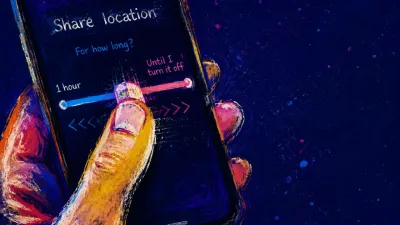
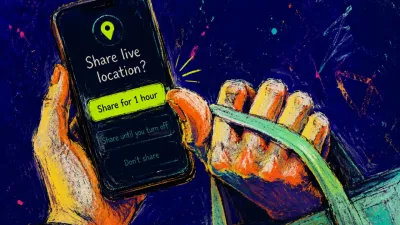
She told me about 6:14 p.m. on a rainy Wednesday: westbound TTC, announcement chime cracking through the carriage, wet coat sleeves brushing her arm, phone hot in her hand from being unlocked too many times. She kept flipping between the iMessage thread, Notes, and a friend's chat, typing one version of a reply, deleting it, opening Find My settings just to look, then scrolling old texts for tone clues. She wanted to seem open to someone she actually liked, but her whole body was saying slow down before you make access feel normal.
'I don't want to make this weird,' she said. 'But I also don't want to hand over something I can't really take back.' That was the real crossroads: wanting to build trust by being open versus fearing the loss of privacy and control if she opened too much, too early. By the time she saw me, she'd already done the modern pilgrimage — group chat poll, Find My settings rabbit hole, and the late-night search of should I share my location with someone I'm dating. A location pin is not proof of trust.
The wariness in her felt like hearing a train before it comes into view: nothing has hit yet, but every muscle has already stepped back from the platform edge. I told her, as gently as I could, that she was not failing some invisible test of being chill. We were here for a Journey to Clarity — to stop letting one tiny ask carry the weight of the whole connection, and to draw a map through the fog.
Choosing the Compass: Decision Cross · Context Edition
I asked her to put both feet on the floor, take one slow breath, and hold only the actual question: do I share it or keep it private? Then I shuffled slowly between us. For me, that moment is never about theatre. It is a clean transition out of the app-switching brain and into attention.
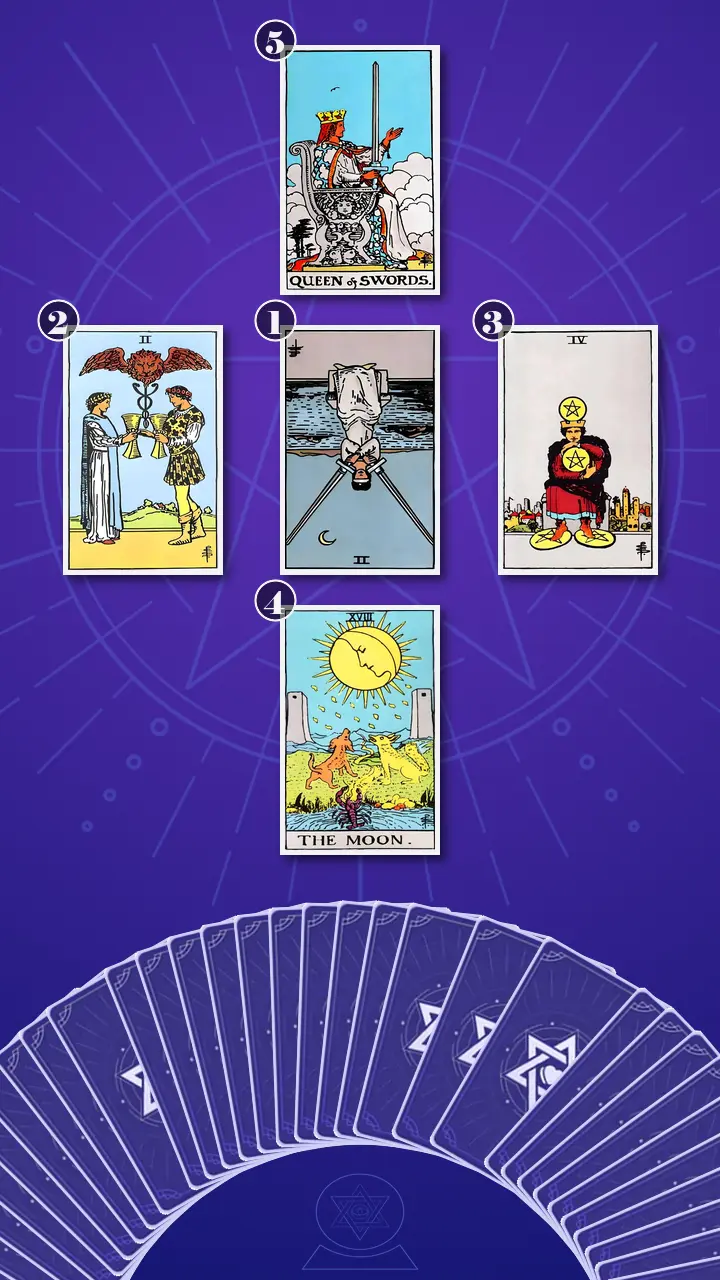
For a question like this — explicit yes or no on the surface, emotionally tangled underneath — I use the Decision Cross · Context Edition. If you've ever wondered how tarot works for modern dating problems, this is one of the clearest examples. A good spread does not pretend to predict whether someone is safe or controlling from one short message. It reveals the structure of the choice. This particular spread is ideal because it stays compact enough for a binary decision, yet it is deep enough to show that the real issue is not only sharing versus not sharing. The deeper issue is what she fears losing either way: safety, control, or connection.
I told her where we were headed. The center card would show the presenting problem: the freeze between wanting to answer warmly and wanting to protect privacy. The left and right cards would compare the energy of sharing location versus keeping it private. The lower card would expose the hidden undertow — fear, projection, or incomplete information. And the top card would show the boundary principle capable of holding both warmth and self-respect at the same time.
Reading the Map Before the Fog Cleared
When I turned over the first card, I felt that familiar click of recognition. Sometimes a spread does not ease into the truth. Sometimes it names the whole loop immediately.
The Center Card: Two of Swords, Reversed
Now lying at the center was the card representing the presenting problem: the freeze between wanting to answer warmly and wanting to protect privacy. The Two of Swords, in reversed position.
It translated almost too neatly into her real life. Maya in the back corner of a TTC streetcar after leaving the agency, thumb hovering over a location request, drafting three replies, deleting all of them, opening Find My settings, then scrolling upward through the chat as if one more clue would make the answer obvious. The blindfold in the card was limited context over text. The crossed swords were the two defensive scripts colliding in her chest. The dark water was the emotion building underneath the unsent reply.
Reversed, this card is blocked Air — not a lack of intelligence, but too much intelligence pointed at a question that does not yet have enough data. It is like rewriting a two-line text the way you're supposed to revise a client pitch deck. Every version tries to solve not just the message in front of you, but the whole future of the relationship. So I said the sentence that often begins the turn: 'The question is not Will they like my answer? The question is What access feels right right now?'
She let out a short laugh with a bitter edge. 'Okay,' she said, rubbing her thumb along the rim of her paper cup, 'that's so accurate it feels a little rude.' Then her shoulders lifted, stalled there, and finally dropped on the exhale. That is what this card often does first: it names the loop so precisely that defense loosens.
The Left Arm: Two of Cups, Upright
The next card occupied the position exploring what sharing location is trying to create or secure in the relationship, including the hope for trust or reciprocity. The Two of Cups, upright.
This was not the card of naivety. It was the card of hope. In ordinary life, it looks like the part of Maya that wants the interaction to stay easy and mutual — the part that thinks maybe sharing a little more says, I'm open too. The raised cups in the image are not about surrender; they are about exchange. She was not craving surveillance. She was craving a smooth, reciprocal feeling, especially with someone she liked enough to care how she came across.
Upright, the energy here is balanced Water, but only if reciprocity is real. If it slips into overfunctioning, the wish for connection starts doing too much emotional labor. I told her that this card showed something worth honoring: she wanted closeness, not because she was weak, but because connection mattered to her.
The Right Arm: Four of Pentacles, Upright
On the opposite side sat the card exploring what keeping location private protects and what boundary it asks her to claim. The Four of Pentacles, upright.
This card was the body saying, not everything needs to become shared property just because the vibe is good. In modern life, it is the instinct to keep one piece of personal territory close until trust has substance — the same logic as keeping your apartment code, your phone passcode, or certain app permissions to yourself even when you genuinely like someone. The pentacle pressed to the chest is not coldness. It is custody.
Upright, this is balanced Earth when it comes from grounded self-respect, and clenched Earth when fear grips the wheel. So I laid the two cards side by side for her. On one side: the wish to keep the connection warm and reciprocal. On the other: the wish to keep access proportionate and earned. 'These are not enemies,' I told her. 'They're two truths.' Her face softened in that immediate, almost embarrassed way people do when they realize they are allowed to want both. 'So I'm not crazy for wanting closeness and privacy at the same time,' she said. 'Not even a little,' I answered.
The Undertow: The Moon, Upright
The card below the center reveals the hidden fear, projection, or incomplete information underneath the dilemma. Here, it was The Moon, upright.
Right as I turned it over, rain tapped the window beside us in a thin, unsettled rhythm, and for a second the room felt like the inside of her 11:42 p.m. bedroom scene — lamp low, radiator ticking, screen glow too bright for the hour. That is Moon territory. Not proven danger. Not simple safety. Just partial visibility.
In real life, this looked exactly like her late-night loop: rereading the wording, overreading punctuation, bouncing between maybe this is sweet and normal and maybe this is the first red flag and I'm missing it because I want to seem chill. The Moon is like reading tone through frosted glass: you can make out shapes, not certainty. This is uncertainty turning into projection, with the nervous system filling in the rest.
Energetically, The Moon floods the spread. It is neither deficiency nor excess so much as distortion under low visibility. I said, 'You are not overreacting just because your body answered before your text did. But this card asks us to separate what you know, what you suspect, and what your body is signaling.' Then I asked her the cleanest question I know in moments like this: 'What do you actually know about the request, and what are you filling in because the silence feels unbearable?'
She went very still. First her breath paused. Then her gaze unfocused, as if she were replaying the exact message in her head. Then her jaw loosened half a notch. 'I know they asked,' she said slowly. 'I don't know what story they'd attach to a no. I've been writing that part for them.' That quieter pause was the first sign of movement inside the fog.
When the Queen Lifted Her Sword
The Guidance Card: Queen of Swords, Upright
The final card sits above the spread and offers the integrating guidance: the clearest mindset and communication stance for an empowered response. When I turned it over, the room seemed to sharpen. The card was the Queen of Swords, upright.
This is one of those cards I trust instantly. Her upright sword and open hand say exactly what this moment needs: a boundary that is clear and relational, not icy. In modern terms, this is Maya stopping the performance of chillness and sending one calm sentence she can actually stand behind. Not a speech. Not a vague dodge. A proportionate answer.
I felt an old memory flick through me from my previous life on Wall Street. On a trading floor, we never made a clean decision by asking, How do we guarantee everyone will feel good about this later? We asked, What is the right level of exposure for the information in front of us? That is the lens I now bring to readings like this, and I call it my Strategic Crossroads Analysis. The Queen of Swords does not ask Maya to value the entire future of the connection in one go. She asks her to probability-weight only the next move: no sharing, a simple arrival text, or a time-bound share for a specific reason. Full access is not the only asset on the table.
The real message was clean: she did not have to trade privacy for closeness; a clear boundary was how she would find out whether trust in this connection was actually mutual. This was a boundary choice, not a loyalty test.
By then, Maya was still holding the problem like it required a perfect verdict — one reply that would protect privacy, preserve chemistry, prevent awkwardness, and somehow prove whether this person was safe, respectful, and worth trusting. That is too much weight for one text, and the body knows it long before the mind admits it.
Stop treating every request like a test you must pass; lift the Queen's sword, say what access is right for now, and let clarity—not pressure—do the talking.
I let the sentence sit between us for a beat.
Her reaction did not arrive as instant relief. First, her inhale caught halfway, and her fingers froze against the edge of her phone. Then her eyes drifted past me, unfocused, replaying some recent scene — the agency kitchen, the split group-chat advice, the half-written Notes draft she never sent. Then came the resistance. 'But if I say it that clearly,' she said, almost annoyed, 'won't I look difficult?' It was such a real question that I almost smiled.
'Maybe to someone who benefits from you being vague,' I said. 'But clarity tells you more than compliance ever will.' I could see the thought land. Her jaw tightened once, then released. One shoulder dropped before the other. The hand that had been near her throat came down flat against her thigh. The shift was not dramatic; it had that strange, slightly dizzy feeling that comes after you've been clenching for so long that relaxing feels unfamiliar. So I asked her, 'Now, with this new lens, think about last week. Was there a moment when this would have changed the feeling in your body?'
She gave me a small, almost disbelieving smile. 'Yeah,' she said. 'I would've stopped trying to win the vibe.' Before I even answered, she opened Notes. In less than a minute, she typed: I don't share my live location early on, but I'm happy to text when I'm on my way and when I get home. She looked at the sentence like it belonged to a version of her she had been waiting to meet. That was the crossing point of the whole reading — from wariness and freeze to clearer self-respect and a calmer trust in her own judgment. Not certainty about him. Certainty about what belonged to her.
From Fog to Fact: Actionable Advice for the Next 48 Hours
When I gathered the story of the spread back into one line, it sounded almost embarrassingly practical. The Two of Swords reversed showed the freeze: one small reply carrying the emotional weight of the whole relationship. The Two of Cups showed why yes felt tempting — because she wanted warmth, reciprocity, and no weirdness. The Four of Pentacles showed why no felt necessary — because privacy is still a form of personal territory, not a moral failing. The Moon showed the undertow: incomplete information had been allowed to inflate into a personality test. And the Queen of Swords restored the missing move — clear language that could hold both connection and self-respect.
I told her her cognitive blind spot was not caution. It was the assumption that boundaries automatically threaten closeness. That belief had been forcing privacy and intimacy to compete like rival stocks, when in reality they can coexist just fine if access is negotiated instead of assumed. Her direction of travel was simple: stop proving trust by granting access, and start naming what level of access feels appropriate now.
Then I pulled in one of the tools I built after leaving finance: a Boardroom-style decision ledger. Not to turn dating into a spreadsheet, and definitely not to score somebody's worth from one text. Just to stop the nervous system from acting like there were only two choices — full openness or total shutdown — when there was clearly a middle path.
- Write the Queen of Swords textOpen Notes and draft one sentence that answers only the access question: 'I don't share my live location early on, but I'm happy to text when I'm on my way and when I get home.' If you want, paste it into iMessage later instead of composing live while watching the typing bar.Before you send it, use my pre-commitment ritual from the trading floor: both feet on the ground, one slow exhale, no app-switching for 90 seconds. Plain is not cold.
- Do the Fog-to-Fact resetSet a three-minute timer and make a two-column note titled 'What I know / What I'm filling in.' Put the exact request in the first column. Put your guesses, fears, and imagined reactions in the second. Do not reread the whole thread or check their socials during those three minutes.Minimum version: one fact, one assumption, one body signal. That is enough to interrupt the algorithm that feeds fear with more fear.
- Choose the access level on purposeUse a 10-minute rapid assessment and pick one of three levels for this exact situation: no sharing, a one-time arrival update, or time-limited location sharing for a concrete safety reason. Match the level to observable trust, not to the pressure of seeming easygoing.If they respond with curiosity, respect, and adjustment, that is useful data. If they push, guilt, or sulk, that is useful data too.
In other words: this was not really a question of how to say no to sharing location without sounding rude. It was a question of how to stay warm without becoming fully accessible. Warm does not have to mean fully accessible.

A Week Later: The Quiet Proof
Four days later, she sent me a screenshot. She had used the script almost word for word. The reply she got back was short: Totally fair. Text me when you're home if you want. That was all. No guilt trip. No weird punishment. Just information.
She also admitted the change was not movie-perfect. She told me she slept through the night for once, then woke with the first reflexive thought — what if that sounded too much? — and laughed before making coffee. That was enough evidence for me. The reading had done what the best relationship tarot does: not predict the ending, but return her to her own proportionate truth.
This is why I trust the Decision Cross · Context Edition tarot spread for questions like privacy versus trust in early dating. It helps people move from pressure to discernment, from tone-scanning to grounded next steps, from freeze to finding clarity they can actually use in a real chat window.
There is a very specific kind of loneliness in holding your breath over a simple text because you want to stay close without feeling suddenly too reachable. If that is where you are tonight, with your thumb hovering over a location button like it might decide the future of the whole connection, please know that noticing the tug-of-war is already the beginning of self-respect.
So the next time the chat opens and your brain wants to turn one reply into a full PR statement in Notes, what is the smallest truthful Queen of Swords sentence you'd want to stand behind today?