TTC Deal Alert, Ten Tabs, Banking App—and the Travel Fund Rule I Tried Next
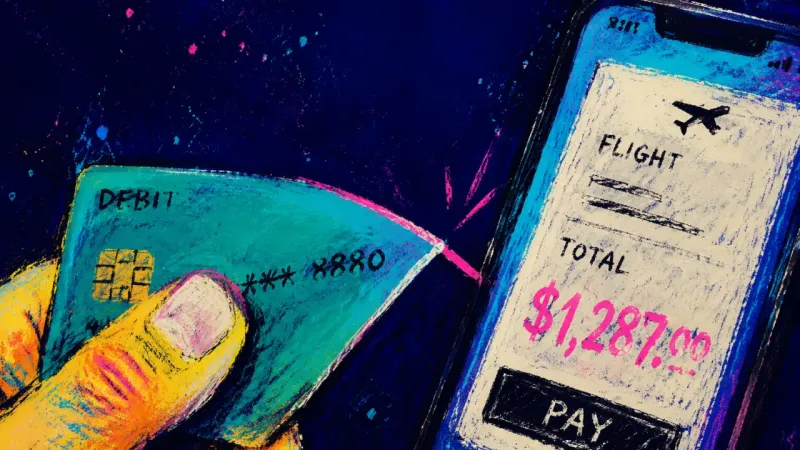
The Flight Deal Alert Anxiety Spiral on the TTC
If a “$179 to Lisbon” flight deal hits while you’re on the TTC and you instantly open 10 tabs—then close them all feeling worse—this is for you.
Jordan (name changed for privacy) came to me from Toronto with a question that sounded simple and maddening at the same time: “Why do travel, savings, and fear keep looping—and what’s the next step?” They’re 29, mid-level marketing, hybrid schedule, decent salary, and the specific kind of tired that comes from being competent all day and then getting ambushed by your own brain at night.
As they spoke, I could see the split-screen of their evenings as clearly as any artifact laid out on a worktable: on the left, Google Flights price graphs, Skyscanner alerts like sirens, TikTok “48 hours in Lisbon” videos playing softly; on the right, the banking app open “just to check,” a quick transfer to savings, a rewritten budget category, and that heavy, disappointed drop after closing the checkout tab.
“It’s like… I hover over Purchase with jittery hands,” they said, pressing their palm to their chest as if it could quiet the sensation. “My chest gets tight, and then I bail. And two hours later, I’m checking the price again like it’s a test.”
I nodded, because the pattern itself was the point: a flight deal alert → 10+ tabs → checkout hover → banking app check → close tab → re-check later. A whole nervous system trying to find safety in motion without ever moving.
The feeling in the room had the texture of anxious craving—like wanting freedom so badly you can almost taste airport coffee, while carrying a spreadsheet like a shield. It’s the particular ache of standing at a departures board with a suitcase in one hand and a budget app in the other.
“We don’t have to shame either part of you,” I told them. “The part that wants to feel alive is legitimate. The part that wants to feel safe is legitimate. Our Journey to Clarity today is to figure out why the loop keeps snapping shut—and how to create a next step that doesn’t require perfect certainty.”
Choosing the Compass: The Transformation Path Grid (6) for Finding Clarity
I asked Jordan to take one slow breath—not as ritual theatre, but as a clean handhold for attention. Then I shuffled, deliberately, the way I once brushed soil from a fragile shard: steady pressure, no rushing, no forcing meaning.
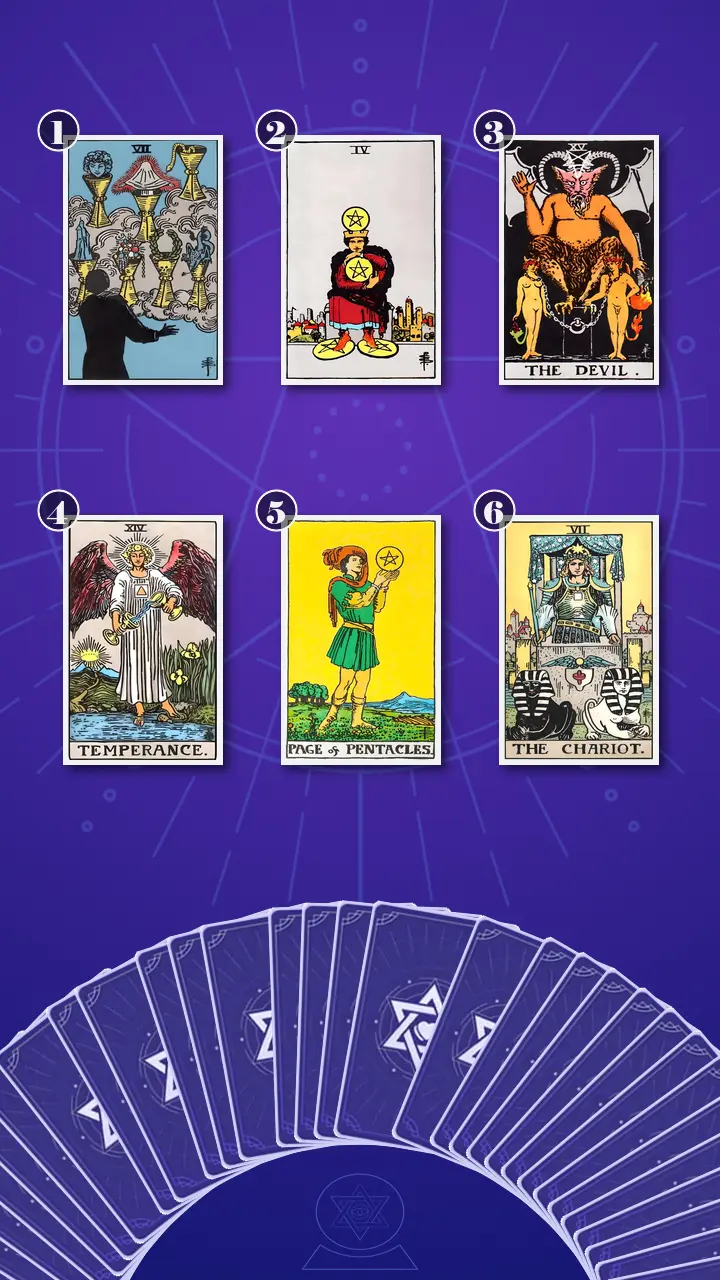
“Today,” I said, “we’ll use a spread called the Transformation Path Grid (6) · Context Edition.”
For readers: I chose this because Jordan’s problem isn’t a simple “travel or save” binary. It’s a self-reinforcing habit loop—deal alerts trigger fantasy, fantasy triggers a money-grip, the money-grip triggers avoidance, and avoidance trains the next alert to feel even more urgent. A six-position grid lets me map the loop cleanly (what happens, what blocks it, what drives it), then build a bridge into change (the key shift, a week-level next step, and what integration feels like). It’s less prediction, more pattern diagnosis—how tarot works best when you want actionable advice, not fate.
I laid the cards in two rows of three—like a small dashboard. “Top row,” I explained, “is the loop: what you do, what freezes you, what’s underneath. Bottom row is the shift: what changes it, what you do this week, and what it feels like when you’re steering again.”
“So,” I added, “we’re going to look at three crucial roles: the observable pattern (Position 1), the exact moment you tighten (Position 2), and the deeper driver (Position 3). Then we’ll hinge on the turning point (Position 4), which is the heart of the reading.”
Reading the Map: The First Three Cards
Position 1: The current loop in action
“Now we turn over,” I said, “the card representing The current loop in action: what you do when the flight deal hits (the observable pattern).”
Seven of Cups, upright.
I traced the image with my finger—cup after cup, each offering something dazzling and slightly unreal. “This is what choice overload looks like in tarot,” I said. “Not a lack of options—a surplus that becomes fog.”
And then I gave them the modern translation in the exact language their life already spoke: “It’s 9:12 PM in your condo, takeout containers on the coffee table. You’ve got Skyscanner, Google Flights, Air Canada, and three TikTok ‘48 hours in Lisbon’ videos open. Each tab is a different version of you—solo-reset you, hot-city-break you, ‘I’ll be cultured and productive’ you, friends-trip you. The deal feels like a portal… until choosing one version feels like killing the others.”
The energy here is excess: too much imagination, too many futures blooming at once. “Your brain is treating tab-count as progress,” I said, “like having fourteen browser tabs open and thinking the tab number equals movement. But it’s more like an algorithm feeding you ‘next best option’ until you can’t remember what you actually wanted.”
Jordan made an unexpected sound—a small laugh that carried a bitter edge. “That is… so accurate it’s kind of rude,” they said. “Like, wow. Okay.”
“Good,” I replied gently. “If it feels a little ‘too on the nose,’ it usually means we’re looking at the real mechanism, not a personal failing.”
Position 2: The main blockage
“Now we turn over the card representing The main blockage: what specifically tightens, freezes, or derails the decision in the moment.”
Four of Pentacles, upright.
“Ah,” I murmured, and Jordan’s eyes narrowed like they already knew what was coming.
“This,” I said, “is the exact freeze-frame.” I described it as they had lived it: the flight in the cart, the thumb hovering over Purchase, shoulders creeping up, jaw tight—then the reflexive swipe to the banking app “just to check.” The savings balance becomes a safety blanket. Money held to the chest like armor.
“Here’s the non-moral truth,” I continued. “The energy is blockage. The Four of Pentacles isn’t ‘bad with money.’ It’s ‘money as emotional protection.’”
Then I let one of my anchor lines land cleanly: Savings isn’t a moral scorecard.
Jordan’s throat moved as they swallowed. Their nod was small and uncomfortable—the kind that says, Yes, and I wish I didn’t.
“I do that transfer,” they admitted. “Like if I move $200 into savings, it proves I’m… not reckless. And then I still go back and refresh prices. It’s exhausting.”
“It makes perfect sense,” I said. “It’s your nervous system trying to build safety out of a number. Understandable—and expensive in the long run, because it costs you trust.”
Position 3: The underlying driver
“Now we turn over the card representing The underlying driver: the deeper belief or attachment that keeps the loop self-reinforcing.”
The Devil, upright.
The room felt a shade quieter, as if the laptop fan had decided to listen. “People get dramatic about this card,” I said, “but I read it with compassion. It’s about attachment—what hooks you.”
“After a brutal hybrid-work day—Slack pings, client decks, the subtle pressure to look ‘on’—the alert hits like relief,” I said, translating it into their world. “The search becomes a ritual: refresh prices, watch itinerary videos, doom-scroll travel highlights… then punish yourself with budget rules when the high wears off.”
The energy here is excess turning into compulsion: the alert is the hit, the research binge is the high, the savings-grip is the comedown. So I named the shame-free truth exactly as it needed to be named: This isn’t a ‘discipline problem.’ It’s a nervous-system workaround with a boarding pass aesthetic.
Jordan’s gaze drifted off-screen for a second—the way people look when they’re replaying a moment. “I open flight sites when I feel trapped,” they said quietly. “Or numb. It’s like… the only thing that makes me feel like I have a life outside my laptop.”
“And the chains,” I said, tapping the image, “can loosen. The Devil always shows chains that look tighter than they are.”
When Temperance Poured Between Two Apps
Position 4: The key shift
I held my hand over the next card for a breath. “This,” I said, “is the hinge. The card that tells us what changes the entire system.”
“Now we turn over the card representing The key shift: the mindset/skill that transforms the loop into a balanced choice.”
Temperance, upright.
In the image, an angel pours water between two cups—one foot on land, one in water—an embodied lesson in moderation that doesn’t scold desire. I felt my old academic reflex rise: the historian in me wanting to lecture about Aristotle’s golden mean. Instead, I chose a different tool from my own kit—one that keeps wisdom alive by keeping it human.
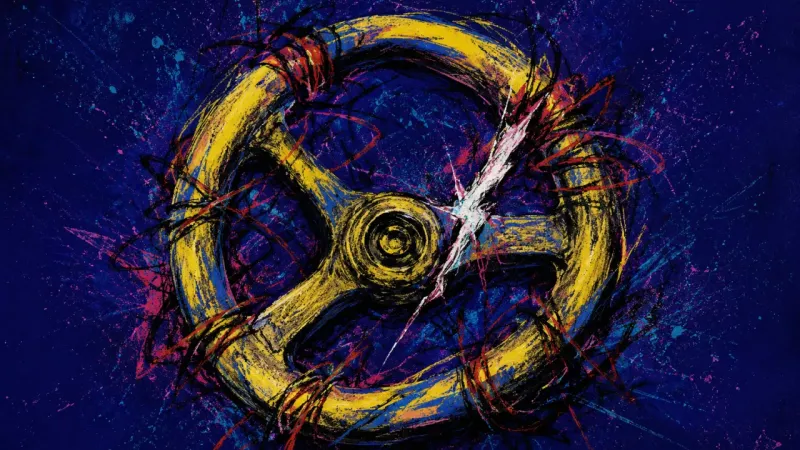
I used my Mythic Archetypes lens. “Temperance is the Integrator archetype,” I said. “In myths, the hero doesn’t win by choosing one extreme—recklessness or retreat. They win by building a third thing: a way through. Like Odysseus lashing himself to the mast—he doesn’t deny the Sirens, and he doesn’t hand them the wheel.”
Setup (I slowed my voice, because the moment required it): “You’re on the TTC with a ‘$179 to Lisbon’ alert open, ten tabs blooming, and your banking app one swipe away—half of you packing a carry-on, half of you clutching the savings number.”
Not a tug-of-war between impulse and restriction—choose the middle path and blend desire with discipline like Temperance pouring from cup to cup.
I let that hang in the air for a beat—long enough for the mind to stop sprinting.
Reinforcement (I watched the reaction arrive in layers): Jordan’s breathing paused first, just a fraction—like their body had been bracing for a verdict. Then their eyes unfocused, the way they do when a thought finally stops ricocheting and starts landing. Their shoulders dropped on a long exhale, and I saw their fingers unclench from the edge of their mug, one by one, as if they’d been gripping it for dear life without noticing.
“So… I don’t have to decide from panic,” they said, and there was a note of anger in it—an honest flare. “But doesn’t that mean I’ve been doing it wrong this whole time?”
“No,” I said immediately. “It means you’ve been surviving. Archaeology teaches you this: the top layer of soil isn’t ‘wrong.’ It’s what formed under pressure. We don’t judge the layer—we read it. Then we choose what to build on purpose.”
And I offered the cleanest reframe, the one that turns urgency back into agency: A deal isn’t a deadline.
“Now,” I asked, “with this new lens—can you recall one moment last week when the alert hit, and this idea could have changed how it felt in your body? Even five percent?”
Jordan’s hand went to their sternum again, but softer this time. “Tuesday night,” they said. “I remember the chest tightness. If I’d had… a rule, a cap, something pre-decided… I wouldn’t have had to re-litigate my whole adulthood at 11 PM.”
“Exactly,” I replied. “This is the start of the transformation: from anxious craving and money-grip control to grounded self-trust and values-based travel decisions. Not by finding the perfect deal—by changing the decision process.”
I pointed to Temperance’s slow pour. “This week, we don’t chase certainty. We build a container.”
The Builder and the Driver
Position 5: The next step
“Now we turn over the card representing The next step: one practical, week-level action that makes the shift real (without needing perfect certainty).”
Page of Pentacles, upright.
“The Page is the opposite of the ten-tab trance,” I said. “This is student energy—learning by doing, building proof with small systems.”
I made it absurdly concrete, just as the card asks: “This week, you treat travel like a small project, not an emergency. You pick one destination you genuinely want (not five). You set an auto-transfer—$25 to $75—into a Travel Fund every Friday. And you make one deal-check rule for seven days: one scheduled check, not refreshing whenever anxiety spikes.”
The energy here is balance through practice. Not romance. Not punishment. Competence built in tiny increments.
“I’m going to want to turn this into a whole Notion dashboard,” Jordan said, half-smiling.
“Of course you are,” I replied. “But we’re not feeding the loop with prettier spreadsheets. Don’t find the perfect trip. Build the container that makes any trip feel safe enough to choose.”
Position 6: Integration
“Now we turn over the card representing Integration: what it feels like when you follow through with the new approach (self-trust outcome).”
The Chariot, upright.
“This is what it looks like when you’re driving again,” I said. “Two forces that used to pull you apart—adventure and stability—get harnessed to one direction.”
I translated it into their daily reality: “A month from now, an alert still arrives—but it doesn’t drive you. You can say, calmly, ‘Not this month,’ or ‘Yes, that fits the container I chose.’ You’re not negotiating with panic at checkout. You’re steering: calendar, budget, priorities.”
Then I gave them the boundary line that belongs to this card: If your phone gets a vote, you need a rule that outvotes it.
Jordan nodded, and this time it wasn’t tight. It was steady—like someone putting their hand back on a wheel.
The Travel Fund Container Method: Actionable Next Steps
I leaned back and stitched the whole reading into one clear story, because that’s what a good spread does—it turns scattered data into a timeline you can live inside.
“Here’s why it’s been happening,” I said. “The Seven of Cups shows the trigger: deals multiply futures faster than you can choose, and FOMO makes each option feel like a once-in-a-lifetime portal. The Four of Pentacles shows the collapse point: the savings number becomes armor, so spending feels like danger, not choice. The Devil shows the deeper engine: the loop regulates stress—hit, high, comedown—so it repeats even when you ‘know better.’ Then Temperance offers the bridge: a pre-set balance point so your nervous system doesn’t have to negotiate at checkout. The Page turns that insight into a tiny system. And The Chariot is the outcome: self-direction, not perfect confidence—just fewer second-guesses.”
The cognitive blind spot here is subtle: you keep trying to research your way into moral certainty—as if the right fare, the right itinerary, the right timing will finally prove you’re “responsible.” But responsibility isn’t a feeling you achieve at 11 PM. It’s a structure you build ahead of time.
The transformation direction is equally specific: shift from “a deal means I must decide right now” to “I decide based on my values and a pre-set travel budget.” In other words: values-first, not urgency-first.
And because I’m a professor who has spent too many years reading inscriptions carved into stone, I offered Jordan one of my own interventions: an Inscription Affirmation. “In excavation sites,” I told them, “we find tiny phrases scratched into pottery—small, repeatable truths people lived by. Yours doesn’t need to be poetic. It needs to be usable.”
- Create the Travel Fund (5 minutes)Open your banking app and create a separate Travel Fund (or a named sub-account). Do it once, while you’re calm—not while you’re hovering over “Purchase.”If your brain wants to optimize, tell it: “This is version 1.0.” You can refine later; today is about breaking the checkout negotiation cycle.
- Set your “container” numbers (10-minute Temperance Test)Set a timer for 10 minutes. Write two numbers in a note titled My travel container: (1) what you’re genuinely okay spending this month (even if it’s $50), and (2) a hard cap you won’t cross.If your chest tightens or you start bargaining, pause. No white-knuckling. You’re training calm clarity, not forcing a purchase.
- Choose one rule that outvotes your phone (7-day experiment)Pick one: either “I only price-check on Sundays” or “I only book from the Travel Fund.” Write your Inscription Affirmation on a sticky note: “If it fits the container, I can decide. If it doesn’t, it’s a no for now.”Expect the thought “But what if a better deal shows up tomorrow?” That’s just the loop trying to reopen. You’re only committing to seven days.
That is the practical heart of how this works: the Transformation Path Grid (6) tarot spread separated Jordan’s surface behavior from the deeper driver, then translated insight into a small, testable routine. Tarot didn’t “tell them what to book.” It showed them how to stop treating every deal like an emergency referendum on their adulthood.

A Week Later: Ownership, Not Urgency
Eight days later, I received a message from Jordan. No dramatic announcement—just a screenshot of a new sub-account labeled Travel Fund and a note that read: “Sunday-only checking. $50 cap for April. I didn’t book Lisbon. And I didn’t spiral.”
They added, “I slept through the night for the first time in a while. Woke up and my first thought was still ‘What if I’m doing this wrong?’—but then I laughed. Like… oh, that’s just the old loop trying to get a vote.”
That’s what I mean by a Journey to Clarity. Not certainty. Not a perfect trip. Just the quiet proof that your choices can come from structure instead of panic—Temperance first, then momentum.
When you want freedom so badly you can taste it, but the moment money becomes real your chest tightens—like choosing wrong would prove you can’t keep yourself safe.
If you gave yourself a tiny travel container—one number and one rule—what would you want it to protect: your peace, your future options, or your ability to actually say yes sometimes?
Every reading at AceTarot is a Journey to connect with inner wisdom and empower next step.
Learn more about our Journey to Clarity.