My 'Just One More Tab' Habit Was Fear: How I Picked One Step

Finding Clarity in the 4:48 p.m. Tab Bar
If you’re a hybrid-office knowledge worker who swears you’re “not procrastinating, just preparing,” but your Chrome tab bar looks like a packed subway platform—welcome to digital overwhelm that masquerades as productivity.
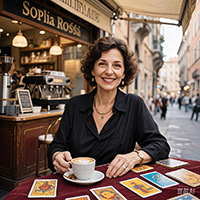
Alex found me on a rainy Tuesday, the kind Toronto does with commitment. They slid into the corner table of my café with their laptop still open like it had followed them here. The fluorescent hum of their office had been replaced by the low hiss of my espresso machine, but their body hadn’t gotten the memo yet.
“It’s 4:48 and I’m still in the same chair,” they said, voice tight in that half-joking way people use when they’re trying not to sound scared. “Slack is pinging. I’ve got a doc, an email thread, a Jira ticket, and… honestly? Like twenty tabs. Maybe more. I keep switching and nothing is landing.”
They flexed their fingers over the trackpad like they were about to sprint. Their jaw looked like it had been braced for impact. Shoulders up near the ears. Wired-but-tired—right there in the chest, like a coffee that never turns into energy, only vibration.
“Why do my 20 open tabs make life feel unbalanced,” they asked me, “and what do I do next?”
I nodded, slow and unshocked. “I know this pattern,” I said, letting my voice be warm but clean. “Not as a moral failing. As a nervous system strategy.”
I glanced at the tab bar—favicons so crowded they’d turned into tiny dots. “Here’s the blunt truth, Alex: your tabs aren’t neutral. They’re active cognitive load.”
Their eyes softened like they’d been waiting for someone to say that without making them feel ridiculous. “That’s… exactly it,” they said. “It’s like if I close something, I’m gambling with being wrong.”
“Okay,” I said. “Then our journey today isn’t about becoming ‘more disciplined.’ It’s about finding clarity—real clarity—inside the fear that closing options means falling behind.”

Choosing the Compass: A Celtic Cross for Digital Overwhelm
I didn’t treat the reading like a stage trick. I treated it like a transition—like wiping down a counter before the morning rush. I asked Alex to put their phone face-down and take one slow inhale, just long enough to notice what their jaw and shoulders did on the exhale. Then I placed my deck between us on the marble table, next to the small cup of water I always keep—because nervous systems, like espresso, need something clean to return to.
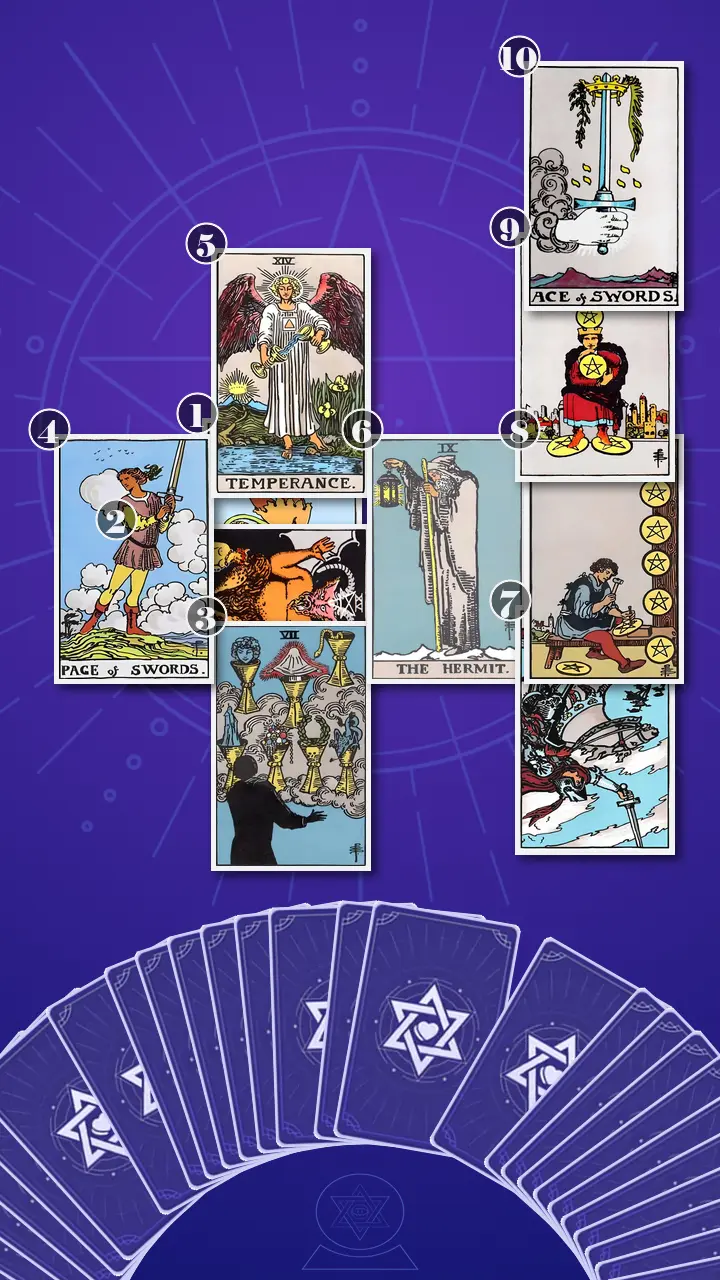
“Today we’ll use the Celtic Cross,” I said.
For anyone searching how tarot works in a moment like this: I chose this spread because Alex’s question isn’t just “how do I be productive?” It’s a full pattern—present behavior, a sticky blocker, a deeper fear, and a needed shift in identity and boundaries. The Celtic Cross separates what’s visible (the tab habit) from what’s driving it underneath (option overload and control), then translates insight into a grounded next step. It’s one of my favorite layouts for modern digital overwhelm and focus because it can hold both the inner world and the workplace pressure without blaming either one.
“A few anchor points to listen for,” I told Alex. “The first card shows the pattern you can actually see on your screen and feel in your body. The crossing card tells us what keeps the cycle running even when you hate it. And the near-future card—our pivot—shows the stance to experiment with next, without needing a perfect system.”
Reading the Map: The Tabs That Look Like ‘Research’
Position 1 — Current observable pattern: what the imbalance looks like day-to-day
“Now we turn over the card representing your current observable pattern—how the ‘20 open tabs’ show up as imbalance in attention and daily functioning,” I said.
Two of Pentacles, reversed.
I tapped the image: the figure mid-juggle, knees bent, that infinity loop ribbon that makes the motion look endless. “This is like when you treat every open tab as ‘still in play,’ so your brain keeps cycling through options instead of landing a decision long enough to finish one concrete step.”
Reversed, the energy isn’t skillful juggling—it’s overload. Earth energy under strain. “The choppy sea behind him,” I said, “is your tab bar. It’s not calm water. It’s input after input after input.”
Alex let out a small laugh that had a bitter edge. “That’s… too accurate. Almost mean.” They rubbed their thumb against the side of their index finger—restless, like their hand wanted to open a new tab just to prove they still could.
“It’s not mean,” I said gently. “It’s precise. Your system is trying to keep you afloat by juggling, but the juggle has become its own job.”
Position 2 — Primary blocker: what keeps the tab-cycle running
“Now we turn over the card representing your primary blocker—what keeps the tab-cycle running even when it clearly isn’t helping,” I said.
The Devil, upright.
Alex’s mouth tightened before they even spoke, like their body recognized the card before their mind translated it.
“In modern terms,” I said, “this is like when you keep tabs open not because you need them, but because closing them feels like losing control—so the browser becomes a leash instead of a tool.”
I pointed to the loose chains. “The detail people miss is that the chains are not locked. You could take them off. But the brain doesn’t move on logic alone—it moves on what feels safe.”
I let the phrase land the way it needed to, without drama: “Some tabs are tools. Some tabs are chains with a friendly UI.”
Then I spoke the echo I could almost hear running behind Alex’s eyes—split-screen, two narratives playing at once.
Screen A: “I’m being thorough.”
Screen B: “I’m scared to be wrong.”
Alex went through a tiny three-step reaction that told me everything: their breathing paused (freeze), their eyes flicked to their laptop like they wanted to count the tabs right now (the thought piercing through), and then a small exhale slipped out, quiet and surprised (release).
“Yeah,” they murmured. “It’s like… if I don’t keep everything open, I’ll get exposed. Like I’ll look incompetent.”
Position 3 — Underlying driver: the deeper fear feeding option overload
“Now we turn over the card representing the underlying driver—the deeper motivation or fear that feeds information-hoarding and option overload,” I said.
Seven of Cups, upright.
“This is the option buffet,” I said, and Alex gave me an immediate half-laugh of recognition—called out, but not shamed. “This is like when you have tabs open for five different ‘right ways’ to do something, and the existence of multiple good answers makes it feel impossible to pick one.”
I watched their cursor hover in the air above the trackpad, like a phantom movement. “Best template. Best strategy. Best example,” I said, naming the kind of tabs everyone pretends they don’t open. “And meanwhile the actual doc stays untouched.”
“Options feel like freedom—until they become a job you never agreed to,” I added.
The energy here is excess—too much imagination without grounding, too much possibility without choice. “This isn’t laziness,” I told them. “This is decision fatigue disguised as ambition.”
Position 4 — Recent background: how the habit got trained into your day
“Now we turn over the card representing your recent background—what pressures made the tab overload feel necessary,” I said.
Page of Swords, upright.
“This is your curiosity,” I said, and I meant it as respect. “This is like when you open ‘one quick tab’ to confirm something, then keep scanning for more angles because being unprepared feels risky.”
The Page’s energy is balanced in theory—mental agility, learning, staying sharp—but in Alex’s context it has been recruited into a defense. “Your skill became your reflex,” I said. “And now every Slack message threatens to flip you into ‘research mode’ before you’ve taken one concrete step.”
Alex nodded once, quick. “I keep optimizing the plan instead of doing the thing.”
Position 5 — Conscious aim: what ‘balance’ actually means to you
“Now we turn over the card representing your conscious aim—what balance actually means to you and what you’re trying to create,” I said.
Temperance, upright.
Temperance always feels like a quiet relief in my hands. The angel pouring between two cups, one foot on land and one in water—measured transfer. “This is like when you stop searching for the perfect productivity system and instead set a simple cadence: read one thing, do one thing, then reassess,” I said.
The energy is balance—not by force, but by rhythm. “Temperance isn’t ‘less capable,’” I told Alex. “It’s ‘more integrated.’ It’s making a playlist instead of leaving Spotify on autoplay. Fewer skips. More intention.”
Alex’s shoulders lowered a fraction, like their body believed that kind of balance could exist without turning into a personality makeover.
When the Hermit Held Up a Lantern (and the Café Went Quiet)
Position 6 — Near-term shift: the stance to experiment with next
I slowed my hands before I flipped the next card. The espresso machine clicked off between shots, and for a second the café had that rare hush—cups cooling, rain tapping the window, the kind of quiet you notice only after you’ve been living inside noise.
“Now we turn over the card representing your near-term shift—the most helpful stance to experiment with next, to change the pattern without needing a perfect system,” I said. “This is the turning point of the reading.”
The Hermit, upright.
Alex stared at the lantern in the card like it was a dare. I could see the thought loop arrive: But I can’t step back. People will pass me. I’ll miss something. I’ll look slow.
That’s when I brought in my own language—my café language, the thing I’ve learned from twenty years of opening a street with coffee aroma and watching people pretend they’re fine until their shoulders tell the truth.
“In Venice,” I said softly, “there’s an old way of reading coffee sediment—grounds divination. The pattern only appears when the cup stops swirling. If you keep stirring, you get motion, not meaning.”
“The Hermit is that stop,” I continued. “A tiny retreat that doesn’t look dramatic: phone face-down, notifications off, one tab centered. The lantern doesn’t light every path; it lights the next step.”
Stop treating every open tab as a lifeline; start choosing intentional solitude with the Hermit’s lantern so your mind can find one true direction.
Alex blinked hard, like the sentence changed the lighting in the room. Their reaction came in layers: first their lips pressed together (holding back a protest), then their gaze went unfocused for a beat (as if replaying every frantic Tuesday), then their shoulders dropped with a shaky exhale that sounded like surrender and relief at the same time.
And then—unexpectedly—they got angry. Not at me, but at the implication.
“But if I do that,” Alex said, voice sharp around the edges, “doesn’t that mean I’ve been doing it wrong this whole time?”
I didn’t rush to soothe them out of it. “It means you’ve been doing what worked to protect you,” I said. “And now it’s costing you. That’s not ‘wrong.’ That’s outdated.”
I let a pause stretch just long enough to be felt, and then I gave them the line that turns fog into a handle.
Clarity isn’t something you find by opening one more tab—it’s something you choose by asking one sharp question, then letting everything else wait.
Alex’s eyes went wet—not dramatic tears, just the thin sheen of someone finally being understood. Their fingers unclenched from the invisible Cmd+T gesture. Their jaw softened. The café sounds returned: a spoon against ceramic, the low chatter of strangers. They inhaled, deeper this time, and the breath looked like it actually reached their ribs.
“I don’t need a better system,” they said, quieter. “I need less noise so I can hear myself.”
“Exactly,” I said. “Stepping back is not falling behind. It’s choosing to steer.”
I leaned in, gentle but specific. “Now, with this new perspective, think about last week. Was there a moment—one Slack message, one email—where this lantern could’ve changed how you felt? Where you could’ve asked one sharp question instead of opening ten insurance-policy tabs?”
Alex stared at the table for a second, then nodded once. “Monday. 11:06. Meeting. I was opening definitions under the table like I was hiding a panic attack.”
“That’s your data point,” I said. “Not your shame point.”
In that moment, I could feel the shift: from restless overload toward cautious focus and curiosity—one small step toward grounded confidence built through completion.
The Ladder on the Right: From Frantic Clicking to a Clean Cut
Position 7 — Self-positioning: how your pace intensifies the imbalance
“Now we turn over the card representing your self-positioning—your mindset and behavior style that intensifies or softens the imbalance,” I said.
Knight of Swords, reversed.
“This is like when you treat every open loop as an emergency and try to solve life by clicking faster, instead of reducing the number of decisions that need to be made today,” I told them.
Reversed, the sword energy is blocked and misdirected: speed without steering. “Your brain is overclocked,” I said. “Urgency feels like progress, but it fragments you.”
Alex gave me a small, guilty smile. “I literally… reopen the same page multiple times. Like it’s going to change.”
“That’s not you being broken,” I said. “That’s the nervous system chasing relief.”
Position 8 — External context: the environment that rewards tab-hoarding
“Now we turn over the card representing your external context—workplace culture and digital environment that rewards or triggers the open-tab lifestyle,” I said.
Eight of Pentacles, upright.
“This is like when you work in an environment that rewards being ‘on top of things,’ so you keep tabs open to signal diligence—even when it fragments your attention,” I said.
The energy here is constructive, but it can become pressure. “There’s real craft in your job,” I told Alex. “And craft wants repetition and focus. But the culture can make you feel like ‘always learning’ is the same as ‘always delivering.’ It’s not.”
Position 9 — Hopes and fears: what you think you gain by holding on
“Now we turn over the card representing your hopes and fears—what you believe you gain by keeping tabs open, and what you fear losing by closing them,” I said.
Four of Pentacles, upright.
“This is like when you keep tabs open as a form of control—like ‘holding’ information so it can’t slip away, even though the grip itself creates tension,” I said, tracing the card’s guarded posture.
The energy is tight and defensive. “You’re hoping tabs will protect your competence,” I said. “And you’re afraid that letting go proves you weren’t prepared.”
Alex swallowed. “If I close it,” they said, “it’s basically gone forever.”
“That’s the fear talking,” I replied. “Not reality. We can build a safety valve that doesn’t become a second job.”
Position 10 — Integration: the empowering takeaway that becomes next steps
“Now we turn over the card representing integration—the clearest takeaway that turns insight into a doable next step,” I said.
Ace of Swords, upright.
“This is like when you write one clear priority, close everything that doesn’t serve it, and suddenly feel your brain ‘come back online’ with clean, simple direction,” I said.
The energy is clarity as a decisive beginning—not harshness, not self-criticism. “You don’t need more tabs,” I told Alex. “You need one clear question.”
I watched their face as that landed. Their expression wasn’t ecstatic. It was calmer, and a little scared—like someone standing in front of a clean counter after a long rush, realizing that now they actually have to cook.
From Insight to Action: The Lantern Question Method (Without Turning It Into a New Personality)
I leaned back and stitched the whole spread into one story, the way I would explain a regular’s order to a new barista: simple, accurate, no extra foam.
“Here’s why it’s been like this,” I said. “Your environment rewards craft and responsiveness (Eight of Pentacles), and you’re genuinely curious (Page of Swords). But when uncertainty hits, your mind offers an option buffet (Seven of Cups) and your body looks for safety by keeping everything open (Four of Pentacles). The result is overload that looks like competence but feels unstable (Two of Pentacles reversed), and the habit hardens into compulsion—like the browser is the boss (The Devil). The way out isn’t more input. It’s the Hermit’s pause, followed by the Ace of Swords’ clean cut.”
“The cognitive blind spot,” I added, “is believing that keeping options open is the same as staying on top of everything. It isn’t. It’s just keeping your worth hostage to making the ‘right’ choice.”
“The direction forward is simpler than it feels,” I said. “Shift from keeping options open to choosing one priority and completing one small, time-boxed step before reopening more inputs.”
Then I gave Alex what they’d actually come for: actionable advice that could survive a real Toronto workweek.
- The Not-Now Folder Release (2 minutes)Create a bookmark folder called “Not Now (Today)”. Move every tab you’re not actively using into it—no categorizing, no sorting. Leave your browser with only what you can honestly work with right now.Expect discomfort. If your chest spikes or your jaw clenches, that’s your old safety strategy protesting—not proof you’re doing it wrong. If you need a safety valve, keep one “parking lot” window open with a single tab: the bookmark folder.
- The Three-Tab Stability Rule (one work block)For one focused block, keep only 3 tabs open: (1) the task tab, (2) one reference tab, (3) the next-step tab where you’ll execute (doc, email draft, ticket comment). At the end, write one sentence: “These three earned a spot because ____.”Lower the bar: you’re not decluttering your life, you’re running a 24-hour experiment. If you catch yourself opening a fourth tab, pause and label the urge: clarity-seeking or relief-seeking.
- One Hermit Block + One Question (this week)Schedule one Hermit block: 45 minutes, notifications off, one task tab open, phone out of reach. Before you start, write a blunt one-sentence goal: “Today, I’m moving ____ forward by doing ____.” Then write the sharp question that makes the next step real: “What do I need to answer to do that?”Make it feel safe, not heroic. Start with 25 minutes if 45 feels impossible. If your job requires responsiveness, set a visible boundary like “I’ll check messages at :30.” The sentence is a steering wheel, not a verdict on your worth.
And because I’m a café owner as much as I’m a reader, I added my own communication tool—something Alex could use without downloading a single new app.
“Pick one scent to anchor your Hermit block,” I said, sliding a small jar of orange peel and cinnamon toward them. “This is Aroma Anchoring. Brew your first coffee or tea, take one deliberate inhale, and let that smell mean one thing: one question, one next step. Your brain learns faster through senses than through lectures.”
Alex’s shoulders dropped again, softer this time. “That feels… doable,” they said. “Like I’m not trying to become a monk. Just… less split.”

A Week Later: The Quiet Proof
A week later, Alex messaged me a photo from their condo kitchen at 8:56 a.m.—kettle steam, soft winter light, and a sticky note on the laptop: “My only job for 45 minutes is one small step.” Their tab bar showed three icons and, off to the side, one folder: Not Now (Today).
“I did the Hermit block,” they wrote. “It wasn’t magical. I still wanted to click. But I sent the draft. Then I sat with my coffee alone for a minute—kind of proud, kind of weirdly sad—and it was still better than the spiral.”
I reread it behind my counter, hands smelling faintly of espresso grounds. That’s the real Journey to Clarity: not a perfect life, but a cleaner next step—chosen on purpose.
When your brain is loud, it can feel safer to keep everything open—even if you’re quietly exhausted from holding your worth hostage to making the ‘right’ choice.
If you only let yourself carry one question for the next hour, what would you want that question to be—so you can take one real step instead of collecting ten more options?