From "Am I Trusted or Used?" to Cleaner Boundaries in Manager 1:1s
The 10:58 Glass Room
I hear some version of this a lot from late-20s tech workers in Toronto: you walk into a recurring 1:1 with a tidy project list and walk out with your manager’s team frustrations sitting in your notes like they belong to you.
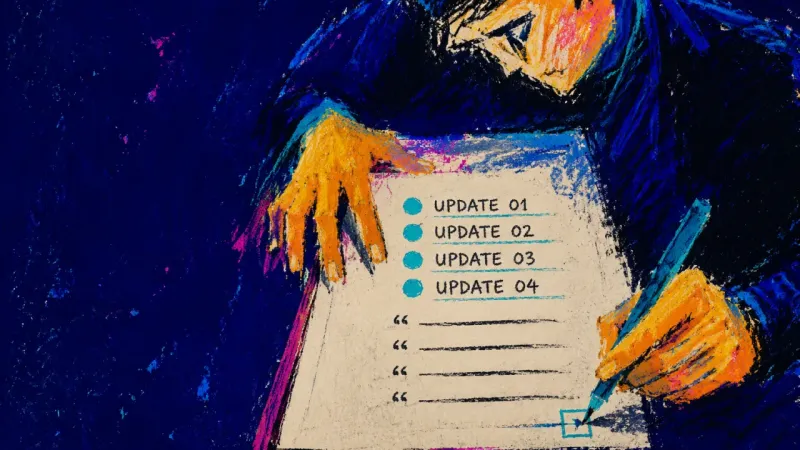
That was almost word for word how Jordan (name changed for privacy), a 28-year-old project coordinator at a growing Toronto tech company, opened our session. She was calling me after work, but the scene she brought into the room was 10:58 a.m. on a Tuesday: a small glass meeting room off a bright open-plan office in King West, fluorescent lights buzzing overhead, a lukewarm coffee at her elbow, warm air from the laptop fan brushing her wrists. She had gone in ready to talk timelines. Five minutes later her manager said, “Can I be candid about the team?” and Jordan felt her jaw lock while her Google Doc turned from four clean bullets into half project notes, half emotional transcript.
“I can’t tell if this is mentorship or just emotional spillover,” she told me. “If I say too much, I could get dragged into it. If I say too little, I look cold.” By the time she booked with me, she had already done the late-night search spiral so many people do: is my manager trusting me or using me as a sounding board, am I overreacting, what am I supposed to say when my manager complains about coworkers to me?
What was really hurting was the contradiction underneath it. She wanted to feel trusted by her manager, and she was scared that the same private access was quietly turning her into an emotional container without real authority. The unease in her had the texture of carrying someone else’s overpacked backpack on a swaying TTC car and not knowing whether setting it down would make you look selfish or disloyal. Tight jaw. Shallow breath. A stomach that went hard before the meeting and stayed hard on the ride home. Your body is clocking the blur before your mind can explain it.
I nodded. “That makes sense,” I said. “And we don’t need to force a dramatic verdict today. We just need a cleaner map. I’m not here to guess your manager’s hidden motives. I’m here to help you see the dynamic clearly enough to choose your part in it. That’s how we start finding clarity.”

Choosing the Map: Relationship Spread · Context Edition
I asked Jordan to put both feet on the floor and take one slow breath in through the nose, out through the mouth. While I shuffled, I invited her to hold one question steady: in these one-on-one meetings, what is actually mine to do?
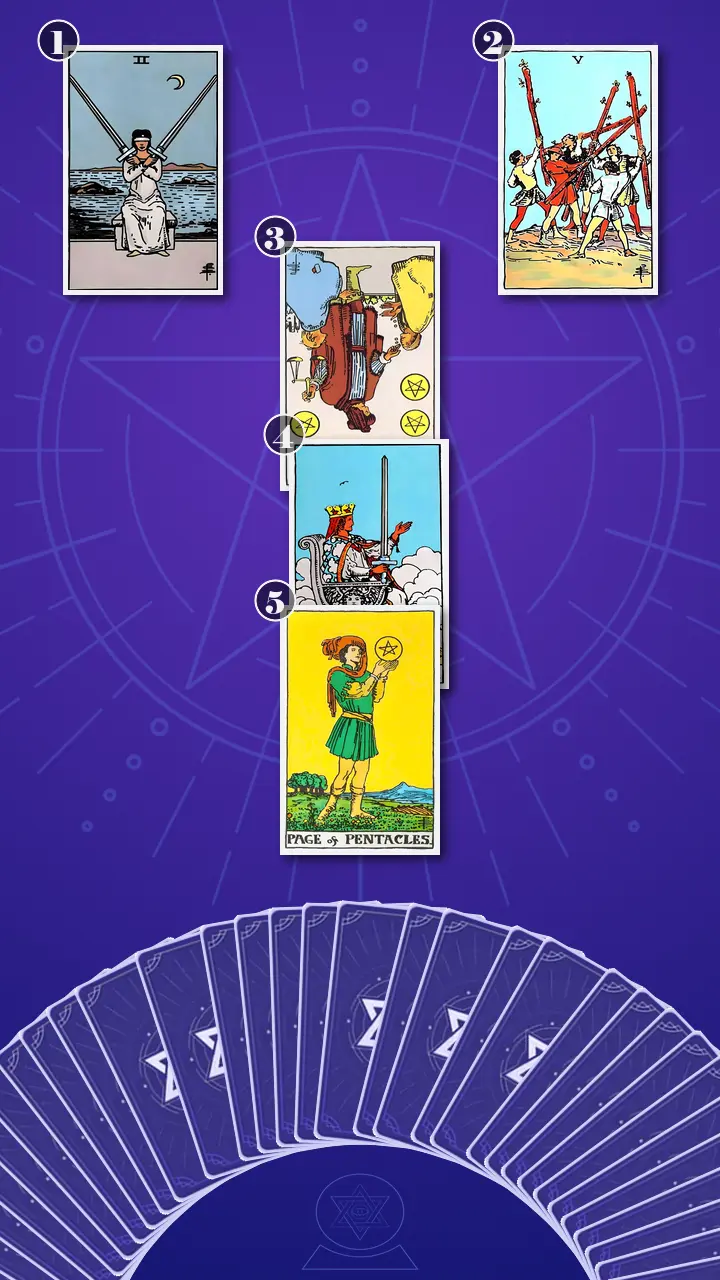
I chose the Relationship Spread · Context Edition. I use it for workplace boundary clarity when the problem is real but motive is foggy. It’s built from the classic Relationship Spread, lightly adapted for ethics and precision: one position shows your stance, one shows what the other person’s behavior brings into the room, one reveals the exchange pattern binding you, one names the core lesson, and one offers the bridge forward. That matters in a charged manager 1:1, because tarot can illuminate structure without pretending to prove what someone secretly intends.
For blurred boundaries and emotional labor in a power-imbalanced work relationship, five cards are enough. The first would show how Jordan entered the room before anyone else even finished a sentence. The center card would tell us what hidden contract kept the question “am I being trusted or used at work?” alive. And the fourth card would name the boundary lesson directly—the place where closeness and appropriateness had gotten tangled.
That’s one of the reasons I trust this spread. It keeps returning the power to the querent. Tarot works best, especially in career questions, when it stops being a crystal ball and becomes a way to organize discernment.
Reading the Static Before the Ask
Position 1: The Composed Face, the Split-Screen Mind
I turned over the card that represents Jordan’s current stance in the 1:1—the guarded, over-reading posture she brings in before anyone else has even finished speaking.
The Two of Swords, upright.
It was almost too exact. I told her this card looks like the version of herself that walks into the glass room with an organized agenda and an almost overly calm voice, then splits in two the moment her manager says, “Can I be honest about the team?” One part of her nods and offers safe phrases—“yeah, I can see that,” “that makes sense”—while the other part tracks every pause, adjective, and implication so she doesn’t accidentally align with the wrong thing. The blindfold is strategic neutrality. The crossed swords over the chest are the two stories she is holding against her own ribs at the same time: this is trust, this is a test.
Energetically, this is blocked Air. Her mind is working overtime, but not in a way that frees her. It’s like keeping twelve browser tabs open about one Slack message and calling it clarity. The protection is intelligent; it also keeps her from naming what already feels off.
Jordan let out a short laugh that landed with more salt than humor. “Okay,” she said, glancing down at her mug, thumb circling the rim once before going still. “That’s accurate enough to be rude.”
I smiled a little. “It isn’t rude,” I told her. “It’s a picture of how carefully you’ve been trying to stay safe.”
Position 2: The Heat That Was Never on the Calendar
Then I turned over the card showing what her manager’s venting brings into the relational field of the meeting, without making a literal claim about private motive.
The Five of Wands, upright.
I told Jordan this card is what it feels like when a 1:1 suddenly stops being about her role and starts carrying the emotional aftershocks of a messy Slack thread, a tense standup, or a week of half-processed team frustration. No clear ask. No stable footing. Just raised wands colliding in the air. In modern life, it’s that moment when names, complaints, and competing agendas enter a room that was never booked for conflict resolution, and your nervous system starts acting like you’ve been recruited anyway.
This is excess Fire. Not passion in a useful sense—more like spillover heat. The card isn’t telling me her manager is secretly manipulative. It’s telling me the room itself becomes crowded with friction. Once that happens, every sentence starts feeling politically loaded, and the meeting starts shaping how Jordan sees coworkers who never directly involved her.
Her shoulders rose almost to her ears, then dropped when I said that. “Yes,” she said softly. “That’s why I speak less in group meetings afterward.”
Position 3: The Private Channel Without Admin Rights
At the center of the spread, I turned over the card revealing the shared pattern that keeps the question “trusted or used?” alive—the imbalance described by the whole reading so far.
Six of Pentacles, reversed.
This was the hinge. I felt it immediately. I told her this card is what happens when access from above comes with an unspoken loyalty tax below. She leaves the meeting with no new title, no clearer authority, no extra decision-making power—yet somehow more to carry. An extra follow-up. A revised document. A new layer of caution around coworkers. It made immediate sense of that 6:14 p.m. Line 1 replay, the one where the train screeches into Bloor-Yonge and your phone screen throws blue light on tired eyes and you suddenly think, Why do I feel responsible for a dynamic I can’t actually control?
In tech language, it’s being added to a private Slack channel without admin rights. Or even plainer: doing on-call emotional support for a system you do not own.
“Access is not the same as trust,” I said.
Reversed, the Six of Pentacles shows blocked reciprocity. Support, pressure, and emotional weight are moving in one direction faster than role clarity or power can move back. When I see this card, my mind never goes to fantasy first. It goes to structure. Years ago in New York, when I was still taking every creative gig I could get, I learned how easily praise can function like a backstage pass while the invisible labor keeps expanding in the dark. This card always asks the unglamorous question: what is being given, what is being taken, and what is being quietly expected in return?
I watched the recognition land in Jordan in three beats. First, stillness: her breath caught and her fingers froze above the trackpad. Then cognition: her eyes unfocused the way they do when someone is replaying a very specific commute-home memory. Then release: one long exhale, deep enough to soften her mouth. “Did I just get included,” she said, almost to herself, “or invoiced?”
“Exactly,” I said. “That’s the real question here. Not ‘what did she mean?’ but ‘what did this interaction quietly ask you to pay?’”
When the Queen Lifted Her Sword
Position 4: The Boundary Lesson That Restores Self-Trust
When I turned the fourth card, the room changed. Even over video, I could feel the air go quieter—the way a scene does in a film right before the line that finally tells the truth. On my end, even the city noise outside my window seemed to fall back a step.
The Queen of Swords, upright.
I told Jordan this card was not asking her to become colder. It was asking her to become cleaner. The raised sword and the open hand belong together: openness without absorption, honesty without escalation. This is the mature professional inside the situation. The one who can hear frustration, stay respectful, and still refuse to become the container for what was never hers.
One of my signature reading lenses is what I call Cinematic Role Models. I ask which script the querent has accidentally walked into. Jordan had been reading these meetings like a quiet back-room scene from The Godfather or a closed-door whisper in Wall Street: if I’m brought behind the curtain, maybe I’ve been chosen; if I’ve been chosen, maybe proving loyalty means holding what I hear without question. The Queen of Swords cuts that script in half. Healthy work trust is not organized like secret-family access. It looks less glamorous and far more solid: mutual respect, clear roles, and clean communication.
I asked her to picture that Tuesday 1:1 again—the four neat bullets, the phrase “between us,” the jaw locking while the page filled with complaints instead of the update she had actually prepared. She had been trapped inside the old math: if she said too little, she’d seem cold; if she said too much, she’d get quietly recruited. Her whole nervous system was trying to decode perfectly so she could stay safe.
This is not a test of how much team drama you can hold; it is an invitation to lift the Queen’s sword, cut away guesswork, and let clarity define trust.
The clearest read here was not about decoding her manager. It was the realization that she did not have to trade emotional labor for professional safety.
Jordan didn’t nod right away. First came the freeze: her lips parted, but no sound came out. Then came the pushback: her brow tightened, and she sat back as if the sentence had physically moved her. “But if that’s true,” she said, voice low and a little sharper now, “then I’ve been doing free emotional cleanup. And I hate that.” She looked off-screen, eyes glossy but annoyed more than sad. It was the anger that sometimes arrives one beat before relief.
I let that be true. “Maybe you have,” I said. “And noticing that doesn’t mean you failed some loyalty test. It means your discernment just came online.”
I watched the next three beats happen in order. Her jaw unclenched first. Then her gaze drifted, unfixed for a second, while she replayed last week’s meeting—the moment her manager complained about a teammate and Jordan immediately volunteered to rewrite a project doc no one had actually assigned. Then came the release: shoulders dropping, a thin breath leaving her like she’d finally taken off a backpack she hadn’t realized she’d adjusted to. There was even a flicker of dizziness in it, that tiny empty feeling that can come right after clarity, when you understand the path and suddenly remember you are the one who has to walk it.
“Okay,” she said. “So what would the Queen actually say?”
I slowed down on purpose. “Something simple,” I told her. “Something like: ‘That sounds frustrating—what would you like me to do with that?’”
The silence after that was clean. Not awkward. Clean. The old fluorescent buzz of the Tuesday room seemed to disappear in the way it does when one precise question acts like a spam filter on what gets to enter your workday. You can be warm without becoming the container. I asked her, “Now, using this lens, can you see one moment from last week that would have felt different?”
She nodded. “Yes. I would have realized I was being handed context, not a duty.”
That was the shift I wanted her to feel in her body, not just understand in her head: from confused vigilance and role-blur to calmer self-trust and steadier professional boundaries. From decoding to discernment.
The Page of Pentacles and the Small Boundary Experiment
Position 5: The Bridge Forward
Then I turned over the final card, the healthiest bridge forward—the actionable next step that could make the very next 1:1 feel even five percent clearer.
Page of Pentacles, upright.
I smiled when I saw it, because this card never asks for a grand confrontation. It asks for a pilot. In modern terms, Jordan doesn’t need to solve the whole relationship in her head before next Tuesday. She needs one grounded experiment: a three-bullet agenda, one clarifying question when the conversation drifts, and notes that record what was actually requested instead of everything she felt pressured to absorb.
This is balanced Earth. After all that Air and Fire—overthinking, subtext, conflict heat—the Page brings the reading back into the part of life you can observe. A/B test one better sentence. Treat the next meeting like a pilot, not a referendum on your likability. Clarity is cheaper than carrying it all week.
Jordan gave me the first real smile of the session. Small, but real. “That I can do,” she said, and this time her voice sounded like it belonged to her again.
From Guesswork to a Boundary-First 1:1
The spread told a coherent story. Jordan entered the room in self-protective neutrality with the Two of Swords. The Five of Wands showed why her body went on alert: the 1:1 was filling with conflict heat that wasn’t actually about her role. The reversed Six of Pentacles revealed the main blockage—emotional labor without matching power, access with an unspoken loyalty tax. Then the Queen of Swords supplied the antidote: separate closeness from appropriateness, ask what is actually needed, and let clarity—not vibe management—define trust. The Page of Pentacles grounded that insight in one repeatable behavior.
The cognitive blind spot was subtle but expensive: Jordan had been treating private access as proof of trust, and over-helpfulness as proof of safety. The transformation direction was cleaner: stop decoding your manager’s intent and define the kind of 1:1 dynamic you are willing to participate in. Clarify before you carry.
Because I am a painter as much as a tarot reader, I gave her my Mondrian Grid Method: when a meeting gets blurry, I stop thinking in vibes and start thinking in blocks with names—Facts, Requests, Overflow. And because nerves make smart people ramble, I paired it with a tiny version of my Oscars Speech Training: open the meeting in under two minutes, before the emotional weather takes over.
- Start with the Clean Ask Filter At the top of your next 1:1 Google Doc or Notion page, write one bold line: “Action needed from me?” Keep it visible for the whole meeting, and if the conversation turns into team venting, ask once, warmly, “What would be most useful for me to do with that?” If no action is named, write “No action assigned” in your private notes before the meeting ends. If saying it out loud feels too exposed, use the minimum version first: keep the line on your notes page and notice how often no clear ask ever arrives.
- Use a Two-Minute Opener Borrowing from my Oscars Speech Training trick, walk into the next 1:1 with just three bullets: project updates, blockers, support needed. Say them in under two minutes. If the conversation drifts, offer a time-choice bridge: “Do you want to use the rest of this for team context, or stay with project blockers?” If that sounds too formal, remember structure is not hostility. Try it in one meeting this week; you are testing a container, not announcing a personality transplant.
- Run a Mondrian Reciprocity Check After the meeting, split your notes into three simple blocks: explicitly requested, self-added because I felt responsible, and overflow that belonged to someone else’s stress. Then pause, remove, or confirm one self-added task before doing it. Guilt may show up fast. Review the starred self-added item 24 hours later before acting. If the role is real, it can survive a clarifying question.
A Week Later, the Jaw Unclenched
A week later, Jordan sent me a message after her next 1:1. It was short enough to fit on one phone screen: “She started venting about the team. I asked, ‘What would be most useful for me to do with that?’ She paused and said, ‘Honestly, nothing right now—I just wanted you to have context.’ I wrote ‘No action assigned’ and we went back to blockers.”
That was the whole proof. Not a perfect manager. Not a magically transformed workplace. Just one cleaner exchange, one clearer role, one nervous system with less psychic overtime. On the TTC ride home, her first thought was still, What if that sounded stiff?—and then, as she told me, she laughed a little and didn’t open her notes app again.
This is why I trust the Relationship Spread · Context Edition for workplace 1:1 boundary clarity. It doesn’t hand people a verdict about who their manager “really is.” It gives them their own footing back. That is the real journey to clarity: not certainty about someone else’s intentions, but steadier access to your own discernment.
When a meeting leaves you with a tight jaw, a fresh task, and the strange feeling that being “trusted” just made you less safe, that’s often the moment closeness and clarity have stopped being the same thing.
So if your next 1:1 starts to feel like a private channel without admin rights, what one small question or structure could help you leave with cleaner footing?
Every reading at AceTarot is a Journey to connect with inner wisdom and empower next step.
Learn more about our Journey to Clarity.