When 'One More' Feels Like Proof: Testing Spark Before Another Drink

The Open-Uber, Close-Uber Moment
If you are the kind of late-20s city person who types 'I’ll keep it chill tonight' into the Friday WhatsApp chat, then still ends up outside a second bar hearing 'one more round?', I already know the issue is rarely just alcohol. It is often hangxiety, people-pleasing, and the fear of being boring sober all tangled together.
That was the energy Jordan (name changed for privacy) brought to me. I was taking her call after my final planetarium shift, with the dome lights dimmed to a soft red behind my office door, and she had that unmistakable look of someone who was tired of making promises to herself she could not keep for longer than a weekend. She was 27, a marketing coordinator in London, and she got straight to it: 'I know I don’t need to drink that much, but I also don’t want to be the dull one.'
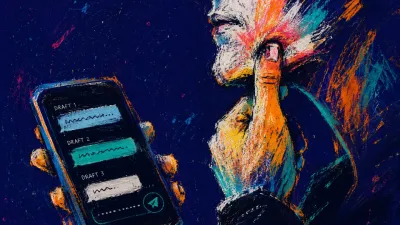
As she spoke, I could see the whole scene she was describing. 10:48 p.m., outside a second bar in Soho. Cold air on her cheeks. Bass leaking through the doorway. Her thumb opening Uber, then closing it again. Someone saying, 'Come on, one more,' while her shoulders climbed toward her ears and her stomach dropped before she ordered another drink she did not even really want. Then the next morning in her Hackney flat: papery mouth, sharp daylight through the curtains, stale makeup on the pillow, Monzo notifications, tagged photos, and half-coherent texts lined up on her screen like evidence bags. She was not really asking me whether she should cut back. She was asking whether cutting back would expose some flat, forgettable version of herself.
The feeling in her was not just anxiety. It was like trying to keep a neon sign glowing with a battery already overheating—restless and buzzy at night, dead heavy by morning. I told her gently, 'You’re not trying to be messy. You’re trying not to disappear.' Then I leaned in a little and said what I say when someone needs both honesty and kindness: 'Let’s make a map for the fog. We’re not here to judge you. We’re here to find clarity.'

Choosing the Map: A Shadow Spread for Finding Clarity
I asked Jordan to put both feet on the floor and take one slow breath with one hand resting on her sternum. While I shuffled, I asked her to hold the real question in mind: not 'Should I be stricter?' but 'What am I afraid sobriety will reveal about me?' Tarot works best that way. Not as a verdict machine, and not as a moral lecture. As a patterning tool.
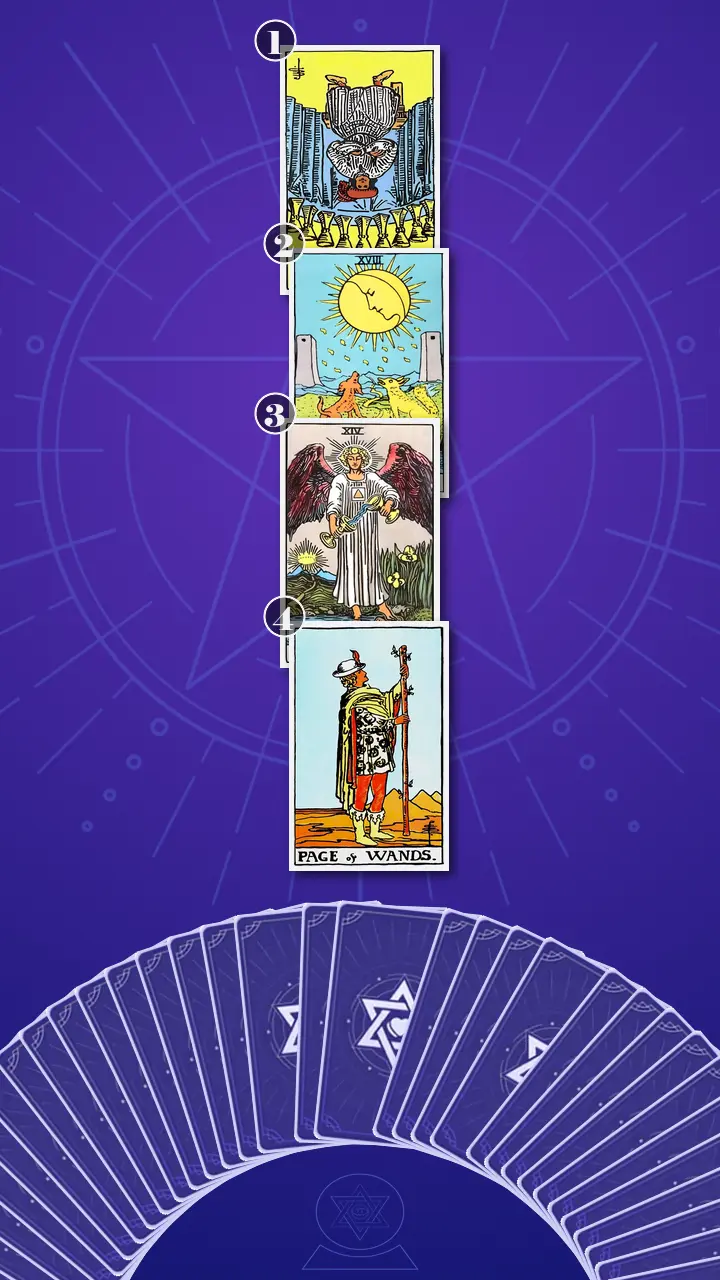
For her, I chose a four-card Shadow Spread. When someone wants to cut back on alcohol and still be social, a simple pros-and-cons layout usually misses the point. The leverage is not in comparing two neat external options. The leverage is in exposing the shadow belief underneath the behavior. This spread is small, but it is exact: one card for the visible symptom, one for the hidden fear, one for the integrating medicine, and one for the next embodied experiment.
I explained the structure plainly, the same way I explain constellations to visitors under a dome: the map does not create the sky, it helps you see what is already there. The first card would show the repeating pattern that keeps making her drink more than planned. The second would reveal the deeper distortion driving it. The third—our key card—would point to the medicine for that loop. And the fourth would ground everything in a practical next step she could test in real life, on an ordinary London night, without having to become a different person first.
Reading the Fog Before the Night Can Name You
Position 1: When One More Becomes Proof
I turned over the card representing the repeating symptom pattern named in her story: drinking past the planned limit, waking up hungover, and then questioning whether she still seemed fun. The card was the Nine of Cups, in reversed position.
In real life, this card looks exactly like the moment Jordan described: Friday night, halfway through the second drink, when the night starts going long instead of good. Someone suggests another round or another bar, and instead of checking whether she actually wants that, she treats staying as proof that she is still lively, still magnetic, still worth leaning toward. The next morning, the proof-hunt continues through Uber receipts, Monzo notifications, tagged photos, and text threads.
Energetically, this was excess. Not simple pleasure, but pleasure tipping into performance. In the Rider-Waite-Smith image, the cups are displayed behind the figure almost like a stage set, and that detail matters. The point is not enjoyment anymore. The point is display. More drinks can look like confidence when they’re really crowd control for your anxiety. Jordan was not just drinking for fun. She was turning the volume up every time the song dipped because she was scared the track would not stand on its own.
I also named the rebound hidden inside the card: the Saturday-morning overcorrection. The dramatic vow to stop going out. The self-shaming rule. The joke in the group chat by evening as if none of it mattered. That swing between 'fully in' and 'fully out' is part of the same loop. Jordan let out a short, bitter laugh and said, 'That is weirdly accurate. Like, rude accurate.' Her fingers tightened around her mug and then loosened. I told her the hinge moment was not the final drink. It was the earlier second when her body said enough and her mind translated that into social danger.
Position 2: The Comment Section No One Wrote
Then I turned over the card representing the hidden driver: the fear that sober Jordan might not be socially compelling enough. The card was The Moon, in upright position.
This card lives in the Tube ride in, or the first lull at the table, or the ten-second pause on a Hinge date while the other person studies the menu. Nothing concrete has happened. No one has rejected you. No one has even looked away for long. But inside your head, the verdict is already forming: 'They’re going to feel me go flat.' 'I need to get back to the fun version fast.' It is like reading a whole comment section that no one actually wrote, just because the room got quiet for ten seconds.
Energetically, The Moon showed blockage. Not a lack of personality. Not proof that sober her was flat. A path obscured by projection. The road in this card is lit enough to walk, just not enough to control the whole journey at once. That matters. At the planetarium, I spend a lot of time teaching people how easily reflected light distorts scale. Under moonlight, everything can look more dramatic than it is. In my own practice, I call this Dark Matter Detection: looking for the unseen force bending the orbit of a person’s choices. For Jordan, the hidden mass was not just alcohol. It was the belief that belonging might vanish the second her energy changed naturally.
Her reaction came in three clear beats. First, a physical freeze: her breath caught halfway in, and even the hand holding her mug went still. Then the recognition: her eyes lost focus and drifted somewhere past my screen, replaying some quiet table, some East London date, some moment when she had mistaken an ordinary lull for an emergency. Then the release: a long exhale, low and scraped out of her chest. 'This is exactly what happens in my head,' she said. 'The night hasn’t even gone wrong and I’m already fixing it.' That was the deep emotional synchronization I was listening for. Once the shadow speaks in its own voice, it loses some of its glamour.
When Temperance Poured Between Two Cups
When I reached the third card, the atmosphere shifted so distinctly that I felt it before I named it. The small lamp beside my star charts cast a pale gold wash over the table, and after the silver-blue unease of The Moon, the new card looked almost like dawn arriving on purpose.
Position 3: The Volume Slider, Not the Off Switch
Now I turned over the card representing the medicine Jordan’s shadow was asking her to develop: the shift from all-or-nothing social performance toward steady self-trust and moderation. The card was Temperance, in upright position.
I asked her to picture the exact Soho pavement again: Uber open, Uber closed, cold air on her face, the group already moving toward the doorway, her body quietly telling her it was enough while her mind panicked that enough might look like less of a person.
Moderation Is Not a Personality Downgrade
Your spark is not hiding in the extra glass; Temperance asks you to mix pleasure with presence until the water runs clear enough for you to recognize yourself.
The real question is not whether sober you is boring. It is whether alcohol has become the shortcut you use before your real social rhythm even gets a chance to show up.
Jordan did not melt into relief straight away. She went still, thumbnail suspended against the side of the mug, jaw locked. Then came the resistance, sharp and almost angry: 'But if that’s true, doesn’t that mean I’ve been getting it wrong this whole time?' I shook my head. 'No. It means you found a fast tool for a real fear in a city that rewards speed, banter, and being up for one more stop. That’s adaptation, not failure.' I watched the sentence land in layers. Her eyes widened first. Then they glassed for a second, not with panic but with recognition. One shoulder dropped before the other. The whole upper half of her body seemed to unclench by degrees, like a fist relearning it had fingers. Seeing Temperance, my mind flashed to orbital mechanics—the tiny adjustment burn that changes a spacecraft’s path weeks later. In my framework, this is Gravity Assist Simulation: one precise correction in angle, and the whole future orbit changes. One drink not ordered. One pause survived. One venue left while you still know your own mind. Temperance is that kind of correction. Not mute or max. A volume slider. I said quietly, 'Moderation is not a personality downgrade.' She let out a shaky laugh and repeated it back to me as if trying the sentence in her own mouth.
I asked her, 'Now, with this new lens, can you think of one moment last week when stopping at enough might have let you feel more like yourself, not less?' She looked down at the card immediately. 'Outside the second bar,' she said. 'I was already done. I knew it.' So I gave her a simple next instruction before the insight could drift off into abstraction: within the next ten minutes, put one note in your phone for your next outing—'What feeling do I think the extra drink will create?' Then add one spark-first move you can try before ordering again. If all she did later was read that note once, it still counted. If she changed her mind, left it unfinished, or kept the whole experiment private, that counted too.
This was the hinge of the reading. Not from messy nights to perfect self-control. From hangxiety and performative drinking to measured self-trust and chosen social aliveness.
Position 4: The Match You Strike Yourself
Finally, I turned over the card representing the grounded experiment that could bring the reading into daily life. The card was the Page of Wands, in upright position.
In modern life, this card looks refreshingly ordinary. It is not a dramatic reinvention. It is the moment at your next night out when, instead of waiting for a buzz to make you interesting, you generate one spark on purpose. You ask the unexpected question. You talk to the quieter person at the table. You suggest the next move. You say, 'Should we dance?' because you actually want to. Or you call your own exit instead of waiting for the group’s energy to decide your night for you.
Energetically, the Page brought constructive Fire back into a spread that had started in overloaded Water. Not reckless heat. Beginner heat. The kind that says: I can create movement without outsourcing it. Jordan nodded slowly, the way people do when something sounds almost too simple and therefore slightly exposing. 'So the goal isn’t to be the most magnetic person there,' she said. 'It’s to stop waiting for the drink to do the first move for me.' 'Exactly,' I told her. 'This card asks for experiment, not perfection.'
Plotting the Next Orbit: Actionable Advice for the Next Night Out
When I laid the four cards together, the story was clean. The Nine of Cups reversed showed the visible loop: drink more than planned, then replay the night like a jury might still be out. The Moon showed why: fear of being boring sober turns every ordinary lull into imagined rejection, so another drink feels safer than finding out what your natural rhythm actually is. Temperance exposed the false binary beneath it all—the idea that you must either escalate or disappear. And the Page of Wands gave us the bridge out: evidence that energy can come from initiative, curiosity, and choice, not only from chemical escalation.
The cognitive blind spot was not weakness. It was misreading ambiguity as a verdict. Jordan had been treating a normal change in social energy as proof of personal failure. She was measuring the night by display instead of discernment, by 'more' instead of 'enough.' I told her that in interstellar navigation, we do not confuse static with destination. We make a small adjustment, then check the trajectory. This was not about becoming rigid, saintly, or dull. It was about moving from borrowed energy to self-trust. Don’t ask whether the night is still fun. Ask whether you’re still in it.
I gave her three practical steps, small enough to survive a real Friday instead of only sounding good on a Sunday reset list:
- Enough Point CheckBefore one social event this week, do my pre-meeting 3-minute cosmic breathing, then open your Notes app and write three lines: your stop point, the feeling you think the extra drink will create, and how you will know you are actually done. Order water at the same time as your second drink as a pacing marker, not a punishment.If that feels too serious or unsexy, do the minimum version: write one sentence only—'What am I hoping the next drink will do for me?' Choice matters more than rules.
- Lull Reality TestWhen the vibe dips—at after-work drinks, on a date, or outside the next venue—take a 90-second bathroom or pavement break before ordering again. Ask yourself, 'What evidence do I actually have that people think I’m boring?' and 'What feeling am I trying not to sit with right now?' While you ask, unclench your jaw, drop your shoulders, and take three slower breaths than you want to.If the full check-in feels too exposed, shrink it down to one question: 'Do I want more alcohol, or do I want relief?' If needed, drink water first and keep the rest private.
- Spark-First ExperimentBefore a third drink at your next night out, make one move that creates energy yourself: ask the first interesting question, start a conversation with the quieter person, suggest the next venue, say 'should we dance?', or use a planned exit cue like 'after this round, I’m heading home.'Success is not being the most magnetic person in the room. Success is gathering one piece of evidence that your natural social energy can move the night without waiting for a buzz.
I reminded her of one final thing that people often need explicit permission to hear: leaving while you still recognize yourself is not killing the vibe. It is one of the clearest ways to protect it.

A Week Later: The Quiet Proof
A week later, just after I had finished a planetarium show for a room full of teenagers arguing about whether black holes are 'basically cosmic rage quit buttons,' a voice note from Jordan came through. 'I did the phone note,' she said. 'Two drinks, water, bathroom break when the vibe dipped. I nearly ordered the third anyway. Then I asked the guy next to me what campaign flop taught him the most, and suddenly the whole table was telling disaster stories. I still wanted to stay longer. I just... didn’t need to.'
Then she added the part I trusted most. 'The Tube home felt a bit exposed,' she said. 'Like I’d left before the night gave me a final score. And when I woke up, my first thought was still, what if I was flatter? But I kind of laughed at it. I didn’t open Monzo like it was going to hand me my personality back.'
That, to me, was the real Journey to Clarity. Not a perfect new identity installed overnight, but the first real proof that she could stay present through the lull and still belong to herself. A four-card Shadow Spread can reveal the pattern behind drinking moderation and sober identity anxiety. But the turning point is never the cards alone. The power returns to the person willing to test a different rhythm.
Sometimes the hardest part is not the dry mouth or the pounding head—it is that small drop in your stomach when the night goes quieter and you wonder whether people would still lean toward you if the buzz were not doing some of the talking.
If your next night out became an experiment instead of a test, what is one tiny spark-first move you would try before asking the next round to do crowd control for your anxiety?
Every reading at AceTarot is a Journey to connect with inner wisdom and empower next step.
Learn more about our Journey to Clarity.