Between City FOMO and Car Math: Choosing a Direction for This Season
The 11:43 p.m. Lease Renewal Spiral
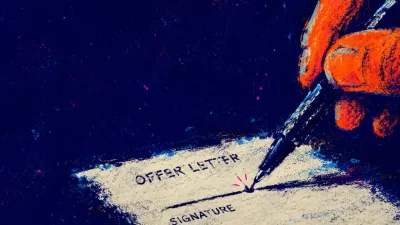
If you're in your late 20s, working a mid-level job in downtown Toronto, and your inbox currently contains both a lease renewal and a suburban job offer, you probably know exactly what lifestyle choice paralysis feels like.
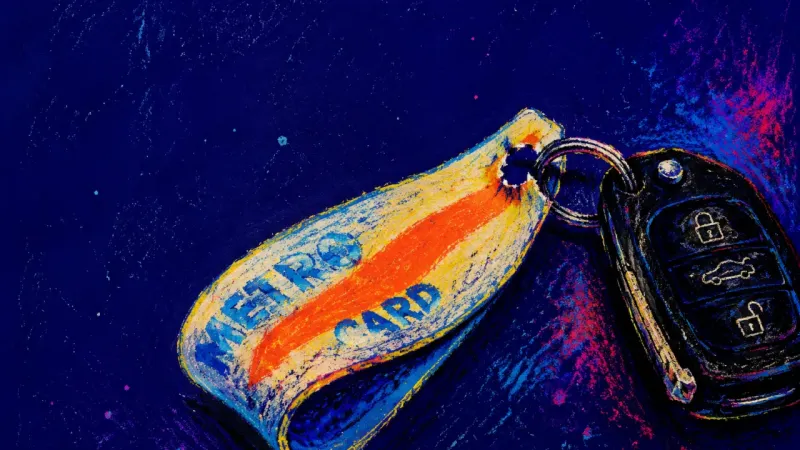
When Maya (name changed for privacy) appeared on my screen, it was 11:43 p.m. on a Tuesday. The cold light of her laptop washed across a condo kitchen counter; through her mic I could hear the fridge hum, and once, the faint ding of a streetcar somewhere below. On her browser I could already see the whole knot: a budget spreadsheet, two AutoTrader tabs for used hatchbacks, a Google Maps commute comparison, and the unread lease-renewal PDF sitting beside the offer email in Gmail.
Her shoulders were almost touching her ears. Her jaw kept setting and resetting. She said, “I love the city, but I also don’t love being broke in it.” Then, after a pause: “What if the raise disappears the second I add a car and commute to the math?”
I recognized the real split immediately: she was torn between taking the suburban offer and keeping city life, between stability that looked smart on paper and a daily rhythm that still felt like her. This was job offer decision paralysis, yes—but it was also FOMO, anticipatory grief, and the fear that one email reply might somehow expose whether she was good at running her own life.
What she kept calling logic had already moved into her body; it sat there like trying to breathe through a winter coat zipped too high, a tight chest with a live-wire buzz running through her shoulders and jaw.
I told her, “This is not indecision for fun. This is what happens when one practical choice starts carrying identity-level weight. We’re not here to force a verdict tonight. We’re here to make a map and find some clarity.”
Choosing the Compass: The Decision Cross for City vs. Suburbs
I asked her to put both feet on the floor, take one slow breath, and say the question out loud without trying to solve it. While she did that, I shuffled. For me, that moment is never about theatre; it is simply the hinge between spiraling and focusing.
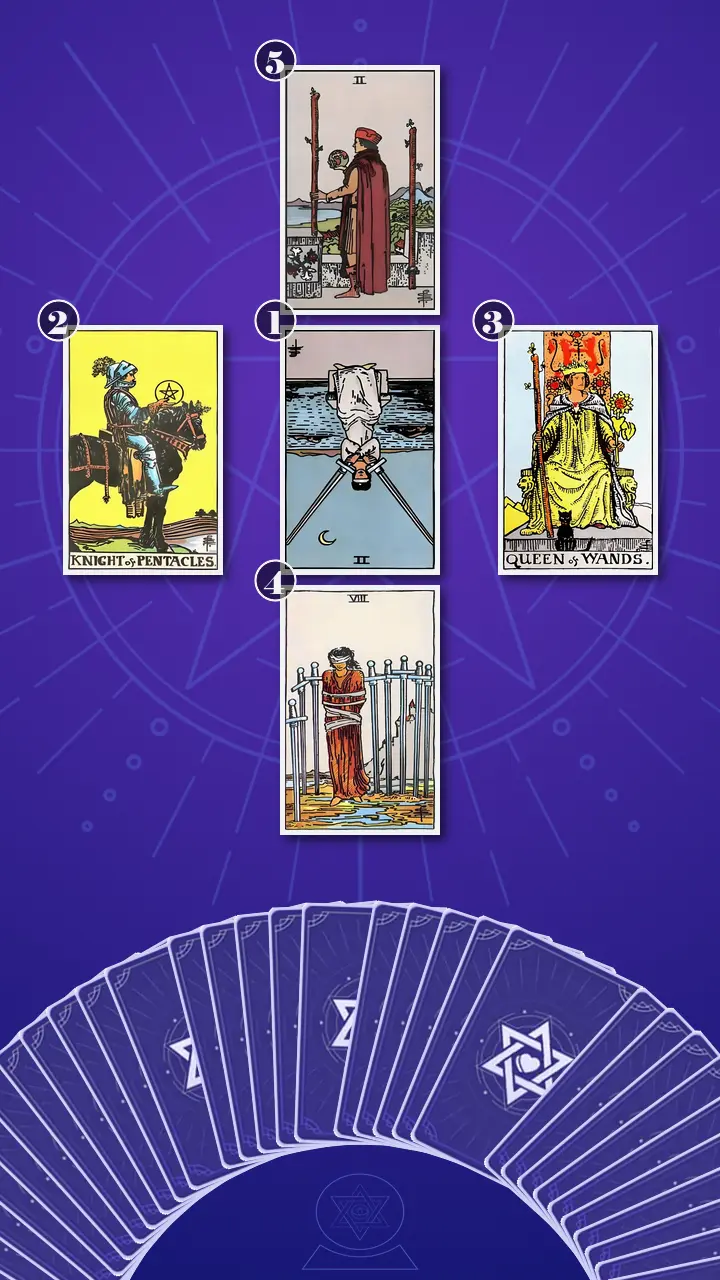
I told her I was using a Decision Cross spread. If you’ve ever wondered how tarot works for a practical question like should I buy a car for a suburban job offer or keep my city life, this is one of the cleanest methods I know. It doesn’t pretend to hand down fate. It organizes pressure: the present knot, the suburban path, the city path, the buried fear under both, and the guidance that can turn panic into a values-based decision.
For Maya’s situation, the fit was exact. The first card would show the visible pattern of overthinking. The next two would compare both live options in context, not fantasy. The fourth would expose the belief making the choice feel irreversible. The fifth—the bridge card—would show how to move from gridlock to grounded direction.
Reading the Map When More Data Stops Helping
Position 1: The Loop That Calls Itself Research
I turned over the center card. “This is the position that reveals the present symptom pattern—the visible indecision, over-researching, and emotional gridlock.”
Two of Swords, reversed.
I told her this card could not have been more literal if it tried. It was the version of her sitting up too late with too many tabs open—used hatchbacks, commute maps, insurance quotes, budget sheets, the offer draft—telling herself she was being responsible while never getting closer to an answer. The issue wasn’t missing information. The issue was being emotionally unable to let one option become real.
In tarot terms, this was Air energy in excess and collapse at the same time: overthinking until perception itself starts to blur. Like having nineteen Chrome tabs open and calling it clarity when your laptop is already overheating. The blindfold on the card sounded exactly like the sentence she’d been repeating: I should be able to solve this logically. The crossed swords over the chest mirrored how she was protecting herself from regret by staying split.
I said, “Right now, more tabs are not creating more truth. They’re buying you fifteen minutes of relief from the emotional risk of choosing.”
She let out a short laugh with a bitter edge to it. “Okay,” she said, “that’s so accurate it’s almost rude.” Her fingers froze around her mug, tapped once against the ceramic, then went still.
I smiled. “I know. But rude clarity is still clarity. You’re not avoiding this because you’re careless. You’re protecting yourself by staying mentally divided, and that protection is what’s wearing you out.”
Position 2: The Suburban Offer on an Ordinary Tuesday
I turned to the left side of the cross. “Now I’m opening the position that examines the suburban offer path—what buying a car and shifting routines would actually provide and require in real daily life.”
Knight of Pentacles, upright.
The energy in the reading slowed the second I named it. This card took us out of status anxiety and into an ordinary Tuesday: earlier alarm, commute, parking, maybe lunch packed in the passenger seat, more dependable cash flow, a job path that could be steadier even if the rhythm felt quieter. This is the card of structure that isn’t glamorous but is very real by 7:10 a.m.
The Knight is balanced Earth—deliberate, sustainable, routine-bound in the healthiest sense. The still horse mattered most to me. This path was not asking, Will this make me feel impressive? It was asking, Could I live this rhythm—not admire it, not fear it, but live it? More data stops helping when the real question is how you want an ordinary Tuesday to feel.
She looked down at the card and unclenched her jaw just enough for me to notice. “That part is weirdly calming,” she said. “I hate that it’s calming.”
“Of course it is,” I said. “Some part of you genuinely wants steadiness. This card isn’t saying the suburban offer is automatically right. It’s saying this path deserves to be judged by sustainability, not image.”
Position 3: The City Version of You That Feels Immediately Alive
I moved to the right side. “This position examines the city-life path—what staying preserves emotionally, socially, and identity-wise.”
Queen of Wands, upright.
This card practically lit the table. I told Maya it looked like her stepping out of her building and being minutes from friends, dates, classes, familiar coffee spots, the version of herself that feels visible and self-directed. The Queen of Wands is the environment where your social battery comes half-charged by the neighborhood itself.
The Fire here was balanced too—warm, energizing, embodied. But the card asked a sharper question than people usually expect: which parts of this path genuinely nourish you, and which parts mainly reassure your identity? The sunflower said vitality. The black cat said instinct and sovereignty. Together they showed me why the city wasn’t just convenient for her. It was self-recognizable.
I asked, “If you stayed, what would you actually be protecting—community, spontaneity, freedom, or the version of yourself that lives there?”
Her eyes shifted away from the screen for the first time. “All of it,” she said. Then she corrected herself. “No. Not all of it. Mostly the part where life still feels easy to say yes to.”
That was the first completely clean sentence she’d given me all night.
Position 4: The Story Turning a Next Step into a Life Sentence
I turned the lower card. “This position reveals the underlying fear and limiting belief that keep the decision feeling irreversible and high-stakes.”
Eight of Swords, upright.
The reading dropped into its real depth. This was the hidden moment where a used car, a new commute, or a lease decision stopped being a practical step and started feeling like a permanent sentence. Accept the offer, and suddenly she’d ‘chosen the wrong life.’ Decline it, and she’d ‘proved’ she preferred comfort over growth. That is exactly how city-versus-suburbs overthinking turns into identity panic.
The energy here was blocked Air again, but tighter now: frozen, braced, clenched. And the most important detail on the card was the one people often miss—the bindings are loose, and there are openings between the swords. The trap feels total in the body, but it is not total in reality. Future adjustments still exist. Renegotiations still exist. Course corrections still exist.
I felt a very old part of my former Wall Street life flicker on. Back then, the costliest mistakes were rarely the bold trades; they were the delayed ones, the moments when people acted as if waiting could erase uncertainty. It never did. It usually just handed the decision to the clock.
I looked at Maya and said, very plainly, “A next step is not a life sentence.”
She stopped mid-breath. Her thumb hovered over the edge of her phone. Her gaze went slightly unfocused, as if some private memory had just replayed behind her eyes. Then her shoulders dropped a full inch.
“I didn’t realize,” she said softly, “that I was treating a car payment like a tattoo on my identity.”
“Exactly,” I said. “This isn’t really about whether you can survive regret. You can. It’s about how dangerous you’ve made regret mean. You’ve been acting as if one wrong move would prove you can’t trust your own judgment.”
When the Two of Wands Put the Globe Back in Her Hand
Before I turned the final card, the room went unusually quiet. Even through the screen, I noticed how the street noise had thinned. Her kitchen window now reflected only her face and the laptop glow—no movement behind it, just stillness, like the night itself had stopped interrupting.
“This is the bridge card,” I said. “The one that shows how paralysis becomes direction.”
Position 5: Guidance That Replaces the Blindfold with a Horizon
Two of Wands, upright.
At 11:40 p.m., with the spreadsheet open, the lease email unread, and the group chat still buzzing, it can honestly feel like you are not choosing between two routes at all—you are choosing who gets to be you next. That is the pressure you’ve been carrying.
This is the part of my work where my finance background becomes useful. I call it my Strategic Crossroads Analysis: when a choice feels huge, I stop asking which option guarantees the whole future. I ask which option has the strongest probability-weighted fit for the mandate of this season. Not your whole life. This season. In your case, the mandate isn’t ‘be the perfect adult.’ It’s simpler and more honest: money, daily energy, and aliveness.
Not the blindfold of perfect certainty, but the globe in your hand: stop waiting for a flawless answer and choose the horizon that fits this season.
I let that sit between us for a beat. Then I added, “This decision is not asking you to predict your entire future. It is asking you to choose the environment that best matches your values now. You are not choosing a forever self. You are choosing a next season.”
Her reaction came in layers. First there was a physical stillness, almost a small freeze, like her body needed to stop moving to let the sentence land. Then her eyes widened and drifted past the card for a second, not avoiding it but replaying something internal—the spreadsheets, the commute math, the version of her that thought one email reply had to function like a character reference. Then came the release: her mouth parted, she let out one long breath that sounded half relieved and half scared, and the hard set in her jaw finally softened.
“But if I choose it as a season,” she said, and now there was a flicker of resistance in it, “doesn’t that mean I’ve made this feel enormous for weeks for no reason?”
“Not for no reason,” I told her. “For a very human reason. You were trying to protect your future by demanding certainty before motion. But clarity doesn’t come from winning an argument against uncertainty. It comes from choosing a direction you can actually live, then letting lived experience teach you the rest.”
I asked her, “Now, with this new perspective, think back to last week. Was there a moment when you already knew what mattered more—your money, your energy, or your aliveness—but you overruled it because you thought the answer had to sound more impressive?”
She laughed again, but this time without the sting. “Yes,” she said. “When I realized I was calculating gas prices for the third time instead of admitting I was grieving the idea of leaving my neighborhood.”
That was the turn. Not certainty. Perspective. The move from anxiety-driven overthinking and false permanence toward self-trust and grounded direction had started right there.
From Insight to Action: The Money-Energy-Aliveness Ledger
Once all five cards were on the table, the story made perfect sense. The reversed Two of Swords showed the symptom: too much research, not enough permission to choose. The Knight of Pentacles showed that the suburban offer had real structural value—stability, routine, a steadier financial lane—but needed to be judged by Tuesday reality, not by title inflation. The Queen of Wands showed why the city had such emotional gravity: it fed real vitality, but it also held an image of herself she was afraid to outgrow. Underneath both sat the Eight of Swords, the actual engine of the panic—the belief that one decision had to be permanent and flawless. The Two of Wands reframed the whole dilemma: this was never about finding the one perfect life setup. It was about choosing the option that best fit her current values, budget, and energy.
I told her the cognitive blind spot was simple and brutal: she had been treating reversibility as something other people get to have. For everyone else, a job can be a trial period, a commute can be re-evaluated, a car can be sold, a lease can end. For herself, every move became evidence.
“So here’s the direction,” I said. “We stop asking which option guarantees the right future. We ask which path gives the strongest fit for your life now, then we build next steps around that. Practical first. Dramatic never.”
- Run the 30-Minute No-New-Tabs Session This week, sit at your kitchen table with your phone on Do Not Disturb and one sheet of paper in front of you. Write only three criteria at the top: money, daily energy, and aliveness. Then use my boardroom-style decision ledger to score each option from 1 to 10 using only the facts you already have—no new tabs, no fresh Reddit threads, no texting one more friend. At the end of 30 minutes, circle the option that fits this season best. Expect the urge to look up “just one more thing.” That’s the old loop, not proof that you’re missing data. If 30 minutes feels intense, do a 12-minute version and stop on time.
- Do the Ordinary Tuesday Test For both paths, write out one normal weekday from wake-up to 8 p.m.: commute, food plan, cost, energy dip, and what your evening actually looks like. If possible, do one live route check this week at approximate commute hours using TTC, Google Maps, or a drive simulation. Focus on routine reality, not fantasy. Keep bringing the question back to, ‘Could I live this rhythm?’ not ‘Would this look impressive?’ That’s how the Knight of Pentacles gives actionable advice.
- Separate Nourishment from Optics Make two lists: what city life genuinely nourishes, and what city life mainly helps you feel about yourself. Choose the top two nourishing things you’d want to protect no matter what. If you take the suburban path, plan one concrete way to preserve each of those two things. If you stay, write down the real monthly cost of keeping them. If grief shows up here, let it. Honest grief is data. Shame is not required.
Before we ended, I gave her one last tool from my old trading-floor life: a tiny pre-commitment ritual. “When you sit down to do this,” I said, “close every extra tab, set a timer, and press both palms to the table for one breath. That’s just a signal to your nervous system that we’re deciding now, not spiraling.”
A Week Later: The Quiet Proof
Five days later, Maya messaged me. She had done the ledger, done the ordinary Tuesday test, and answered the offer. She didn’t send fireworks. She sent one line: “I picked the path that fits this season, not the one that makes the best Instagram caption.”
A minute later she sent another: “I still had a mini chest squeeze after I hit send. Then I made coffee and went for a walk instead of reopening the spreadsheet.”
She told me she spent Saturday alone in a Queen West café afterward, phone face-down, a little tender in the quiet. Clear, but not invincible. That felt exactly right.
That is the proof I care about most. Not a magically perfect future. Not zero fear. Just the first clean evidence of ownership. In this Decision Cross tarot spread, clarity didn’t arrive as certainty. It arrived as a steadier relationship with her own judgment.
Sometimes the tightest feeling in your chest is not about the offer or the car math at all—it is the fear that one email reply might expose whether you can really trust your own judgment. If tonight you’re standing between a subway map and a highway sign, I want you to hear what I told her: you are not choosing a forever self. You are choosing a next season.
So if this choice only had to fit the next season of your life—not prove who you are forever—which direction on your own map feels most honest to your money, your energy, and your sense of aliveness right now?
Every reading at AceTarot is a Journey to connect with inner wisdom and empower next step.
Learn more about our Journey to Clarity.