When Inclusion Stops Matching Reality

A grounded look at the gap between inclusion language and daily behavior, with related tarot cards and reading insights.

Dei Trust Gap
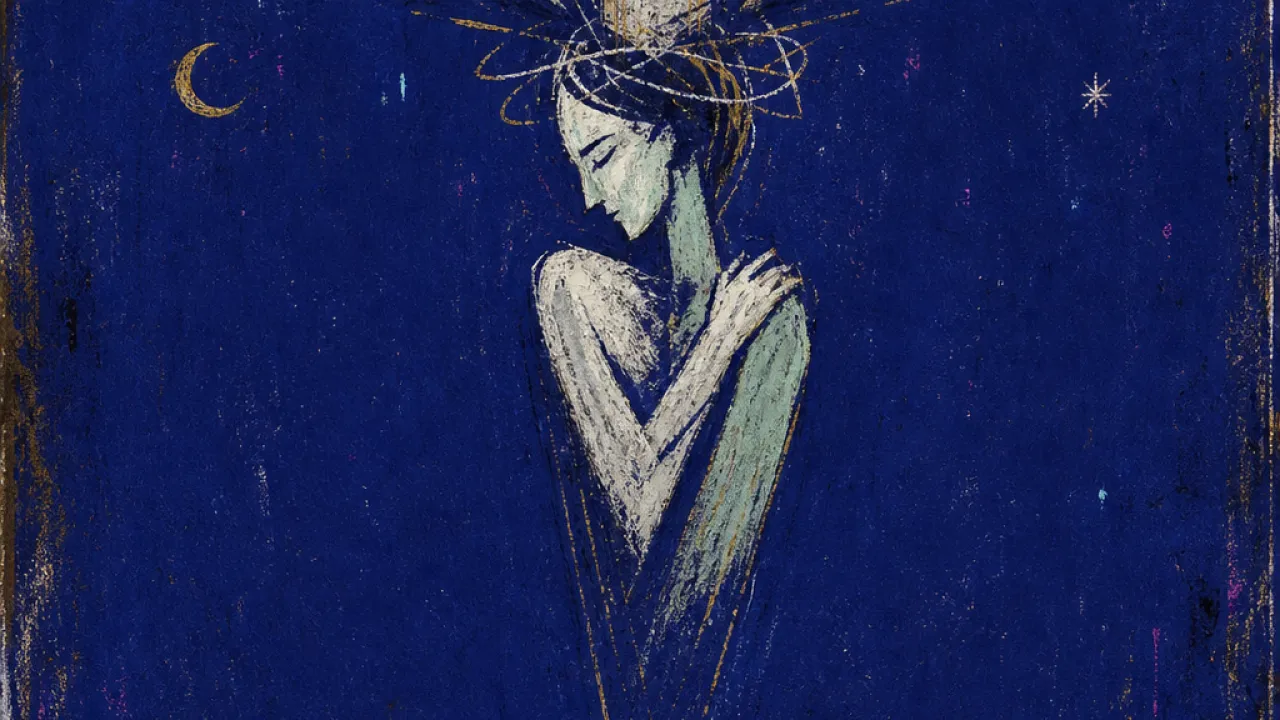
A solitary figure beneath polished banners, shoulders held tight as closed doors press inward along a narrow deep indigo path

What is this situation?

DEI Trust Gap — you enter a workplace, campus, nonprofit, brand, or public-facing organization that says all the right things about inclusion, but the day-to-day pattern keeps telling a different story. The onboarding deck has polished language, the website features diverse faces, the all-hands meeting opens with values statements, and there may even be panels, heritage month posts, surveys, or listening sessions where people are invited to speak. But when decisions are made, the same small circle still has access; feedback from underrepresented employees gets softened, delayed, or reframed; concerns are thanked and then left untouched; and the people most affected are often asked to explain the problem while being given the least power to change it. You start noticing who gets mentored without asking, whose mistakes are treated as learning moments, whose tone is questioned, whose ideas need a second voice before they count, and who is quietly expected to make the organization look more inclusive than it actually feels from the inside. The exhausting part is not one single comment or one awkward meeting, but the repeated split between the language on the wall and the behavior in the room, so every invitation to “be honest” comes with a calculation about whether honesty will be used, ignored, or held against you. Over time, trust stops being something you can offer freely and becomes something the environment has to earn in tiny, observable ways, much like the Five of Pentacles, where two figures pass a warm lit window that is close enough to see but still not open to them.

Why it's not you?

The problem is not that you are reading too much into it; the gap is in the organization’s own pattern. When public commitments are not matched by access, accountability, promotion paths, or follow-through, distrust is a reasonable response to the environment. This has a shape: polished language on the outside, uneven power and closed doors underneath.

Dei Trust Gap in Tarot Cards

The DEI Trust Gap shows up when the room says inclusion out loud, but your shoulders still tense before a meeting because the pattern has taught you to check who will be believed, promoted, or quietly sidelined. This is an environmental, structural dynamic, not a private misunderstanding; it lives in the distance between public language and daily decisions. The Tarot Cards below don't decide whether an organization means what it says. They reflect the shape of that gap, the closed doors around it, and the weight of having to read the room before you speak.

The Magician
Reversed
The raised wand, lowered hand, and array of tools on the table stage a promise that ideas can be translated into material action. Reversed, that channel becomes unreliable: inclusion language circulates at the level of presentation while sponsorship, authority, and access fail to reach the people named by it. You encounter a social environment skilled at producing the symbols of inclusion without consistently changing who is heard, protected, or connected to power. The reversed Magician separates communication capacity from delivery capacity, showing why trust cannot rest on polished campaigns when the organization's material tools remain under the same control.
The Emperor
Reversed
The stone throne, armoured body, and barren mountains place authority inside a hard, defended structure. Reversed, that structure does not simply lose order; it preserves control while becoming less accountable to the people outside its established command chain. You may be welcomed into the workplace symbolically while the same senior circle continues to control sponsorship, promotion criteria, budgets, and whose account of a problem becomes official. The reversed Emperor identifies concentrated authority as the bottleneck, making the issue larger than whether individual leaders use inclusive language.
The Hierophant
Reversed
The seated institutional figure, crossed keys, and two kneeling acolytes depict a formal system that defines legitimate values and controls admission to them. Reversed, the doctrine remains visible, but its claim to moral and social authority weakens because lived practice no longer supports the official teaching. You can hear inclusion described as a shared organizational value while watching belonging remain conditional on fitting unwritten norms or receiving approval from established insiders. The reversed Hierophant locates the trust problem in institutional legitimacy: the language on the wall cannot secure belief when the social rules in the room contradict it.
Wheel of Fortune
Reversed
The central wheel, the figures rising and descending around it, and the watchful beings in the corners create a complete image of recurring movement. Reversed, the calendar can keep turning while the underlying distribution of position remains stubbornly repetitive: another survey, another campaign, another annual statement, and the same access pattern afterward. You may experience each new inclusion cycle as a promised turning point, only to see concerns collected and deferred until the next scheduled initiative. The reversed Wheel of Fortune identifies a timing structure in which institutional activity is abundant but structural movement is scarce, explaining why another launch date no longer functions as evidence of change.
Justice
Reversed
The level scales, upright sword, and symmetrical pillars present accountability as something that should be measurable, enforceable, and consistently applied. Reversed, those instruments remain part of the institution's image while standards bend according to status, identity, or proximity to power. You notice the gap when similar mistakes receive different consequences, concerns disappear into opaque processes, or inclusion commitments have no owner and no enforcement point. The reversed Justice card makes distrust an audit of unequal standards rather than a failure of optimism, directing attention to evidence, remedy, and whether decisions can be reviewed.
The Moon
Upright
The winding path, twin towers, and dog and wolf responding differently beneath the same moon create a landscape of incomplete and conflicting signals. Upright, the path is still available, but it cannot be navigated by treating every reflection as settled fact or every official light as full daylight. You may repeatedly compare inclusive language with small behavioural cues, wondering whether caution is discernment or overreaction. The Moon gives that internal uncertainty an external structure: when an institution sends mixed signals, your psychological workload grows because you must interpret what the organization refuses to make clear through consistent action.
Judgement
Reversed
The angel's trumpet, the rising figures, and the open coffins depict a public call that demands a consequential response. Reversed, voices can be summoned and displayed while the institution fails to complete the reckoning that the call was supposed to initiate. You may be asked to join listening sessions, disclose patterns, or document concerns, only to see the resulting information thanked, softened, and left without an accountable decision. The reversed Judgement card identifies consultation without institutional response as a career risk, because speaking becomes visible while the system's obligation to act remains diffuse.
Three of Cups
Reversed
The three raised cups, inward-facing bodies, and shared harvest create a compact circle of recognition and celebration. Reversed, the circle becomes socially restrictive: warmth remains available inside it, but access depends on informal membership that public inclusion messaging may never acknowledge. You may work or study in a visibly diverse organization while noticing that candid information, mentorship, invitations, and second chances circulate through a small relational cluster. The reversed Three of Cups identifies the trust gap at the level of clique infrastructure, where formal inclusion cannot compensate for being absent from the relationships through which opportunity actually moves.
Four of Cups
Upright
The cup extended from a cloud, the crossed arms, and the three cups already on the ground show an invitation meeting a history of prior offers. Upright, the refusal is not proof that no opportunity exists; it is a pause in which the credibility and value of another offer are being assessed. You may stop volunteering for listening sessions or inclusion committees after earlier contributions disappeared into summaries without affecting decisions. The Four of Cups frames disengagement as a response to depleted institutional credibility, showing why another invitation cannot be evaluated separately from what happened to the previous three.
Eight of Cups
Upright
The stacked cups, the visible gap in their arrangement, and the cloaked figure walking toward the mountains show a structure that looks nearly complete but still cannot provide what is missing. Upright, a route beyond that arrangement is visible, even though taking it means leaving accumulated investment and familiar terrain behind. You may be deciding whether an organization's stated values can become a credible long-term home or whether the repeated trust gap has become directional evidence. The Eight of Cups does not reduce the issue to disappointment; it reveals the point at which symbolic inclusion no longer answers the deeper requirement for access, accountability, and workable belonging.
Three of Pentacles
Reversed
The three figures beneath the arch, the plan held between them, and the pentacles built into the structure present collaboration as shared expertise made materially visible. Reversed, the meeting still occurs, but recognition, coordination, and influence no longer travel evenly among the participants. You may be invited to contribute lived experience or specialist knowledge while your ideas are diluted, credited elsewhere, or accepted only after an insider repeats them. The reversed Three of Pentacles locates the career gap inside the collaboration process itself, where a seat in the meeting does not guarantee equal authorship of the work or influence over the outcome.
Four of Pentacles
Upright
The crowned figure grips one pentacle to the chest, pins two beneath the feet, and sits apart from the city while keeping every resource under bodily control. Upright, the image makes retention and gatekeeping unmistakable: security for the holder is produced by preventing circulation. You may see mentoring, stretch assignments, candid information, leadership access, and second chances remain concentrated within the same trusted circle despite inclusive recruitment or branding. The Four of Pentacles identifies resource control as the career mechanism beneath the trust gap, showing why representation alone cannot change outcomes when opportunity is not allowed to move.
Five of Pentacles
Upright
The stained-glass pentacles, harsh snow, and two figures passing outside a substantial building depict institutional resources separated from the people who need them. Upright, the educational structure is close enough to shape expectations, but not open enough to make support dependable. You may study at a campus that promotes inclusion while mentoring, research opportunities, recommendation access, and informal academic guidance continue to flow through established networks. The Five of Pentacles identifies the learning barrier as institutional access, showing why enrolment and representation do not automatically create equal participation in the hidden curriculum.
Six of Pentacles
Reversed
The scales held above two kneeling figures and the coins released from a single hand depict educational resources moving through a visible hierarchy. Reversed, the institution may advertise equitable support while access depends on discretion, performative visibility, or an insider's willingness to sponsor a particular student. You may be invited to represent campus diversity while funding, research placements, extensions, or faculty advocacy continue to reach students unevenly. The reversed Six of Pentacles reveals a study environment where support is present but not reliably governed, making academic trust dependent on who controls distribution.
Seven of Pentacles
Reversed
The worker leaning on a tool, the seven pentacles accumulated on the vine, and the solitary pentacle near the feet depict a pause for evaluating what sustained effort has actually produced. Reversed, repeated investment can continue without a credible harvest, turning patience into a mechanism that protects delay. You may have watched years of statements, committees, surveys, and targets produce little movement in leadership access, accountability, or promotion patterns. The reversed Seven of Pentacles makes timing measurable: the issue is not whether change requires time, but whether the organization can show that elapsed time has generated structural yield.
Two of Swords
Upright
The blindfold, crossed swords, and rocky water behind the seated figure depict a decision constrained by incomplete information and credible risk on more than one side. Upright, the temporary barrier preserves space for assessment, but it also shows how long the choice can remain suspended when the environment refuses to clarify the consequences. You may be weighing whether to speak honestly, remain quiet, use a formal channel, find an ally, or leave, while none of those options is cost-free. The Two of Swords locates the paralysis in the organization's trust deficit: you are being asked to choose before knowing whether honesty will be used, ignored, or held against you.
Seven of Swords
Upright
The figure carrying five swords away from the camp, the two swords left standing, and the backward glance depict selective handling of what belongs to the wider group. Upright, information and responsibility are being moved through an indirect route, leaving the visible scene incomplete and difficult to verify. You may watch specific concerns become softer summaries, lose their accountable owner, or reappear as generic culture messaging that removes the original power problem. The Seven of Swords identifies a social system of narrative management, showing how an organization can preserve its inclusive self-image by controlling which parts of feedback reach the collective record.
Eight of Swords
Upright
The blindfolded and bound figure, the surrounding swords, and the distant castle show limited movement inside a system whose exits are difficult to perceive and costly to test. Upright, the bindings are not the whole landscape, but the available openings do not erase the immediate reality of constrained action. You may technically have a reporting channel, open-door policy, or invitation to be candid while lacking confidence that using it will protect your role, reputation, or future opportunities. The Eight of Swords reveals how formal permission can coexist with practical inhibition, making self-censorship a predictable result of the workplace structure rather than evidence that no problem exists.
Four of Wands
Reversed
The flowered canopy, four upright posts, and figures raising bouquets create the architecture of a visible communal celebration. Reversed, the decorated threshold cannot substitute for a secure foundation, so the event can look welcoming while belonging remains unstable once the photographs and speeches end. You may be invited into heritage celebrations, panels, launches, or public rituals that showcase inclusion without opening the organization's durable networks. The reversed Four of Wands distinguishes event-based welcome from structural membership, explaining why participation in the celebration may not increase your access to the community behind it.
Six of Wands
Reversed
The laurel-crowned rider, decorated wand, and surrounding crowd place recognition in a highly public hierarchy. Reversed, visibility becomes unreliable currency: the organization may feature your face, story, or labour while withholding the sponsorship and advancement that would make recognition materially consequential. You can become legible as evidence of inclusion without being treated as an authority whose ideas count on their own. The reversed Six of Wands separates brand-facing praise from career recognition, showing why applause, reposts, and panel invitations do not repair a promotion or credibility gap.
Seven of Wands
Upright
The lone figure on high ground, six wands pressing upward, and mismatched shoes show someone defending a position without the benefit of settled footing. Upright, the figure still has leverage and a visible stance, but maintaining that ground requires repeated effort against a larger field of pressure. You may find that naming inequity turns an ordinary contribution into a defence of your credibility, tone, evidence, and right to raise the issue. The Seven of Wands makes the career cost visible: the path to being heard exists, yet the organization places the burden of sustaining the challenge on the person with less institutional backing.
Nine of Wands
Upright
The bandaged head, guarded stance, and row of wands behind the figure turn prior impact into a visible boundary around present attention. Upright, this is not indiscriminate withdrawal; the figure remains standing and observant, with experience converted into a more demanding threshold for trust. You may scan each new inclusion promise against earlier moments when honesty produced no change or created additional exposure. The Nine of Wands frames that vigilance as accumulated institutional data, while also showing the psychological cost of having to keep the gate active because the environment has not yet demonstrated consistent safety.
Ten of Wands
Upright
The ten bundled wands obscure the carrier's view, bend the body forward, and concentrate the entire load in one pair of hands despite the town being close. Upright, the burden is concrete and nameable, which exposes how much work has been assigned before anyone can discuss whether responsibility is fairly distributed. You may be expected to educate colleagues, represent a community, repair harmful moments, serve on committees, and make the organization appear inclusive while lacking the authority to change policy or resource allocation. The Ten of Wands identifies the career structure as responsibility without matching power, not a personal failure to carry the mission gracefully.

Dei Trust Gap in Tarot Card Reading Insights

When people bring the DEI Trust Gap into readings, they are often trying to name the distance between the public promise and what happens in meetings, promotions, feedback, and silence. The readings below show how others have sat with that disconnect through the cards. Tarot Reading Insights from sessions involving this kind of workplace or institutional gap.

Psychological Contexts Related to Dei Trust Gap