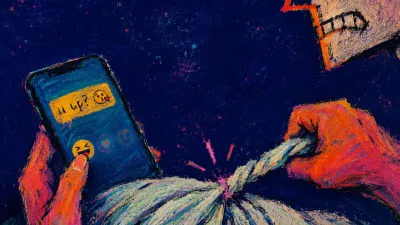
Typing "No Worries :)" and Going Quiet—Until the Facts Cut In
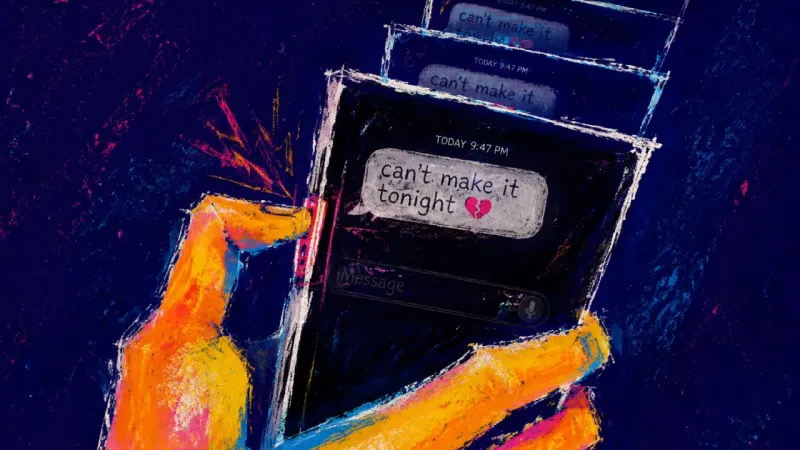
The 8:47 P.M. Canceled-Plan Rejection Spiral
If your version of being chill is typing “No worries :)” and then not opening the chat for three hours because asking to reschedule first feels like losing, I know exactly the wound I’m sitting with. Maya (name changed for privacy) came to me with that particular late-20s city look I’ve learned to recognize fast: competent everywhere else, quietly unraveled the second she’s alone with her phone. She could walk a team through a product flow in Figma without missing a beat, but one raincheck text could still send her straight into canceled-plans rejection anxiety.
When she described the last time it happened, I could see the whole frame. It was 8:47 on a Thursday night in her west-end Toronto condo, pad thai going cold in the carton beside her, sweet and salty in the air. The radiator clicked. Her phone felt hot in her palm. At the top of her screen, the bright ring of an Instagram Story glowed from the same person who had just texted to cancel. She flipped between the thread and the Story, typed “No worries :)” too fast, then left the chat unopened so it would look like she was unbothered. “I know plans change,” she told me, “but why does it always feel personal?”
I told her what I could already feel at the center of the reading: she wanted dependable connection, but one changed plan made it feel unsafe to knock again. The hurt moved through her like a gray text bubble that had somehow been allowed to bang a courtroom gavel inside her chest. Tight chest. Dropped stomach. That hollow body feeling that arrives before logic has even put its shoes on. “We’re not here to guess what this other person secretly meant,” I said. “We’re here to map the old rejection story that rushed in, so you can stop letting ambiguity sentence you before the conversation even happens. Let’s draw a way out of the fog.”
Choosing the Staircase: A Tarot Spread for Canceled-Plan Triggers
I asked Maya to put both feet on the floor and take one breath that was slower than her panic wanted. Then I shuffled. Not as mystical theater. As a threshold. Sometimes the body needs a visible pause before it stops treating a notification like weather.
For her, I chose the Four-Layer Insight Ladder · Context Edition, a relationship clarity tarot spread I use when the real question isn’t “What does this other person intend?” but “Why did this one moment hit my nervous system like a verdict?” If you’ve ever wondered how tarot works in a situation like this, this is the part that matters: card meanings in context. I wasn’t using the spread to predict whether the person would text back with roses and a fixed Google Calendar invite. I was using it to trace the loop itself—trigger, old wound, defense, corrective truth, emotional medicine, and one grounded next move. A simple timeline spread would have shown sequence but missed the self-reinforcing mechanism. A bigger classic spread would have buried the issue under too much noise.
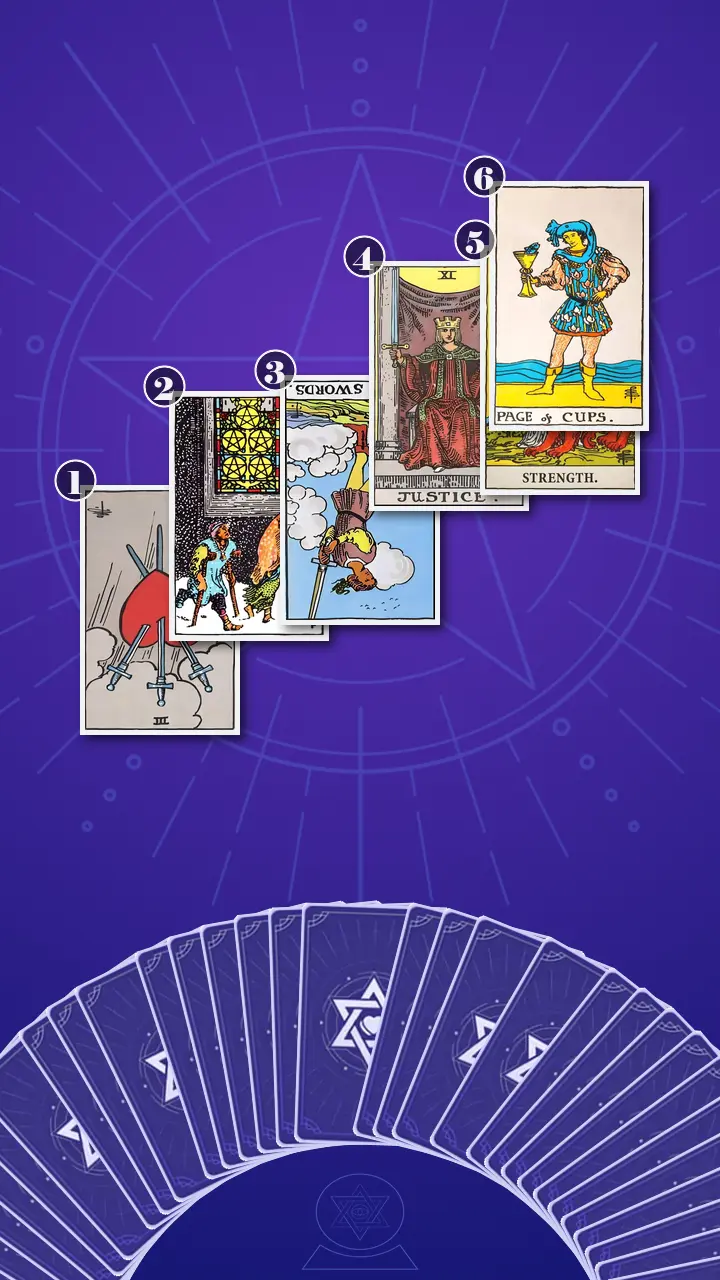
I showed her the rising layout as I placed the cards. The first position would show the immediate reaction right after the cancellation lands. The second would reveal the older belonging wound underneath it. The third would map the replay mechanism—the hyper-reading, withholding, or testing that feels protective but quietly creates more distance. The fourth card would be the hinge, the clarifying truth. The fifth would show what her body and heart needed in order to make that truth livable. The sixth would turn insight into one low-stakes relational move. The whole thing climbed like a staircase out of a basement narrative and toward clearer air.
The Cards That Named the Pattern
Position 1: The Smiley-Face Bandage
I turned over the first card and said, “This is the position that shows the specific present-moment reaction when canceled plans reopen hurt and how you behave right after the message lands.” The card was the Three of Swords, reversed. In modern life, it looked exactly like this: a 6:31 P.M. raincheck text turning an ordinary evening into an emotional bruise she tried to hide. Screenshot the message. Zoom in on the wording. Send a breezy reply. Sit with the sting alone as if the hurt would be less embarrassing if nobody could see it. Reversed, the energy wasn’t clean release. It was hurt turned inward—pain swallowed, managed, minimized, and still very much alive.
“You are not too much for noticing the sting,” I told her. “What makes this card sharp isn’t only the cancellation. It’s that the heart was already tender.” Maya let out a short laugh with no real humor in it. “That’s accurate enough to be rude,” she said. Her fingers went to the paper cup beside her and traced the rim without looking at me. That little motion told me the card had landed exactly where it needed to.
Position 2: The Warm Room You Think You’re Outside Of
I turned the second card. “This one reveals the old rejection story beneath the trigger and the belonging fear attached to it.” It was the Five of Pentacles, upright. The translation was immediate: the cancellation stopped being “plans changed” and became “I knew I was never really inside with them.” This is the card of feeling like everyone else gets the warm, easy version of closeness while you’re the one left outside refreshing your phone in the cold. Upright, the energy hardens. Hurt becomes exile. A logistical change gets treated like proof of permanent exclusion.
I described the image in the language her body already knew: warm restaurant light through a window, birthday dinner Stories glowing on a Saturday morning, the condo lobby buzz seeming to let everyone else in first. “This,” I said, “is the old line: everyone else gets the easy version of being wanted.” Her whole body gave the smallest flinch, one I might have missed if I hadn’t been watching closely. Then came the long exhale. “Yeah,” she said, quieter now. “That’s exactly it. It’s not even about that one person anymore when it hits. It’s like I’m outside again.”
Position 3: Detective Mode Feels Safer Than Asking
I turned the third card. “This position maps the replay mechanism of hyper-reading, withholding, or testing that protects you while quietly recreating distance.” The card was the Page of Swords, reversed. In her life, it looked like becoming a private investigator of mixed signals: checking whether they viewed her Story, rereading punctuation, drafting three versions of a reply, and holding back the direct question because monitoring felt safer than exposure. Reversed, this was Air in excess and distortion—sharp, restless, defensive thinking. A mind using analysis like a shield. The inner logic sounded simple: If I can decode it first, I won’t get blindsided.
“It feels productive,” I told her, “but it’s really an FBI corkboard made of timestamps, activity dots, and half-finished Notes app drafts titled Do not send this.” That got the nervous laugh I expected. She leaned back, shook her head once, and said, “I can talk myself out of someone in ten minutes with nothing but a text bubble.” I nodded. “Exactly. And that’s why Justice is such an important card in this spread. This is where we stop letting vibes impersonate evidence. Receipts before vibes.”
When Justice Set Down the Scales
Position 4: The Card That Refused the Old Verdict
When I turned the fourth card, the room went 12 Angry Men quiet. Even the radiator seemed to pause between clicks. “This is the position that shows the reality-based lens that separates a changed plan from a verdict on worth or desirability,” I said. The card was Justice, upright. In real life, Justice was the moment before the spiral writes the ending: pause, sort the moment into three buckets, and ask what happened, what you’re assuming, and what you actually need. ‘They canceled’ is fact. ‘I’m low priority’ is interpretation. ‘I’d like clarity and a concrete new time if they still want this’ is need. That is the exact point where the old case against yourself starts losing power.
Justice always sends my mind to a conservator’s table at the Met—old varnish being lifted off a painting so the original colors can breathe again. The past can coat the present so completely that you think the yellowed layer is the image itself. This is where I use one of my own tools, what I call Da Vinci Notes. Leonardo sketched structure by layers—bone, muscle, motion—so he could see what belonged to what. I do the same with emotional confusion. I separate the anatomy of the moment: Fact. Story. Need. That is Justice in everyday language. Not colder feeling. Cleaner seeing.
And this was the setup I named for her: at 8:47 P.M., with cold takeout beside her and that Story ring still glowing at the top of the screen, her body often decided the case before her mind did. Tight chest. Dropped stomach. Instant “I knew it.” She wasn’t just upset. She was trapped in the old urgency to reach a verdict before anyone else could hurt her with one.
This is not a verdict on your worth; weigh the facts, ask for clarity, and let Justice’s scales and sword cut the old rejection script away from the present moment.
Her reaction came in three small waves I could see from across the table. First, she went still—breath paused, thumb frozen against the edge of her phone case as if her body had opened the old file before her mind could object. Then her eyes drifted past me, slightly unfocused, replaying some private montage: a raincheck, a Story ring, a night she decided silence would hurt less than asking. Finally the emotion broke through not as relief, but as resistance. “But if I have to separate it like that,” she said, voice suddenly sharper, “doesn’t that mean I’ve been wrong this whole time?” I shook my head. “No. It means the part of you that hates being blindsided has been overworking.” I let that sit for a beat. “A canceled plan is data, not a sentence.” Her shoulders dropped a fraction. One hand moved from her throat to the table. “Now,” I asked her gently, “with this new perspective, think back to last week. Was there a moment when one clear question would have told you more than all the checking did?” She nodded so slowly it almost looked like grief.
I named the transformation out loud so she could hear it in plain terms: “This is the hinge. Not from caring to not caring. From hurt-driven mind-reading and silent withdrawal to reality-based steadiness and calmer openness.”
The Lion and the Reply Bubble
Position 5: The Jaw, the Breath, the Softer Grip
I turned the fifth card. “This position identifies the emotional medicine needed to stay open without collapsing into self-blame or guardedness.” It was Strength, upright. In her daily life, this looked almost unglamorous: feet on the floor, jaw unclenched, one slower exhale, one kinder sentence to herself before she touched the keyboard again. Upright, Strength is balanced power—not suppression, not dramatics, not pretending to be chill. It is the ability to feel the sting without letting the sting become the judge. The woman on the card does not fight the lion. She steadies it.
“You do not need more self-control in the punishing sense,” I told her. “You need self-trust. The kind that says, ‘I can feel hurt without making the hurt the authority.’” As if on cue, the muscles at the corners of her mouth softened. She planted both feet more firmly on the floor. That was the moment Justice unlocked Strength for her: she stopped cross-examining herself and started holding herself.
Position 6: The Two-Sentence Reopen
I turned the last card. “This one turns insight into one low-stakes relational move.” The card was the Page of Cups, upright. In modern life, it was beautifully simple: “Thanks for letting me know. I’d still love to see you—want to do Sunday coffee at 11?” Warm. Specific. Proportionate. Not a thesis. Not a disappearing act. Not a silent audition for reassurance. Just a clean little reopening that gives reality a chance to answer.
Maya looked at the card and then back at me. “But if I suggest the next time,” she said, “I feel like I’m proving I care more.” I nodded, because that fear made total sense in the architecture we had just mapped. “I know,” I said. “But clarity is not neediness. This card isn’t asking you to beg. It’s asking you to test the connection with one small RSVP instead of waiting in the hallway for someone else to prove you matter. Don’t make yourself audition in silence.” This time her laugh was softer. Not bitter. More like recognition.
Receipts Before Vibes in the Next 48 Hours
When I gathered the whole spread back together, the story was startlingly clean. The Three of Swords reversed showed hurt swallowed whole under forced casualness. The Five of Pentacles named the basement narrative beneath it: I’m outside again. The Page of Swords reversed showed the replay mechanism—surveillance, withholding, and mental case-building—that protects pride in the short term while creating emotional distance in the long term. Justice cut fact from projection. Strength made that truth emotionally livable. Page of Cups turned it into one honest, low-drama next step.
That is why this pattern feels so sticky. The blind spot isn’t that Maya has feelings. The blind spot is that ambiguity keeps getting treated like a ranking system for her worth. One changed plan becomes a full trend line about belonging. The shift is both simpler and harder than the spiral wants: stop treating rescheduling personally by default, check the facts, name the need, and keep self-worth separate from somebody else’s availability. More thinking alone will not solve mixed-signals overthinking. Discernment has to come first, then regulation, then action.
- Receipts Before Vibes CheckWhen a plan changes this week, open your Notes app before replying and make three quick lines: Fact / Story / Need. Under Fact, write only the exact words that were sent. Under Story, write the interpretation your mind is rushing to lock in. Under Need, name one honest relational need such as clarity, a concrete new time, or a little space to calm down first. If your phone feels too magnetized to the chat, do it on paper instead; I call that a Manuscript Mindmap, because a messy handwritten page often slows the inner prosecutor better than another glowing screen can.Keep it under two minutes. If you’re too activated, do only Fact and stop there.
- The No-Detective WindowBefore you send any reply, put both feet on the floor and exhale longer than you inhale for five rounds. Name the emotion in one sentence: “I feel hurt and a little ashamed right now.” Then put your phone face down for three minutes—on the table, in your bag, or across the room. This is the body-first reply pause that Strength asks for.If body-based grounding feels too intense, skip the hand-on-chest part and simply look around the room naming five neutral objects.
- The Soft Reopen TextIf you do want the connection, send one low-drama message with one concrete option: “Thanks for letting me know. I’d still love to see you—want to do Sunday coffee at 11?” Keep it to one or two sentences. Offer one time, not five. Let it be information-gathering, not a referendum on your desirability.If sending feels too vulnerable at night, draft it and decide the next morning. Clarity is not neediness.
I told Maya that actionable advice only counts if it protects dignity. If the other person stays vague, never suggests another time, or keeps the whole thing foggy, that is still useful information. The point is not to force closeness. The point is to stop handing the old rejection script the pen before reality has had a chance to speak.

A Week Later, the Quiet Proof
Five days later, Maya sent me a message from a coffee shop near Trinity Bellwoods. She had done the Fact / Story / Need reset instead of checking Story views. Then she sent the Sunday coffee text. The reply came back simple and clear: yes, Sunday worked. She wrote, “I still got the stomach-drop when I hit send. But I didn’t lose my whole night to it.” That was the part I loved most. Not a fairytale ending. A real one.
In fifty words or less, this was her proof: she slept a full night after sending it, though her first thought on waking was still, “What if I misread this?” This time she smiled, made coffee, and checked her phone second.
That is the real journey to clarity as I understand it. Not becoming impossible to hurt. Not turning into the coolest person in the chat. Just moving from detective mode to discernment, from silent auditioning to honest clarity, from hurt-driven withdrawal to calmer openness.
That is why I trust the Four-Layer Insight Ladder · Context Edition tarot spread for tracing old rejection stories after canceled plans. It does not flatter the spiral, and it does not shame it either. It simply shows where the bruise lives, where the mind starts building a case, and where the next usable step actually is.
Sometimes the most painful part is not the canceled plan itself, but the moment your chest tightens and you try to act normal while one changed time slot starts feeling like proof you were never really inside the circle to begin with.
If that moment knows you too, then the next time a raincheck lights up your screen, what small honest message—or even unsent Fact / Story / Need draft—might feel possible if you did not let it serve as a verdict?